

Congress presses Colorado court about rule tied to immigration enforcement
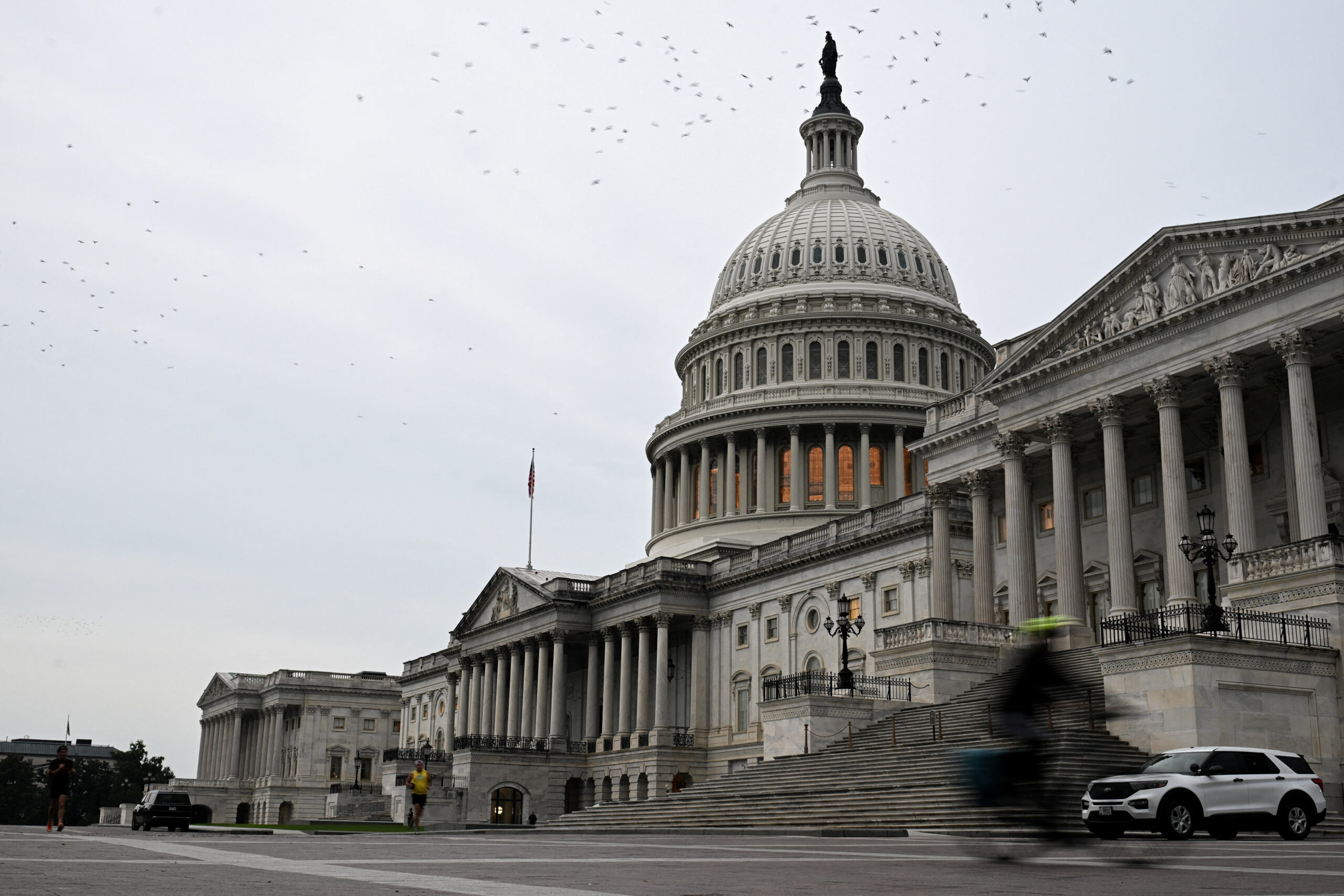
The U.S. House Judiciary Committee is seeking information from Colorado’s court administrator regarding a new requirement that attorneys certify they will not use court data for immigration enforcement, arguing it unlawfully obstructs federal law and compels political speech tied to the state’s “sanctuary” policies.
Colorado, a blue state that has passed “sanctuary” laws, has been in the crosshairs of the Trump administration, which has cracked down on illegal immigration. Colorado officials, meanwhile, have adopted a confrontational stance against both the administration and Trump’s policies, routinely criticizing the president and suing over an array of issues.
Broadly speaking, “sanctuary” policies restrict or prohibit cooperation with federal immigration authorities.
Colorado and Denver have adopted laws barring such cooperation, though political leaders insist neither the state nor municipality is a “sanctuary” jurisdiction.
The new court rule, which arose out of the requirements of a 2025 law, mandates attorneys accessing Colorado’s state electronic court filing system to certify information obtained from the database will not be used to assist federal immigration enforcement.
At its core, the 2025 law reemphasized existing statutes that precludes local law enforcers from detaining an individual based on an “immigration detainer.”
State statutes already prohibit an employee of a state agency from disclosing any identifying information of a person to assist with immigration enforcement. The new legislation extended that to employees of all political subdivisions, such as “home rule” counties and municipalities.
Crucially, the law extended the definition of “state agency” to the judicial and legislative branches. That change meant the courts became subjects to the laws, first adopted in 2021, requiring third parties accessing non-public records to certify, “under penalty of perjury,” that they will not use the information for the purposes of immigration enforcement.
“This certification, made under penalty of perjury, obstructs federal law and prevents federal officials from using Colorado state court information to enforce federal immigration law,” the letter from the House Judiciary Committee said.
“It also hijacks the private practice of law to fulfill the political goals of the state of Colorado and undermines attorneys’ ethical obligations, all to ensure that illegal and criminal aliens in Colorado can remain in the state indefinitely,” the letter, addressed to the court administrator, added.
The committee said it wants to know the penalties for third parties who violate the court rule; the number of complaints against it; how many private attorneys have been “punished” and any documents relating to their investigation; and all documents relating to the court’s decision on how to implement the law’s requirements.
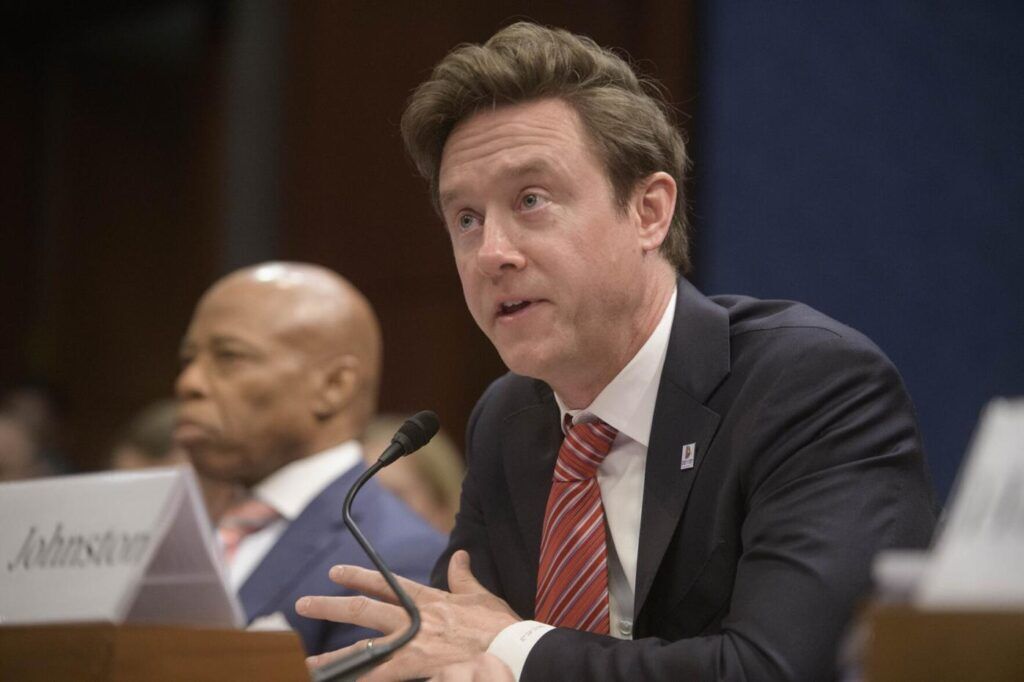
The letter was signed by U.S. Reps. Jim Jordan, chairman of the Judiciary Committee, and Tom McClintock, chairman of its Subcommittee on Immigration Integrity, Security, and Enforcement.
In a congressional hearing last year, Jordan clashed with Denver Mayor Mike Johnston over the city’s sanctuary policies, pressing him on cooperation with federal immigration agents and the release of an alleged Venezuelan gang member onto the streets, instead of to federal immigration agents.
That release was captured on a video, which showed the alleged gang member getting released onto the streets outside the county jail, and, upon seeing federal authorities, running, leaving ICE agents to chase after him.
Johnston did not respond to a request for comment.
Last year, Gov. Jared Polis signed into law the “Protect Civil Rights Immigration Status” bill, which was sponsored by a group of Democratic lawmakers, including state Sen. Julie Gonzales, who is running for the U.S. Senate.
Polis’ office referred The Denver Gazette’s inquiry to the State Court Administrator’s Office, which said it did not request the legislation but is required to follow it.
“The Department did not request this legislation, but is obligated to comply with it,” Suzanne Karrer, a spokesperson for the State Court Administrator’s Office, said in an email.
Gonzales said the law was intended to limit the sharing of state data with third parties, not restrict attorneys’ access to court systems.
“The judicial branch’s application of the certification is not our intent and will be addressed legislatively,” she said, adding that lawmakers are working to clarify the issue this session. “It is frustrating to see that, yet again, MAGA extremists in Congress are seeking to score cheap political points when what they should be doing is ending the war (in Iran).”
The new law dealt with privacy rules around personal data, expanded legal remedies for defendants and set new restrictions on how public institutions and law enforcement handle and access information.
Under the law, a government worker faces a civil fine of $50,000 for each violation of the prohibition to share information to federal immigration authorities.
Ian Speir, a constitutional attorney in Colorado Springs, likened the new requirement to “saluting The Resistance” on X, saying that it hampers his ability to fully represent his clients.
“If I don’t click ‘Accept’ in order to access the State’s e-filing system, I will harm my clients, torpedo my practice, and probably commit malpractice,” Speir wrote. “So, I have no choice. I’m clicking ‘Accept’ under protest.”
Attorney General Phil Weiser, who has already deployed the 2025 law by suing a sheriff’s deputy over the arrest of an individual who had overstayed her visa, declined to comment.
A prominent First Amendment attorney said he believes the annual, one-time requirement is unconstitutional.
“Imagine, for example, if anyone wishing to access a public library were required to sign a statement, before entering, saying, ‘I hereby declare, under penalty of perjury, that I will not use any of the information I obtain from this library in support of any Democratic candidate for office,’ ” Steve Zansberg said in an email.
“That viewpoint-based discrimination in providing access to a public resource would unquestionably be unconstitutional (regardless of how likely, or unlikely, it is that the person who violated that oath would be sanctioned therefor),” he said.
“The same is true here,” he added.
Zansberg represents The Denver Gazette and several other media organizations.
U.S. Department of Homeland Security Acting Assistant Secretary for Public Affairs Lauren Bis said the state’s stance on immigration enforcement is a threat to public safety.
“This is insane,” Bis said in a statement to The Denver Gazette. “Colorado’s sanctuary politicians continue to try to shield criminal illegal aliens from arrest. We need cooperation from sanctuary politicians to help arrest public safety threats.”
Denver, and Colorado more broadly, have become part of the national immigration debate following an influx of immigrants over the past three years that strained city finances, with more than 40,000 people arriving in the state.
Denver emerged as an unexpected destination, despite its distance from the southern border, in part due to the temporary housing and services city officials provided during the illegal immigration surge.
The Venezuelan gang Tren de Aragua later became a focal point in the presidential election, with President Donald Trump promising mass deportations beginning in Aurora.


Thousands of migrants bull-rush Spanish border, sparking ‘total humanitarian and social emergency’
Timothy Nerozzi
timothy-nerozzi@coloradopolitics.com
Updated 7 hours ago
Hundreds of migrants in Morocco have bull-rushed through the Spanish border into the European Union, exacerbating the migration crisis. A mob of African migrants plowed past border guards and circumvented barriers into the Spanish territory of Ceuta this week, creating...

Small Colorado town grapples with ICE detention center opening
Nico Brambila
nico.brambila@denvergazette.com
Updated 12 hours ago
Thirty miles northeast of downtown Denver — where the Front Range loosens its grip, subdivisions give way to open fields and pickups outnumber Teslas — is the town of Hudson. Population 1,652. Hudson still feels like the kind of place...

DOJ sues Colorado to overturn in‑state tuition for students living in the country illegally
Marianne Goodland
marianne.goodland@coloradopolitics.com
Updated 6 days ago
The U.S. Department of Justice has sued Colorado to dismantle a decade‑old law that grants in‑state tuition to students living illegally in the United States, setting up a high‑stakes clash over immigration policy. In 2013, after more than six tries...
Hudson faces lawsuit over ICE detention facility
Nicole C. Brambila
nicole-c-brambila@coloradopolitics.com
Updated 6 days ago
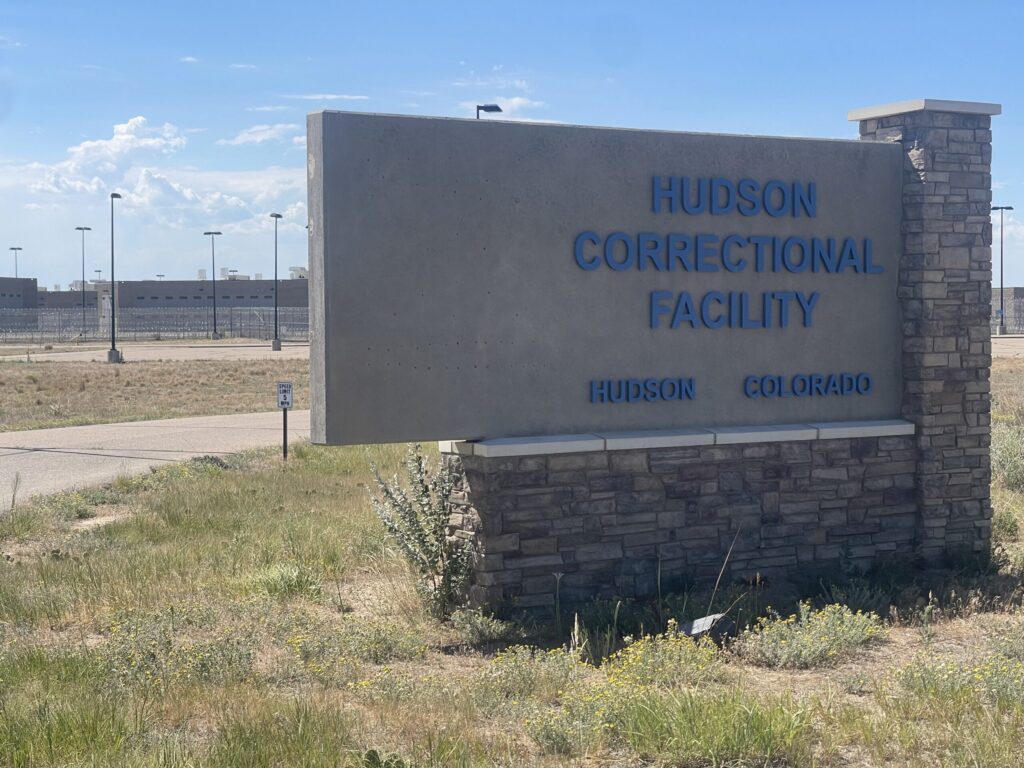
A nonprofit organization filed a lawsuit against the Town of Hudson Wednesday, challenging plans to reopen a former federal prison in the town as a U.S. Immigration and Customs Enforcement detention facility. Together Colorado, along with Janet E. Carlson, filed...

GEO impeding TB investigation at Aurora ICE detention center, Colorado officials say
Nico Brambila
nico.brambila@denvergazette.com
Updated 1 week ago
Colorado officials said Tuesday that the GEO Group has failed to provide access required under state law for a tuberculosis investigation at the Aurora ICE Processing Center, hindering efforts to identify people who may have been exposed. The Adams County...

Federal judge dismisses Colorado county sheriff’s challenge to law limiting immigration cooperation
Michael Karlik
michael.karlik@coloradopolitics.com
Updated 5 days ago
A federal judge dismissed a challenge from Mesa County Sheriff’s Office leaders last week to a Colorado law limiting public employees’ cooperation with immigration authorities, concluding that the plaintiffs did not allege they engage in any conduct that the law...

Employee of Aurora ICE detention facility arrested, accused of shooting protester
Kyla Pearce
kyla.pearce@gazette.com
Updated 1 week ago
The person arrested in connection with a shooting near the Aurora Immigration and Customs Enforcement detention facility Thursday is a GEO Group employee, Aurora Police Department officials said Friday. The woman who suffered the gunshot wound and another woman with...
Protesters descend on Hudson Town Council days after prison funded to reopen as ICE facility
Nico Brambila
nico.brambila@denvergazette.com
Updated 1 week ago
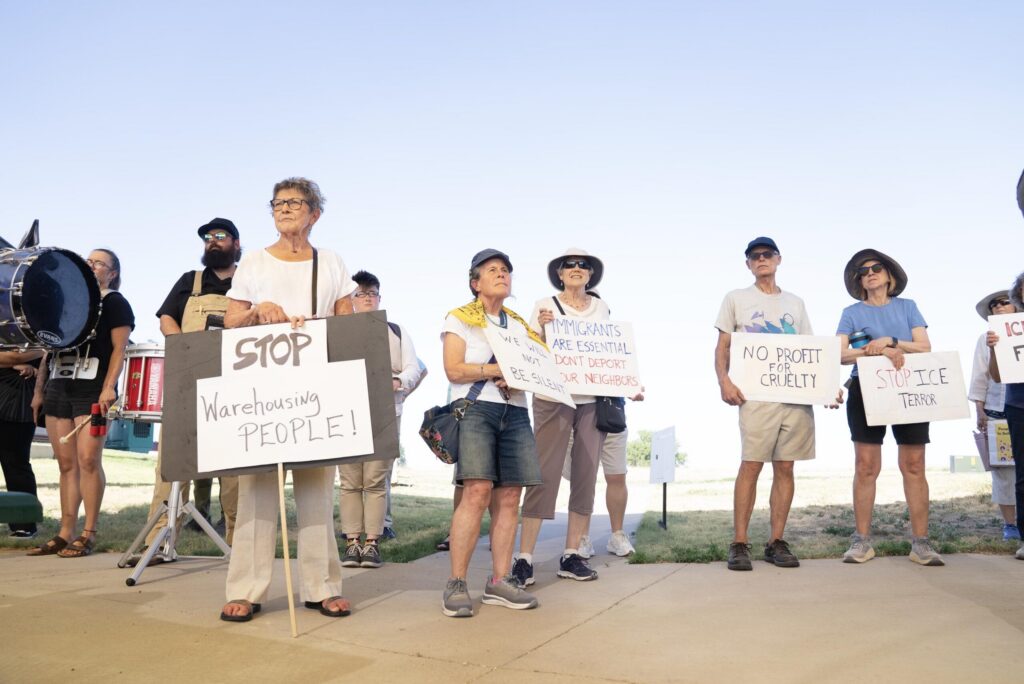
HUDSON — Nearly 200 protesters, including current and former members of the Democratic Party’s progressive wing, descended on Hudson on Wednesday, gathering outside Town Hall about an hour before the regularly scheduled town council meeting to protest the reopening of...

Trump says ‘we cannot give up’ on ICE vehicle stops after temporary halt
The Washington Examiner
the-washington-examiner@coloradopolitics.com
Updated 2 weeks ago
WASHINGTON • President Donald Trump said on Wednesday he doesn’t want to see the end of vehicle stops conducted by Immigration and Customs Enforcement after they were halted by the agency Tuesday in response to multiple fatal officer-involved shootings. The...
$529M ICE contract will nearly double Colorado’s immigrant detention capacity
Nico Brambila
nico.brambila@denvergazette.com
Updated 2 weeks ago
The federal government has signed a five-year contract with private prison company GEO Group that will effectively double Colorado’s immigration detention capacity to about 2,700 beds. Signed July 9, the contract comes a year after the Trump administration told Colorado’s...
PREV
PREVIOUS

Colorado business leaders, Gov. Jared Polis send warning as companies pack their bags
Is Colorado scaring away corporate expansions and entrepreneurs that had once made the state a magnet for high-tech business growth? That’s the assertion of a letter signed by more than 200 business and technology leaders, addressed to Gov. Jared Polis, Denver Mayor Mike Johnston, Democratic senatorial candidates and other political leaders. Notably, one of the […]

Survey: Most Colorado teachers satisfied, but lack prep time
A biannual teacher satisfaction survey released today shows deep job satisfaction, even as educators struggle with inadequate time for lesson prep and professional learning. Released by the Colorado Department of Education, the 2026 Teaching and Learning Conditions Colorado found nine in 10 teachers reported that their schools are good environments for student learning. But just […]