

Colorado expands state inspection authority over ICE detention centers
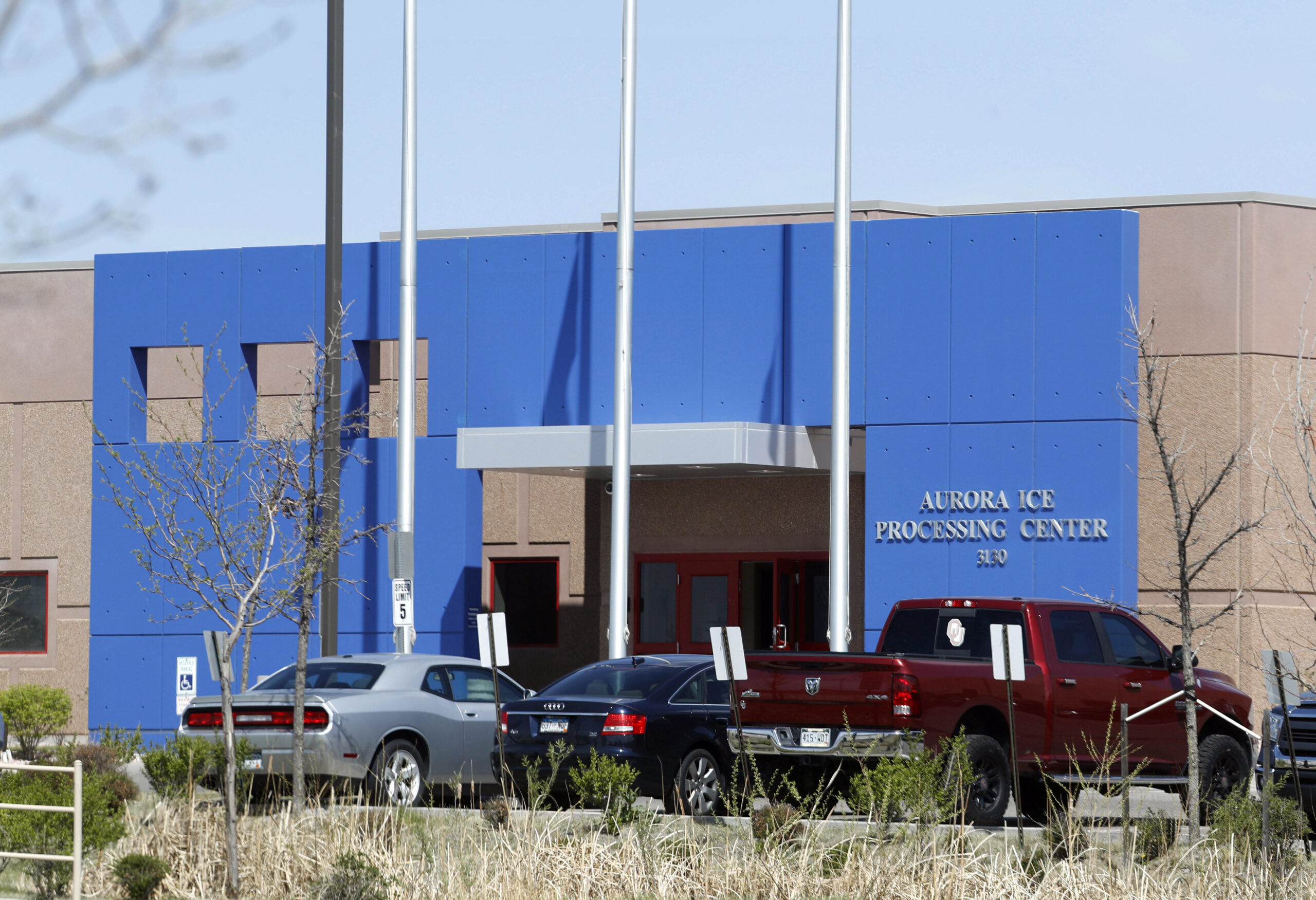
Gov. Jared Polis on Thursday signed a bill that broadens Colorado’s power to conduct health and safety inspections at federal immigration detention centers.
Additionally, the legislation requires the Attorney General’s Office to craft a policy on when personally identifying information must be shared with federal immigration authorities under state or federal law.
It’s the latest policy to get adopted in Colorado, a blue state that has passed successive “sanctuary” laws in the last several years and which has been in the crosshairs of the Trump administration amid the latter’s crackdown on illegal immigration. Colorado officials have adopted a confrontational stance against both the administration and Trump’s policies, routinely criticizing the president and suing over an array of issues.
Broadly speaking, “sanctuary” policies restrict or prohibit cooperation with federal immigration authorities. Some of Colorado’s leaders, notably Polis, have insisted the state is not a “sanctuary” jurisdiction.
House Bill 1276 — sponsored by Reps. Elizabeth Velasco, D‑Glenwood Springs, and Lorena Garcia, D‑Adams County, along with Aurora Democratic Sens. Iman Jodeh and Mike Weissman — doubles down on the existing ban on state and local employees sharing someone’s immigration status with federal authorities by extending civil‑penalty liability to employers, as well.
Backers framed the legislation as necessary given the “unacceptable conditions” at U.S. Immigration and Customs Enforcement facilities. Critics said the funding allocated for
“As state legislators, we have a responsibility to do everything we can to keep our communities safe from the violent and unconstitutional overreach of ICE,” said Jodeh. “We hear all too often about death, sickness, overcrowding, and other unacceptable conditions in ICE detention facilities, but there is almost no transparency. This law is about increasing oversight, ensuring frequent inspections, and protecting health and safety.”
The measure, which passed through both chambers on party-line votes, allows the Colorado Department of Health and Environment to conduct more frequent inspections into the food safety, water quality, and confinement conditions at immigration detention centers in the state.
Colorado currently has one such major immigration detention facility in Aurora, but there are several temporary holding facilities across the state.
Republicans argued that the more than $200,000 outlined in the bill’s fiscal note over the next two years would be better spent elsewhere, such as the state’s strained health care system and deteriorating roads.
“I’m still struggling with the idea that while Colorado roads are deteriorating, our health care system is failing, students in K-12 are not performing at grade level, and our budget is out of control, we are spending time debating federal policy that I struggle to believe is acting in a manner that my colleagues on the other side of the aisle want me to believe it is,” Rep. Ryan Gonzalez, R-Greeley, told bill sponsors during a debate last month.
Sponsors maintained that HB 1276 would be budget‑neutral, as it establishes a new fee on immigration detention facilities to fund the inspections.
New law criminalizes getting a worker’s identification documents
Polis also signed into law House Bill 1283, which makes it a criminal act for an employer to confiscate, retain or demand for an employee’s identification documents with narrow exemptions, such as for verifying a person’s employment eligibility status.
The measure — sponsored by Reps. Junie Joseph, D‑Denver, and Naquetta Ricks, D‑Aurora, along with Sens. Adrienne Benavidez, D‑Denver, and Janice Marchman, D‑Loveland — also requires employers to give workers written notice of this newly created prohibition in their own language if is not English.
Additionally, the bill classifies handing over an employee’s identification to federal immigration authorities or threatening to do so as a “bias” motivated crime.
House Bill 1283 passed on a party-line vote in the Senate and a 41-23 vote in the House, with all Republicans and one Democrat, Rep. Cecelia Espenoza of Denver, voting against it.


Two more wolves killed by Colorado wildlife staff
Marianne Goodland
marianne.goodland@coloradopolitics.com
Updated 15 hours ago
Two yearling wolves from the Copper Creek and Three Creeks packs in Pitkin and Rio Blanco counties, respectively, were killed by Colorado Parks and Wildlife staff on Monday. That brings to 19 the number of wolves that have died under...

U.S. Rep. Lauren Boebert calls Trump’s 90-day wolf-delisting review ‘real progress’
Marianne Goodland
marianne.goodland@coloradopolitics.com
Updated 13 hours ago
President Donald Trump has directed Interior Secretary Doug Burgum to launch a 90-day review on whether gray wolves and Mexican wolves should be removed from Endangered Species Act protections. The order drew mixed reactions for Colorado’s wolf-reintroduction effort, with ranchers...
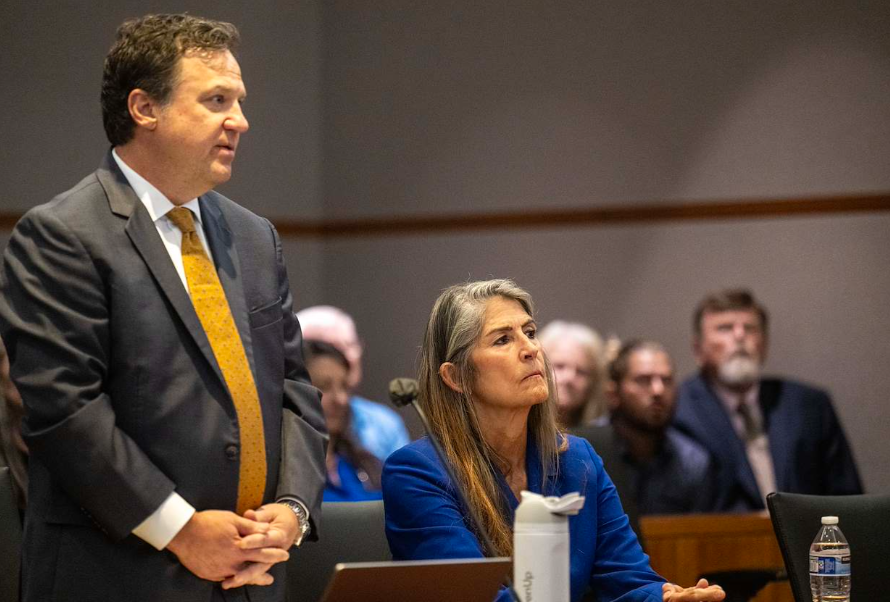
Disgraced ex-CBI analyst Missy Woods sentenced to prison in DNA scandal
Jenny Deam
jenny.deam@gazette.com
Updated 15 hours ago
A Jefferson County district court judge on Tuesday sentenced a disgraced former Colorado Bureau of Investigation DNA analyst to a decade in prison for altering and deleting data in scores of criminal cases over several years. Jefferson County District Judge...

Jason Crow endorses Democrats up and down Colorado’s ballot, chips in $100K for campaign efforts
Ernest Luning
ernest.luning@coloradopolitics.com
Updated 15 hours ago
Democratic U.S. Rep. Jason Crow on Tuesday formally endorsed more than 60 Democrats running up and down Colorado’s ballot and said he’s putting $100,000 into statewide and county campaigns and organizing programs to drive turnout in the fall election. Crow,...

With its water source dry, a southeast Colorado town’s clock is ticking
Savannah Eller
savannah-eller@coloradopolitics.com
Updated 22 hours ago
The Cucharas is not a mighty river, but the people of La Veta knew they had a problem brewing when it ran dry at the beginning of June. “We’re getting by,” said La Veta Mayor Doug Brgoch. “It’s not great.”...
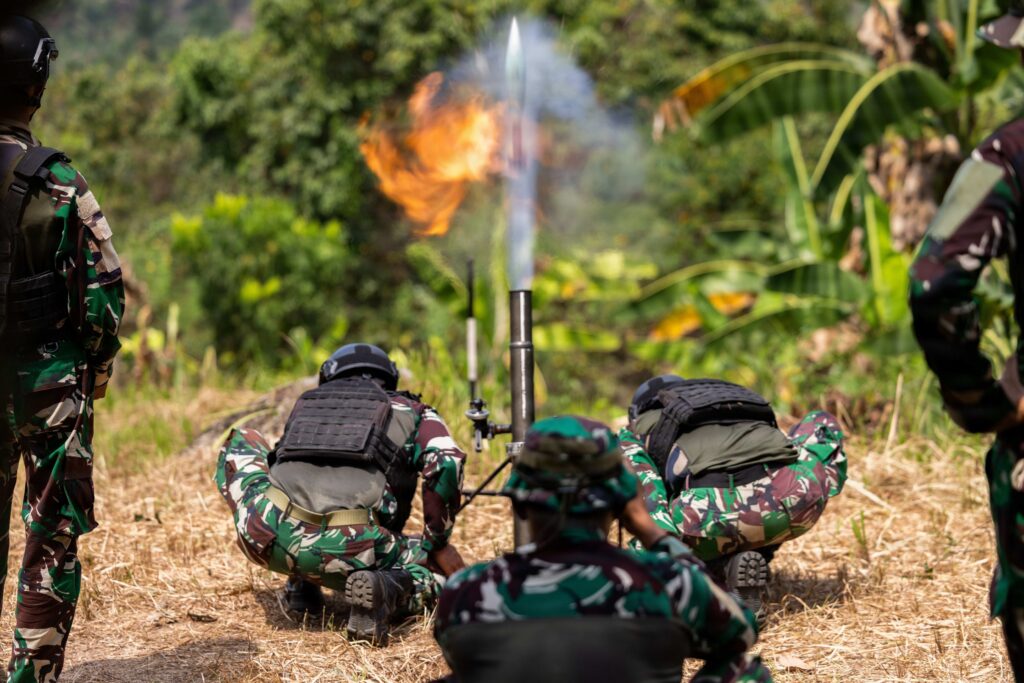
Fort Carson soldiers run Indonesian exercise, refine communications tech
Mary Shinn
mary-shinn@coloradopolitics.com
Updated 22 hours ago
Fort Carson soldiers are overseeing an expansive military exercise in Indonesia while honing new communications technology for the Army. More than 4,700 personnel are participating in the annual training, known as Super Garuda Shield 2026, taking place across several regions...

Parenting from prison: Inmates hope to be present in their children’s lives, while physically absent
Marianne Goodland
marianne.goodland@coloradopolitics.com
Updated 20 hours ago
The room was decorated with balloons, the tables sparking bright with colors as the smell of pizza and cake wafted through the air. As did music. This was, after all, a father-daughter dance. Except this was not a typical father-daughter...

Colorado House ethics committee issues ‘stern letter’ to Democrat over caucus funds mismanagement
Marianne Goodland
marianne.goodland@coloradopolitics.com
Updated 16 hours ago
The Colorado House ethics committee on Friday voted unanimously to issue a “stern letter” to Rep. Mandy Lindsay, D-Aurora, regarding her mismanagement of House Democratic caucus funds. The committee further voted to request that Lindsay resign as Democratic Caucus co-chair...

Secretary of Energy, congressmen push for reliable power over renewable outside CSU coal power plant
Brennen Kauffman
brennen-kauffman@coloradopolitics.com
Updated 22 hours ago
U.S. Secretary of Energy Chris Wright said Friday that the Trump administration would continue to fight against state efforts to close coal power plants, including the Ray Nixon Power Plant outside of Colorado Springs. Wright was joined by Colorado Republican...

State seeks $50K penalty against GOP candidate Victor Marx over alleged campaign finance violations
Deborah Grigsby
deborah.smith@denvergazette.com
Updated 15 hours ago
Republican gubernatorial candidate Victor Marx is looking at more than $50,000 in fines in what the Elections Division of the Office of the Secretary of State calls “unprecedented” campaign finance violations. The state has not imposed that fine yet, and...
PREV
PREVIOUS

Paramedics' convictions tossed in Elijah McClain's death
AURORA, Colo. — Two former Aurora Fire Rescue paramedics convicted in connection with the 2019 death of Elijah McClain will be retried following a ruling by the Colorado Court of Appeals. In September 2021, a statewide grand jury indicted Cooper and fellow paramedic Peter Cichuniec in McClain’s death. They went to trial together and were both convicted of […]

Colorado voters to decide dozens of open state seats in June 30 primaries
With 21 Senate seats and all 65 House seats on the ballot, Colorado voters can expect a crowded November election. Nearly two dozen lawmakers are stepping down — some to run for other offices, others to leave politics altogether — meaning many districts will choose entirely new representatives. Below is a look at the candidates […]