

Colorado Commission prioritizes feelings over science | Rachel Gabel

The Colorado Parks and Wildlife Commission voted Thursday and prioritized feelings over science-based management. Meanwhile, Rancher X is the beneficiary of those feelings-driven decisions. Well played, Governor. The newest appointees to the CPW Commission are just the parting gift you had in mind for rural Colorado.
The Commission voted Thursday 6-5 to reject CPW staff recommendations again and, rather than imposing a 15 animal per day bag limit on furbearers suggested by staff after staff explained the science behind the current framework, they imposed a 2-animal bag limit. This was all despite staff explaining harvest levels across all furbearers are at historic lows. Dr. Rebecca Niemiec, in her first Commission meeting, said the new limit was meant to “make sure people feel better” about trapping. She then offered an unverified survey she completed herself with about 600 respondents to prove her point. That survey was compared to the data collected and analyzed by the biologists I hope aren’t penning their resignation letters this morning in search of an agency that isn’t run by a Commission like this one.
Commissioners Dallas May and Frances Silva-Blaney attempted to pass a motion to allow CPW more time; that motion failed. Niemiec then moved to restrict the furbearer bag limits to two per day. She said, “there’s a large section of the public that doesn’t like that we can kill an unlimited number of animals.” John Le Coq, also newly appointed, seconded the motion.
Notably, CPW places trapping success rates at about 15% with 3,000 successful trappers of the 20,000 permits issued trapping two animals per species, per season.
“Social acceptance is being confused with a political agenda that seeks to eliminate the hunting of furbearers,” Silva Blaney said. “Furbearer populations are abundant. We don’t have a problem with furbearers.”
But we have problems with feelings.
Commissioner Tai Jacober urged the Commission to err on the side of science rather than social tolerance. When the vote was done, he asked why the Commission is choosing not to support staff recommendation. “I guess it’s a practice in social acceptance,” he said.
Commissioner Silva Blaney suggested the time could have been better used to work on lesser prairie chicken management, a species that is struggling.
Commissioner May said the Commission has “done a disservice to all the people.”
Commissioner Jack Murphy pointed out the effect of trappers is small because there just aren’t many of them.
One of the people directly affected by wildlife management via ballot-box biology is Rancher X. He is the now-former employee of the Nottingham Ranch and is the man who caught a wolf in the act of chasing cattle. and shot her. Today, Rancher X defines the moment the wolf situation in Colorado reached a breaking point.

The Nottingham Ranch lost 60 calves over the winter. After the male of the King Pack died during re-collaring operations, the female with pups moved into the ranch’s calving grounds during the heat of calving. In an interview, Rancher X said though he was following direction to “protect the cattle and shoot if necessary,” he has since been fired. He said his belongings, including the belongings of his late wife, were disposed of. A call to the ranch owner has not yet been returned.
“I did everything by the book,” he said. “I was told under any circumstances to take care of those cows. A wolf came in and was depredating, I was told to take care of (the cows), and I did. I did it by the law, but I did it.”
He said he’s in a bad situation. He likened it to the situation former CPW Dir. Jeff Davis was placed in by the governor. There are, to be sure, no winners. This situation was going to occur eventually, not because ranchers hate wolves, but because ranching is a business and the plan the CPW Commission approved allows for the lethal take of wolves caught in the act. Now it will be a waiting game to see the outcome of the investigation against a rancher who no longer has a job or legal representation.
Rancher X, who left the ranch with little more than the clothes on his back, is now trying to put his life back together, he said, and there has been a GoFundMe campaign launched to help him. At press time, it has raised $150. Due to the ongoing investigation and the very real need to protect his identity from those who wish to do him harm, his name is being withheld.
The decisions made by the 300 boards and commissions in the state affect real people. They’re perhaps not chiming in on a willy-nilly survey about their feelings because their heads are down and they’re trying to make a living despite the people who wish they would just leave. Real lives are being destroyed. Real problems are being created. Real solutions will have to come soon.
Rachel Gabel writes about agriculture and rural issues. She is assistant editor of The Fence Post Magazine, the region’s preeminent agriculture publication.


CoComandering? | Miller Hudson
Miller Hudson
miller-hudson@coloradopolitics.com
Updated 19 hours ago
At 8 a.m., Friday morning, Aug. 28, 70 or 80 mostly bleary-eyed visitors to the Transportation Technology Center outside Pueblo packed a conference room to attend the Front Range Passenger Rail District’s (FRPRD) Board meeting. With the exception of those...

Even Dem court couldn’t abide theft of GOP seats | Dick Wadhams
Dick Wadhams
dick-wadhams@coloradopolitics.com
Updated 15 hours ago
Thanks to the Colorado Supreme Court, Colorado voters will be able to reaffirm their support for the Independent Congressional Redistricting Commission after the court struck down the Democratic scheme to steal three Republican congressional seats. Billionaire-funded national Democratic groups from...

Chaotic meeting began with attempt to squelch public comment | Rachel Gabel
Rachel Gabel
rachel-gabel@coloradopolitics.com
Updated 15 hours ago
When Attorney General Phil Weiser takes the governor’s office in January, he must immediately address the chaos of the latest round of appointees to the Colorado Parks and Wildlife Commission to assure stakeholders he’s willing to put pressure on the...

Graduated income tax proposal is a flat tax in disguise | Jon Caldara
Jon Caldara
jon-caldara@coloradopolitics.com
Updated 3 days ago
“Youth is wasted on all the wrong people.” That’s one of my favorite lines from “It’s a Wonderful Life.” The older I get, the less it sounds like a joke. Every generation inherits victories it did not win. Young Americans...
AI optimism vs. anxiety — podcasters debate this every night | Tom Cronin
Tom Cronin
tom-cronin@coloradopolitics.com
Updated 2 days ago
President Donald Trump, CNBC’s “Mad Money” host Jim Cramer and entrepreneurial “accelerationists” celebrate the AI revolution and the infrastructure data-center build-out. Cramer recently gushed, “I like data centers so much that I wish I lived in one.” Trump criticized any community...

Colorado House ethics committee issues ‘stern letter’ to Democrat over caucus funds mismanagement
Marianne Goodland
marianne.goodland@coloradopolitics.com
Updated 18 hours ago
The Colorado House ethics committee on Friday voted unanimously to issue a “stern letter” to Rep. Mandy Lindsay, D-Aurora, regarding her mismanagement of House Democratic caucus funds. The committee further voted to request that Lindsay resign as Democratic Caucus co-chair...
Manny Rutinel resigns from Colorado legislature to focus on congressional race
Marissa Ventrelli
marissa.ventrelli@coloradopolitics.com
Updated 2 days ago
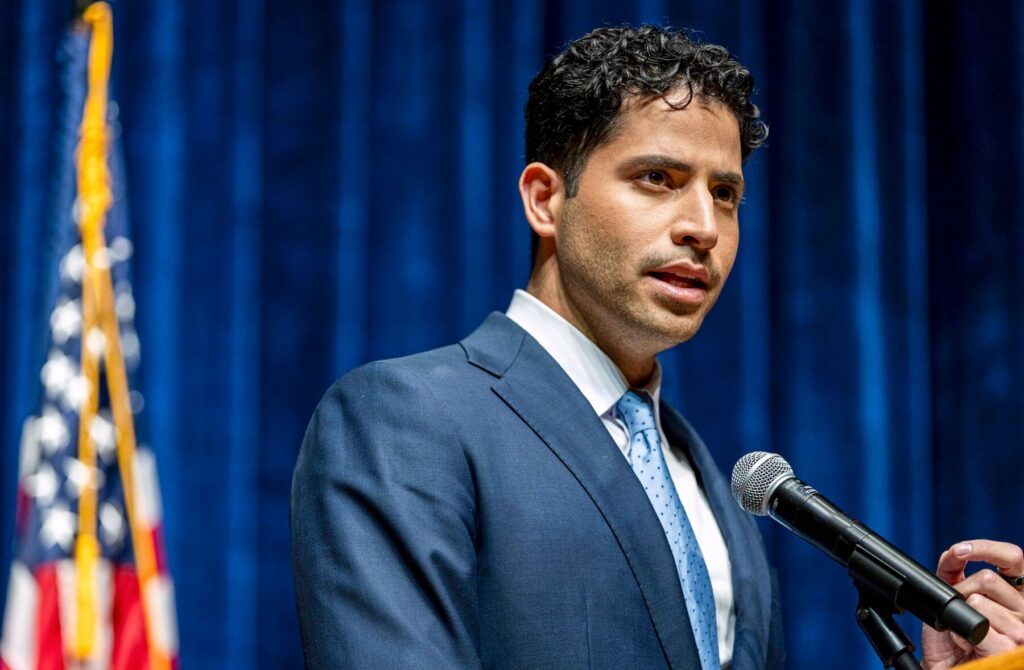
The Democrat running for a key congressional race — whose outcome could decide the balance of power in the U.S. House — on Friday resigned from the Colorado legislature. State Rep. Manny Rutinel is turning his attention to his campaign...

Colorado secures FEMA support for wildfire, flooding and mudslide recovery
Marissa Ventrelli
marissa.ventrelli@coloradopolitics.com
Updated 1 day ago
Federal authorities on Friday approved Colorado’s request for federal public assistance to help communities devastated by the Aspen Acres and Gold Mountain Fires. The Federal Emergency Management Agency did not announce how much the state would receive but confirmed that...

State seeks $50K penalty against GOP candidate Victor Marx over alleged campaign finance violations
Deborah Grigsby
deborah.smith@denvergazette.com
Updated 2 days ago
Republican gubernatorial candidate Victor Marx is looking at more than $50,000 in fines in what the Elections Division of the Office of the Secretary of State calls “unprecedented” campaign finance violations. The state has not imposed that fine yet, and...

Judge puts Colorado Libertarians’ secretary of state candidate on ballot after party’s 1st nominee drops out
Ernest Luning
ernest.luning@coloradopolitics.com
Updated 2 days ago
A Denver judge ruled Friday that the Colorado Libertarian Party’s pick for secretary of state will appear on the November ballot after the party’s original nominee withdrew one day after the deadline to replace minor party candidates. Following a hearing...
PREV
PREVIOUS

What to know before Colorado’s new law on semiautomatic firearms goes into effect
A Colorado law passed in 2025 established new requirements for individuals planning to purchase semiautomatic weapons. Here’s what residents should know before Senate Bill 003 goes into effect on Aug. 1. From a ban to a training course For decades, advocates have been pushing for a ban on semiautomatic weapons with detachable magazines, which they […]

Colorado Republicans will have to live with the consequences of their candidate of choice | Miller Hudson
Two surprising election results this year in Colorado and Maine’s 2026 primaries compel us to examine the role of voters. It’s usually regarded as impolite, if not insulting, to question the judgment of voters. Democratic theory often implies the collective conclusions they reach capture some ephemeral element of shared wisdom. This may be true when […]