

SCOTUS decides Colorado case, state’s newest justice authors first opinion | COURT CRAWL
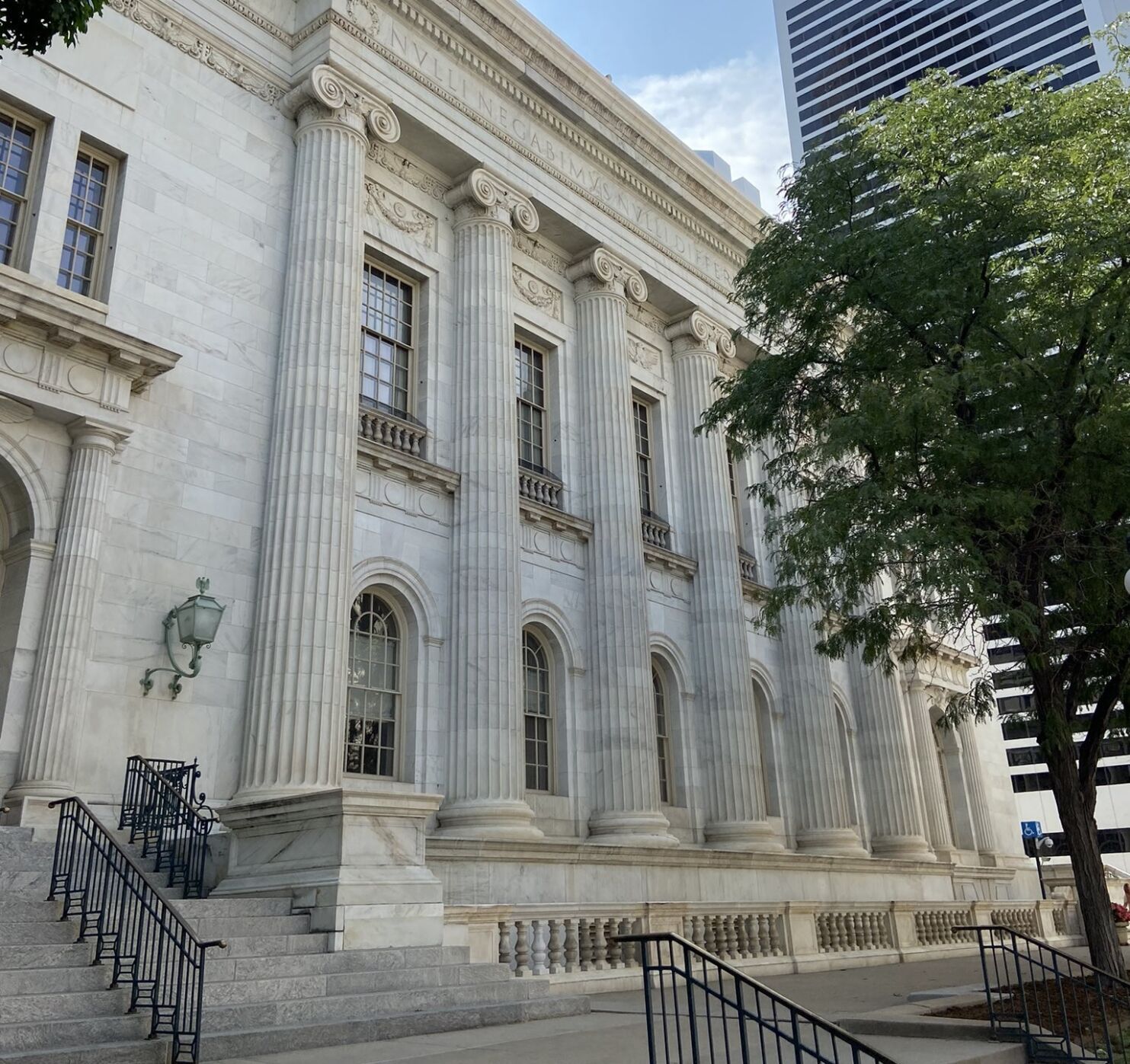
Welcome to Court Crawl, Colorado Politics’ roundup of news from the third branch of government.
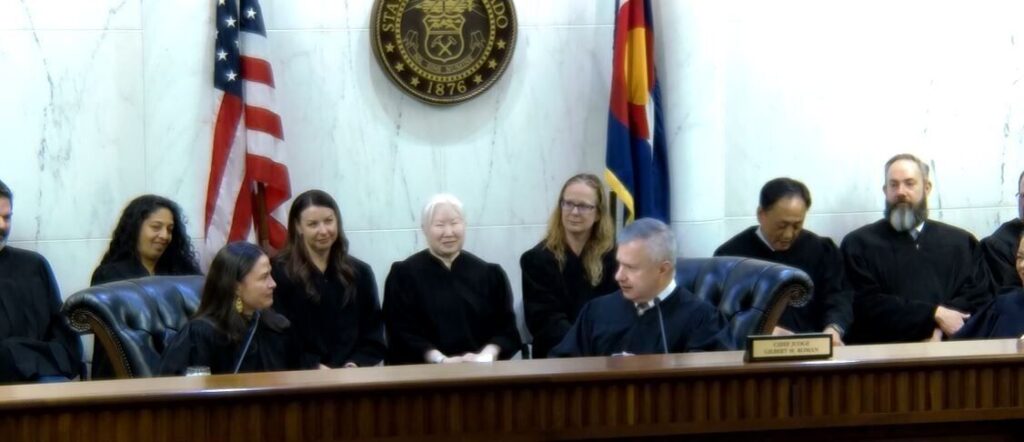
The nation’s highest court decided a First Amendment case out of Colorado, plus the state’s newest justice issued her first opinion since joining the Colorado Supreme Court last month.
Heard on appeal
• The state Supreme Court decided that news organizations were entitled to receive aggregate numbers of child abuse reports from three residential facilities, with the majority reasoning that the otherwise-confidential addresses were already in the public domain.
• By 4-3, the Supreme Court concluded a Denver detective didn’t violate the Miranda rights of a suspect because the man wasn’t in custody at the time he invoked his right to an attorney.
• Justice Susan Blanco wrote her first opinion since joining the court in early March. It was a solo concurrence in the Denver case that staked out a fairly aggressive position in favor of only deciding issues the parties to an appeal have presented to the court.
• The Supreme Court agreed to hear cases questioning whether Netflix subscriptions are subject to the state sales tax, whether minors can appeal judges’ child neglect decisions through their legal representatives and without the government, and when it’s acceptable to bring a deceased witness’s prior testimony into a criminal trial.
• The Supreme Court is also intervening in four ongoing cases, including a juvenile’s criminal prosecution in El Paso County, a case in Boulder County where the alleged victim was also a defendant in a different case, and a civil litigant’s belated request for a jury trial.
• The state’s Court of Appeals upheld the criminal convictions of former Mesa County clerk Tina Peters, but ordered a new sentencing for her.
• The Court of Appeals reversed a murder conviction in El Paso County due to a biased juror being allowed to serve.
In federal news
• The U.S. Supreme Court ruled that Colorado’s restriction on state-licensed professionals providing “conversion therapy” to LGBTQ minors must survive a much more demanding legal test because it implicates the First Amendment-protected speech of a counselor who engages in talk therapy with patients.
• It’s worth noting that, contrary to the statements of some public officials and the reporting of certain media outlets, the Supreme Court didn’t “strike down” Colorado’s conversion therapy law. The law, after all, prohibits conduct beyond speech. As next steps, the case will return to the U.S. Court of Appeals for the 10th Circuit, where the three-judge panel that just got reversed will have to apply the more stringent test to counselor Kaley Chiles‘ request for an injunction. If the panel decides the law is likely unconstitutional as applied to her, she’ll get her injunction. If not, there will probably be another appeal to the Supreme Court.
• The 10th Circuit decided that a cognitively impaired man’s risk that he would face harm or a forced lobotomy didn’t prevent his deportation to Mexico, as any such injuries wouldn’t amount to “torture.”
• The 10th Circuit once again warned lawyers to be careful after the court caught another attorney relying on a fake AI-generated case.
• The 10th Circuit found federal regulators used an appropriate methodology to calculate exit fees for entities that wish to leave the Tri-State utility co-op before their contract is over.
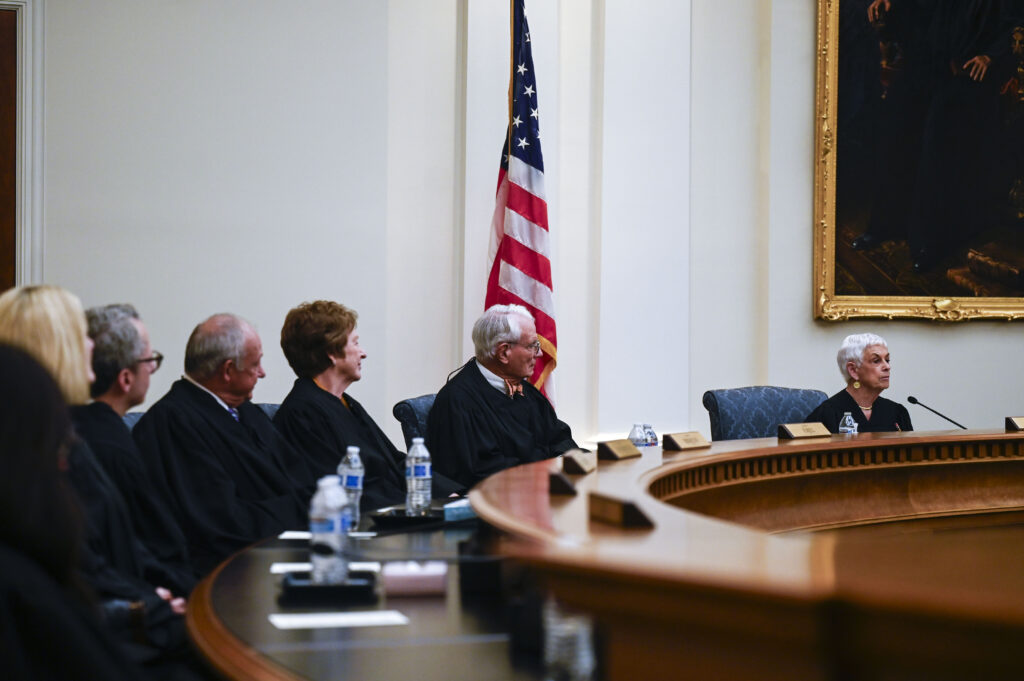
• The 10th Circuit is now slated to hear two cases out of Colorado in a full-court format, which is rare to happen even once in a given year. The judges voted to review whether Colorado’s law applying state interest rates to out-of-state banks violates federal law.
• It’s not necessarily good news for Judge Gregory A. Phillips, who authored both of the opinions that are now subject to all-judges review.
• A federal judge found a portion of Colorado’s law governing political parties’ primary elections unconstitutional, as it created too heavy a burden for the state GOP to opt out of the primary system.
• A judge dismissed the U.S. government’s lawsuit against Colorado and Denver, finding the government could not coerce states to assist in immigration enforcement under the 10th Amendment.
• A federal judge agreed that the U.S. Department of Justice performed a reasonable search for records related to family members of former President Joe Biden in response to a Colorado lawyer’s Freedom of Information Act request.
• A judge is once again moving to sanction lawyers for MyPillow CEO Mike Lindell for relying on a fake, seemingly AI-generated case in their legal filings.
• A federal judge ordered a man released from immigration custody immediately after an immigration judge disobeyed his orders to conduct a bond hearing.
• A former Mesa County student didn’t have his First Amendment rights violated when administrators imposed minor discipline in response to his disruptive conduct, a judge decided.
Vacancies and appointments
• There are three finalists to succeed now-Supreme Court Justice Susan Blanco in her former role as a judge in the Eighth Judicial District (Larimer and Jackson counties): Magistrate Kara E. Clark, Michael W. Deschenes, and Trenton W. Ghoram.
Miscellaneous proceedings
• A Denver judge declined to dismiss a lawsuit against Gov. Jared Polis over the disclosure of data to immigration authorities.
• Applications are due by April 30 for those organizations seeking $2.1 million in grants from the Judicial Department to assist low-income people experiencing family violence.
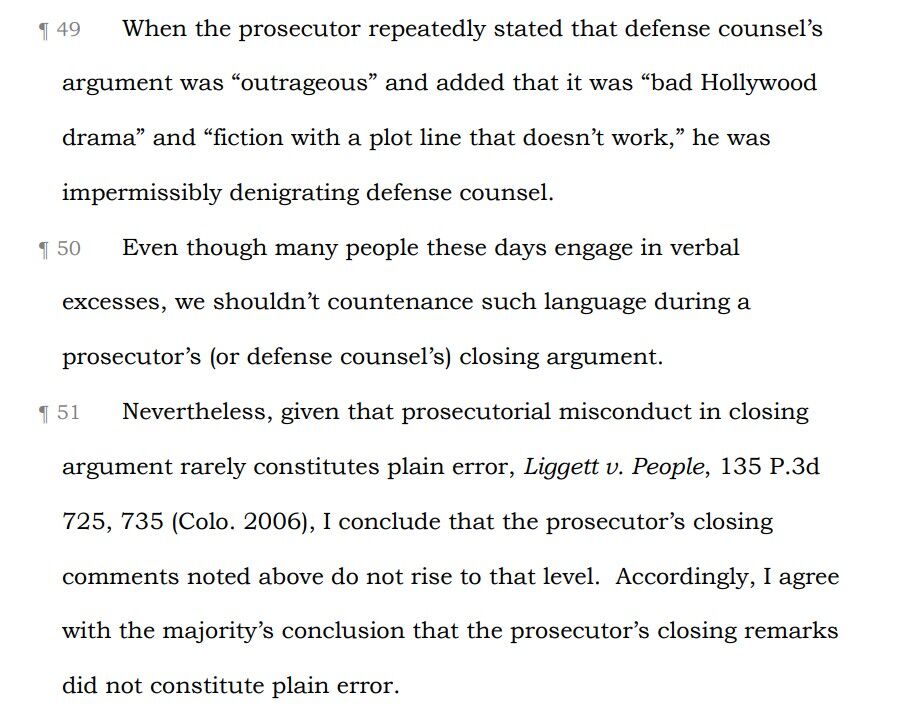
• Although Judge Daniel M. Taubman of the state’s Court of Appeals found the comments didn’t merit reversal of a defendant’s conviction, he specifically called out a Weld County prosecutor’s characterization of the defense counsel’s “bad Hollywood drama” as an example of rhetoric to avoid:

Federal judge green-lights civil trial against ex-Fort Collins DUI officer
Michael Karlik
michael.karlik@coloradopolitics.com
Updated 2 days ago
A federal judge ruled on Thursday that Fort Collins’ former “DUI officer” will face a civil trial for allegedly investigating a motorist for impaired driving without any reasonable suspicion to do so. In recent years, several people arrested by Officer...

Colorado Supreme Court suspends Mesa County judge pending misconduct investigation
Michael Karlik
michael.karlik@coloradopolitics.com
Updated 22 hours ago
The Colorado Supreme Court suspended Mesa County Court Judge Michael J. Grattan on Thursday amid a misconduct investigation. The court’s Sept. 10 order gave Grattan 21 days to explain why his paid suspension should not continue through the end of...
Colorado Supreme Court changes course, dismisses case about special district bonds
Michael Karlik
michael.karlik@coloradopolitics.com
Updated 22 hours ago
The Colorado Supreme Court declined on Friday to decide a dispute between a large-scale Commerce City development and the various districts financing it, after initially showing interest in the ongoing case. Colorado has roughly 2,800 special districts, which are local...

10th Circuit tosses GEO Group’s pretrial appeal in human trafficking lawsuit
Michael Karlik
michael.karlik@coloradopolitics.com
Updated 3 days ago
The Denver-based federal appeals court dismissed an attempt by The GEO Group on Wednesday to appeal a trial judge’s non-existent decision two months before the company is scheduled to face a civil trial over alleged trafficking violations at the Aurora...
Denver sues Trump to block armed ICE agents from polling sites
Deborah Grigsby
deborah.smith@denvergazette.com
Updated 3 days ago
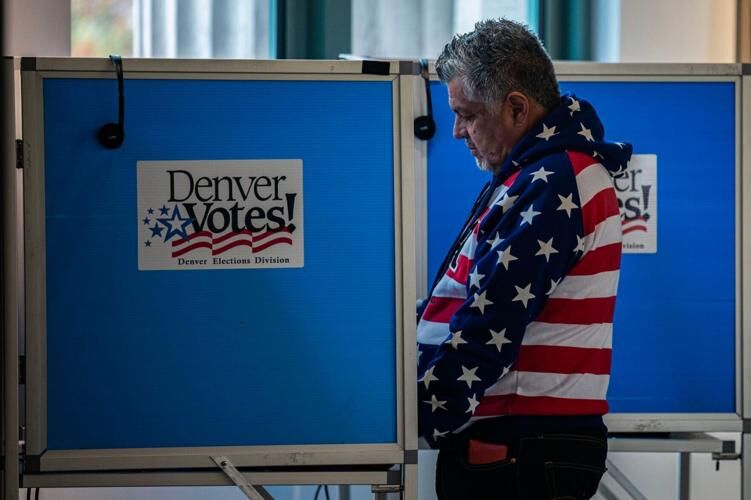
The city of Denver, along with several groups, sued the Trump administration Thursday, seeking to block U.S. Immigration and Customs Enforcement officers who are armed from polling sites during the upcoming midterm elections. In fact, there are no official orders...
Federal judge takes no action against ICE in Colorado after hearing about mistakes, not ‘blatant violations’
Michael Karlik
michael.karlik@coloradopolitics.com
Updated 20 hours ago
A federal judge declined to take action against U.S. Immigration and Customs Enforcement on Thursday after hearing that a pattern of alleged lawbreaking amounted to mistakes and a misunderstanding of the government’s position in court. For nearly a year, Colorado’s...
Colorado doctors, dentists challenge state law on gender‑transition services in new federal lawsuit
Marissa Ventrelli
marissa.ventrelli@coloradopolitics.com
Updated 17 hours ago
A group of Christian doctors and dentists has filed a federal lawsuit challenging a Colorado law they say requires them to provide gender‑transition services that conflict with their religious and ethical beliefs. The lawsuit, filed by the Christian Medical and...
Federal judge directs plaintiff to revise complaint alleging Denver officers’ constitutional violations
Michael Karlik
michael.karlik@coloradopolitics.com
Updated 20 hours ago
A federal judge directed a plaintiff to revise his allegations on Wednesday to more precisely state what two Denver officers and the city itself allegedly did to violate his constitutional rights by facilitating his prosecution for murder until prosecutors dropped...
Lawsuit challenges Douglas County commissioners’ ballot actions
Nicholas Fogleman
nicholas.fogleman@denvergazette.com
Updated 3 days ago
A new lawsuit against Douglas County commissioners seeks to invalidate the board’s intervention in efforts to expand the commission from three members to five and restore the original ballot language approved by more than 20,000 petition signers. The suit marks...
Federal judge explores new sanctions against ex-Colorado judicial discipline director
Michael Karlik
michael.karlik@coloradopolitics.com
Updated 23 hours ago
A federal judge on Wednesday directed Colorado’s former judicial discipline director, for the third time this year, to explain why she should not sanction him for his latest conduct in his litigation against the state’s judiciary. Christopher S.P. Gregory, who served...
PREV
PREVIOUS

Striking JBS workers to return on promise of talks
Workers at one of the nation’s largest meatpacking plants have agreed to return to work and halt a three-week strike after plant owner JBS USA agreed to resume negotiations, labor union representatives announced The strike by thousands of workers at the Swift Beef Co. plant in Greeley began on March 16 in coordination with the […]
El Paso County defendant's speedy trial rights violated, Colorado justices find in overturning convictions
The Colorado Supreme Court concluded on Monday that an El Paso County prosecutor made an unjustified decision to file a mid-case appeal, pushing the trial beyond the legal deadline and requiring that the defendant’s convictions be overturned. In Colorado, the government generally must bring criminal defendants to trial within six months of a not-guilty plea, […]