

‘Larger than life’ and ‘logistically challenging:’ Getting to know wolverines and Colorado’s restoration plan
Last month inside a Denver conference room, as the Colorado Parks and Wildlife Commission moved to the next agenda item, a whisper could be heard.
“I’m excited for this one.”
Bob Inman stepped to a microphone.
“Colorado has many remarkable species of wildlife,” he said, “but it’s been missing one of its most mysterious and fascinating for over a century now.”
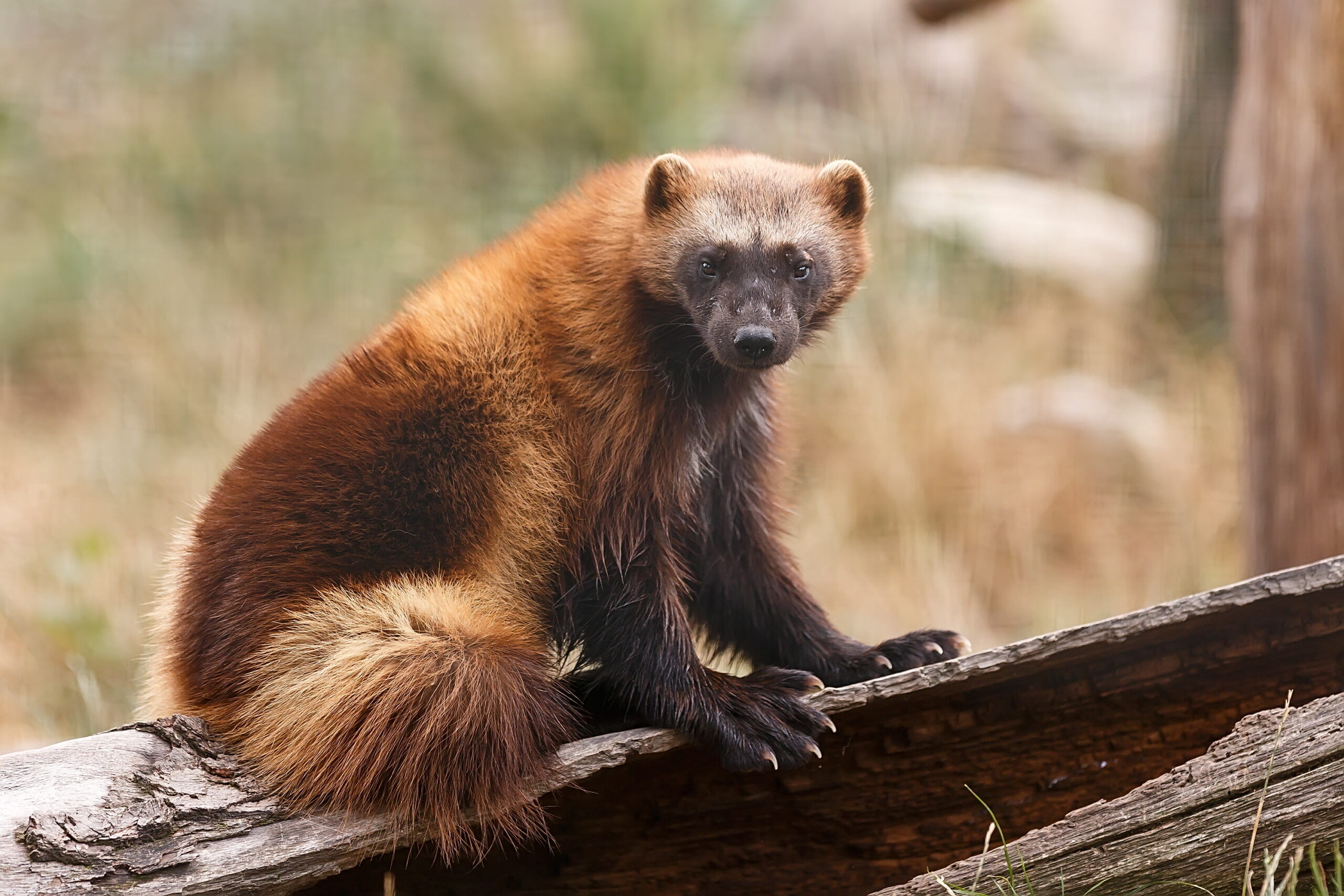
The wolverine is set to return to the state, following 2024 legislation that cleared the way for the recently released 106-page restoration plan.
Inman was at the CPW Commission meeting to present the plan, which draws on lengthy research and knowledge that he has spent much of his career building. Considered one of the world’s foremost wolverine experts, CPW hired Inman to launch the complex effort.
Some quick history
By the early 1900s, it’s believed hunting and poisoning wiped out wolverines across Colorado and much of their native, western lands. Over the decades recovery was noted across the elusive creature’s North American range, extending from Canada south into Washington, Idaho, Montana and northwest Wyoming.
But it seemed low, unsuitable desert between that range and Colorado kept the cold-adapted wolverine away from this state ー until 2009. That was when a collared subject out of the Tetons was photographed at Rocky Mountain National Park. It was the state’s first verified sighting in 90 years.
By then, there had long been interest in returning wolverines to Colorado. Canada lynx took priority in a 1998 plan.
Why Colorado?
The restoration plan represents “arguably the most significant, positive step forward we can make for wolverine conservation in the Lower 48,” Inman said in his presentation to CPW commissioners.
Colorado, he noted, “is the largest block of unoccupied historic range.” The plan estimates about 18,600 square miles of habitat across snowy elevations where the furry, big-footed wolverine scavenges, hunts and makes home.
Colorado is home to more 14,000-foot peaks than any other state ー alluding to the special suitability for the alpine species. With the altitude “and rugged terrain where north slopes hold snow, (Colorado) may endure climate change better than many other areas of wolverine distribution,” Inman said.
The plan states “food resources here should be abundant,” noting “large populations of elk, mule deer and moose.” Marmots figure to be wolverines’ top prey in Colorado.
More about their survival
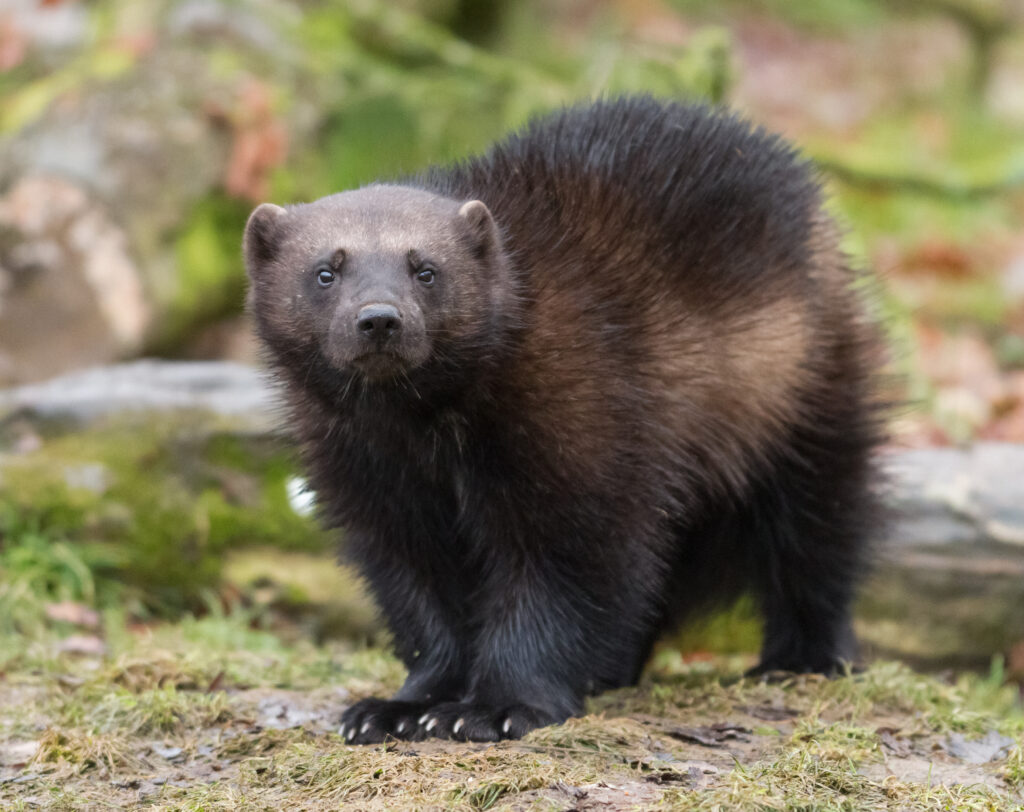
A member of the weasel family but resembling a small bear ー typically weighing between 20-30 pounds ー CPW describes wolverines as “larger than life” and “famous for their boldness, toughness and formidable attitude.” Yes, they might take on one of those much bigger ungulates, but wolverines more commonly seek carcasses that they can smell from far away or buried deep in snow.
They travel as they must.
“It’s one of the most amazing facts about wolverines,” Inman said. “Their home range is off the charts for a 30-pound animal.”
An adult male might mark his territory across 300 square miles and “patrol it regularly,” Inman said. He said the home range for an adult female might be closer to 100 square miles as she stays closer to her young.
“Wolverines give birth at an odd time of year, midwinter,” Inman continued in his CPW Commission presentation. And they “give birth in amazing places,” he said. He showed a picture of a den amid “a tangled mess of logs” left by an avalanche, “with about 10 feet of snow on top of it.”
While “odd” compared with other animals, the timing of offspring has to do with food availability, Inman explained: “They scavenge and cache food all winter, which fuels the nursing of newborns, and then they hunt marmots and other small game during brief summer periods, and those summer foods fuel juvenile growth.”
But juveniles are far from a guarantee.
“Litter loss is very common,” Inman said. “Essentially, wolverines take a chance every year that enough food will be available.”
That loss, coupled with low reproduction rates to begin with and individuals’ vast range “naturally results in extremely low densities,” Inman said. Estimates place 300 total across Montana, Idaho, Washington and Wyoming.

The human dimension
The plan foresees 100 wolverines in Colorado someday ー “likely similar to historical capacity.” But the plan also recognizes a human capacity different from history: “Colorado has a higher density of people and roads than almost any other area of wolverine range.”
Livestock depredation has been at the center of Colorado’s highly controversial and stalled wolf reintroduction plan. But the plan for wolverines points to hardly any reports of them killing cattle and sheep elsewhere.
Inman emphasized wolverines’ low density ー a landscape the size of Rocky Mountain National Park might support four or five, he said ー their “solitary” nature and preference for extreme terrain away from typical grazing land.
“Having said that, there will eventually be some depredation, primarily on domestic sheep, and when it happens it can be significant to individual producers,” Inman said. “So, it’s important we have a fair depredation compensation rule.”
The restoration plan also depends on a ruling from U.S. Fish and Wildlife ー a 10(j) rule that would classify reintroduced wolverines as “experimental” rather than endangered. The ruling is meant to provide “flexibility” in management and “could streamline the consultation process and ease concerns regarding ongoing land uses,” according to the plan.
The plan identifies “overlap of primary wolverine habitat with ski resorts” that “may trigger (Endangered Species Act) consultation.” That overlap was a key issue of lynx restoration in Colorado going back to the ’90s.
The plan also identifies popular fourteener hiking that “could degrade habitat to some degree in highly used areas.”
A ‘logistical’ reintroduction
With a 10(j) ruling, the plan calls for translocating 15 wolverines a year for three years ー ideally from Canada, pending an agreement, and on to three zones around western Colorado.
It would not be as simple as letting wolverines loose “out of a box,” Inman said in detailing “an approach that will be more logistically challenging but will have the potential for greater success.”
He returned to the point of adult females mostly getting pregnant every year and that difficult, winter timing of birth. The plan: For some of the captured to be kept at a facility for nurturing and hopeful birthing and for others to be released at a den stocked with food also in hopes of success.
The ultimate hope: For females to stick around Colorado and not attempt to roam back home ー “a big issue for a species that can travel like wolverines,” Inman said. Hence the timing of translocation around birth. The thinking, Inman said, is “the instinct of the mother is stronger to take care of the young than it is to start moving back to their old area.”
Inman continued: “We’re going to have to be very careful in how we go about releasing males.” Males, he said, were “an important cause of juvenile mortality” if unrelated.
The aim is to capture males from the same location of females ー “likely to be a mated pair,” Inman said. “And the presence of these males could even benefit the survival of their offspring.”
The plan outlines a “learn and adapt framework.”
“I need to emphasize there’s no blueprint for how to do this with wolverines,” Inman said. “These are questions no one knows.”


Healthcare Freefall: Longer drives, fewer options for maternity care in Colorado
Thelma Grimes
thelma.grimes@coloradopolitics.com
Updated 20 hours ago
Editor’s Note: Colorado’s healthcare system is entering a period of accelerating instability — a “tsunami,” as multiple leaders describe it — driven by collapsing hospital finances, shrinking Medicaid reimbursements, disappearing services and a political fight over who is responsible for...
Polis requests federal disaster declaration for Colorado wildfires and floods
9News
9news@coloradopolitics.com
Updated 14 hours ago
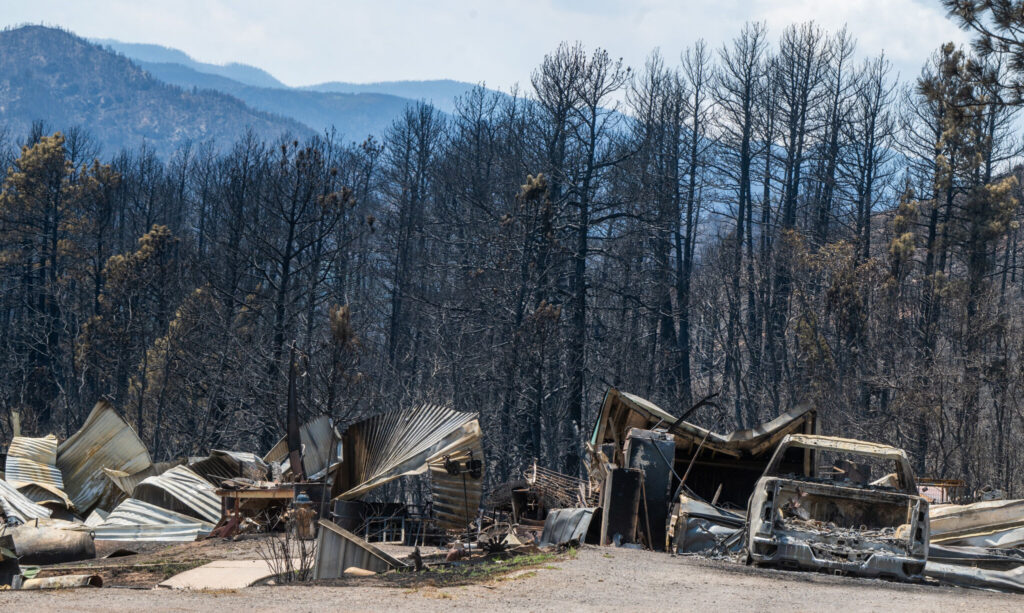
On Sunday, Gov. Jared Polis officially requested a Major Disaster Declaration from President Donald Trump and the Federal Emergency Management Agency to support recovery from two wildfires and the subsequent flooding and debris flows on both burn scars. Polis requested a declaration...

Operation Foster helps ensure troops can return home to their pets
Mary Shinn
mary-shinn@coloradopolitics.com
Updated 20 hours ago
As more troops have been sent overseas, more pets are in need of temporary care while they await their owner’s return home. Operation Foster, a nationwide nonprofit, helps provide some of that care by connecting service members with volunteers willing...
Operation Foster helps ensure troops can return home to their pets
Mary Shinn
mary-shinn@coloradopolitics.com
Updated 20 hours ago
As more troops have been sent overseas, more pets are in need of temporary care while they await their owner’s return home. Operation Foster, a nationwide nonprofit, helps provide some of that care by connecting service members with volunteers willing...
Castle Pines to hear annexation policy following moratorium on new requests
Nicholas Fogleman
nicholas.fogleman@denvergazette.com
Updated 21 hours ago
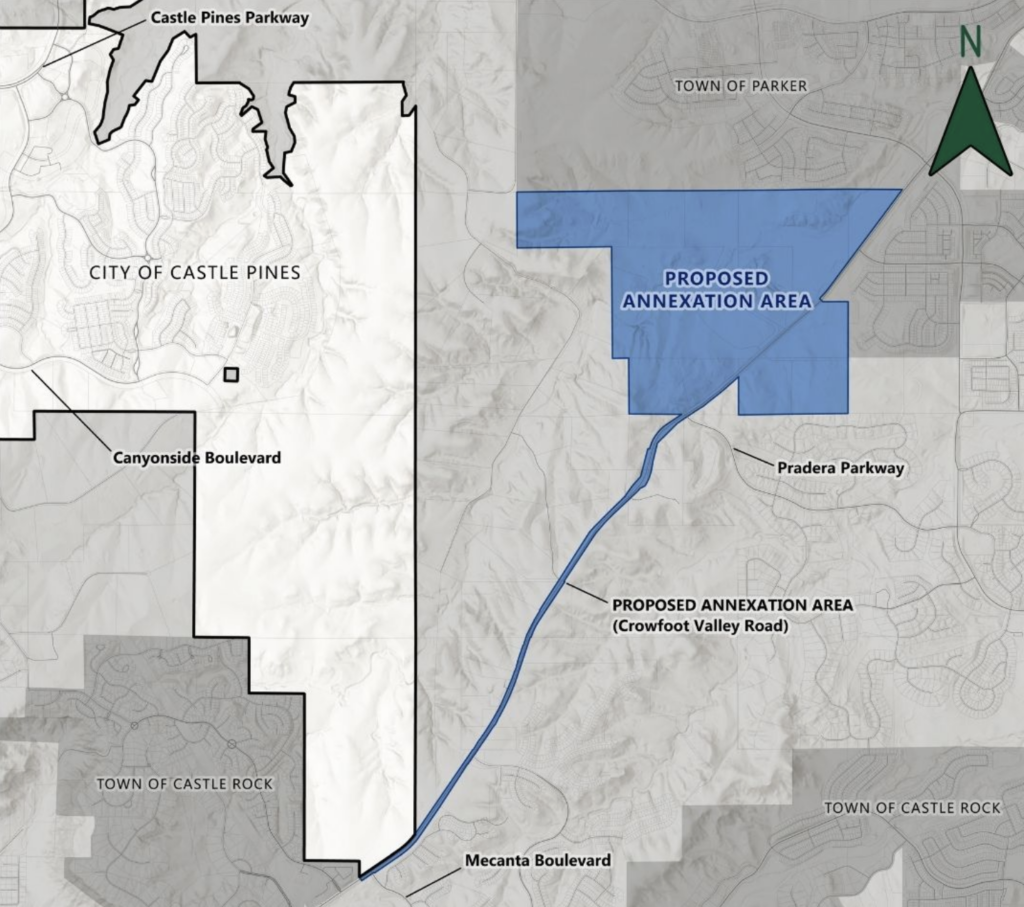
The Castle Pines City Council is set to consider a proposed annexation policy Tuesday that would establish the city’s first formal framework for reviewing future annexation requests. The policy emerged after the Crowsnest annexation proposal prompted significant public debate and...

Aurora lawmakers to discuss first of new data center regulations
Kyla Pearce
kyla.pearce@gazette.com
Updated 20 hours ago
Aurora’s lawmakers will discuss the specifics of data center regulations Monday night, specifically focusing on an evaporative cooling ban and zoning changes. At the last council meeting, council members approved a resolution directing city management to update data center development...

Why local police departments are left to grapple with electric vehicle trends
Nicholas Fogleman
nicholas.fogleman@denvergazette.com
Updated 21 hours ago
Littleton officials are weighing new regulations for electric bicycles as cities and counties across the metro Denver area increasingly grapple with safety concerns involving e-bikes, electric motorcycles and other motorized vehicles that often fall into gray areas of Colorado law....

Colorado schools reopen with measles vaccination rates below protective threshold
Nico Brambila
nico.brambila@denvergazette.com
Updated 20 hours ago
Colorado is entering the new school year without active measles transmission, but health officials remain concerned as kindergarten MMR coverage sits at just 87.8% and most counties fall below the 95% threshold considered protective against outbreaks. “These declining vaccination rates,...

Jeffco Public Schools board votes to put $133M mill levy override before voters
Matt Kyle
matt.kyle@denvergazette.com
Updated 20 hours ago
Voters in Jefferson County will decide this November whether or not to approve a $133 million mill-levy override that Jeffco Public Schools officials say is needed to cover funding shortfalls in the district. The Jeffco Public Schools Board of Education...
Democratic candidate in Colorado’s 4th CD urges long-term water planning
Marianne Goodland
marianne.goodland@coloradopolitics.com
Updated 2 days ago
The Democrat hoping to become the next representative of Colorado’s 4th Congressional District on Thursday made her case on the final day of Colorado Water Congress in Steamboat Springs. Eileen Laubacher, who spent 34 years in the U.S. Navy and...
PREV
PREVIOUS

Unsalaried legislature in New Mexico asks voters to reconsider volunteer status | OUT WEST ROUNDUP
NEW MEXICO Voters to decide on paying legislators SANTA FE — Members of the nation’s only unsalaried legislature are asking voters to reconsider their volunteer status that has endured for 114 years since statehood in New Mexico. The state Senate on Feb. 17 narrowly endorsed a constitutional amendment that would do away with the state’s […]

Iran names Khamenei's son to succeed him, signaling no letup in war as oil prices surge
DUBAI, United Arab Emirates (AP) — Iran named the hard-line Ayatollah Mojtaba Khamenei to succeed his late father as supreme leader on Monday, signaling no letup in the war launched by the United States and Israel. Oil prices surged as Iran attacked regional energy infrastructure and the U.S. and Israel bombed targets across Iran. The […]