

‘Beware!’ 10th Circuit judge calls for full-court review of precedent on police searches without arrest
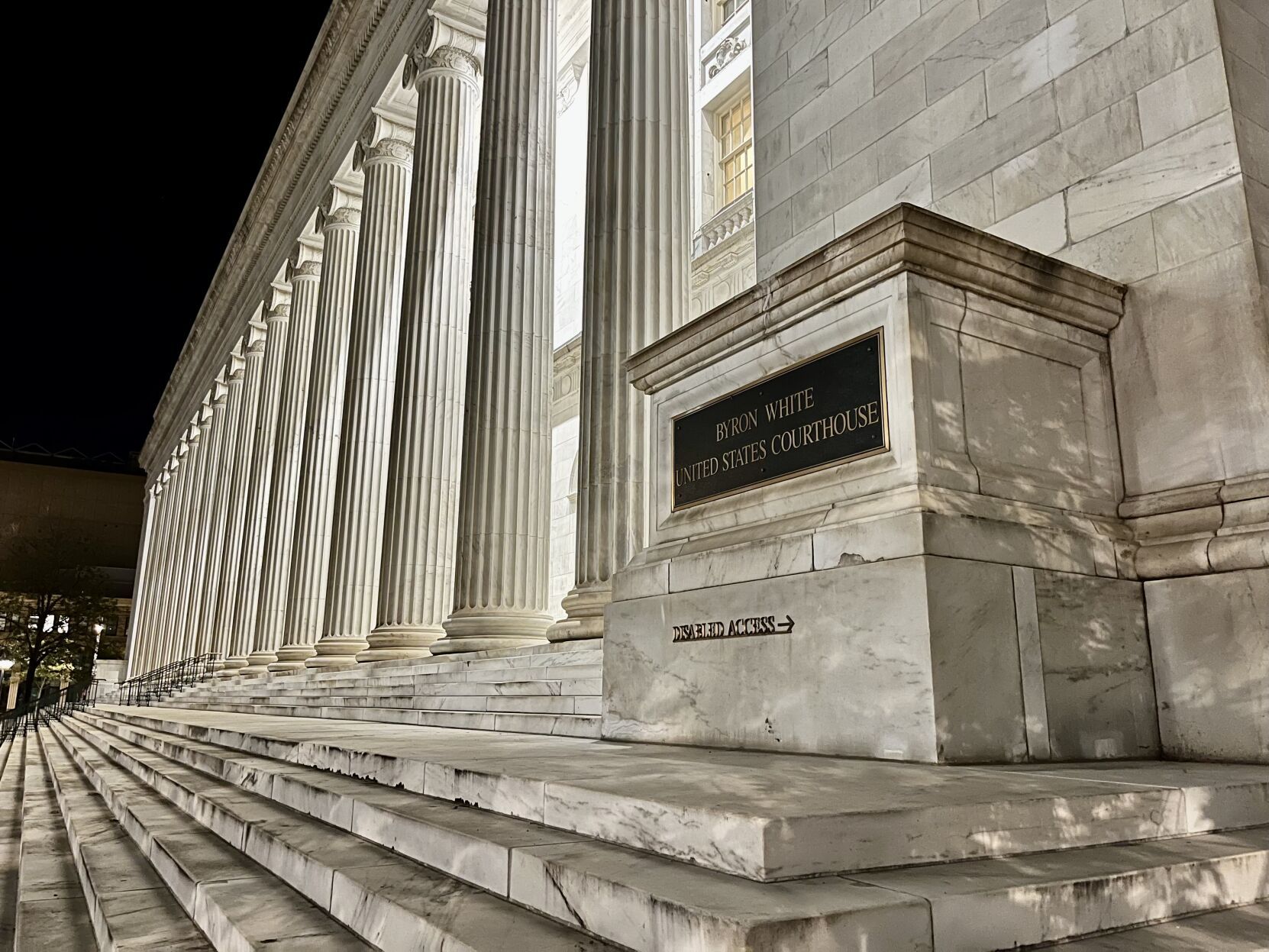
The Colorado-based federal appeals court green-lit an unreasonable search claim against a Denver police officer on Tuesday, while one judge called for full-court reconsideration of a 44-year-old precedent limiting law enforcement’s ability to search suspects even when probable cause exists to arrest them.
William Montgomery’s lawsuit against Officer Armando Cruz featured several unusual developments, but the question on appeal was straightforward: If an officer has probable cause to formally arrest a suspect, but instead merely detains them while investigating the alleged crime, can the officer still search inside the suspect’s pockets?
No, concluded a three-judge panel of the U.S. Court of Appeals for the 10th Circuit.
“Given the safety risk and possible destruction of evidence, Officer Cruz could have searched Mr. Montgomery’s pockets incident to an arrest,” wrote Judge Robert E. Bacharach in the Jan. 6 opinion. “But Officer Cruz admits that he hadn’t arrested Mr. Montgomery before conducting the search.”
Senior Judge Bobby R. Baldock wrote separately to agree that the 10th Circuit’s own precedent required that outcome. However, he deemed it “farcical” that a police officer may arrest a suspect with probable cause and search them in compliance with the Fourth Amendment, yet be liable for a constitutional violation if the officer delays making a formal arrest and the suspect is ultimately found to be innocent.
“Law enforcement officials in the Tenth Circuit beware!” he wrote. “Where probable cause to arrest a suspect exists, make sure to arrest the suspect promptly before conducting any further investigation lest such investigation exonerate the suspect.”
Case: Montgomery v. Cruz
Decided: January 6, 2026
Jurisdiction: U.S. District Court for Colorado
Ruling: 3-0
Judges: Robert E. Bacharach (author)
Joel M. Carson III
Bobby R. Baldock (concurrence)
Montgomery has filed a series of state and federal lawsuits in recent years based on a similar pattern of events: He enters a big-box store, pays for merchandise, fails to produce his receipt when asked, and then files suit after security detains and investigates him.
During an October 2018 trip to a Walmart store in northeast Denver, Montgomery similarly refused to show his receipt upon exiting. Cruz was outside the exit and prevented Montgomery from leaving. Montgomery was agitated and Cruz suspected he had shoplifted.
Cruz told Montgomery that he was detaining him. Another officer arrived, and they placed Montgomery in handcuffs. Cruz patted down Montgomery for weapons and removed items from his pocket. He also removed Montgomery’s driver’s license from his wallet. Montgomery responded, “Yeah … I tried to give it to you.”
The officers placed Montgomery in a police vehicle. After reviewing surveillance footage, the officers determined that Montgomery had not shoplifted.
In seeking to end Montgomery’s unreasonable search claim in his favor, Cruz invoked qualified immunity, a judicially created shield for government employees that applies unless they violate a person’s rights as clearly established by prior court decisions.
In February 2023, then-U.S. Magistrate Judge Michael E. Hegarty noted it was unclear whether Cruz, in merely detaining Montgomery rather than arresting him, patted down the outside of Montgomery’s jacket pocket for weapons as he was allowed to do, or whether Cruz immediately searched the inside.
However, Hegarty concluded Cruz had “arguable probable cause” to arrest Montgomery for shoplifting, meaning there was no clear prohibition against a search of the pocket. Further, because Montgomery “explicitly told Defendant that he was going to give Defendant his ID anyway,” the search of Montgomery’s wallet was also valid.
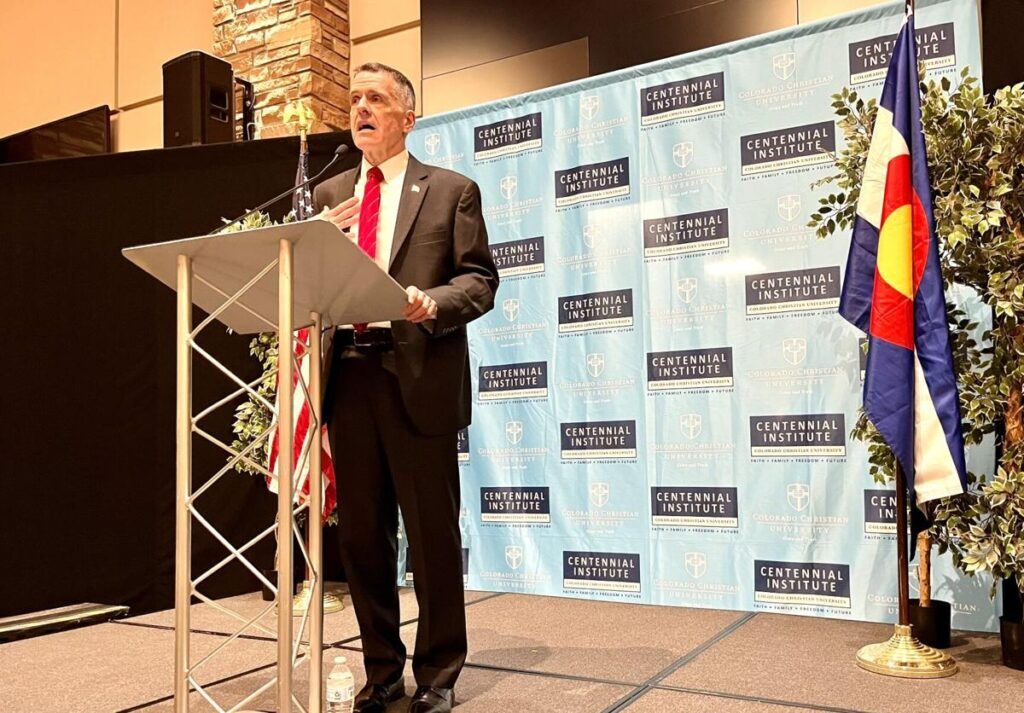
Montgomery, representing himself, objected to Hegarty’s recommendation to grant qualified immunity to Cruz. In a rare move, U.S. District Court Chief Judge Philip A. Brimmer agreed with Montgomery and rejected the recommendation. He found that a jury would have to decide whether Cruz patted down the jacket pocket before reaching inside to remove items. If not, that would be a clear Fourth Amendment violation since Montgomery was not under arrest.
As for the removal of his driver’s license, “Mr. Montgomery’s statement regarding consent occurred after Officer Cruz seized Mr. Montgomery’s ID card,” wrote Brimmer. “The video provides no evidence that Mr. Montgomery consented to the search of his pocket containing his wallet before Officer Cruz removed the wallet from Mr. Montgomery’s pocket.”
During oral arguments to the 10th Circuit panel, the Denver City Attorney’s Office conceded that Cruz had not arrested Montgomery prior to searching him, but argued that he had ample grounds to arrest at the time of the search. Montgomery’s lawyers, whom the 10th Circuit appointed to represent him due to the “significant legal issues” involved, countered that the defense’s proposal would blur the distinction between brief investigatory stops and full arrests.
“An arrest signifies a significant event in the criminal justice process,” said attorney Erin Gust, referring to the requirement that police inform suspects of their right to counsel and to silence. “What Officer Cruz is arguing for allows the government to have the benefits of an arrest, but what of these rights that attach for the suspect?”

In the panel’s opinion, Bacharach, writing for himself and Judge Joel M. Carson III, concluded that unless he arrested Montgomery, Cruz could not have reached into Montgomery’s pocket without performing a pat-down first.
Baldock, in his concurrence, noted the outcome was dictated by the 10th Circuit’s 1982 decision in United States v. Ward. There, the court concluded that a federal agent with probable cause of a crime nonetheless lacked the authority to pat down the suspect because there was no indication the suspect was armed and dangerous. In other words, the more restrictive standards for pat-down searches apply when an officer can arrest someone, but does not.
“As such, I am left with no choice but to reluctantly concur in the Court’s judgment that the Fourth Amendment law it today endorses was clearly established at the time of Defendant’s encounter with Plaintiff,” he wrote. “Outnumbered two to one, no useful purpose would be served by indulging myself and arguing the rule this Court validates today was not clearly established.”
However, Baldock urged the 10th Circuit to undertake a rare “en banc” review of the Ward decision with the full court. Only then can the 10th Circuit overrule its own precedents.
“In the meantime,” he continued, “law enforcement in and around the Aurora, Colorado area should be aware that Plaintiff appears to welcome encounters with the police in the hope that any such encounter will produce fodder for a civil rights lawsuit.”
The case is Montgomery v. Cruz.


Misconduct complaints from ex-Colorado judicial discipline director dismissed against federal judges
Michael Karlik
michael.karlik@coloradopolitics.com
Updated 11 hours ago
The administrative body for the Denver-based federal appeals court upheld a finding last week that misconduct complaints against Colorado’s chief federal trial judge and the chief appeals judge warranted dismissal and appeared to be a “litigation tactic” by the complaining...

First-ever Red Rocks naturalization ceremony draws most diverse group of new citizens
Michael Karlik
michael.karlik@coloradopolitics.com
Updated 14 hours ago
Colorado’s federal trial court held its first-ever naturalization ceremony for nearly 300 new citizens on Thursday at Red Rocks Park and Amphitheater. “We’re doing it to commemorate the 250th anniversary of the Declaration of Independence and the United States. Red...
10th Circuit finds no fair housing violation by Littleton landlord for worker’s alleged rape of tenant
Michael Karlik
michael.karlik@coloradopolitics.com
Updated 2 days ago
The Denver-based federal appeals court concluded on Monday that Littleton’s housing authority could not be held liable for a maintenance worker’s alleged rape of a tenant, as the worker’s employment did not provide any special access to the victim. A...

Jeffco Public Schools sues Trump administration to protect funding after alleged transgender policies violation
Matt Kyle
matt.kyle@denvergazette.com
Updated 22 hours ago
In the wake of several threats by the Trump administration to revoke federal funding, Jeffco Public Schools filed a lawsuit against the Department of Education seeking to protect that badly needed money. Jeffco has been under investigation by the DOE’s...
Denver detox center did not violate man’s rights with 10-hour hold, 10th Circuit says
Michael Karlik
michael.karlik@coloradopolitics.com
Updated 3 days ago
The Colorado-based federal appeals court concluded on Tuesday that Denver’s detoxification facility did not violate a man’s rights by holding him against his will for 10 hours until his blood alcohol content was projected to reach zero. Unusually, Brian Garrett’s...

Federal judge clarifies ex-GOP treasurer candidate’s burden to prove defamation claims
Michael Karlik
michael.karlik@coloradopolitics.com
Updated 3 days ago
A federal judge clarified last week that businessman and former Republican statewide candidate Brian Watson will need to surmount a higher hurdle in proving his claim that a party guest’s alleged description of him as a “criminal” amounted to defamation....
Colorado board permits state to appeal injunction against arthritis drug price cap
Marissa Ventrelli
marissa.ventrelli@coloradopolitics.com
Updated 3 days ago
A Colorado board voted Friday to allow the Attorney General’s Office to fight an injunction against a price cap on a drug that treats arthritis. A U.S. district court judge had granted the company Amgen a preliminary injunction, temporarily blocking...

Federal judge rejects constitutional claims, ‘expressions of hatred’ by Club Q defendant
Michael Karlik
michael.karlik@coloradopolitics.com
Updated 4 days ago
A federal judge rejected a defendant’s claims that he received constitutionally ineffective assistance of counsel while facing federal hate crime and firearms charges for murdering five people at a Colorado Springs LGBTQ nightclub in 2022. Anderson Lee Aldrich is serving...

Divided 10th Circuit upholds Colorado congestion fee on car rentals
Michael Karlik
michael.karlik@coloradopolitics.com
Updated 3 days ago
The Denver-based federal appeals court concluded on Monday that a 2024 “congestion impact fee” that lawmakers imposed on short-term vehicle rentals did not conflict with a federal prohibition on certain airport-related charges. Beginning in the 1970s, Congress began limiting the...
10th Circuit dismisses woman’s lawsuit following 10-year attempt to undo restraining order
Michael Karlik
michael.karlik@coloradopolitics.com
Updated 7 days ago
The Denver-based federal appeals court rejected a woman’s challenge on Friday to a restraining order imposed on her more than a decade ago, finding that she cannot credibly claim she will be prosecuted for violating the restraining order through her...
PREV
PREVIOUS

Urban vs. rural, labor vs. business: Battles are brewing ahead of the 2026 Colorado legislative session
Grab your popcorn — it’s going to be an interesting 2026 legislative session in Colorado. There’s not much you can count on these days, but if you’ve been around the state Capitol long enough, you’ve probably seen your fair share of disagreements, both friendly and unfriendly — and you can be sure you’ll see even […]

Colorado encourages parents to ignore federal vaccine guideline changes
Colorado became the latest state to criticize the newly released federal guidance for childhood vaccines on Tuesday. The Colorado Department of Public Health and Environment released a statement rejecting the CDC’s new vaccine schedule and said Colorado’s approach “remains grounded in long-standing science, expert consensus, and transparency.” On Monday, the Department of Health and Human […]