

Candidate’s disturbing anti-animal agriculture history | Rachel Gabel
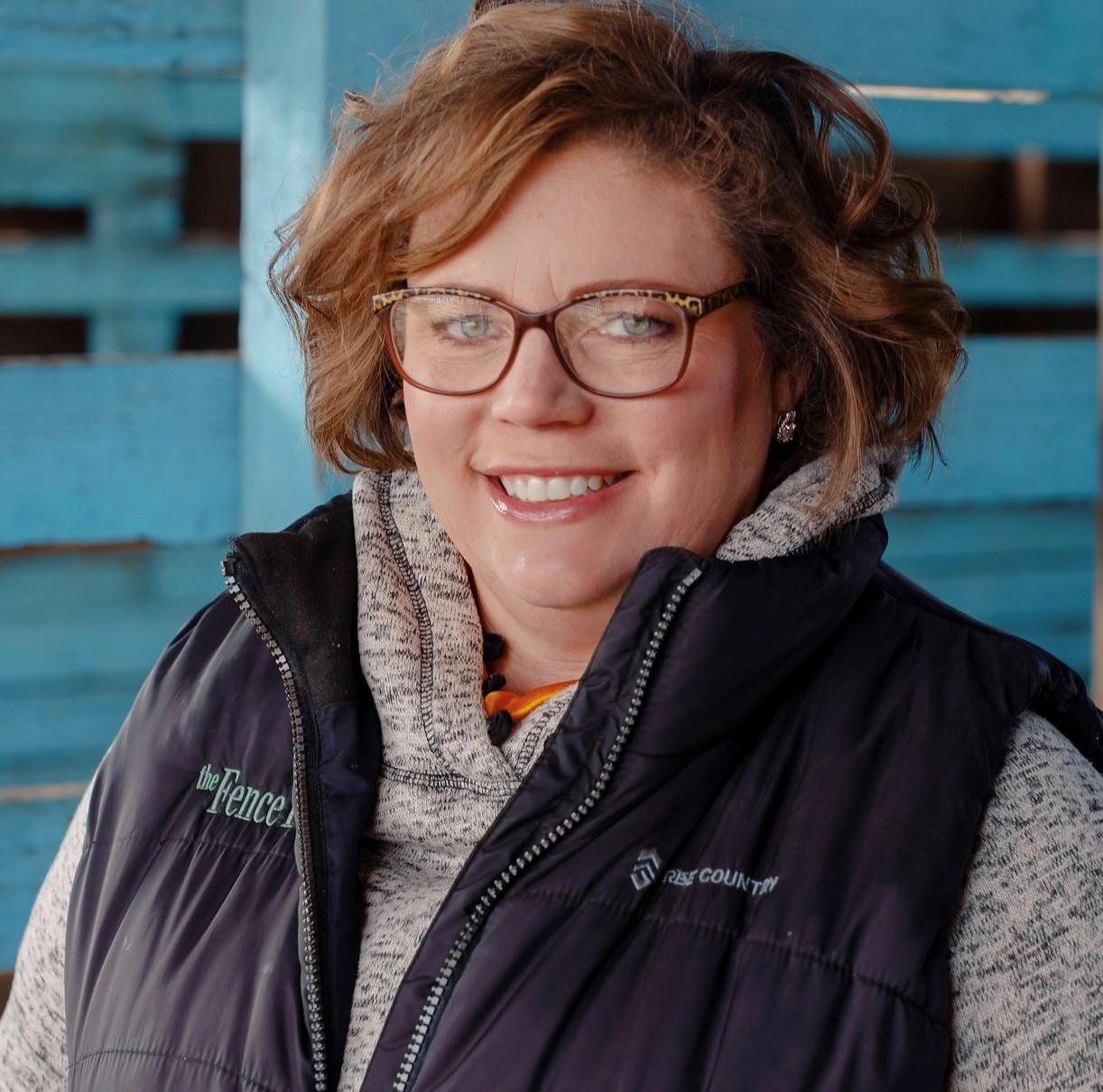
Rep. Manny Rutinel has busted out a cowboy hat for campaign photos and has thrown it into the ring to represent Colorado’s 8th Congressional District in D.C. He is endorsed by U.S. Sen. Cory Booker, a New Jersey democrat who serves on the Committee on Agriculture, Nutrition, and Forestry, where he works to “rein in the abuses of factory farms.”
Booker became the first vegan senator to serve on the committee in 2021, though his “vegan identity” has varied over the years. His lunch order is no business of mine, but he has been a champion of animal-rights-type causes and legislation, and it would appear that Rutinel perhaps hopes to follow his lead. This, of course, is a race to represent an electorate still flinching after nearly 8 years of Gov. Jared Polis’ anti-oil and gas and anti-ag agenda, and First Gentleman Marlon Reis’ undue influence on anti-animal ag causes.
Colorado’s 8th District, currently represented by Republican Gabe Evans, encompasses portions of agriculture powerhouse Weld County, as well as Adams and Larimer Counties. Weld County, according to 2022 Census of Agriculture data, is behind $2.3 billion (with a B) in ag products sold. Of that, $1.8 billion is paid out by ag producers to produce those commodities, largely in part to local economies. Cattle are king in Weld County, with forage, corn silage, wheat, corn, and sorghum all serving in the court and churning out more than a quarter of the state’s ag sales. For their own part, Adams County produces $94 million in ag products, primarily wheat, and Larimer produces $270 million in ag products, primarily in bovine form. That brings the three counties Rutinel would like to represent, contributing to a combined $2.6 billion in ag production of the state’s $8.95 billion in farm cash receipts.
The problem, though, is Rutinel’s anti-animal agriculture history.
In an interview with Kyle Clark, who I like more all the time, Clark asked Rutinel about the time in 2021 he told the Yale Big Ag and Antitrust Conference attendees that “animal agriculture is one of the biggest sources of suffering on the planet” and went on to call it “a horrific, exploitative industry.” In response, Rutinel called farmers and ranchers his friends and offered a rather Victor Marx-like non-answer that gives voters in CD-8, who contribute substantially to the state’s economy, no confidence.
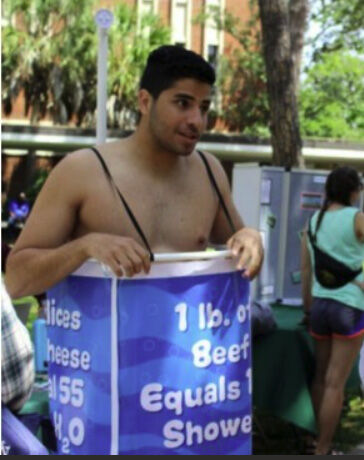
While at the University of Florida as an undergraduate, Rutinel protested animal-based food production by posing shirtless and draped in a PETA banner to make a point about the amount of water used in beef production. At Yale Law School, which was in 2022, dear readers, Rutinel spoke about transitioning producers away from animal agriculture by offering carbon offset credits. He also claimed “farmers are polluting a lot in animal agriculture, and if they switched to plant agriculture, they would emit much less while still producing great products that provide people with nutritious, delicious, and sustainable foods.” He said factory farms are “able to put out as much pollution as they want,” celebrated his cooperation with Mercy for Animals, and suggested that monitoring farms and ranches with satellite imagery to detect any “fishy” activities happening, like raising livestock. He said, “As it stands now, animal agriculture is a horrific, exploitive industry. It’s producing an incredible amount of harm, from chronic health conditions to pandemics, that affect farmers, laborers, animals, local communities, consumers, and people drinking water miles down the road.” He accused farmers of “cramming genetically homogenous animals into conditions that compromise their immune systems through stress” and said farm laborers would be better off without animal ag because they would no longer be “working with tortured animals.”
When he was appointed to the Colorado Legislature in 2023, he said at the University of Denver that those in the “meat and oil industry…they’re all scared and they’re trying to warn everybody about what I’m about to do.” Then he said, “maybe they’re right, maybe they should be a little scared.” He told students at DU’s law school that he became involved in politics in part due to how animals are treated in agriculture and, according to reporting by Jesse Paul in 2025, called the pair of Denver ballot measures to end slaughterhouses in Denver and to ban fur sales “really awesome.” He has yet to serve a full term in the state legislature.
Factory farming is a buzzword term thrown around by those opposed to production agriculture. It harkens back to a really horrible Chipotle ad several years ago that offered a cartoon version of cows riding a conveyor belt into a factory and exiting as a box. There is room in the American agriculture industry for all types of production methods but there is no room for an attack on the industry that feeds, fuels, and clothes the world.
In 2023, Sen. Byron Pelton invited Rutinel to have his questions and concerns about animal agriculture answered directly by someone in the industry. Over the course of a more than 2-hour visit, Pelton said Rutinel offered a number of click bait-type talking points- that poultry producers cut the beaks off the birds and cows that are AI bred are abused because they don’t provide consent – and wasn’t interested in the truth. That lack of interest in the truth as recently as 2023 paired with his inability and unwillingness to offer an answer with accountability is enough to make those in the cattle capital wonder if he’s all hat and no cattle.
Rachel Gabel writes about agriculture and rural issues. She is assistant editor of The Fence Post Magazine, the regionís preeminent agriculture publication.

A right to buy a product? | Hal Bidlack
Hal Bidlack
hal-bidlack@coloradopolitics.com
Updated 1 day ago
A recent story in Colorado Politics caught my eye, as I learned of a “citizen initiative” that has qualified for the November ballot. It seems supporters of Initiative 177 have collected enough signatures, 146,165 legitimate ones out of a total...

A daring and fearless rescuer — is afraid of a debate | Dick Wadhams
Dick Wadhams
dick-wadhams@coloradopolitics.com
Updated 4 days ago
Victor Marx, the Republican nominee for governor who says he can exorcize demons and who claimed he has fearlessly rescued 45,000 women and children during 150 “high-risk” missions around the world, appears to be intimidated by the notion of debating...

Colorado’s ballot-initiative process again a battleground for deep pockets, special interests — not the people | Miller Hudson
Miller Hudson
miller-hudson@coloradopolitics.com
Updated 2 days ago
The Oxford English Dictionary defines a constitution as, “The set of fundamental principles according to which a state is constituted and governed, a body of rules prescribing the major elements of the structure and activities of any organization.” Somewhere in...

Proposed EPA changes could save truckers billions | Rachel Gabel
Rachel Gabel
rachel-gabel@coloradopolitics.com
Updated 4 days ago
Agriculture is in distress across nearly every segment across much of the nation, and certainly to a more dire degree in the western United States. If it were not a historic drought, some pressures could be eased. Others can be...

Colorado Democrats, your time is coming | Jon Caldara
Jon Caldara
jon-caldara@coloradopolitics.com
Updated 4 days ago
Hey, Colorado Democrats! All the fun you’ve had watching Republican dysfunction in Colorado for the last 20 years was just a preview of what is about to happen to you. The Colorado Republican Party no longer exists as a competitive...

The relevance of Watergate more than a half-century later | SONDERMANN
By Eric Sondermann
by-eric-sondermann@coloradopolitics.com
Updated 7 days ago
It was the scandal for which all other scandals are now named. In June 1972, a small group of Cuban burglars with high-level connections broke into the headquarters of the Democratic National Committee. Those headquarters were located in the Watergate...

Were the primaries a preview for consequential general election? | Paula Noonan
Paula Noonan
paula-noonan@coloradopolitics.com
Updated 7 days ago
Colorado’s political future will go the way of this election. Historically, the state has not had both chambers controlled by a supermajority. This election may change that. The primaries suggest how the general election may play out. Democrats had solid...
Courageous Colorado bucks Trump’s federal stupidity | Miller Hudson
Miller Hudson
miller-hudson@coloradopolitics.com
Updated 1 week ago
There are several theories regarding the rhythm of American politics. The most frequently cited is the pendulum hypothesis — positing that episodes of liberal dominance are then interrupted by spans of conservative control. Since Ronald Reagan’s presidential election in 1980,...
A historic moment during another major drought | Rachel Gabel
Rachel Gabel
rachel-gabel@coloradopolitics.com
Updated 2 weeks ago
Gustav Sumnick emigrated from Germany, traveled to Oklahoma and decided rather than be a Sooner, he wanted to be a farmer. He moved north to Nebraska and married an Irish immigrant farmer’s daughter. They farmed near Fremont, Nebraska, where the...
Colorado can’t forget the lessons of COVID | Jon Caldara
Jon Caldara
jon-caldara@coloradopolitics.com
Updated 1 week ago
We are finally getting a clearer picture of what happened during COVID. Not because the people who locked us up, masked our faces and forced unproven chemicals into our bodies have suddenly become transparent, but because Anthony Fauci’s COVID-era diary...
PREV
PREVIOUS

Marx, Bottoms, a primary death wish for Colorado GOP | Dick Wadhams
Colorado Republicans stand on the brink of total irrelevance and embarrassment if they nominate one of the two nonsensical, buffoonish candidates running for governor, Victor Marx and Scott Bottoms. Republicans are already in a very defensive, tenuous position as Democrats have had absolute control of every facet of Colorado state government for the past eight years. Term-limited Gov. […]

Lindsay Datko on school safety, misconduct and transparency in Jeffco schools | The OpEdge Podcast
Jeffco Kids First founder Lindsay Datko joins The OpEdge to explore concerns about school safety, staff misconduct and transparency in Jefferson County Schools. Datko tells host and investigative columnist Jimmy Sengenberger why she believes Colorado’s second-largest district has too often prioritized self-protection over accountability, citing a sweeping safety audit, a federal Title IX finding and […]