

Colorado justices uphold $10.5 million award in downstairs meth lab case
The Colorado Supreme Court on Monday upheld a judge’s $10.5 million award to a woman and her daughter for their injuries stemming from toxic exposure from a suspected downstairs meth lab in their Littleton apartment building.
The court originally took up the appeal to decide when a person or entity is required to preserve evidence if a lawsuit has not yet been filed. Although the justices clarified the standard going forward, Chief Justice Monica M. Márquez noted the legal issue did not actually affect the outcome, as the trial judge relied on other sources of evidence when ruling in favor of Kathleen and Delaney Keaten.
“Put differently, the trial court’s causation finding linking toxic fumes in Unit 203E to the Keatens’ injuries did not rest on the negative inference the court drew from Defendants’ destruction of evidence,” she wrote in the June 23 opinion.
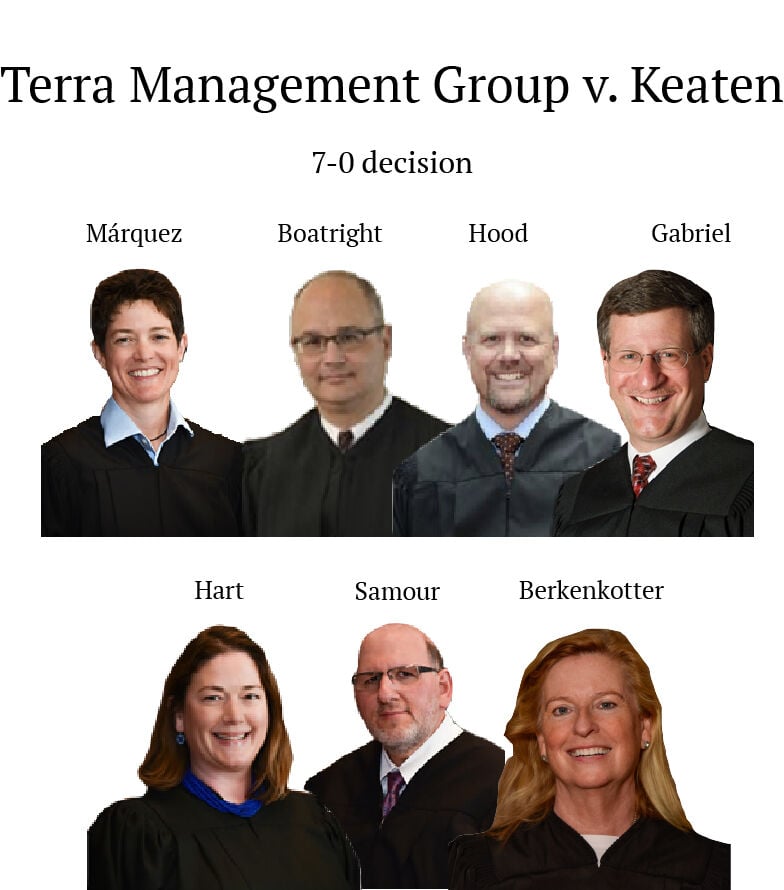

In 2017, the Keatens noticed a chemical smell in their Unit 203E in Littleton’s Main Street Apartments. They reported the fumes to the property manager. Continuing into 2018, the Keatens suspected they were being exposed to methamphetamine from the unit below them and reported burning sensations, dizziness, bloody noses and difficulty breathing.
The now-bankrupt Terra Management Group evicted the downstairs tenant, renovated the unit and re-leased it. They did not document the contents of the apartment, including gas canisters and a propane tank, even though company policy required otherwise.
Only in response to a court order did testing uncover multiple areas of highly concentrated meth that apparently seeped into the Keatens’ apartment. Both women suffer from permanent brain injuries and signs of dementia.
In an August 2021 order after trial, then-District Court Judge Frederick T. Martinez awarded the Keatens $10.5 million in damages, finding the defendants unreasonably left the women to suffer the severe consequences of meth exposure despite being aware of the problem for months. He further slammed Terra Management for failing to document or preserve the evidence of meth-making.
The defendants attempted to “cover up, hide or destroy evidence when they knew of the Keatens’ claims and the threat of potential liability,” he wrote.
A three-judge panel of the Court of Appeals took no issue with Martinez’s conclusion that the defendants destroyed evidence, even though the Keatens would not file suit for more than a year afterward.
“Plaintiffs were vocal and persistent in their complaints related to the toxic fume exposure they were experiencing,” wrote retired Supreme Court Justice Alex J. Martinez, sitting on the panel at the chief justice’s assignment. It was reasonable to assume “the evidence destroyed would have shown what defendants did not want it to show.”
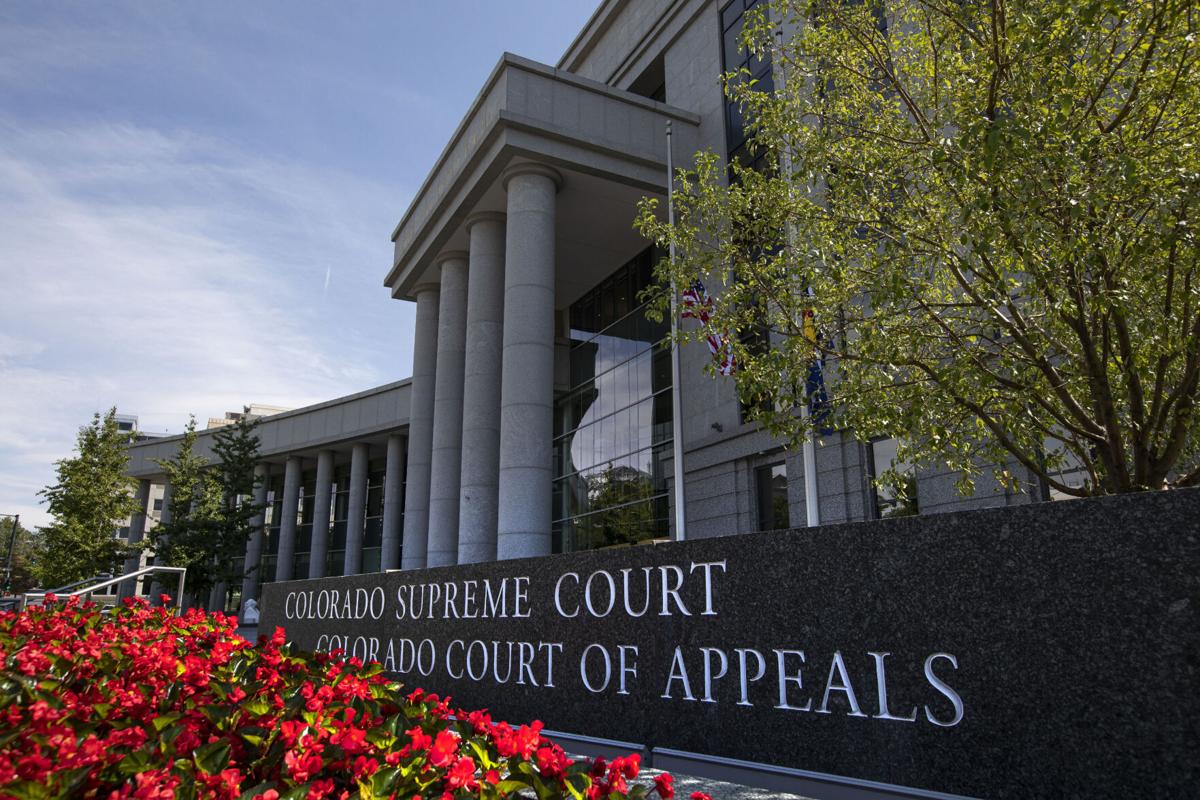
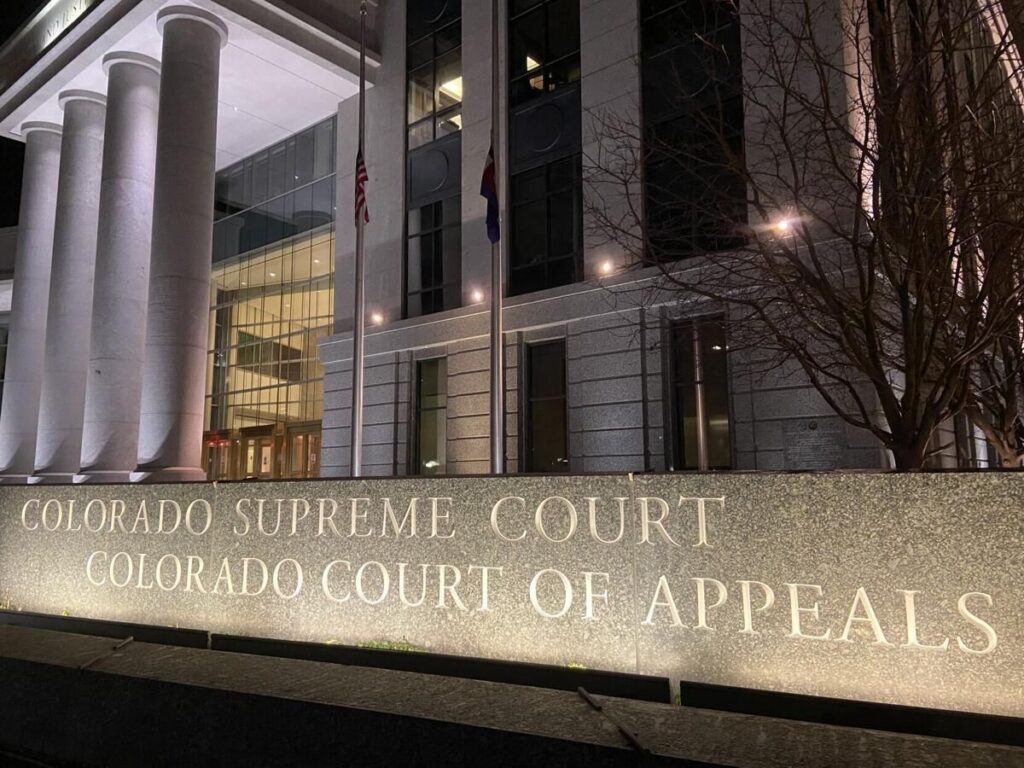
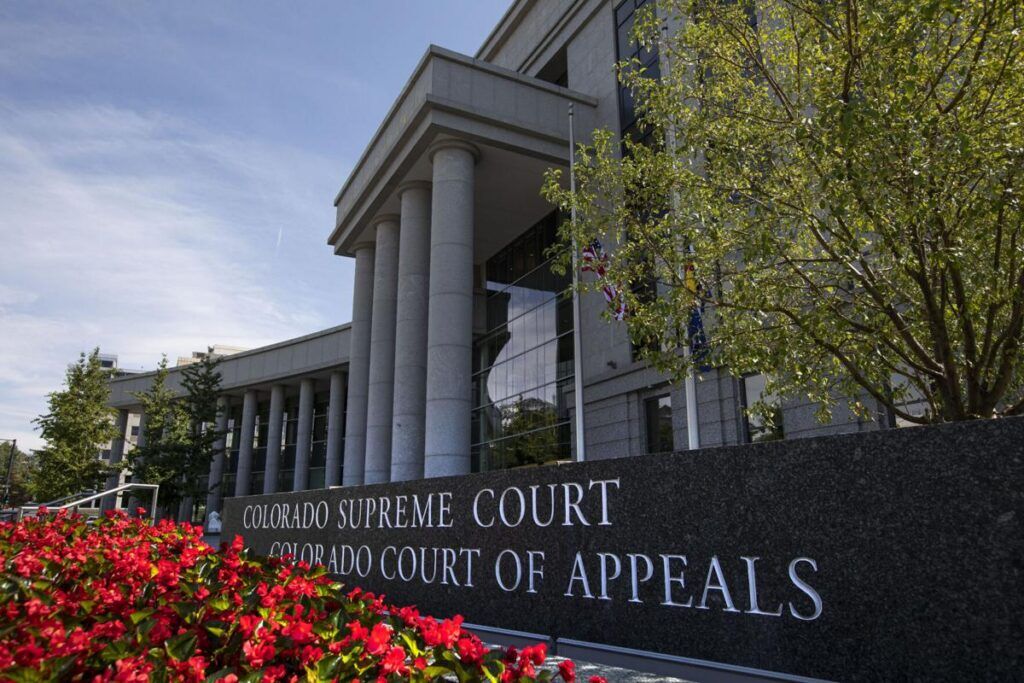
FILE PHOTO: The Ralph L. Carr Colorado Judicial Center, on Tuesday, Sept. 13, 2022, in Denver, Colo. (Timothy Hurst/The Denver Gazette)
Timothy Hurst/Denver Gazette

Terra Management then appealed to the Supreme Court over an issue the justices had not yet addressed: when an entity must begin to preserve evidence before a lawsuit is filed. Multiple outside organizations weighed in to the Supreme Court.
The Colorado Defense Lawyers Association and U.S. Chamber of Commerce pointed to the substantial cost and interference to business of preserving evidence in the absence of any threatened litigation. On the other side, the Colorado Plaintiff Employment Lawyers Association and Colorado Trial Lawyers Association emphasized the imbalance between defendants who hold key evidence and plaintiffs who must rely on that evidence to prove their claims.
During oral arguments, some of the justices were skeptical the Keatens’ legal claims blindsided their landlord to the point that the company was justified in neglecting to preserve relevant items.
“There was ample evidence you were already in possession of that meth had been manufactured in the unit beneath and had migrated,” observed Justice William W. Hood III to Terra Management’s attorney. “Why isn’t that enough to trigger an obligation to preserve?”
At the same time, some justices were sympathetic to Terra Management’s observation that the Keatens had only lodged complaints of fumes up to the time of eviction, then stopped communicating for more than a year before filing suit.
“Isn’t the silence for a year tantamount to an implicit statement, ‘We’re not gonna file a suit?'” wondered Justice Melissa Hart.

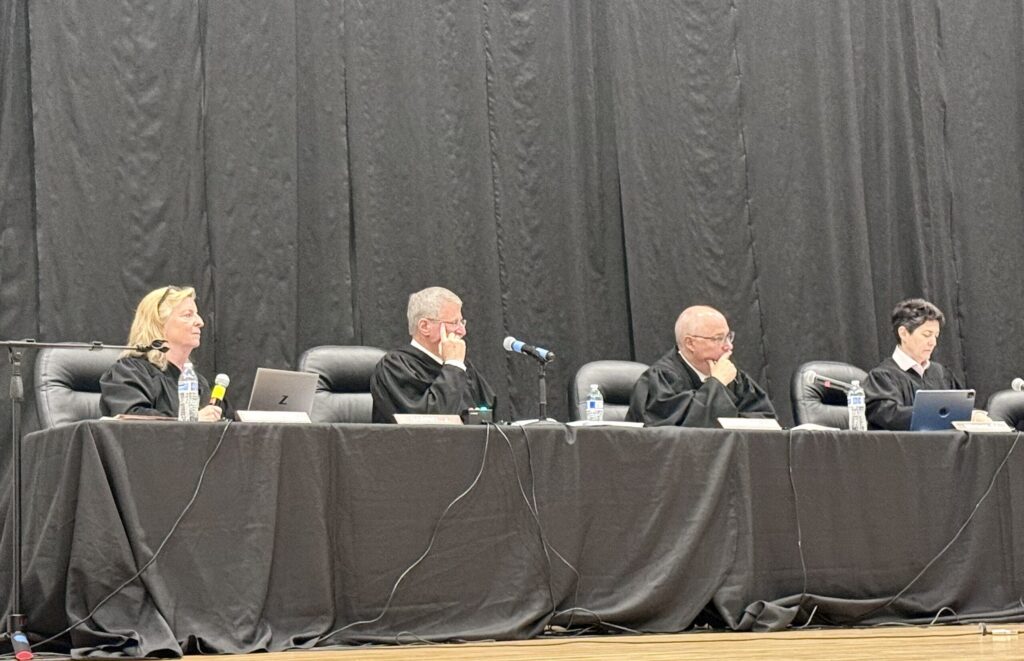
From left, Colorado Supreme Court Justices William W. Hood III, Melissa Hart and Maria E. Berkenkotter listen to an argument during a Courts in the Community session held at Pine Creek High School in Colorado Springs on Thursday, Nov. 17, 2022. (The Gazette, Parker Seibold)
Parker Seibold

Ultimately, the court concluded that even if Judge Frederick Martinez incorrectly penalized Terra Management for failing to hold onto evidence of a meth lab, it did not matter because he rested his decision on other evidence linking the Keatens’ injuries to the fumes.
Going forward, “the duty to preserve evidence arises when the party knows or should know that litigation is ‘reasonably foreseeable’; this standard encompasses litigation that is imminent, likely, or reasonably anticipated,” wrote Márquez.
She added that a “large-scale disaster” could suggest to a potential defendant that litigation is imminent. Or a potential plaintiff’s representation that their issues are resolved may indicate they do not plan to sue after all.
The case was one of the longest-pending appeals currently at the Supreme Court, having been argued in May 2024.
The case is Terra Management Group, LLC et al. v. Keaten et al.
Colorado Politics Must-Reads:

Trump’s 10th Circuit nominee recuses from cases against federal government without explanation
Michael Karlik
michael.karlik@coloradopolitics.com
Updated 1 day ago
President Donald Trump’s nominee to fill a vacancy on the Denver-based federal appeals court recused himself without a clear explanation from nine cases against the executive branch while he was undergoing vetting by the White House this spring. U.S. District...
Adams County murder conviction reversed due to faulty jury instruction
Michael Karlik
michael.karlik@coloradopolitics.com
Updated 1 day ago
Colorado’s second-highest court overturned an Adams County defendant’s murder conviction last month because the instruction provided to the jury about a trespasser’s right to use self-defense did not accurately reflect Colorado law. A person is justified in using force to...
Colorado court upholds murder conviction despite jury disobeying instructions
Michael Karlik
michael.karlik@coloradopolitics.com
Updated 2 days ago
Colorado’s second-highest court upheld an Arapahoe County defendant’s murder conviction last month, even though jurors found he was not the one who shot the victim and the evidence suggested he was not present for the shooting. A three-judge Court of...
Divided appeals court reverses conviction after judge declined to define ‘bludgeon’
Michael Karlik
michael.karlik@coloradopolitics.com
Updated 2 days ago
Colorado’s second-highest court reversed a Jefferson County defendant’s felony menacing conviction on Thursday, concluding that the trial judge’s failure to define “bludgeon” for jurors may have affected the outcome. A three-judge Court of Appeals panel divided in unusual ways in...
10th Circuit dismisses Tina Peters’ challenge to confinement as moot
Michael Karlik
michael.karlik@coloradopolitics.com
Updated 2 days ago
The Denver-based federal appeals court granted the state’s unopposed request on Wednesday to dismiss former Mesa County clerk Tina Peters’ challenge to her confinement as moot. Although Peters received a commutation of her prison sentence last month from Gov. Jared...
Federal judge declines to recuse from death penalty case after Supermax visit
Michael Karlik
michael.karlik@coloradopolitics.com
Updated 2 days ago
A federal judge declined to recuse herself last month from a death penalty case arising out of Colorado’s “Supermax” prison, finding that her tour of the facility earlier this year did not bias her decision-making. U.S. District Court Judge Charlotte...
Appeals court clarifies offense of impersonating a peace officer
Michael Karlik
michael.karlik@coloradopolitics.com
Updated 3 days ago
Colorado’s second-highest court clarified this month that a person commits the offense of impersonating a peace officer if they engage in “any conduct” while pretending to be law enforcement. In a case out of El Paso County, Richard James Coulier...
Colorado Supreme Court reverses 2 Chaffee County judges for imposing fee on habeas petitioner
Michael Karlik
michael.karlik@coloradopolitics.com
Updated 4 days ago
The Colorado Supreme Court rejected two separate appeals earlier this month from an incarcerated defendant seeking immediate release from prison, but concluded that two Chaffee County judges incorrectly required him to prepay filing fees for his cases. David J. Gottorff...
Weld County judge wrongly denied bail to murder defendant in gap between law change
Michael Karlik
michael.karlik@coloradopolitics.com
Updated 4 days ago
Colorado’s second-highest court ruled this month that a Weld County judge was wrong to deny bail to a murder defendant in the window between the state Supreme Court’s recognition of the right to bail and the voters’ subsequent overruling of...
Defendants acquitted by insanity are eligible for records-sealing, appeals court says
Michael Karlik
michael.karlik@coloradopolitics.com
Updated 3 days ago
Colorado’s second-highest court clarified last month that defendants who are found not guilty by reason of insanity are eligible to have their criminal records sealed from public view. Judges must seal criminal records if, among other things, a defendant is...