

Colorado Supreme Court upholds new trial for teen convicted of felony murder
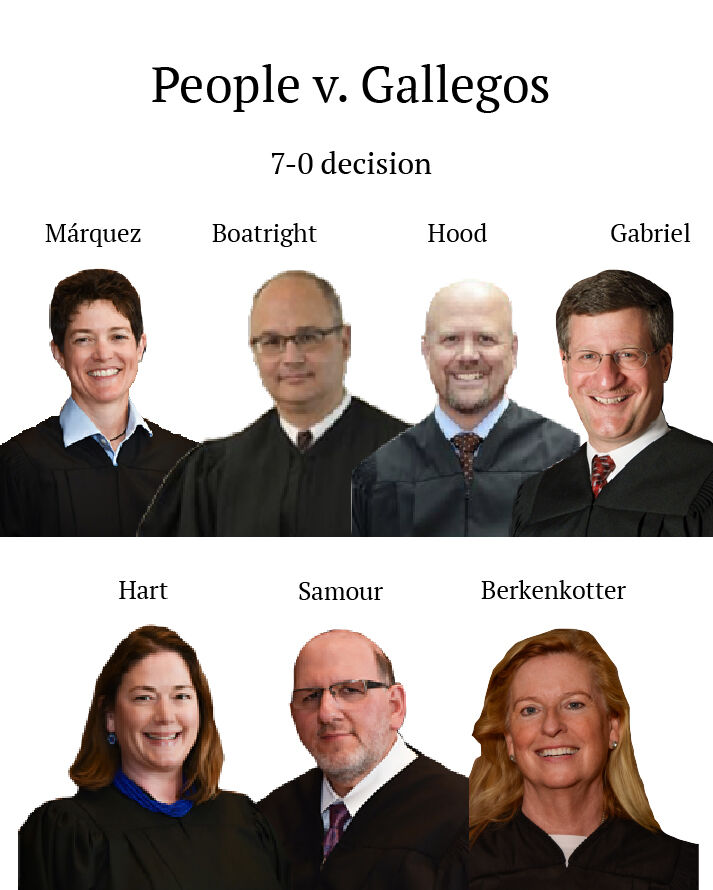
The Colorado Supreme Court ordered a new trial for an Aurora teenager on Monday, agreeing a defendant need not admit to committing an underlying offense to assert a defense to the more serious crime of felony murder.
Felony murder is a unique offense, in which a defendant is guilty if he participates in certain crimes, such as robbery or sexual assault, and someone dies as a result. There is also an affirmative defense to felony murder, meaning a set of factors the prosecution has to disprove beyond a reasonable doubt, in addition to proving the criminal charges themselves.
The case of Kenneth Alfonso Gallegos presented the question of whether a defendant needs to admit to committing the underlying crime before jurors can consider his affirmative defense to murder — or else risk triggering an automatic murder conviction if he denies all culpability and is convicted of the less serious crime.
No, the Supreme Court decided, the options are not all-or-nothing.
“Even though the crime of felony murder necessarily involves committing a predicate felony, its affirmative defense is just that — a defense to felony murder, which is separate,” wrote Justice Brian D. Boatright in the June 23 opinion.

Lloyd Chavez IV, a student at Cherokee Trail High School, died in May 2019 after four teenagers attempted to rob him during a meetup to purchase vaping supplies. Demarea Mitchell was the one who fatally shot Chavez, but jurors also convicted Gallegos of felony murder.
Gallegos insisted he did not plan to rob Chavez, nor was he aware the other members of the group had a gun. To that end, he asked then-Arapahoe County District Court Judge Ben L. Leutwyler to instruct jurors about Gallegos’ affirmative defense to felony murder. An affirmative defense — which would result in an acquittal if the prosecution is unable to disprove any part of it — must be given when there is “some credible evidence” supporting it.
Leutwyler rejected the request because Gallegos “is not acknowledging in any way, through any evidence that has been presented, his involvement in any part of the crime.” Jurors found Gallegos guilty of attempted aggravated robbery, felony murder and other offenses.
However, a three-judge Court of Appeals panel believed the unusual dual-crime structure of felony murder meant a person was not required to admit to the underlying criminal conduct to be eligible for the affirmative defense. Moreover, the panel agreed there was some evidence suggesting Gallegos was unaware of any plan to kill Chavez, notably the statements of other participants in the robbery attempt.
A defendant “convicted of a predicate offense does not automatically stand convicted of felony murder,” wrote Judge Lino S. Lipinsky de Orlov. The underlying offense and the felony murder “are discrete crimes with discrete elements and discrete defenses. A jury may convict a defendant of the predicate offense yet acquit on the felony murder count.”
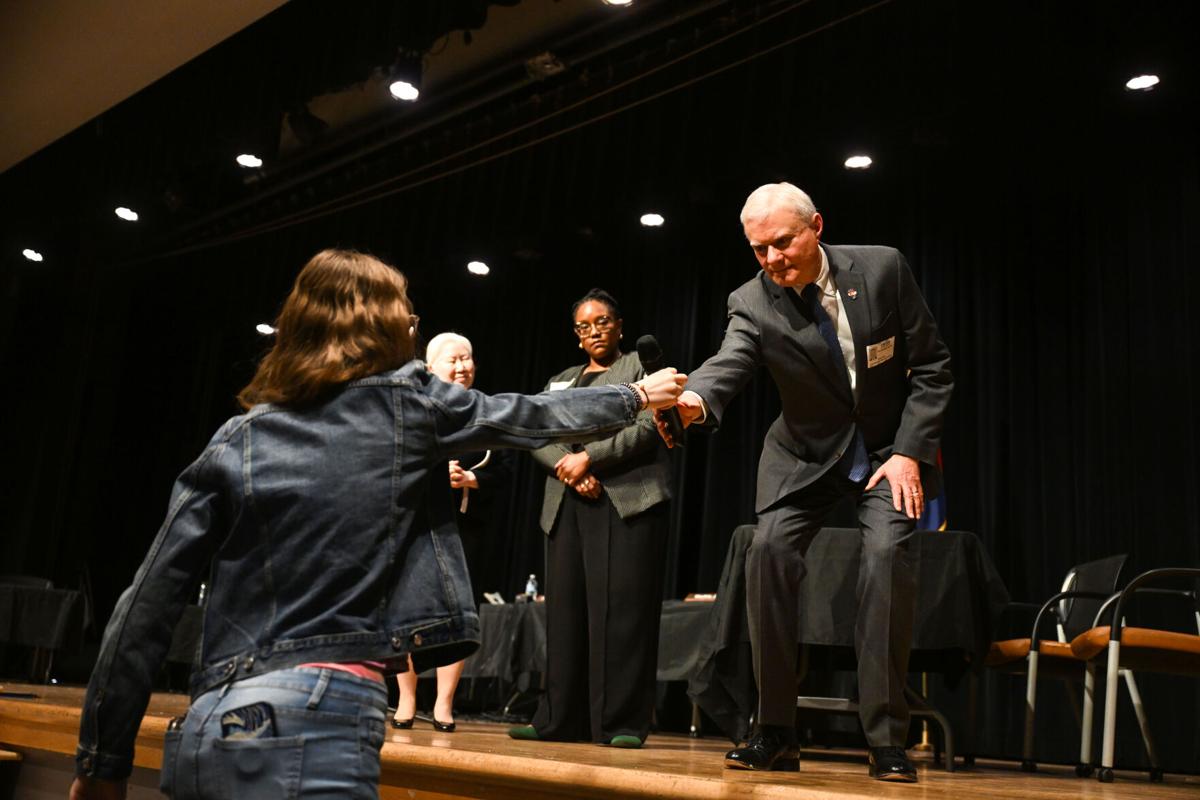
Colorado Court of Appeals Judge Lino S. Lipinsky de Orlov, right, takes the microphone from a student in the Green Mountain High School auditorium after hearing oral arguments in two cases as part of a "Courts in the Community" event on Thursday, Feb. 27, 2025. The Colorado Court of Appeals and Supreme Court hold Courts in the Community events multiple times per year in which they conduct oral arguments in real cases before an audience of students. (Stephen Swofford, Denver Gazette)
Stephen Swofford/ Denver Gazette

The government appealed to the Supreme Court, insisting that a defendant’s complete denial of participation in an underlying offense necessarily bars a felony murder defense — one component of which is that the defendant “was not the only participant in the underlying crime.”
“We’re not suggesting they have to plead guilty or in any way relieve the prosecution of its burden,” said Assistant Attorney General Brenna Brackett during oral arguments. But “it starts from, ‘You are a participant.'”
To the extent that asserting an affirmative defense to felony murder — which normally involves admitting to criminal conduct — creates a logical inconsistency, Boatright raised a hypothetical example in which multiple suspects wearing ski masks commit an offense, such that the identity of a shooter is in question.
“I can see both scenarios playing out. ‘They didn’t prove my guy was there’ and, ‘If he (was), you saw the guy in the blue ski mask act in self-defense,'” Boatright said. “If there’s a legitimate question of identity, why can’t you have both defenses?”
“Of course you can,” replied defense attorney Michael P. Zwiebel, “and that’s exactly my argument.”
Ultimately, the Supreme Court agreed defendants are permitted to raise inconsistent defenses at trial, and there was evidence to support the theory that Gallegos was present for the robbery but was unaware of any plans to kill Chavez — and may have actually tried to stop the altercation. Therefore, Gallegos was entitled to pursue his affirmative defense separately from his denial of the robbery.
“Assuming sufficient evidence supports the affirmative defense to felony murder,” concluded Boatright, “it is the province of the jury to weigh the credibility of any conflicting evidence and decide both (1) whether the defendant committed the underlying crime and, if so, (2) whether the affirmative defense shields the defendant from felony murder liability.”
Assistant District Attorney Ryan Brackley said his office “will certainly analyze whether or not we would seek to appeal this to the United States Supreme Court. But short of that, it’s our office’s intention to retry Mr. Gallegos.”
Gallegos’ lawyer on appeal declined to comment.
The case is People v. Gallegos.
This story has been updated with additional comments.
Colorado Politics Must-Reads:

Colorado board permits state to appeal injunction against arthritis drug price cap
Marissa Ventrelli
marissa.ventrelli@coloradopolitics.com
Updated 41 minutes ago
A Colorado board voted Friday to allow the Attorney General’s Office to fight an injunction against a price cap on a drug that treats arthritis. A U.S. district court judge had granted the company Amgen a preliminary injunction, temporarily blocking...
Federal judge rejects constitutional claims, ‘expressions of hatred’ by Club Q defendant
Michael Karlik
michael.karlik@coloradopolitics.com
Updated 16 hours ago
A federal judge rejected a defendant’s claims that he received constitutionally ineffective assistance of counsel while facing federal hate crime and firearms charges for murdering five people at a Colorado Springs LGBTQ nightclub in 2022. Anderson Lee Aldrich is serving...

Divided 10th Circuit upholds Colorado congestion fee on car rentals
Michael Karlik
michael.karlik@coloradopolitics.com
Updated 13 hours ago
The Denver-based federal appeals court concluded on Monday that a 2024 “congestion impact fee” that lawmakers imposed on short-term vehicle rentals did not conflict with a federal prohibition on certain airport-related charges. Beginning in the 1970s, Congress began limiting the...
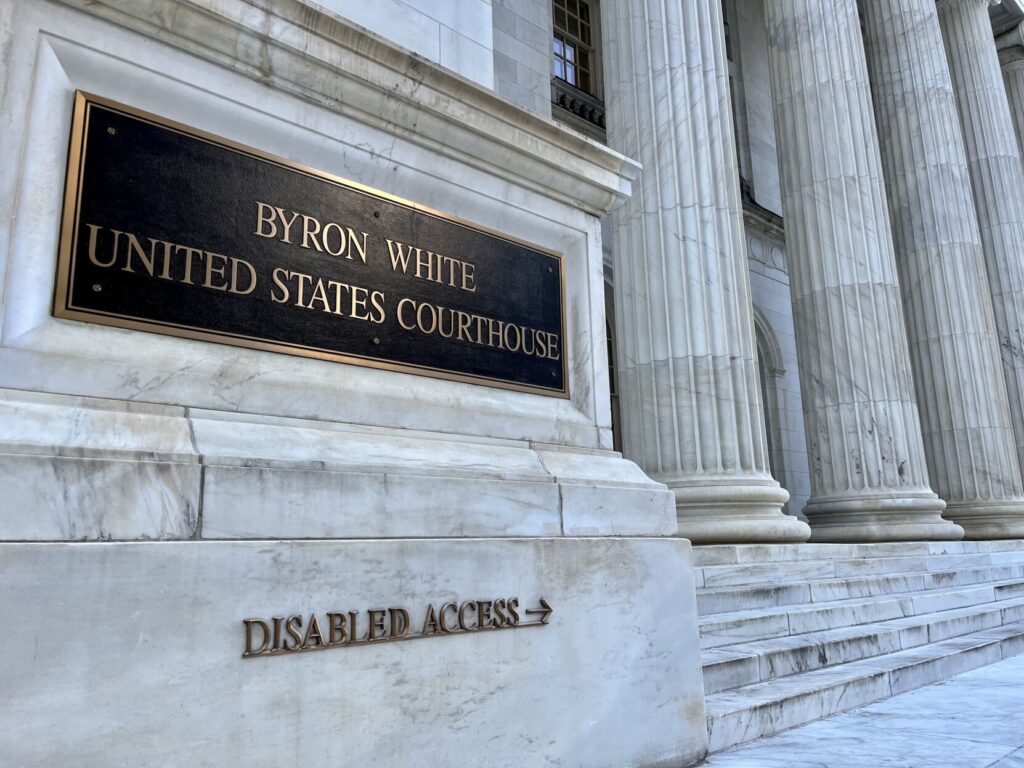
10th Circuit dismisses woman’s lawsuit following 10-year attempt to undo restraining order
Michael Karlik
michael.karlik@coloradopolitics.com
Updated 4 days ago
The Denver-based federal appeals court rejected a woman’s challenge on Friday to a restraining order imposed on her more than a decade ago, finding that she cannot credibly claim she will be prosecuted for violating the restraining order through her...
10th Circuit dismisses woman’s lawsuit following 10-year attempt to undo restraining order
Michael Karlik
michael.karlik@coloradopolitics.com
Updated 4 days ago
The Denver-based federal appeals court rejected a woman’s challenge on Friday to a restraining order imposed on her more than a decade ago, finding that she cannot credibly claim she will be prosecuted for violating the restraining order through her...
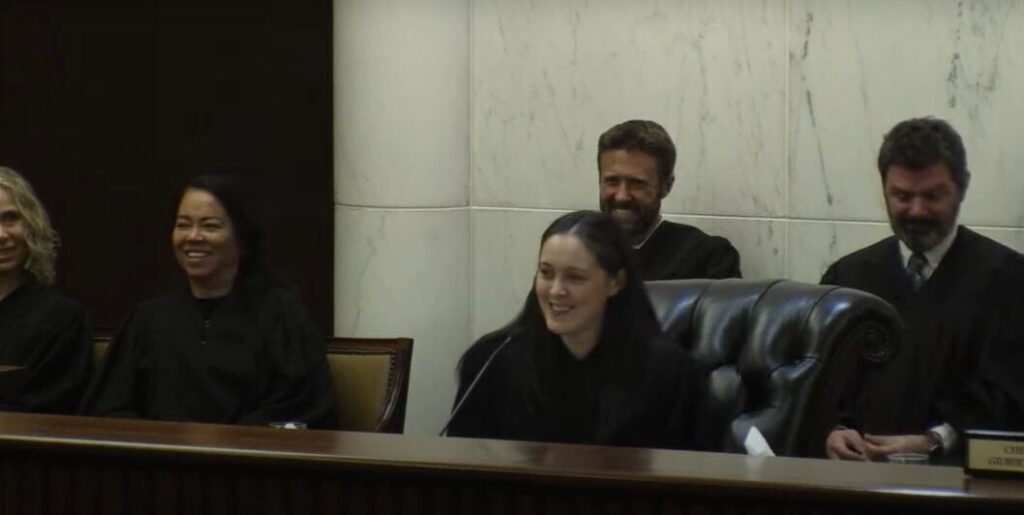
Colorado equal pay law does not require plaintiffs to allege gender-based retaliation, appeals court finds
Michael Karlik
michael.karlik@coloradopolitics.com
Updated 3 days ago
The 2019 Colorado law aimed at rooting out pay discrimination on the basis of sex does not require a plaintiff to allege their employer retaliated against them for sex- or gender-related reasons, the state’s second-highest court decided on Thursday. Lawmakers...
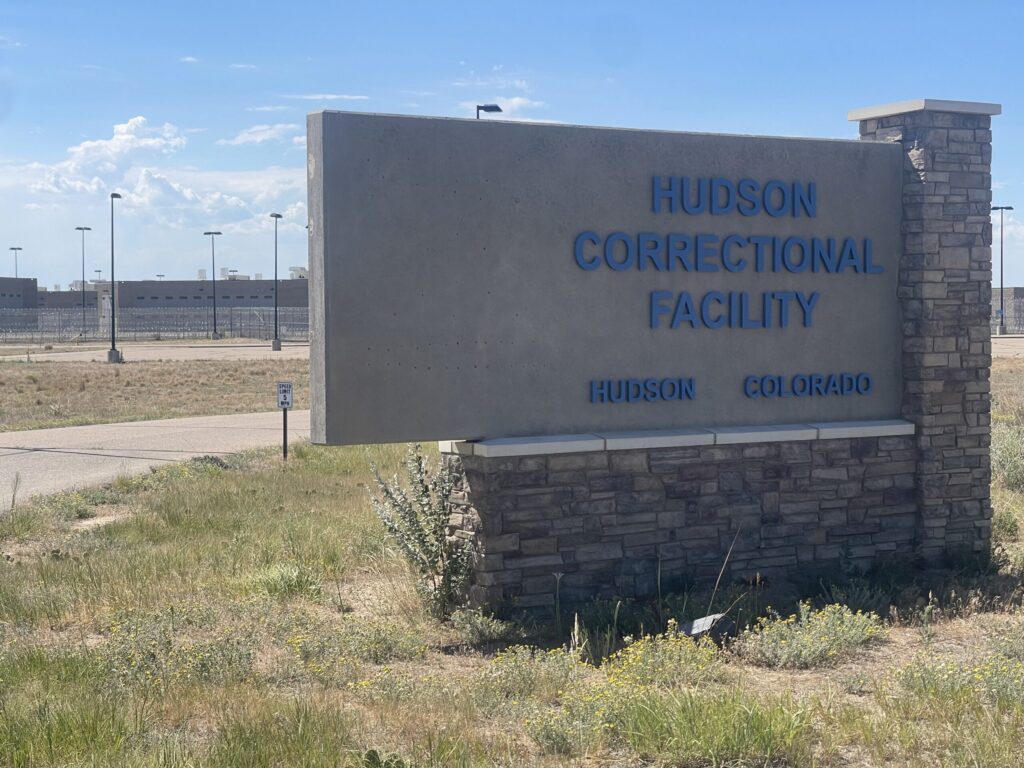
Hudson faces lawsuit over ICE detention facility
Nicole C. Brambila
nicole-c-brambila@coloradopolitics.com
Updated 4 days ago
A nonprofit organization filed a lawsuit against the Town of Hudson Wednesday, challenging plans to reopen a former federal prison in the town as a U.S. Immigration and Customs Enforcement detention facility. Together Colorado, along with Janet E. Carlson, filed...
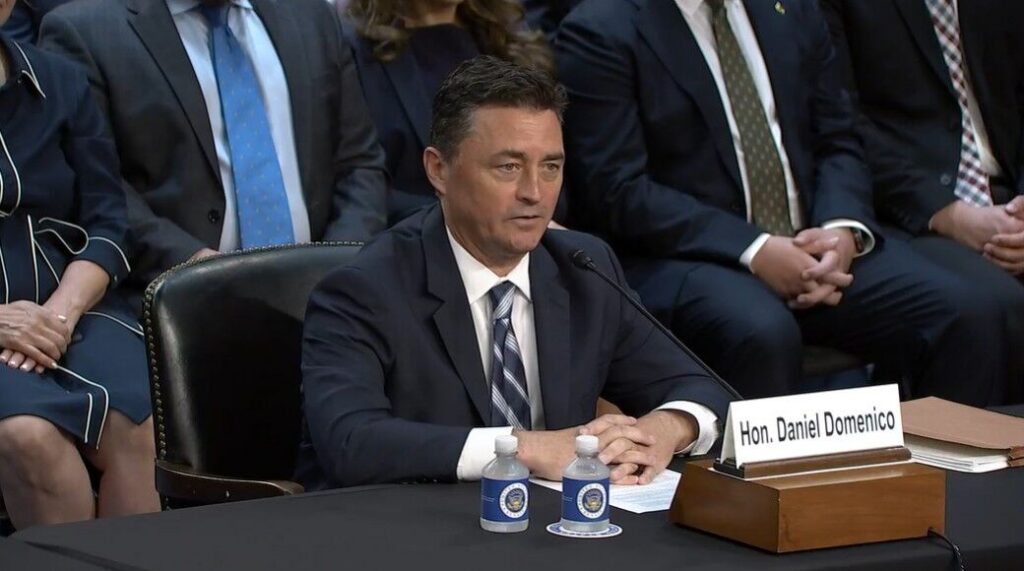
Senate committee advances Trump’s 10th Circuit nominee, as Domenico responds to questions about delays
Michael Karlik
michael.karlik@coloradopolitics.com
Updated 4 days ago
The U.S. Senate Judiciary Committee advanced President Donald Trump’s nominee to the Denver-based federal appeals court on Thursday by a party-line vote of 12-10. U.S. District Court Judge Daniel D. Domenico, who was Trump’s first-term appointee to Colorado’s federal trial...
Colorado justices to hear embryonic donation dispute
Michael Karlik
michael.karlik@coloradopolitics.com
Updated 5 days ago
The Colorado Supreme Court announced on Monday that it will decide whether lower court judges properly applied its framework for adjudicating disputes over the fate of pre-embryos, in which one person wants to use them to become a parent and...

Isolation, emotion, persona: Colorado judicial programming prepares people for life on the bench
Michael Karlik
michael.karlik@coloradopolitics.com
Updated 5 days ago
As a trial judge and now as a member of the Colorado Supreme Court, Justice Carlos A. Samour Jr. has heard the view that being a judge is isolating. “In neither court have I felt isolated. I’ve always interacted a...