

Yes, no, maybe so: Federal judge gets different answers about power to address US ‘interest’ in Tina Peters case
Last week, a federal judge asked three different entities whether he had the authority to discard the United States’ “statement of interest” in a civil case brought by convicted Mesa County clerk Tina Peters.
This week, he received three different answers.
Mesa County jurors convicted Peters in 2024 for her role in a security breach of her office’s voting equipment. She is currently serving a nine-year prison sentence. While the state’s Court of Appeals reviews her conviction, Peters has filed a federal petition for “habeas corpus,” a legal tool used to challenge one’s confinement. Specifically, Peters is seeking to be released on bond while her appeal moves forward in state court.
However, last month the U.S. Department of Justice unexpectedly inserted itself into the case, filing a statement of interest to claim it was reviewing whether Peters’ prosecution was “oriented more toward inflicting political pain than toward pursuing actual justice or legitimate governmental objectives.”
The Colorado Attorney General’s Office, which is litigating opposite Peters, asked Chief U.S. Magistrate Judge Scott T. Varholak to discard the statement entirely, or at least strike the portion alleging political motivations. The office argued it was unprecedented for the Justice Department to claim an interest in a state criminal defendant’s habeas case, and characterized the filing as an act of intimidation.
Varholak held a hearing on April 22, when he probed the Justice Department’s reasoning for making its presence known in Peters’ case. But he also recognized he was in uncharted waters. Not only was the federal government’s statement highly unusual, but it was not clear whether Varholak even had the power to do what the state wanted — discard the statement — given his status as a magistrate judge who is neither appointed by the president nor confirmed by the U.S. Senate.
Instead, Varholak gave the parties a week to research the question on their own.
In a trio of April 29 filings, the results were inconclusive.
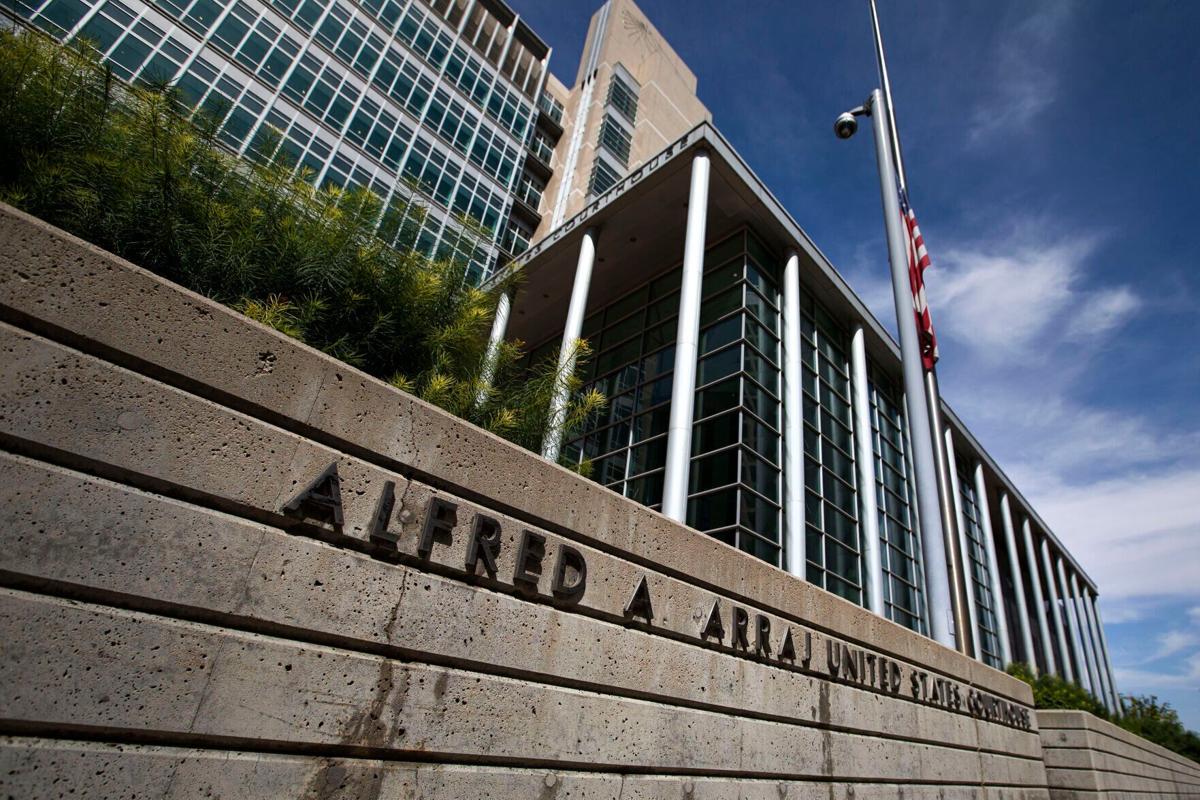
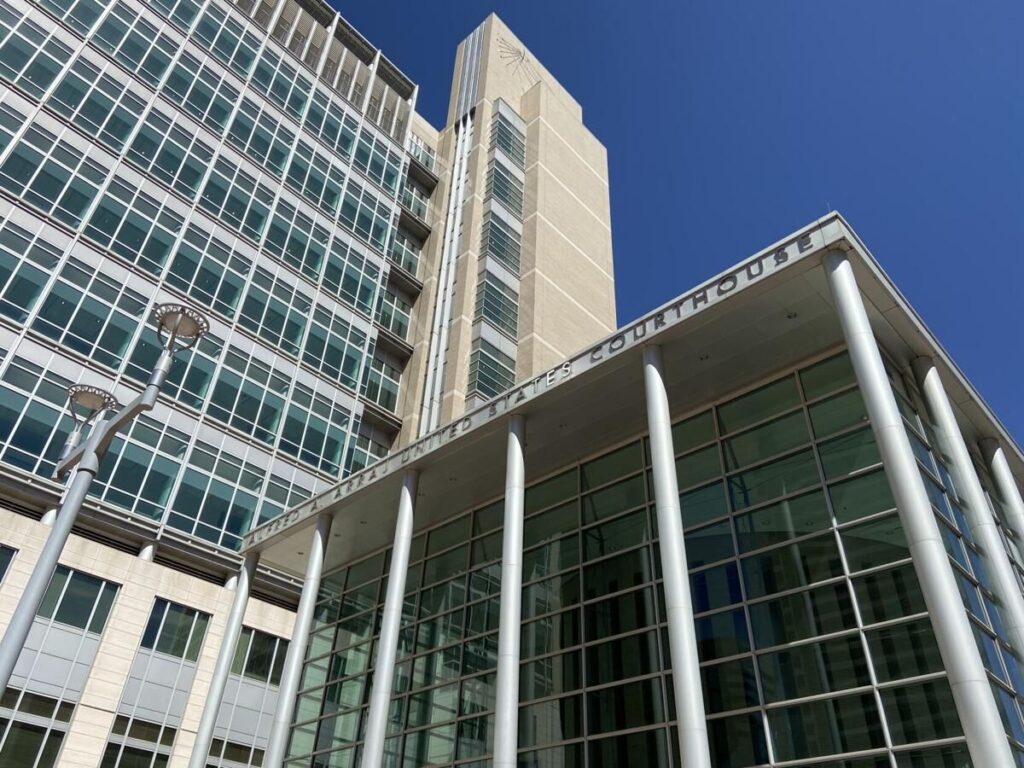
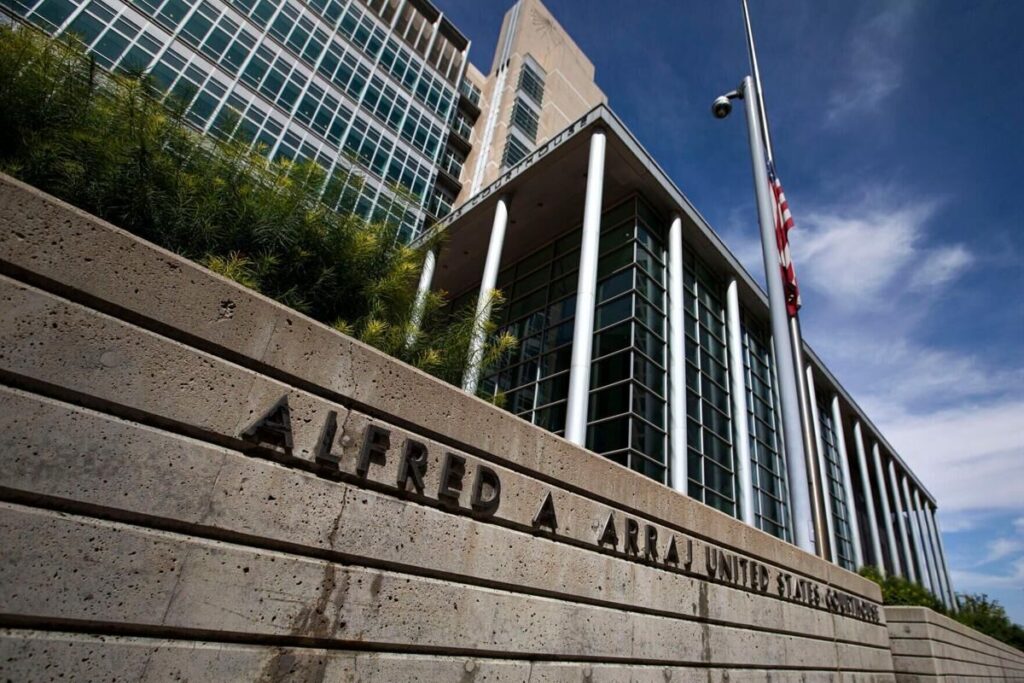
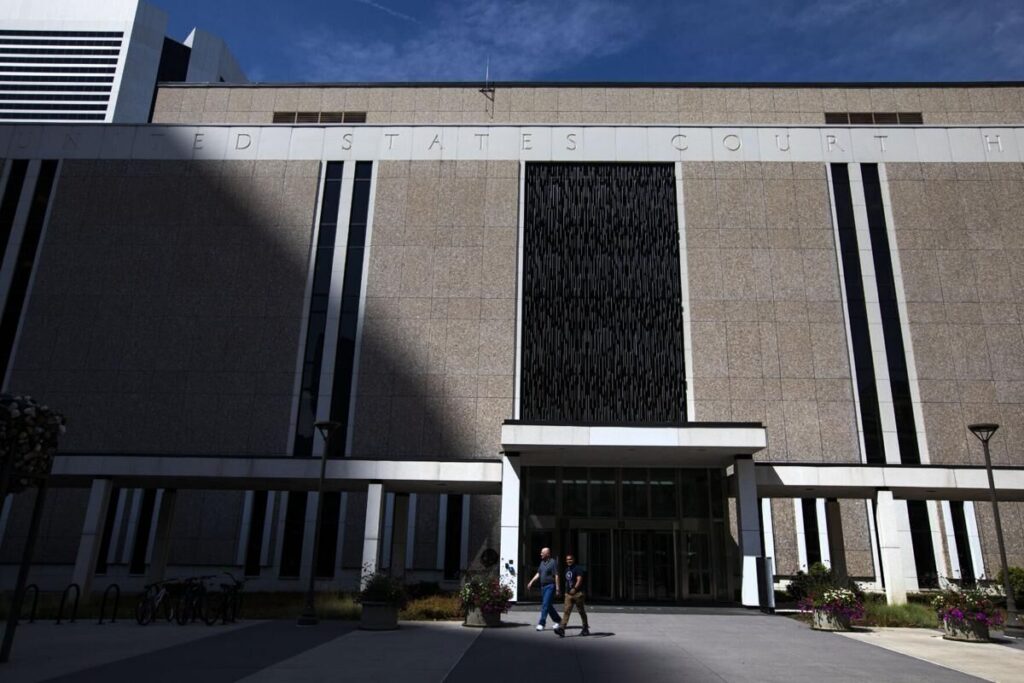
FILE PHOTO: The Alfred A. Arraj federal courthouse in Denver
Timothy Hurst, The Denver Gazette file

“Tina Peters believes that Magistrate Judge Varholak lacks jurisdiction to grant Respondents’ Motion to Strike the Statement of Interest,” wrote attorneys for Peters.
They elaborated that for magistrate judges to decide dispositive motions — meaning those that can potentially dispose of a party’s claims — they need the consent of all parties to the case. Becuase all parties have not consented to Varholak being the final decider on Peters’ habeas case, Varholak might be deciding a dispositive matter for the federal government if he struck the statement.
Also, Peters’ attorneys added, judges have “no authority” to strike a legally authorized means for the executive branch to express its position on a case.
In contrast, the attorney general’s office argued Varholak is within his authority to decide a “somewhat tangential issue” that ultimately has no bearing on the merits of Peters’ habeas case.
“Striking some of the language instead of the entire filing would undoubtedly be a nondispositive ruling because the Statement of Interest would still be a part of the case,” wrote Solicitor General Shannon Stevenson. But she continued that Varholak should discard the whole document “because the Statement of Interest is unhelpful and sets a troubling precedent.”
Finally, the Justice Department reported it found no cases addressing a magistrate judge’s power to discard statements of interest. Further, federal law lists eight dispositive motions that magistrate judges cannot handle without consent, but a motion to strike a statement of interest is not one of those.
Still, striking its statement would “end the mechanism by which the United States asserted its interests in this matter,” the department wrote. In that instance, Varholak’s order would be “functionally dispositive.”
The case is Peters v. Stancil et al.

Federal judge green-lights civil trial against ex-Fort Collins DUI officer
Michael Karlik
michael.karlik@coloradopolitics.com
Updated 2 days ago
A federal judge ruled on Thursday that Fort Collins’ former “DUI officer” will face a civil trial for allegedly investigating a motorist for impaired driving without any reasonable suspicion to do so. In recent years, several people arrested by Officer...

Colorado Supreme Court suspends Mesa County judge pending misconduct investigation
Michael Karlik
michael.karlik@coloradopolitics.com
Updated 20 hours ago
The Colorado Supreme Court suspended Mesa County Court Judge Michael J. Grattan on Thursday amid a misconduct investigation. The court’s Sept. 10 order gave Grattan 21 days to explain why his paid suspension should not continue through the end of...
Colorado Supreme Court changes course, dismisses case about special district bonds
Michael Karlik
michael.karlik@coloradopolitics.com
Updated 20 hours ago
The Colorado Supreme Court declined on Friday to decide a dispute between a large-scale Commerce City development and the various districts financing it, after initially showing interest in the ongoing case. Colorado has roughly 2,800 special districts, which are local...
10th Circuit tosses GEO Group’s pretrial appeal in human trafficking lawsuit
Michael Karlik
michael.karlik@coloradopolitics.com
Updated 3 days ago
The Denver-based federal appeals court dismissed an attempt by The GEO Group on Wednesday to appeal a trial judge’s non-existent decision two months before the company is scheduled to face a civil trial over alleged trafficking violations at the Aurora...
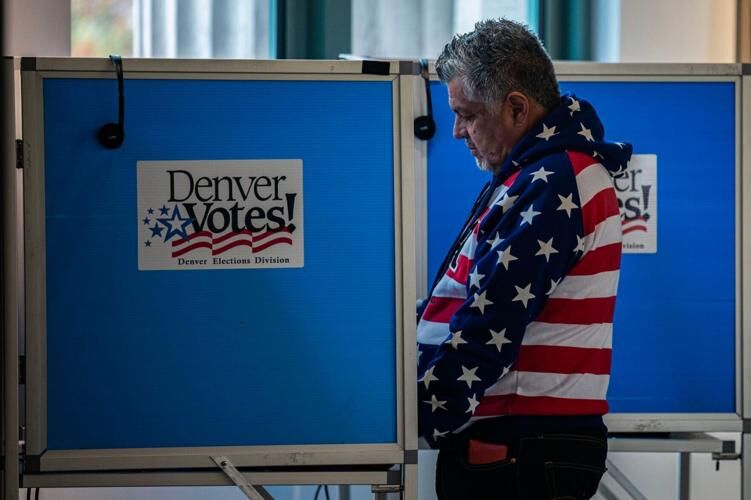
Denver sues Trump to block armed ICE agents from polling sites
Deborah Grigsby
deborah.smith@denvergazette.com
Updated 3 days ago
The city of Denver, along with several groups, sued the Trump administration Thursday, seeking to block U.S. Immigration and Customs Enforcement officers who are armed from polling sites during the upcoming midterm elections. In fact, there are no official orders...
Federal judge takes no action against ICE in Colorado after hearing about mistakes, not ‘blatant violations’
Michael Karlik
michael.karlik@coloradopolitics.com
Updated 18 hours ago
A federal judge declined to take action against U.S. Immigration and Customs Enforcement on Thursday after hearing that a pattern of alleged lawbreaking amounted to mistakes and a misunderstanding of the government’s position in court. For nearly a year, Colorado’s...
Colorado doctors, dentists challenge state law on gender‑transition services in new federal lawsuit
Marissa Ventrelli
marissa.ventrelli@coloradopolitics.com
Updated 15 hours ago
A group of Christian doctors and dentists has filed a federal lawsuit challenging a Colorado law they say requires them to provide gender‑transition services that conflict with their religious and ethical beliefs. The lawsuit, filed by the Christian Medical and...
Federal judge directs plaintiff to revise complaint alleging Denver officers’ constitutional violations
Michael Karlik
michael.karlik@coloradopolitics.com
Updated 18 hours ago
A federal judge directed a plaintiff to revise his allegations on Wednesday to more precisely state what two Denver officers and the city itself allegedly did to violate his constitutional rights by facilitating his prosecution for murder until prosecutors dropped...

Lawsuit challenges Douglas County commissioners’ ballot actions
Nicholas Fogleman
nicholas.fogleman@denvergazette.com
Updated 3 days ago
A new lawsuit against Douglas County commissioners seeks to invalidate the board’s intervention in efforts to expand the commission from three members to five and restore the original ballot language approved by more than 20,000 petition signers. The suit marks...
Federal judge explores new sanctions against ex-Colorado judicial discipline director
Michael Karlik
michael.karlik@coloradopolitics.com
Updated 20 hours ago
A federal judge on Wednesday directed Colorado’s former judicial discipline director, for the third time this year, to explain why she should not sanction him for his latest conduct in his litigation against the state’s judiciary. Christopher S.P. Gregory, who served...