

Federal judge dismisses hunger strike-related claims of US embassy bombing defendant
A federal judge last month dismissed an incarcerated man’s claims against officials in Colorado’s “Supermax” prison alleging they acted with negligence toward the plaintiff’s 20-day hunger strike.
Khalfan Khamis Mohamed, who was convicted of the deadly 1998 bombing of the U.S. embassy in Tanzania, was incarcerated at the U.S. Penitentiary — Administrative Maximum Facility in Florence. In 2019, he alleged, a staff member pressured Mohamed to withdraw his grievance against her, but he refused. In retaliation, the officer allegedly interfered with Mohamed’s ability to make phone calls to his family members.
Mohamed then undertook a 20-day hunger strike beginning in March 2020. He told senior staff members of his intentions, and was informed “that everyone was already aware” of the hunger strike, including the warden and Mohamed’s doctor.
After two weeks, Mohamed saw a nurse upon experiencing “extreme and growing pain,” dizziness, shortness of breath and vomiting blood. The nurse allegedly said he could not do anything for Mohamed, but would alert the doctor.
Representing himself, Mohamed filed suit under the Federal Tort Claims Act, which allows claims against the United States if certain conditions are met.
Among other things, Mohamed alleged one employee, identified as “Officer Santistevan,” was negligent for refusing to refer Mohamed to medical staff during the hunger strike, falsifying records about Mohamed’s food intake and not removing food from Mohamed’s cell as prison policy required.
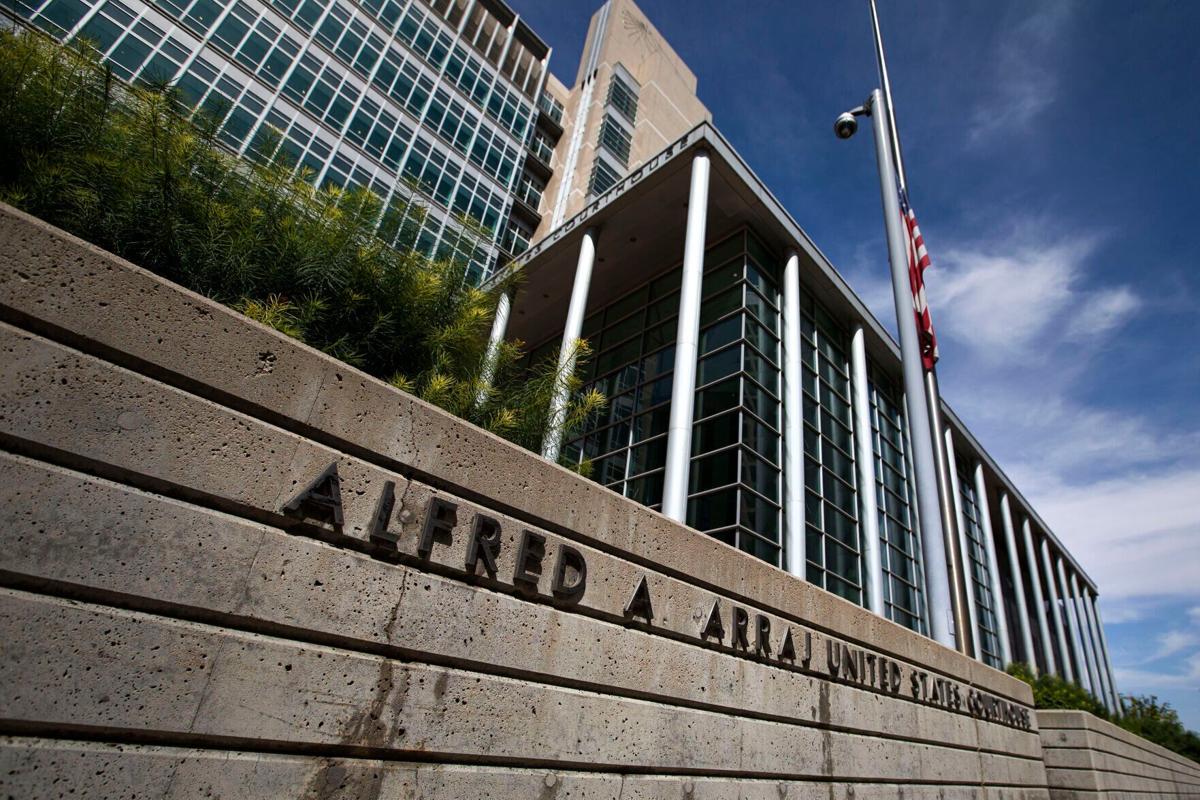
FILE PHOTO: The Alfred A. Arraj federal courthouse in Denver
Timothy Hurst, The Denver Gazette file

Mohamed also asserted a negligence claim based on Santistevan allegedly using excessive and unnecessary force while escorting him to the medical room. Santistevan allegedly told Mohamed to “shut up” when Mohamed said he was in pain, and Santistevan also allegedly said, “Mark my words, I’m gonna get rid of you. I like killing terrorists.”
Mohamed further alleged another staff member and the warden did not intervene or protect him against Santistevan’s conduct.
The government moved to dismiss Mohamed’s claims. In February, U.S. Magistrate Judge Maritza Dominguez Braswell recommended the government’s motion be granted for several reasons.
As for Santistevan’s alleged conduct during the hunger strike, Dominguez Braswell noted Mohamed’s own allegations indicated medical staff knew of the hunger strike independently of anything Santistevan did or failed to do.
“In other words, because medical staff was already aware of the strike, and it was medical staff — not Officer Santistevan — that was responsible for Plaintiff’s medical care, there is no causal link between the failure to refer and the alleged injury,” she wrote.
Santistevan’s alleged falsification of Mohamed’s food intake was not a viable claim, Dominguez Braswell continued, because the Federal Tort Claims Act prohibits any claim “arising out of” misrepresentation. Finally, while Mohamed alleged Santistevan violated prison policy by failing to remove food items from Mohamed’s cell during the hunger strike, Mohamed had not shown an injury from that specific action.
Turning to Santistevan’s alleged use of excessive force, Dominguez Braswell noted Mohamed had also raised a battery claim from the incident, which the government had not attempted to dismiss. Moreover, the claim the government was seeking to dismiss — negligence — did not fit with the alleged facts.

U.S Magistrate Judge Maritza Dominguez Braswell
Courtesy photo

The “defining feature of a negligence claim is that the ultimate result — that is, the ultimate injury — is unintended,” she wrote. But Mohamed “clearly alleges Officer Santistevan intentionally used excessive force with the intent to cause Plaintiff pain.”
Finally, Dominguez Braswell recommended against allowing the failure-to-intervene or failure-to-protect allegations to move forward, observing the Federal Tort Claims Act did not allow such claims.
Mohamed objected to the recommendation, arguing Santistevan’s alleged violations of prison policy “substantially contributed” to his injuries. But in a March 28 order, U.S. District Court Judge Nina Y. Wang upheld Dominguez Braswell’s reasoning and conclusions.
“Plaintiff’s injuries ultimately arise from his decision to begin and continue a hunger strike,” she wrote. “Between Plaintiff’s voluntary conduct and the more immediate roles of the (prison) warden, doctor, and medical staff in delaying medical attention to Plaintiff, the Court concludes that Plaintiff fails to plausibly allege that Officer Santistevan’s failure to refer him to medical staff was a substantial factor in his injuries.”
Wang also agreed the excessive force allegations spoke more to “Officer Santistevan’s intentional harmful contact with Plaintiff, as opposed to mere carelessness.” Therefore, Mohamed’s still-intact claims of battery were the proper path to litigate that incident.
The case is Mohamed v. United States.


Trump’s 10th Circuit nominee recuses from cases against federal government without explanation
Michael Karlik
michael.karlik@coloradopolitics.com
Updated 22 hours ago
President Donald Trump’s nominee to fill a vacancy on the Denver-based federal appeals court recused himself without a clear explanation from nine cases against the executive branch while he was undergoing vetting by the White House this spring. U.S. District...
Adams County murder conviction reversed due to faulty jury instruction
Michael Karlik
michael.karlik@coloradopolitics.com
Updated 1 day ago
Colorado’s second-highest court overturned an Adams County defendant’s murder conviction last month because the instruction provided to the jury about a trespasser’s right to use self-defense did not accurately reflect Colorado law. A person is justified in using force to...
Colorado court upholds murder conviction despite jury disobeying instructions
Michael Karlik
michael.karlik@coloradopolitics.com
Updated 2 days ago
Colorado’s second-highest court upheld an Arapahoe County defendant’s murder conviction last month, even though jurors found he was not the one who shot the victim and the evidence suggested he was not present for the shooting. A three-judge Court of...
Divided appeals court reverses conviction after judge declined to define ‘bludgeon’
Michael Karlik
michael.karlik@coloradopolitics.com
Updated 2 days ago
Colorado’s second-highest court reversed a Jefferson County defendant’s felony menacing conviction on Thursday, concluding that the trial judge’s failure to define “bludgeon” for jurors may have affected the outcome. A three-judge Court of Appeals panel divided in unusual ways in...
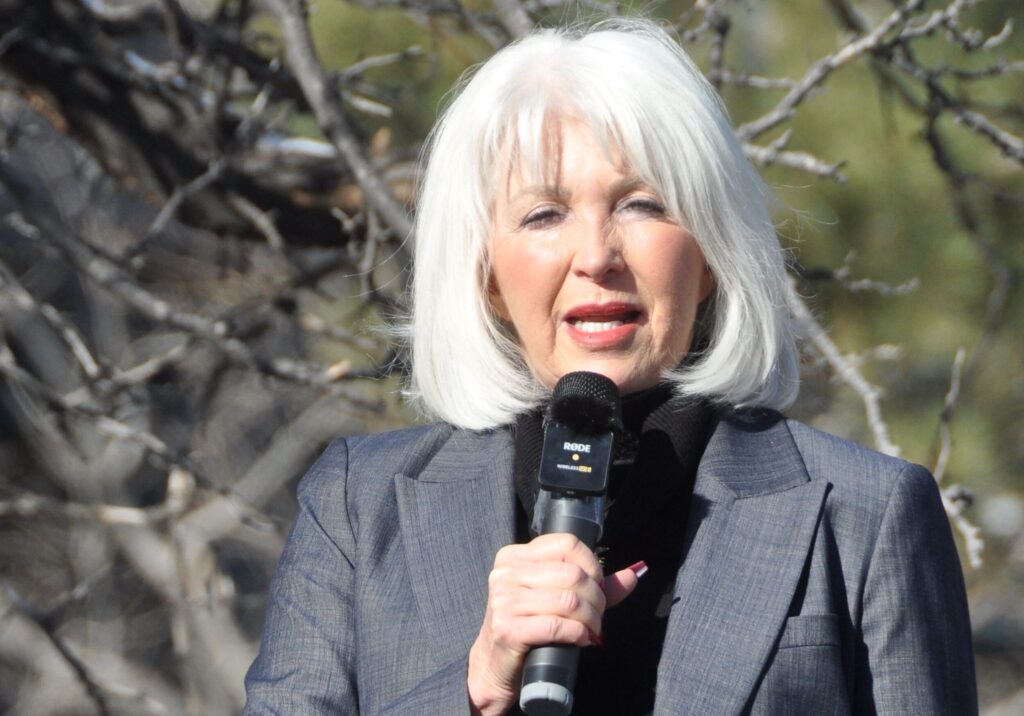
10th Circuit dismisses Tina Peters’ challenge to confinement as moot
Michael Karlik
michael.karlik@coloradopolitics.com
Updated 2 days ago
The Denver-based federal appeals court granted the state’s unopposed request on Wednesday to dismiss former Mesa County clerk Tina Peters’ challenge to her confinement as moot. Although Peters received a commutation of her prison sentence last month from Gov. Jared...
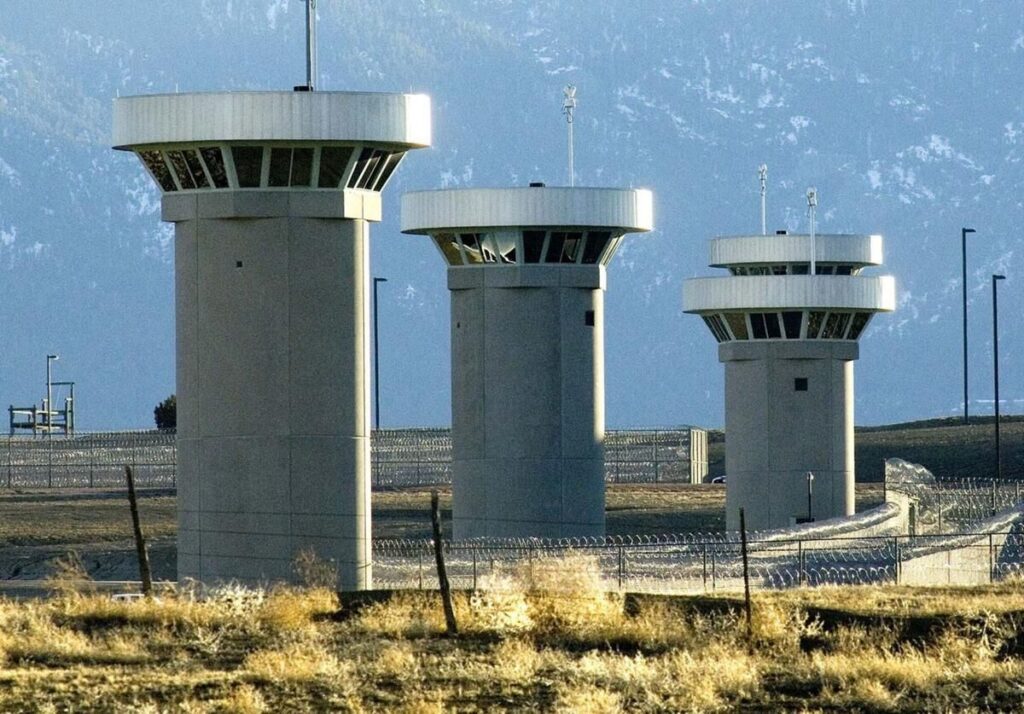
Federal judge declines to recuse from death penalty case after Supermax visit
Michael Karlik
michael.karlik@coloradopolitics.com
Updated 2 days ago
A federal judge declined to recuse herself last month from a death penalty case arising out of Colorado’s “Supermax” prison, finding that her tour of the facility earlier this year did not bias her decision-making. U.S. District Court Judge Charlotte...
Appeals court clarifies offense of impersonating a peace officer
Michael Karlik
michael.karlik@coloradopolitics.com
Updated 3 days ago
Colorado’s second-highest court clarified this month that a person commits the offense of impersonating a peace officer if they engage in “any conduct” while pretending to be law enforcement. In a case out of El Paso County, Richard James Coulier...
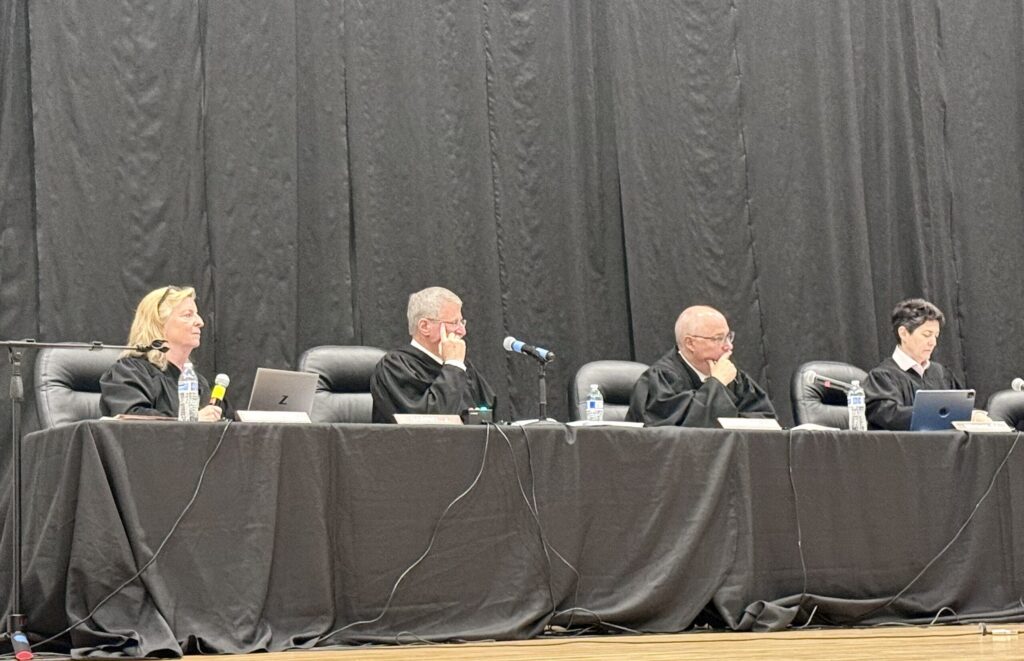
Colorado Supreme Court reverses 2 Chaffee County judges for imposing fee on habeas petitioner
Michael Karlik
michael.karlik@coloradopolitics.com
Updated 4 days ago
The Colorado Supreme Court rejected two separate appeals earlier this month from an incarcerated defendant seeking immediate release from prison, but concluded that two Chaffee County judges incorrectly required him to prepay filing fees for his cases. David J. Gottorff...
Weld County judge wrongly denied bail to murder defendant in gap between law change
Michael Karlik
michael.karlik@coloradopolitics.com
Updated 4 days ago
Colorado’s second-highest court ruled this month that a Weld County judge was wrong to deny bail to a murder defendant in the window between the state Supreme Court’s recognition of the right to bail and the voters’ subsequent overruling of...
Defendants acquitted by insanity are eligible for records-sealing, appeals court says
Michael Karlik
michael.karlik@coloradopolitics.com
Updated 3 days ago
Colorado’s second-highest court clarified last month that defendants who are found not guilty by reason of insanity are eligible to have their criminal records sealed from public view. Judges must seal criminal records if, among other things, a defendant is...