

Colorado justices say judge had no grounds to order defendant to turn over info to prosecution
The Colorado Supreme Court agreed on Monday that a trial judge had no authority to order a defendant to give the prosecution a preview of what his expert witness would say at a hearing to challenge his murder convictions.
In contrast to direct appeals of criminal convictions, defendants may pursue postconviction relief in the trial courts for limited reasons, including newly discovered evidence and constitutionally ineffective assistance of counsel. Generally, the criminal rules empower judges to require the defense to disclose a summary of any expert witness’s planned testimony to the prosecution — the purpose being to give the government “sufficient meaningful information” to cross-examine the expert effectively.
However, the disclosure rule does not mention postconviction proceedings and is specifically designated as a procedure “before trial.”
In response to a petition from defendant Roberto C. Silva-Jaquez, the Supreme Court clarified for the first time that nothing in the state’s constitution, laws or rules of procedure allows a judge to order defendants to disclose expert testimony to the prosecution in a postconviction proceeding.
“Of course, a trial court has inherent authority to carry out its duties, including as reasonably required to allow it to efficiently perform its judicial functions; to protect its dignity, independence, and integrity; and to effectuate its lawful actions,” wrote Justice Carlos A. Samour Jr. in the March 3 opinion. But requiring defendants to give the prosecution a preview of witness testimony “is simply not the sort of function necessary for the effective operation of a court.”
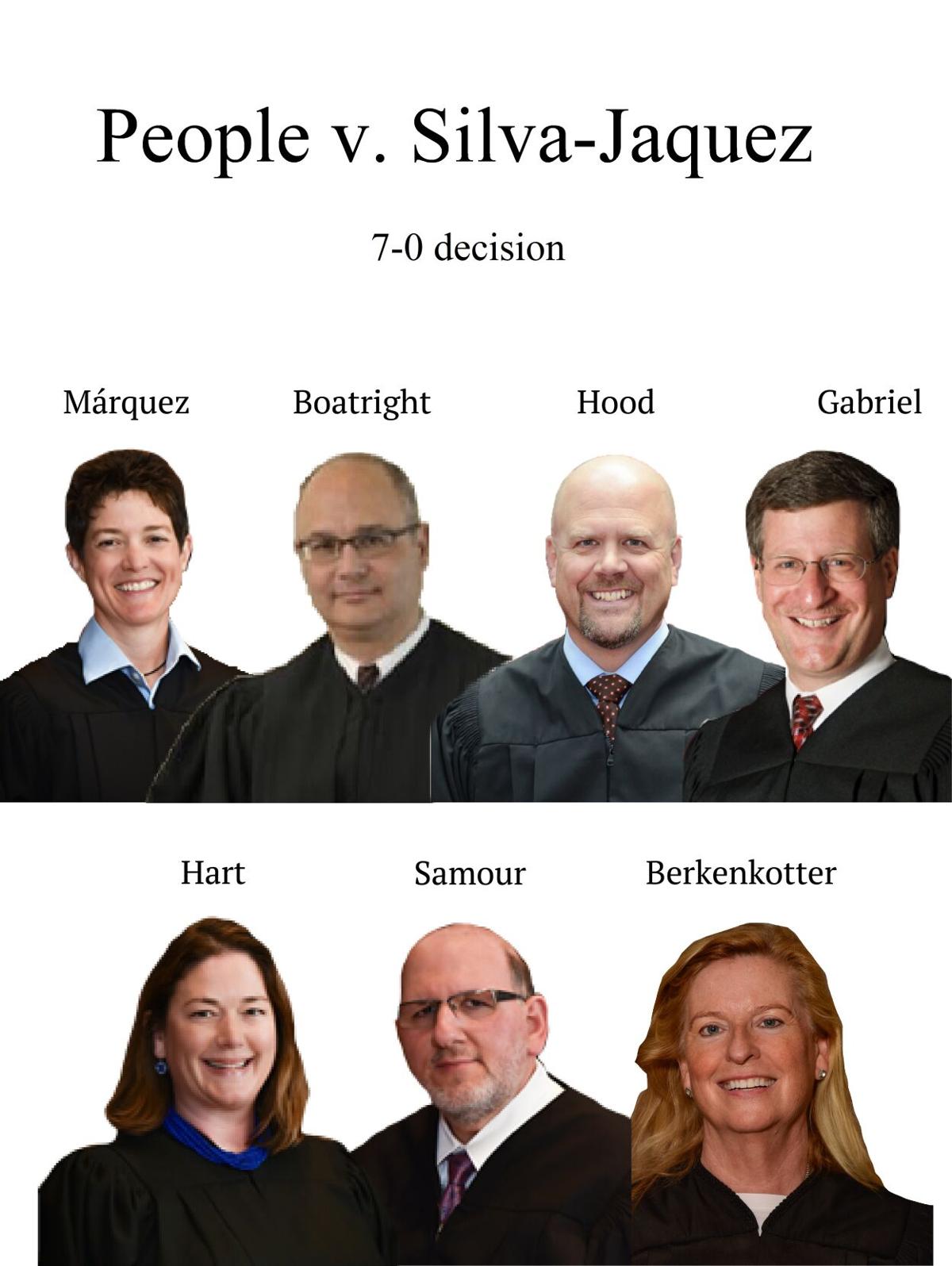

Samour, a former trial judge, added that the Supreme Court was not concerned about the possibility the prosecution might be “surprised” by a defendant’s expert testimony. He noted the screening process for postconviction claims gives the prosecution advance notice of a defendant’s arguments.
Adams County jurors convicted Silva-Jaquez of murder in 2014 and he received a life sentence. Subsequently, Silva-Jaquez filed a petition for postconviction relief. He contended his trial attorneys were constitutionally ineffective for, among other things, not seeking to have the jury consider him guilty of the lesser crime of vehicular homicide.
The defense planned to rely upon an expert witness at his postconviction hearing. The district attorney’s office acknowledged there was no specific rule addressing the subject, but it requested pre-hearing disclosure of any report the expert would produce.
Stephen E. Howard, a retired district court judge assigned to the case, granted the request for information-sharing. He largely relied on a single sentence in a 2014 Colorado Supreme Court decision pertaining to the prosecution’s obligation — not the defense’s — to disclose materials in postconviction cases.
It is “undisputed that district courts have the inherent authority to manage their dockets through scheduling orders requiring the endorsement of witnesses and other timely disclosures, as they deem necessary to avoid delay-causing surprise at evidentiary hearings on post-conviction claims, just as at criminal trials,” wrote then-Justice Nathan B. Coats.
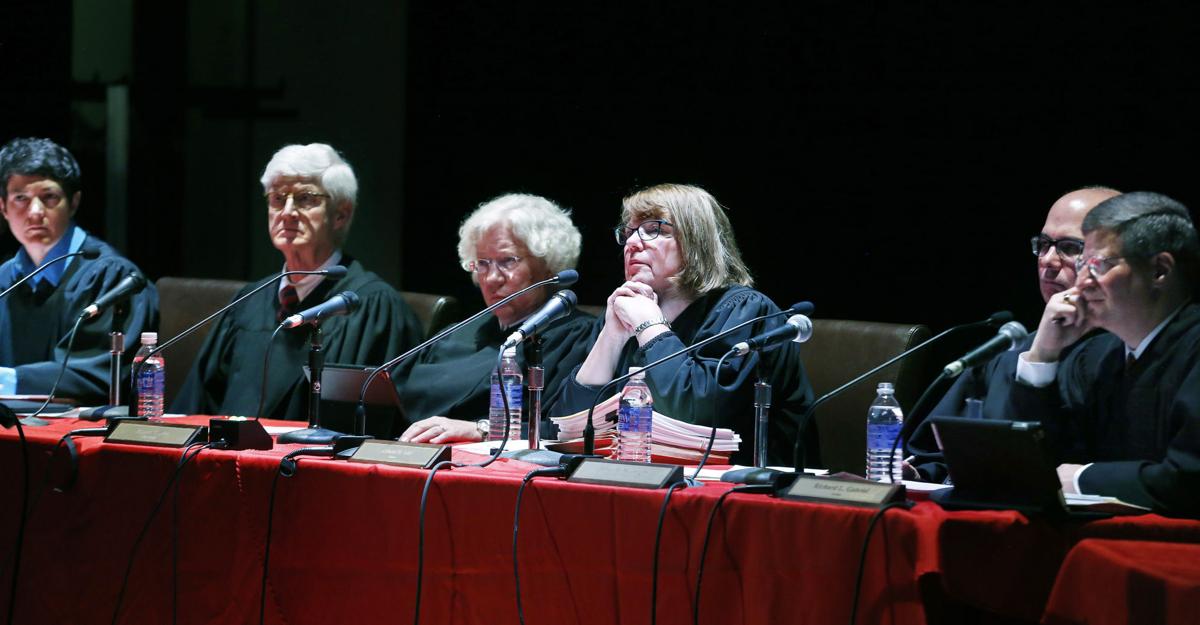
Colorado Supreme Court Justices hear arguments on the question of whether Colorado ski resorts can be liable for avalanches that happen within their boundaries in a lawsuit prompted by a skier’s death, during a court session held at East High School, Tuesday, Sept. 29, 2015, in Denver, Left to right, are Justices Monica M. Márquez, Nathan B. Coats, Chief Justice Nancy E. Rice, Justices Allison H. Eid, Brian D. Boatright, and Richard L. Gabriel. Attorneys presented oral arguments in a case with potentially far-reaching implications for the state’s $3 billion-a-year ski industry. (AP Photo/Brennan Linsley)
Brennan Linsley

Colorado Supreme Court Justices hear arguments on the question of whether Colorado ski resorts can be liable for avalanches that happen within their boundaries in a lawsuit prompted by a skier’s death, during a court session held at East High School, Tuesday, Sept. 29, 2015, in Denver, Left to right, are Justices Monica M. Márquez, Nathan B. Coats, Chief Justice Nancy E. Rice, Justices Allison H. Eid, Brian D. Boatright, and Richard L. Gabriel. Attorneys presented oral arguments in a case with potentially far-reaching implications for the state’s $3 billion-a-year ski industry. (AP Photo/Brennan Linsley)
But the parties disputed the propriety of having the defense preview its expert’s work.
“Never before have I gotten an order from a judge, actually, when everything is said and done, ordering me to provide disclosures,” Silva-Jaquez’s attorney, Cassandra Zobel, told Howard in June after he issued his order.
“In all the postconviction litigations that I have been a part of,” countered Assistant District Attorney Rhoda Pilmer, “postconviction counsel has always provided this information to us without a request to the court. So, I think we are on opposite ends of that at this time.”
Howard said he was surprised the Supreme Court had never provided guidance on the subject, adding he was “not offended” if Zobel wanted to immediately challenge his ruling in the state’s highest court.
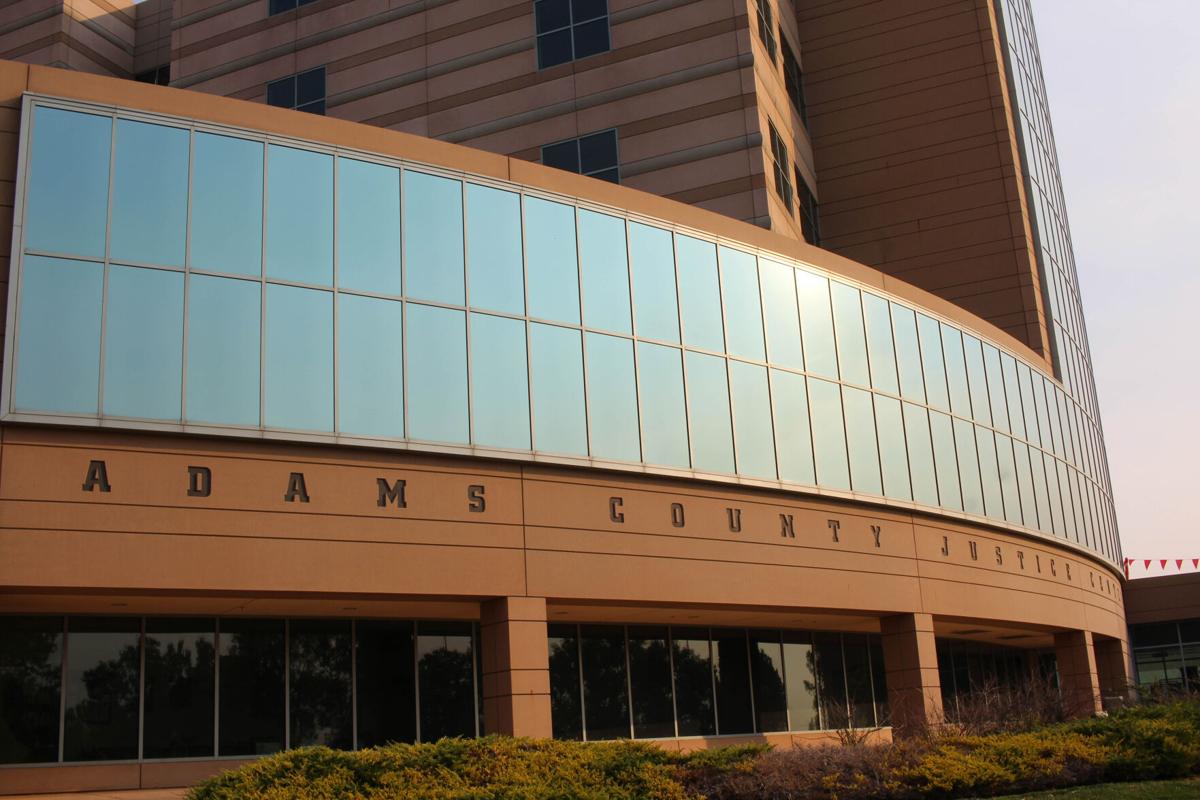
The Adams County Justice Center
Photo by Liam Adams

The Adams County Justice Center
Zobel sought the Supreme Court’s intervention, arguing there is “little consistency” around the state about whether judges can order defendants to disclose in postconviction cases.
“The District Court’s order here permits the prosecution to prepare for and test the truth of any expert testimony, particularly through effective cross-examination, and thus protects the integrity of the truth-finding process in postconviction proceeding,” responded Senior Deputy District Attorney Cameron Munier.
But the Supreme Court explained that Howard needed to have authority from somewhere to order the defense to share its expert’s testimony with the prosecution. In reality, there was none.
“Such silence creates a limitation, not an opportunity,” wrote Samour. He added that the single sentence from the court’s 2014 decision was not a legal basis, either.
“There, it was the defense seeking information in the possession of the prosecution. Here, it’s the prosecution seeking information in the possession of the defense,” Samour wrote. “At any rate, in the unlikely event the prosecution is genuinely surprised at a postconviction evidentiary hearing, it may ask the court to pause the proceedings for a reasonable period of time.”
The case is People v. Silva-Jaquez.

Schoolchildren’s presence at child sex-related trial did not harm Arapahoe County defendant, appeals court says
Michael Karlik
michael.karlik@coloradopolitics.com
Updated 4 hours ago
Colorado’s second-highest court decided on Thursday that the presence of a group of schoolchildren on the first day of a child sexual exploitation trial did not violate an Arapahoe County defendant’s constitutional right to a fair trial. Prosecutors charged Jerry...
Appeals court cites week-old Colorado law to reinstate child neglect case at child, father’s request
Michael Karlik
michael.karlik@coloradopolitics.com
Updated 7 hours ago
Colorado’s second-highest court invoked a new state law for the first time on Thursday and reinstated a child neglect case that both the child and her father wished to reopen. House Bill 1227 took effect on Aug. 12, reversing a...
Colorado Supreme Court names William Hood as next chief justice
Michael Karlik
michael.karlik@coloradopolitics.com
Updated 3 hours ago
The Colorado Supreme Court has selected Justice William W. Hood III to be the next chief justice, the judicial branch announced on Friday. Hood will succeed Chief Justice Monica M. Márquez, who took over the role in July 2024. “I...
Appeals court upholds Park County trophy hunting conviction
Michael Karlik
michael.karlik@coloradopolitics.com
Updated 23 minutes ago
Colorado’s second-highest court clarified on Thursday that a defendant may stand convicted under the state’s trophy hunting laws if he abandons a bear carcass but returns later to remove the meat. Under Colorado law, it is a felony to detach...
Judge grants partial injunction to GEO in fight against state health inspection law
Kyla Pearce
kyla.pearce@gazette.com
Updated 1 day ago
A judge ruled Thursday that The GEO Group does not have to follow parts of a new state law requiring more frequent health and safety inspections at the U.S. Immigration and Customs Enforcement processing center in Aurora. Under the order...
Parker man faces 20 years to life for serial sexual assaults
Nicholas Fogleman
nicholas.fogleman@denvergazette.com
Updated 1 day ago
A 25-year-old Parker man who sexually assaulted three women in 2025 pleaded guilty Wednesday and will serve 20 years to life in prison. Javier Rodriguez-Andrade pleaded guilty to charges stemming from three sexual assaults involving women ages 19 to 24. ...
Divided appeals court upholds warrantless DNA collection in Colorado cold case, cautions of government overreach
Michael Karlik
michael.karlik@coloradopolitics.com
Updated 1 day ago
Colorado’s second-highest court upheld the warrantless collection of a suspect’s DNA from a discarded soda can as constitutional on Thursday, while warning about potential abuse of DNA privacy in the absence of further guardrails. By 2-1, a three-judge Court of...
Man charged in Northglenn homicide of wife
Matt Kyle
matt.kyle@denvergazette.com
Updated 1 day ago
A man has been formally charged with murder and burglary relating to a homicide last week in Northglenn. Alexei Munive-Rodriguez, 48, was arrested Sunday after he was at large following the homicide, which occurred Friday. Police were dispatched around 10:30...
10th Circuit grants immunity to officers for fatal Manitou Springs shooting
Michael Karlik
michael.karlik@coloradopolitics.com
Updated 13 hours ago
The Denver-based federal appeals court ruled on Wednesday that responding officers from Manitou Springs and El Paso County cannot be held constitutionally liable for shooting and killing a man after a 20-minute standoff. Wilford Deweese allegedly pulled out a gun...
10th Circuit rejects invitation for full-court review of tax-avoidance case
Michael Karlik
michael.karlik@coloradopolitics.com
Updated 2 days ago
The Denver-based federal appeals court declined to reconsider the standards for holding entities liable for their tax-avoidance schemes, with a majority of judges voting against full-court review on Monday. In April, a three-judge panel of the U.S. Court of Appeals...