

Colorado justices allow sentences of probation after prison, even though prison-plus-probation illegal
Even though the Colorado Supreme Court ruled five years ago that sentences of prison plus probation are illegal, the justices decided on Monday that judges were permitted to fix those sentences by imposing basically the same punishment.
In its 2019 decision of Allman v. People, the Supreme Court ruled that state law treats probation as an alternative to incarceration and judges must choose one or the other in a single case. Further, a person who is released from prison on parole would be under the simultaneous supervision of their parole officer and a probation officer, with potentially conflicting conditions.
By the time Allman was decided, Bradford Wayne Snedeker had served the prison portion of his prison-plus-probation sentence. When resentencing him in compliance with Allman, however, a trial judge gave him a new sentence of probation only — meaning Snedeker, at the end of the day, was still receiving prison plus probation in his case.
The Supreme Court saw no issue with that ultimate outcome.
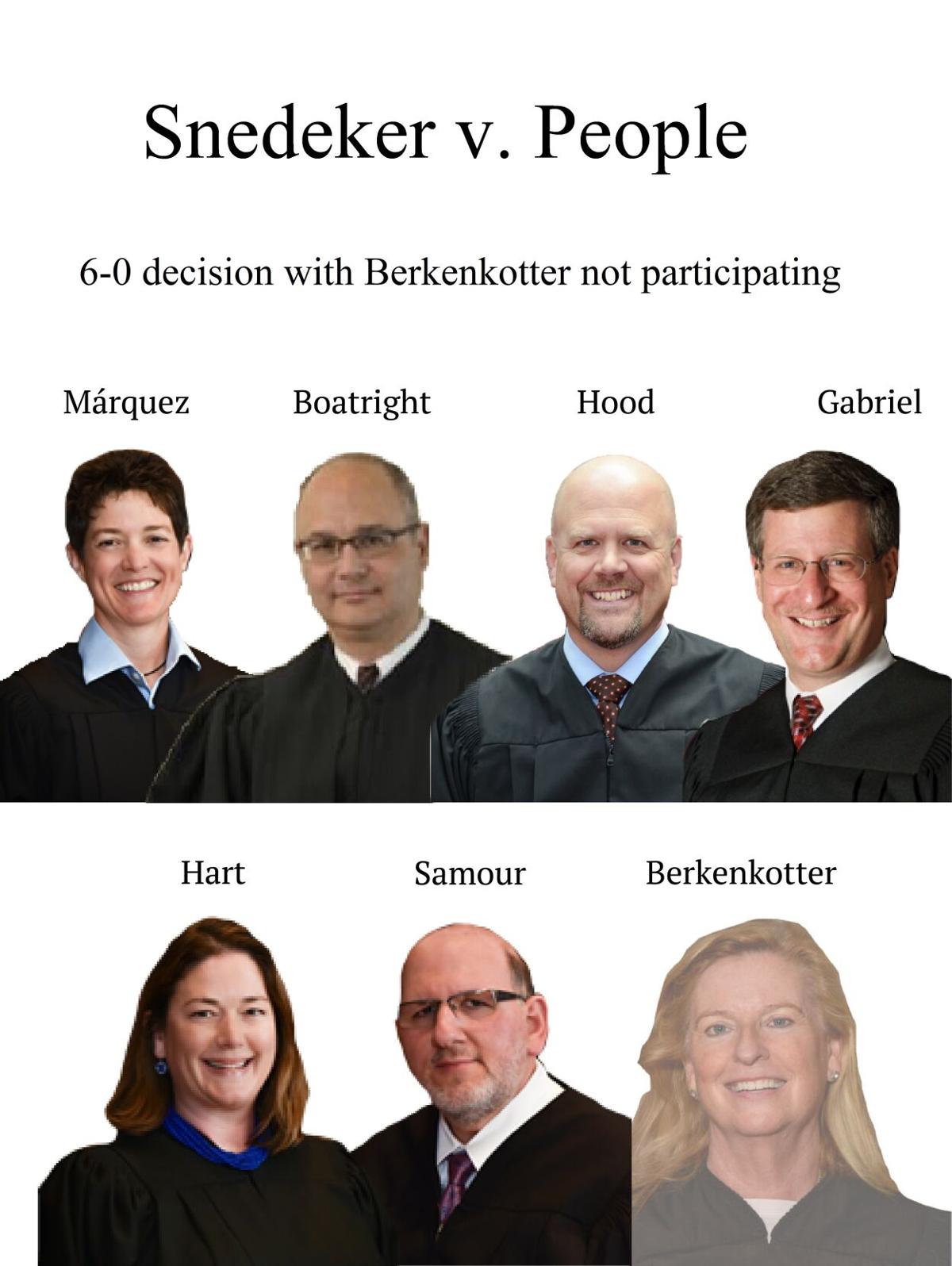
“That Snedeker was previously sentenced to prison plus probation is irrelevant because that sentence is void and has no effect,” wrote Justice Brian D. Boatright in the March 3 opinion. “This remains true even if a defendant’s lived experience includes a prison sentence, followed by a new sentence of probation.”

In 2021, Snedeker appeared in Boulder County for resentencing on his prior securities fraud convictions. At the time, he had been serving a sentence outlawed by Allman. Snedeker already completed the prison portion and was in the process of serving 20 years of probation.
Chief Judge Ingrid S. Bakke resentenced Snedeker, imposing 20 years of probation again with credit for his prison time. Snedeker appealed his sentence as the functional equivalent of an illegal prison-plus-probation punishment.
A three-judge panel for the Court of Appeals disagreed, noting Snedeker received a new sentence that was shorter than the original and did not technically have a prison component.
“Under these circumstances, the entire original sentence is void,” wrote Judge Jerry N. Jones, “and the proper remedy isn’t ‘lopping off’ the probation sentence — the proper remedy is resentencing and imposing a legal sentence.”
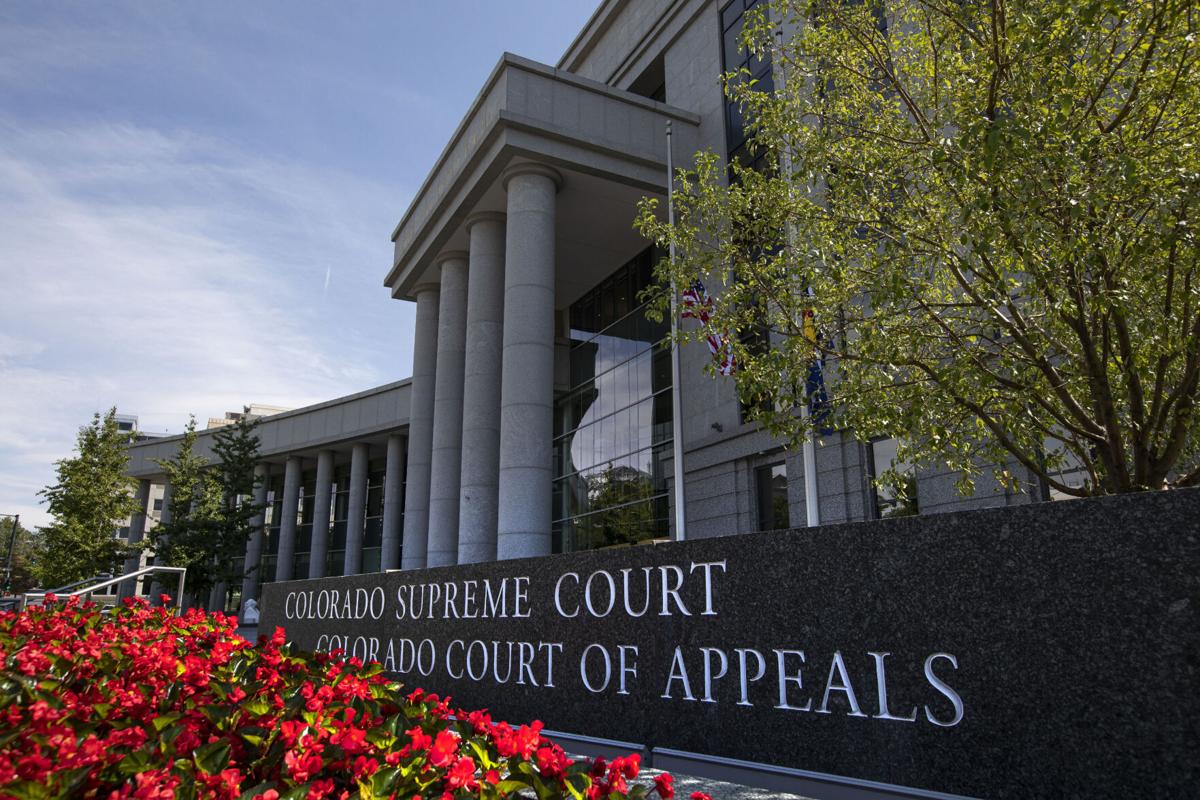
FILE PHOTO: The Ralph L. Carr Colorado Judicial Center, on Tuesday, Sept. 13, 2022, in Denver, Colo. (Timothy Hurst/The Denver Gazette)
Timothy Hurst/Denver Gazette

FILE PHOTO: The Ralph L. Carr Colorado Judicial Center, on Tuesday, Sept. 13, 2022, in Denver, Colo. (Timothy Hurst/The Denver Gazette)
To the Supreme Court, defense attorney Kimberly Alderman Penix acknowledged that Snedeker’s argument would logically mean a defendant in his shoes would either be resentenced to additional time in prison in lieu of probation — a likely worse outcome — or receive a windfall by having his sentence terminated entirely after the prison portion is complete.
Still, Penix believed it was unfair for a defendant to functionally serve a punishment the Supreme Court had deemed illegal.
“The defendant is still experiencing the thing that he’s not supposed to experience under Allman,” she said.
The Supreme Court upheld the Court of Appeals’ conclusion that nothing prevents judges from imposing a probation-only sentence when fixing an illegal prison-plus-probation punishment.
Boatright, who also authored the Allman ruling, conceded Snedeker could have received a less-desirable sentence as a result of Allman. However, Bakke avoided that result by deducting the years Snedeker served in prison from his new, probation-only punishment.
The Supreme Court also decided that Allman does not prevent judges from imposing a prison sentence in one case and a probation sentence in another for the same defendant. That outcome was logical, Boatright explained, because “the offenses could be quite different, and a court could reasonably reach two different sentencing determinations.”
Justice Maria E. Berkenkotter did not participate in the appeal. As a Boulder County judge prior to joining the Supreme Court, she briefly handled Snedeker’s case in 2015.
The case is Snedeker v. People.

Schoolchildren’s presence at child sex-related trial did not harm Arapahoe County defendant, appeals court says
Michael Karlik
michael.karlik@coloradopolitics.com
Updated 5 hours ago
Colorado’s second-highest court decided on Thursday that the presence of a group of schoolchildren on the first day of a child sexual exploitation trial did not violate an Arapahoe County defendant’s constitutional right to a fair trial. Prosecutors charged Jerry...
Appeals court cites week-old Colorado law to reinstate child neglect case at child, father’s request
Michael Karlik
michael.karlik@coloradopolitics.com
Updated 8 hours ago
Colorado’s second-highest court invoked a new state law for the first time on Thursday and reinstated a child neglect case that both the child and her father wished to reopen. House Bill 1227 took effect on Aug. 12, reversing a...
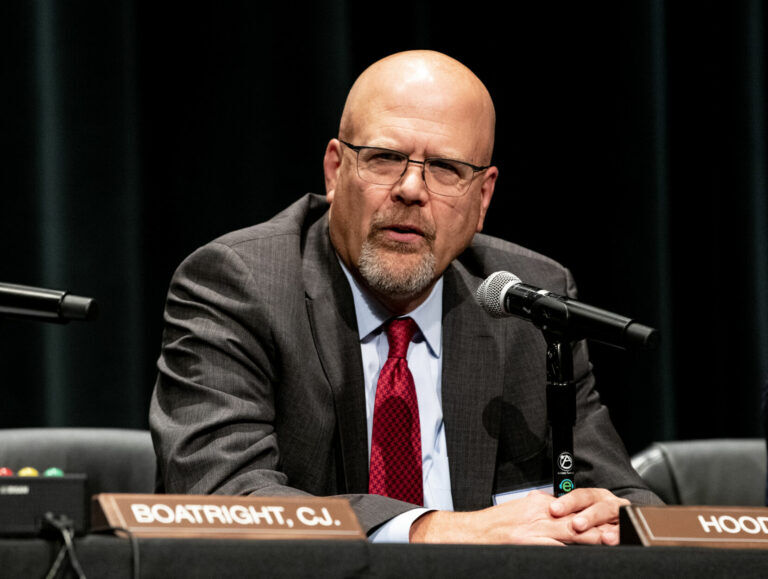
Colorado Supreme Court names William Hood as next chief justice
Michael Karlik
michael.karlik@coloradopolitics.com
Updated 4 hours ago
The Colorado Supreme Court has selected Justice William W. Hood III to be the next chief justice, the judicial branch announced on Friday. Hood will succeed Chief Justice Monica M. Márquez, who took over the role in July 2024. “I...

Appeals court upholds Park County trophy hunting conviction
Michael Karlik
michael.karlik@coloradopolitics.com
Updated 1 hour ago
Colorado’s second-highest court clarified on Thursday that a defendant may stand convicted under the state’s trophy hunting laws if he abandons a bear carcass but returns later to remove the meat. Under Colorado law, it is a felony to detach...

Judge grants partial injunction to GEO in fight against state health inspection law
Kyla Pearce
kyla.pearce@gazette.com
Updated 1 day ago
A judge ruled Thursday that The GEO Group does not have to follow parts of a new state law requiring more frequent health and safety inspections at the U.S. Immigration and Customs Enforcement processing center in Aurora. Under the order...

Parker man faces 20 years to life for serial sexual assaults
Nicholas Fogleman
nicholas.fogleman@denvergazette.com
Updated 1 day ago
A 25-year-old Parker man who sexually assaulted three women in 2025 pleaded guilty Wednesday and will serve 20 years to life in prison. Javier Rodriguez-Andrade pleaded guilty to charges stemming from three sexual assaults involving women ages 19 to 24. ...
Divided appeals court upholds warrantless DNA collection in Colorado cold case, cautions of government overreach
Michael Karlik
michael.karlik@coloradopolitics.com
Updated 1 day ago
Colorado’s second-highest court upheld the warrantless collection of a suspect’s DNA from a discarded soda can as constitutional on Thursday, while warning about potential abuse of DNA privacy in the absence of further guardrails. By 2-1, a three-judge Court of...

Man charged in Northglenn homicide of wife
Matt Kyle
matt.kyle@denvergazette.com
Updated 1 day ago
A man has been formally charged with murder and burglary relating to a homicide last week in Northglenn. Alexei Munive-Rodriguez, 48, was arrested Sunday after he was at large following the homicide, which occurred Friday. Police were dispatched around 10:30...

10th Circuit grants immunity to officers for fatal Manitou Springs shooting
Michael Karlik
michael.karlik@coloradopolitics.com
Updated 14 hours ago
The Denver-based federal appeals court ruled on Wednesday that responding officers from Manitou Springs and El Paso County cannot be held constitutionally liable for shooting and killing a man after a 20-minute standoff. Wilford Deweese allegedly pulled out a gun...
10th Circuit rejects invitation for full-court review of tax-avoidance case
Michael Karlik
michael.karlik@coloradopolitics.com
Updated 2 days ago
The Denver-based federal appeals court declined to reconsider the standards for holding entities liable for their tax-avoidance schemes, with a majority of judges voting against full-court review on Monday. In April, a three-judge panel of the U.S. Court of Appeals...