

Colorado Supreme Court rebuffs AG’s plea to scrap restitution ruling while remaining open to tweaks
During a marathon session of oral arguments on Tuesday, members of the Colorado Supreme Court appeared open to tweaking their landmark 2021 decision warning trial judges and prosecutors to follow the law when awarding restitution to crime victims.
But the justices quickly gave the Colorado Attorney General’s Office a reality check, indicating the Supreme Court would not be caving to the government’s demand to abandon the precedent in part or in whole.
“All of these arguments about reversing,” said Justice Melissa Hart within the first five minutes, “are sort of an irritant.”
In Colorado, as part of sentencing, judges must consider whether defendants owe financial restitution to their victims. If so, prosecutors generally need to provide the requested amount by the time of sentencing or within 91 days of sentencing. Judges must also impose the restitution amount within 91 days of sentencing. If judges need to extend either deadline, they must find extenuating circumstances or good cause.
In a major decision, People v. Weeks, the Supreme Court ruled in November 2021 that judges’ historical process of awarding compensation to crime victims did not comply with Colorado law. The justices noted a lackadaisical approach had taken hold in the trial courts that neglected the clear deadlines and procedural requirements. Consequently, if trial judges fail to follow the law, they lose authority to issue a restitution order.
Quickly, defendants challenged untimely restitution orders in the Court of Appeals. While several succeeded, the appellate court also found ways to conclude Weeks‘ automatic reversal rule did not apply in particular circumstances.
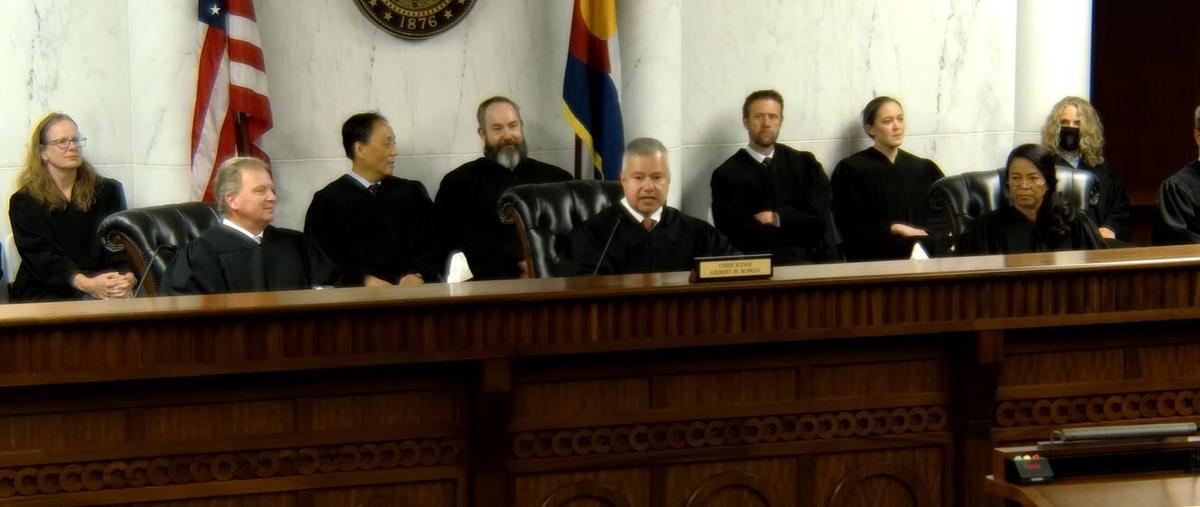
FILE PHOTO: Members of Colorado's Court of Appeals gather at the ceremonial swearing-in of Judge Grant T. Sullivan.
image from video

FILE PHOTO: Members of Colorado’s Court of Appeals gather at the ceremonial swearing-in of Judge Grant T. Sullivan.
At the same time, the attorney general’s office vigorously attempted to neutralize Weeks, seeking to undo the consequence of automatic reversal, hold defendants responsible for some untimely orders and impose other limitations.
Justice Carlos A. Samour Jr., who authored Weeks, bristled at several points during the arguments as the government’s lawyers suggested the court’s interpretation of the restitution law was unreasonable.
“We didn’t just pull it out of thin air. What was the reason we did that? Why did we adopt such a rigid scheme in Weeks?” he demanded.
“Because you had great intentions,” responded Assistant Attorney General Frank R. Lawson.
“You know the reason. We said it in Weeks. You may not like it, but you know it,” retorted Samour. “Because prosecutors were not following the law.”
Samour, a former prosecutor and trial judge, observed it was only after the Supreme Court imposed a consequence for violating the deadlines set by the legislature that the government cried foul. He defended the court’s actions to get the attention of prosecutors and trial judges.
“This is what it took to finally get them to follow the statute,” he said. “We wanted to give teeth to the deadlines. So, that’s the background here, right? Are you asking us now to go back on that? And go back to the way things used to be?”
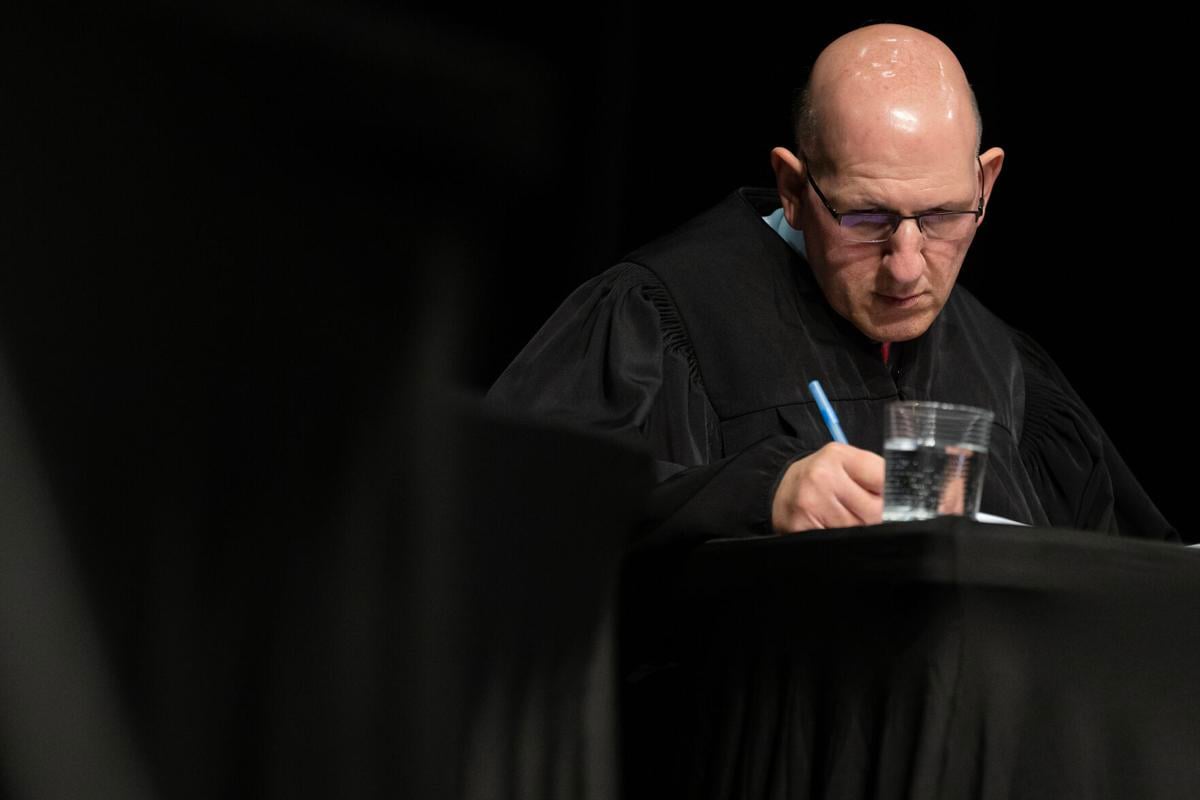
Colorado Supreme Court justice Carlos A. Samour, Jr. takes notes during oral arguments of the Arnold R. Martinez v The People of the State of Colorado case during Courts in the Community on Thursday, Oct. 26, 2023, at Gateway High School in Aurora, Colo. (Timothy Hurst/Denver Gazette)
Timothy Hurst

Colorado Supreme Court justice Carlos A. Samour, Jr. takes notes during oral arguments of the Arnold R. Martinez v The People of the State of Colorado case during Courts in the Community on Thursday, Oct. 26, 2023, at Gateway High School in Aurora, Colo. (Timothy Hurst/Denver Gazette)
Divergent views on Weeks
For their part, defense lawyers voiced relief that the Supreme Court would not be retreating from its core instructions in Weeks. Attorneys told the justices the decision has been successfully changing behavior in the trial courts.
“When I look at sentencing transcripts, what I’m seeing is judges saying, ‘We have 91 days. We need to get this done in 91 days. How are we going to do this? How can we get this done in 91 days?’ And they’re getting that done,” said public defender Lisa Weisz.
The justices also heard that 42 defendants’ restitution orders have been overturned due to the Weeks decision. Lawson, of the attorney general’s office, emphasized he wanted to help adjust Weeks to provide better outcomes for victims.
Weisz, arguing against him, countered that both defendants and crime victims have a right for restitution to be ordered in compliance with the law, and “the victim doesn’t have an entitlement to illegal restitution.”
“It’s interesting. You love Weeks on your side of the aisle and they hate it on the other side of the aisle,” said Samour, referring to the defense and the prosecution, respectively. “You think it simplified things and made things clearer. They think it just made a mess of things.”
Issues large and small
The five appeals the Supreme Court considered touched on a variety of issues, including:
• What happens if a judge orders restitution on the 91st day, but the defendant objects and requests a hearing?
• If a defendant specifically requests a hearing outside the 91-day window, but the judge does not find good cause, is there a problem?
• Can a defendant challenge an untimely restitution order anytime because it amounts to an illegal sentence?
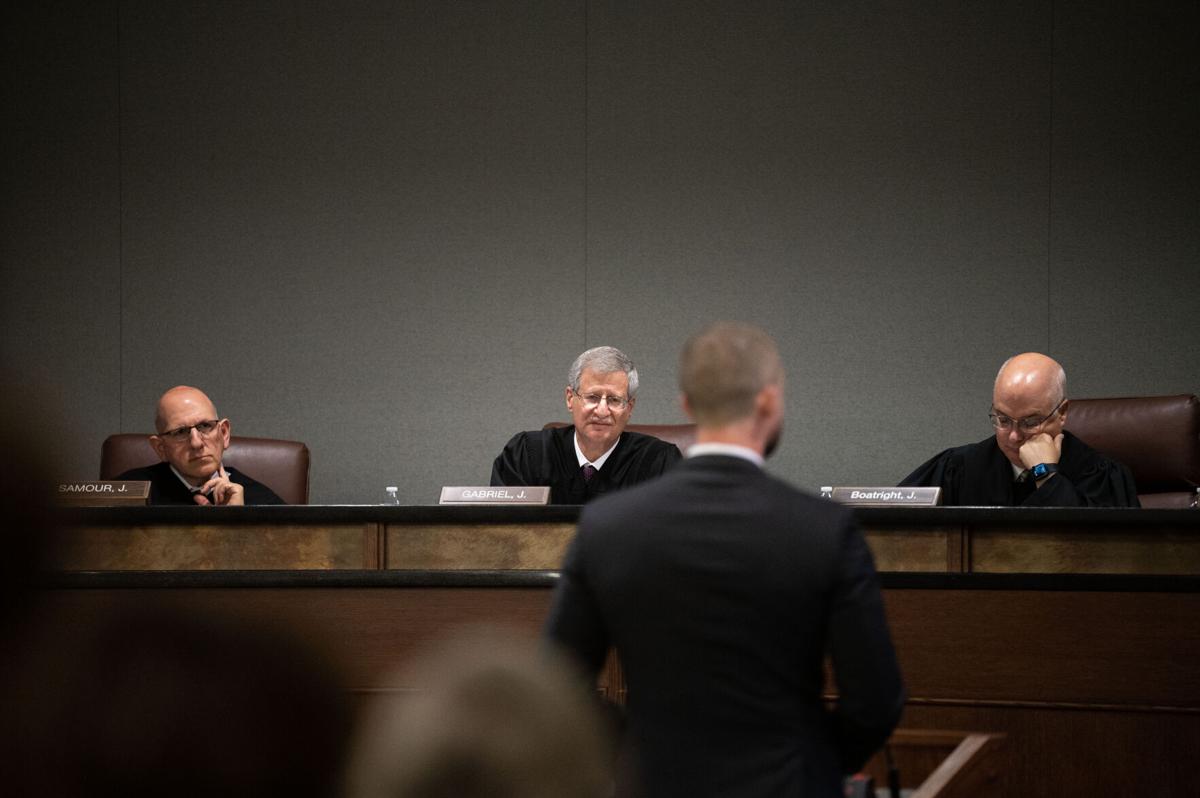
Colorado Supreme Court Justices (from left) Carlos A. Samour Jr., Richard L. Gabriel and Brian D. Boatright listen to arguments from Jake Davis, an attorney in the Nonhuman Rights Project v. Cheyenne Mountain Zoological Society case, as part of Courts in the Community at the Wolf Law building at University of Colorado Boulder on Thursday, Oct. 24, 2024. The semi-annual event entails the Colorado Supreme Court hearing arguments before an audience of students throughout the state. (Stephen Swofford, Denver Gazette)
Stephen Swofford Denver Gazette

Colorado Supreme Court Justices (from left) Carlos A. Samour Jr., Richard L. Gabriel and Brian D. Boatright listen to arguments from Jake Davis, an attorney in the Nonhuman Rights Project v. Cheyenne Mountain Zoological Society case, as part of Courts in the Community at the Wolf Law building at University of Colorado Boulder on Thursday, Oct. 24, 2024. The semi-annual event entails the Colorado Supreme Court hearing arguments before an audience of students throughout the state. (Stephen Swofford, Denver Gazette)
The attorneys and the justices flagged one topic in particular as a concern: Must there be some other harm to the defendant beyond the deadline violation alone for the automatic reversal rule to apply?
Chief Justice Monica M. Márquez acknowledged the Weeks decision did not offer much analysis about what should happen to non-compliant restitution orders. But she hesitated to let untimely orders slide.
“It seems to rip the heart out of Weeks to the extent Weeks was intended to put teeth into the deadlines,” Márquez said.
Justice Richard L. Gabriel quoted from a recent Court of Appeals opinion — not among the batch of cases being heard this week — in which Judge Ted C. Tow III wrote that a restitution order issued without legal authority is always harmful to a defendant.
Public defender Jessica A. Pitts also endorsed that idea.
“Our clients are people, and they have hopes and dreams. And the idea of $13,000 hanging over their head … that causes anxiety and concern to defendants and causes them to put off major life decisions,” she told the Supreme Court. “To say that there’s no prejudice to defendants, I don’t think is accurate.”
‘Not anxious’ to go back
The justices on several occasions seemed to agree that some of the challenged restitution orders should be upheld because various actions taken in the trial court satisfied the spirit, if not the letter, of Weeks. At the same time, members of the Supreme Court stressed to the government that they were serious about correcting bad behavior.
“Some of what Weeks does, what it explicitly does, is providing what is the best practice,” said Senior Assistant Attorney General Brock J. Swanson.
“Was it best practice? Or was it saying, ‘This is what the statute requires?'” interjected Gabriel.
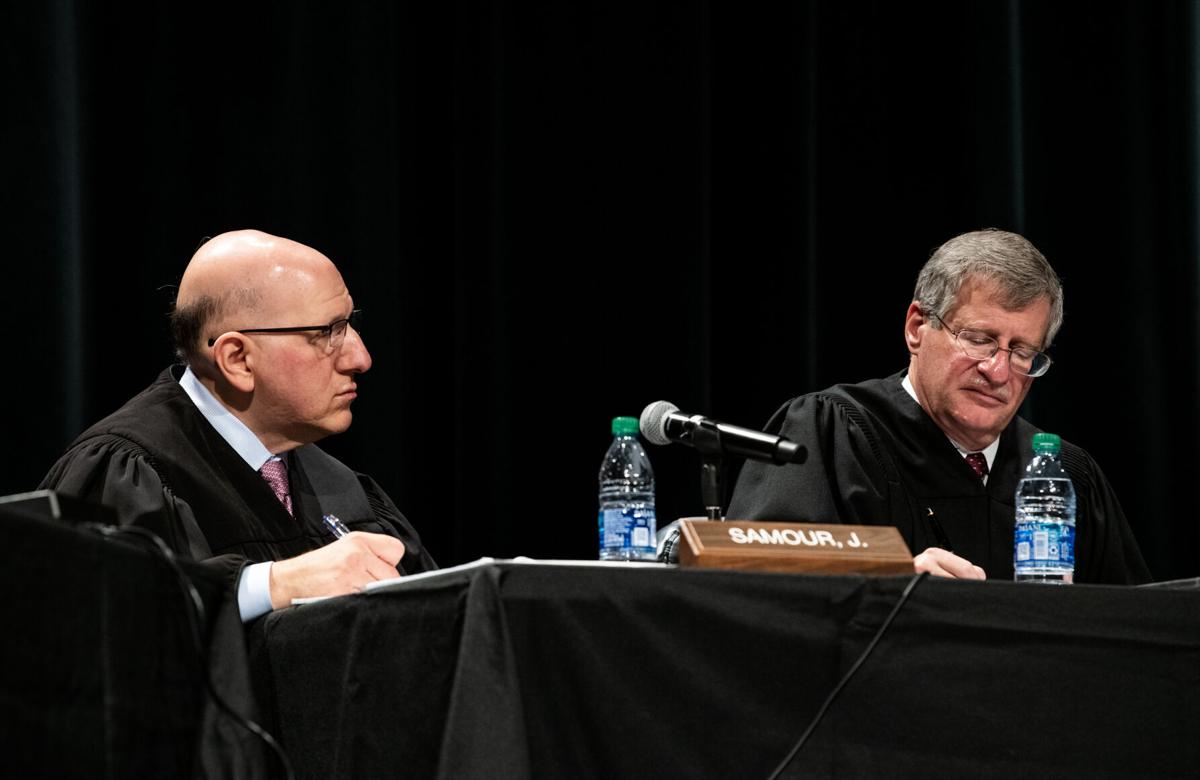
Colorado Supreme Court Justices Carlos A. Samour Jr., left, and Richard L. Gabriel listen to an argument during a Courts in the Community event held at Pine Creek High School in Colorado Springs on Thursday, Nov. 17, 2022.
Parker Seibold, The Gazette

Colorado Supreme Court Justices Carlos A. Samour Jr., left, and Richard L. Gabriel listen to an argument during a Courts in the Community event held at Pine Creek High School in Colorado Springs on Thursday, Nov. 17, 2022.
“Weeks should have been unnecessary,” Samour jumped in. “We expect DA’s to read statutes and follow them. For whatever reason, this has been an area of struggle for a long, long time.”
During the final argument, Justice William W. Hood III summarized the mood of the court after the attorney general’s office made its pitch for eliminating the automatic reversal rule.
“It seems like a recipe just to go back to square one. I think if nothing else is clear from today’s efforts,” he said, “we’re not anxious to go there.”
The cases are Tennyson v. People, Snow v. People, Johnson v. People, Babcock v. People and People v. Roberson.

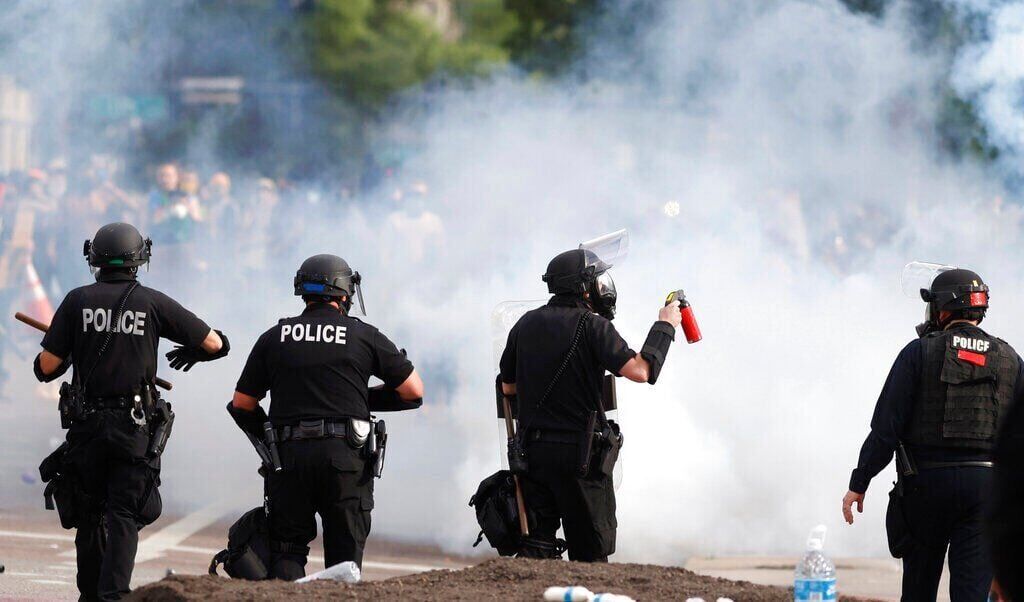
10th Circuit partially revives lawsuit over 2020 Denver protest injuries
Michael Karlik
michael.karlik@coloradopolitics.com
Updated 6 hours ago
The Colorado-based federal appeals court revived a man’s claims against Denver on Friday after concluding a trial judge resolved the case in the city’s favor without analyzing two of the three instances of alleged excessive force and other constitutional violations....
Federal judges find Colorado immigration judge violated several orders
Michael Karlik
michael.karlik@coloradopolitics.com
Updated 7 hours ago
Multiple federal judges in Colorado have freed people from immigration custody after determining that one immigration judge violated their directives for properly conducting bond hearings. For nearly a year, Colorado’s U.S. District Court has faced a flood of “habeas corpus” petitions...
Misconduct complaints from ex-Colorado judicial discipline director dismissed against federal judges
Michael Karlik
michael.karlik@coloradopolitics.com
Updated 1 day ago
The administrative body for the Denver-based federal appeals court upheld a finding last week that misconduct complaints against Colorado’s chief federal trial judge and the chief appeals judge warranted dismissal and appeared to be a “litigation tactic” by the complaining...

First-ever Red Rocks naturalization ceremony draws most diverse group of new citizens
Michael Karlik
michael.karlik@coloradopolitics.com
Updated 8 hours ago
Colorado’s federal trial court held its first-ever naturalization ceremony for nearly 300 new citizens on Thursday at Red Rocks Park and Amphitheatre. “We’re doing it to commemorate the 250th anniversary of the Declaration of Independence and the United States. Red...
Jeffco taxpayers could be on the hook for a possible child sex assault settlement
Matt Kyle
matt.kyle@denvergazette.com
Updated 12 hours ago
Taxpayers may end up on the hook for a child sexual assault settlement, possibly worth up to $15 million, after Jeffco Public Schools failed to notify its insurance company in a timely manner about the case. The incident stems from...
10th Circuit finds no fair housing violation by Littleton landlord for worker’s alleged rape of tenant
Michael Karlik
michael.karlik@coloradopolitics.com
Updated 6 hours ago
The Denver-based federal appeals court concluded on Monday that Littleton’s housing authority could not be held liable for a maintenance worker’s alleged rape of a tenant, as the worker’s employment did not provide any special access to the victim. A...

Jeffco Public Schools sues Trump administration to protect funding after alleged transgender policies violation
Matt Kyle
matt.kyle@denvergazette.com
Updated 2 days ago
In the wake of several threats by the Trump administration to revoke federal funding, Jeffco Public Schools filed a lawsuit against the Department of Education seeking to protect that badly needed money. Jeffco has been under investigation by the DOE’s...
Denver detox center did not violate man’s rights with 10-hour hold, 10th Circuit says
Michael Karlik
michael.karlik@coloradopolitics.com
Updated 3 days ago
The Colorado-based federal appeals court concluded on Tuesday that Denver’s detoxification facility did not violate a man’s rights by holding him against his will for 10 hours until his blood alcohol content was projected to reach zero. Unusually, Brian Garrett’s...

Federal judge clarifies ex-GOP treasurer candidate’s burden to prove defamation claims
Michael Karlik
michael.karlik@coloradopolitics.com
Updated 3 days ago
A federal judge clarified last week that businessman and former Republican statewide candidate Brian Watson will need to surmount a higher hurdle in proving his claim that a party guest’s alleged description of him as a “criminal” amounted to defamation....
Colorado board permits state to appeal injunction against arthritis drug price cap
Marissa Ventrelli
marissa.ventrelli@coloradopolitics.com
Updated 4 days ago
A Colorado board voted Friday to allow the Attorney General’s Office to fight an injunction against a price cap on a drug that treats arthritis. A U.S. district court judge had granted the company Amgen a preliminary injunction, temporarily blocking...