

Colorado Springs voters split on recreational marijuana, early returns show
Colorado Springs voters appear to be split between approving or banning recreational marijuana sales in city limits, early returns show Tuesday night.
As of 7:58 p.m., when first unofficial results were announced by the El Paso County Clerk and Recorder’s Office, two competing ballot questions that will either authorize or more permanently prevent retail cannabis sales locally were in a dead heat, with 235,158 ballots counted.
The resident-backed Ballot Question 300 that proposes authorizing the city’s roughly 90 existing medical marijuana shops to also opt into selling retail cannabis products was earning 53.29% of the vote, while the City Council-backed Ballot Question 2D, which proposes banning recreational marijuana establishments by city charter, had 53.28%.
In the unlikely event that both questions pass, the charter ban will take precedence, city officials previously said.
Colorado Springs has banned recreational sales by ordinance, but the City Council has the discretion to amend or overturn ordinances. A charter ban can only be changed in the future by a vote of the people.
The Latest: Trump wins North Carolina while votes are still being counted in other key states
The last time Colorado Springs voters decided on recreational marijuana sales in 2022, the community rejected the proposal, with 57% of voters saying no.
Those opposed to authorizing retail cannabis sales in Colorado Springs have touched on the potential harms of marijuana and the importance of keeping it out of the hands of underage users.
They have also said outlawing recreational marijuana sales could further keep Colorado Springs’ designation as the permanent headquarters of Space Command, as ambivalence over the outcome of Tuesday’s presidential election prompted uncertainty about whether the command would remain in Colorado Springs.
Daniel Cole, who represents the Colorado Springs Safe Neighborhood Coalition that supported the charter ban on recreational marijuana sales, felt the close vote early Tuesday came down to confusing ballot language.
“Our polling has shown confusion over Ballot Question 300 (the pro campaign),” Cole said. “Some anti-marijuana people have been voting yes on it because the wording is deliberately deceptive. It reads like it restricts recreational marijuana stores when in fact it legalizes them. Part of our campaign has been dedicated to correcting that confusion.”
Part of the ballot language for Ballot Question 300 asks voters “to limit the number of retail/recreational marijuana licenses in Colorado Springs so that the number of licensed locations cannot exceed the number of existing medical marijuana licenses on Nov. 5.”
Supporters who want to authorize retail sales have pushed back against claims about marijuana’s potential health risks while also touting its economic benefits for cannabis retailers and the community as a whole.
An estimated $10 million to $15 million in revenues would support public safety, mental health services and post-traumatic stress disorder treatment programs for veterans, as outlined in Ballot Question 300.
A spokeswoman for the resident-backed pro campaign, Citizens for Responsible Marijuana Regulation, did not immediately return The Gazette’s requests for comment after first results were reported Tuesday night.
If retail sales are officially legalized, there is some remaining question about where recreational marijuana shops may be allowed to operate in the city.
The City Council in late September appeared to preemptively limit shops’ possible operating locations to the eastern edge of the community when it voted to prohibit facilities that sell recreational cannabis, if it is allowed in Colorado Springs, from operating within 1 mile of K-12 schools and residential and child care and drug or alcohol treatment facilities.
Proponents of recreational sales and other city leaders who did not support the zoning ordinance said it de-facto bans retail marijuana sales because of how limiting it is. A city-provided map has shown how the current locations of all medical marijuana shops in Colorado Springs do not comply with the 1-mile buffer rule.
Supporters of the 1-mile buffer said it will better keep marijuana away from underage users.
The resident-backed campaign instead proposes prohibiting recreational marijuana shops from operating within 1,000 feet of schools and other facilities.
Though discussion at public meetings in the summer operated under the understanding that the 1-mile buffer will take precedence over the zoning requirements in the resident-backed question, the city has not yet been able to provide a clear answer.
In September, spokesman Max D’Onofrio told The Gazette the Planning Department will need to evaluate each request for a new retail marijuana license to ensure it complies with zoning and licensing requirements in city code.
Ahead of the election, D’Onofrio said Monday there is no update from the city on which setback requirements could take precedence.


Boebert challenger Eileen Laubacher says she’ll ‘break through the noise’ in Democrat’s 1st TV ad
Ernest Luning
ernest.luning@coloradopolitics.com
Updated 4 hours ago
Democratic congressional candidate Eileen Laubacher says she’ll take a different approach than her opponent in a campaign ad released Wednesday that opens with a cacophonous series of videos featuring Republican U.S. Rep. Lauren Boebert. “Eileen’s had enough of the noise...

Jason Crow endorses Democrats up and down Colorado’s ballot, chips in $100K for campaign efforts
Ernest Luning
ernest.luning@coloradopolitics.com
Updated 1 day ago
Democratic U.S. Rep. Jason Crow on Tuesday formally endorsed more than 60 Democrats running up and down Colorado’s ballot and said he’s putting $100,000 into statewide and county campaigns and organizing programs to drive turnout in the fall election. Crow,...

Colorado House ethics committee issues ‘stern letter’ to Democrat over caucus funds mismanagement
Marianne Goodland
marianne.goodland@coloradopolitics.com
Updated 1 day ago
The Colorado House ethics committee on Friday voted unanimously to issue a “stern letter” to Rep. Mandy Lindsay, D-Aurora, regarding her mismanagement of House Democratic caucus funds. The committee further voted to request that Lindsay resign as Democratic Caucus co-chair...
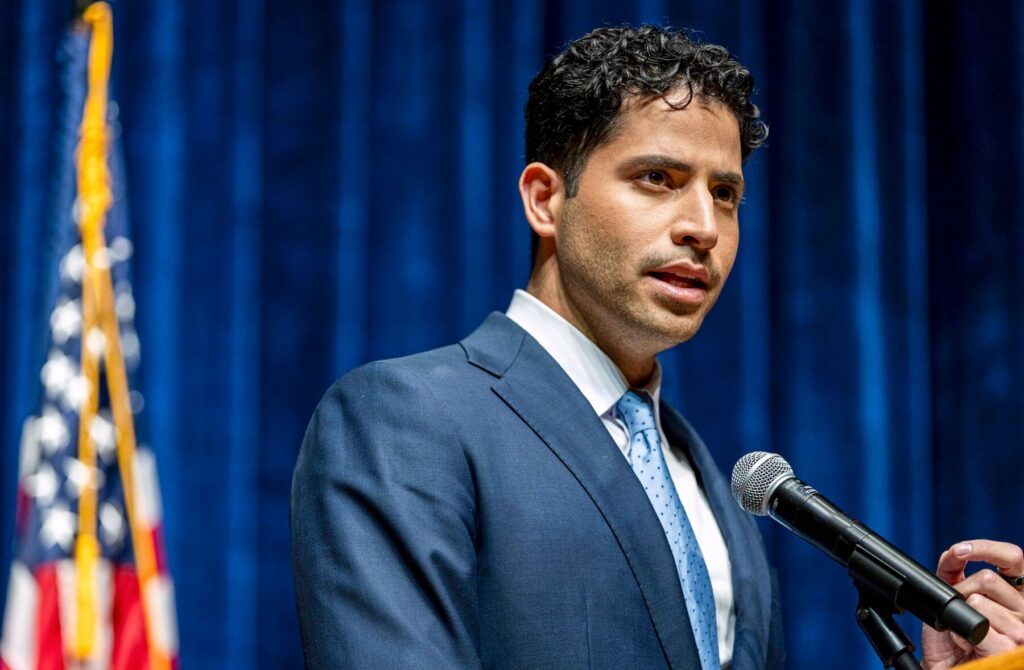
Manny Rutinel resigns from Colorado legislature to focus on congressional race
Marissa Ventrelli
marissa.ventrelli@coloradopolitics.com
Updated 2 days ago
The Democrat running for a key congressional race — whose outcome could decide the balance of power in the U.S. House — on Friday resigned from the Colorado legislature. State Rep. Manny Rutinel is turning his attention to his campaign...

State seeks $50K penalty against GOP candidate Victor Marx over alleged campaign finance violations
Deborah Grigsby
deborah.smith@denvergazette.com
Updated 1 day ago
Republican gubernatorial candidate Victor Marx is looking at more than $50,000 in fines in what the Elections Division of the Office of the Secretary of State calls “unprecedented” campaign finance violations. The state has not imposed that fine yet, and...

Judge puts Colorado Libertarians’ secretary of state candidate on ballot after party’s 1st nominee drops out
Ernest Luning
ernest.luning@coloradopolitics.com
Updated 5 days ago
A Denver judge ruled Friday that the Colorado Libertarian Party’s pick for secretary of state will appear on the November ballot after the party’s original nominee withdrew one day after the deadline to replace minor party candidates. Following a hearing...
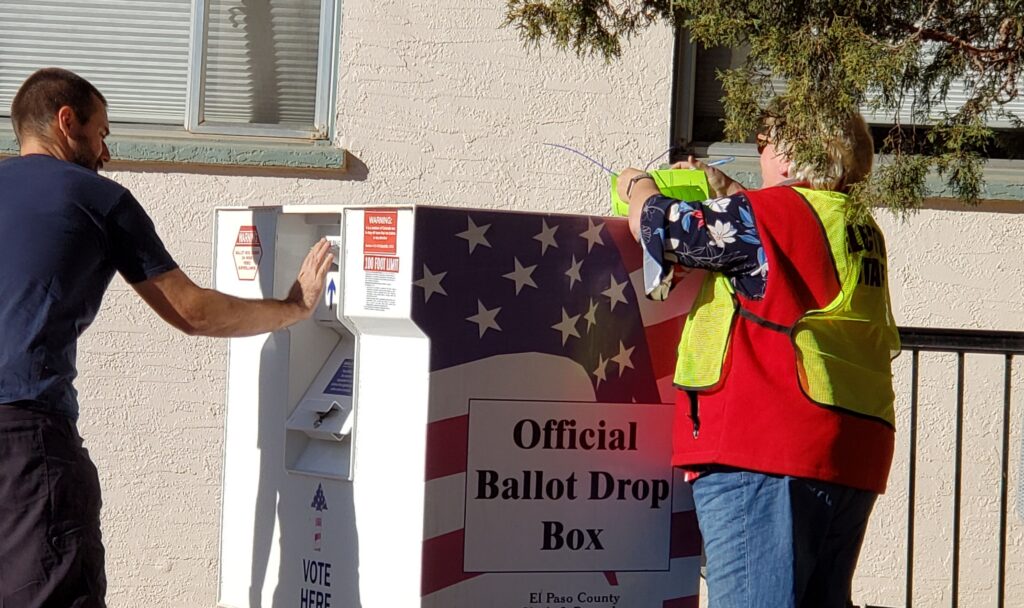
Fentanyl sentencing, tax overhauls, transgender issues anchor Colorado’s 14 ballot measures
Marissa Ventrelli
marissa.ventrelli@coloradopolitics.com
Updated 3 days ago
Fourteen statewide ballot measures await Colorado voters this November, offering a mix of criminal justice matters, tax overhauls and constitutional tweaks. Colorado’s 14 statewide ballot measures match the 2024 election for the most number in recent state history. The all-time...

House adopts Republican U.S. Rep. Jeff Crank’s resolution condemning socialism, mostly along party lines
Ernest Luning
ernest.luning@coloradopolitics.com
Updated 1 week ago
The U.S. House on Tuesday approved a resolution sponsored by U.S. Rep. Jeff Crank to condemn socialism in a largely party-line vote that the Colorado Republican characterized as a chance for lawmakers to “stand firm” against an ideology making inroads...
Capped or graduated income tax rate? Colorado voters to decide
Marianne Goodland
marianne.goodland@coloradopolitics.com
Updated 1 week ago
The proposal to create income tax tiers — which would replace Colorado’s flat rate — has been certified for the November general election ballot, setting the stage for a major showdown between two competing forces seeking to define the parameters of...

Colorado redistricting limits measure heads to November ballot
Marissa Ventrelli
marissa.ventrelli@coloradopolitics.com
Updated 1 week ago
A proposed constitutional amendment that would prohibit Colorado’s congressional maps from being redrawn outside of election cycles has qualified for the November ballot, according to the Secretary of State’s Office. Under Initiative No. 256, redistricting changes for the 2028 election...