

Colorado GOP asks judge to bar state from sending Republican primary ballots to unaffiliated voters
The Colorado Republican Party on Monday asked a federal judge to issue an emergency injunction to prevent the state’s unaffiliated voters from being able to cast ballots in the GOP’s upcoming primary election.
Lawyers for the party argue in a motion filed in U.S. District Court for the District of Colorado that requiring Republicans to participate in the state’s semi-open primary system infringes on the party’s freedom of association under the First Amendment, basing their motion on a March 31 ruling by the same judge in the GOP’s ongoing challenge to the state’s voter-approved primary system.
Under current law, Colorado voters who aren’t affiliated with a political party — amounting to just over half of the state’s roughly 4 million active, registered voters — receive both Democratic and Republican primary ballots and can decide whether to fill out and return one of them.
The Colorado GOP has been suing to overturn the law since 2023, alleging it unconstitutionally limits the party’s ability to decide who participates in one of its core activities, designating candidates to the November ballot.
In the motion filed late Monday, the party asks U.S. District Court Judge Philip A. Brimmer to issue an order barring Colorado Secretary of State Jena Griswold, the state’s top election official and a Democrat, from “including unaffiliated voters in the Republican primary ballot” for the June 30 primary election.
According to court records, Brimmer initially rejected the Colorado GOP’s motion because, at 19 pages, it exceeded the maximum 15-page length the judge has set for filings in his courtroom. The party’s attorneys later filed a revised motion that falls within the judge’s limit.
County clerks are scheduled to begin mailing ballots to overseas and military voters next month and start sending ballots to all voters in the first week of June.
Griswold said in a written statement to Colorado Politics that she opposes the state GOP’s motion.
“The Republican Party’s request is not consistent with Colorado law and the will of Colorado voters,” Griswold said. “It would create confusion for voters and election administration challenges weeks before ballots are sent for the June Primary Election. The Court should deny it.”
Some Republicans have opposed the semi-open primary system since its creation following the 2016 passage of Proposition 108, arguing that the state shouldn’t be able to tell the party who gets to choose its nominees. Others in the party have maintained the system requires candidates to win support from beyond the party’s base, potentially improving chances of winning in November, when unaffiliated voters typically make up a plurality of the electorate.
While both parties opposed the ballot measure before it passed, Democrats have since embraced the primary system, and party leaders routinely deride Republican attempts to snub unaffiliated voters instead of courting them.
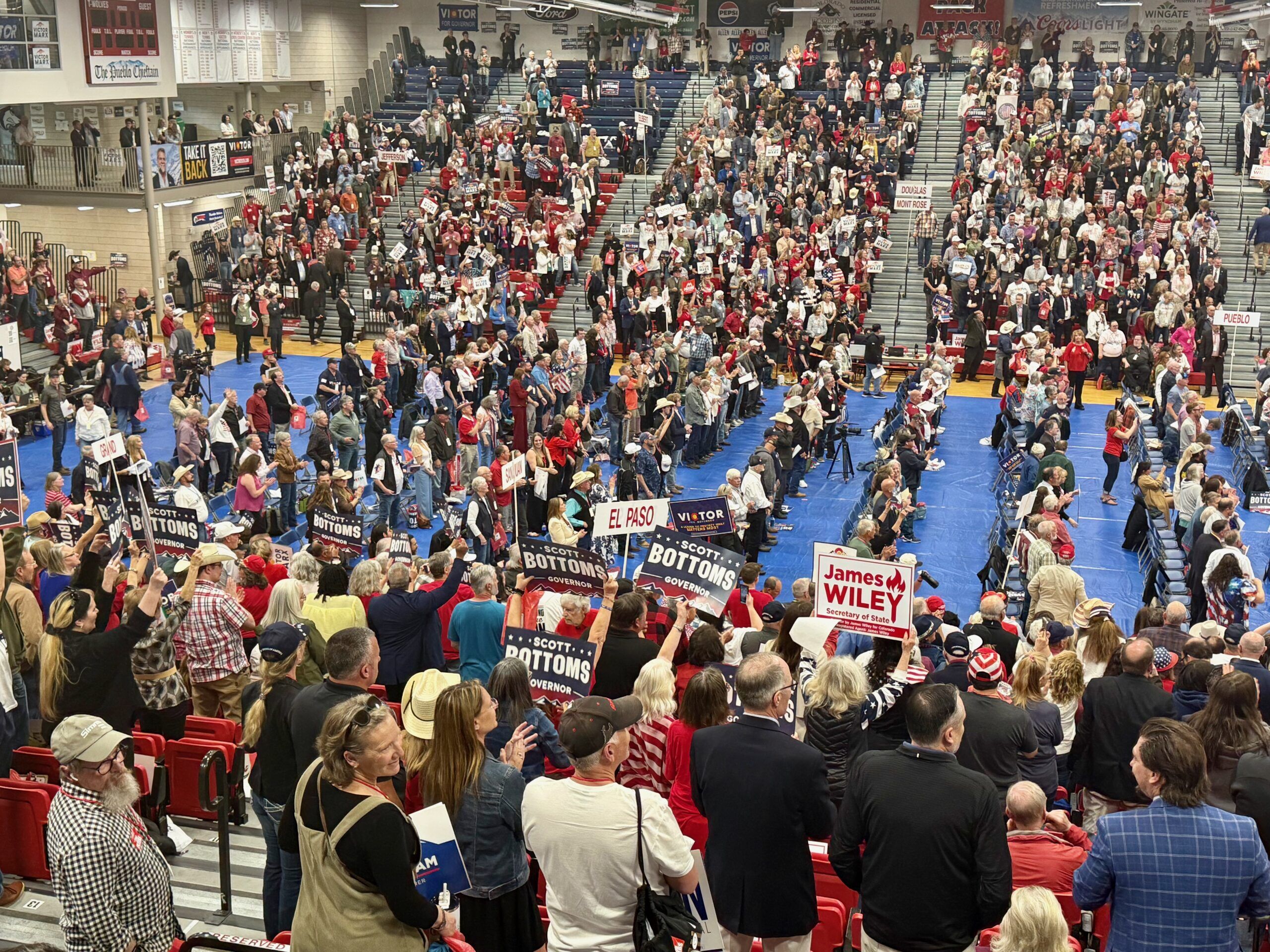
The state GOP’s motion comes just over a week after delegates to the Colorado Republicans’ state assembly on April 11 in Pueblo voted overwhelmingly to reverse a decision made two days earlier by members of the state party’s executive committee that prohibited the party’s lawyers from asking the court to close the party’s primary. Assembly delegates also voted resoundingly to censure the 15 members of the party’s executive committee who opposed filing the motion.
Former state GOP chair Brita Horn, who controlled the state party when the earlier vote was taken, was in power until her scheduled resignation on April 17. She instructed the party’s attorney not to file the motion, based on her attorney’s conclusion that their opponents had misinterpreted state law governing party operations, according to exhibits attached to the party’s filing.
Within days of her departure, however, interim state chair Eric Grossman, the party’s recently elected vice chair, fired Horn’s attorney and permitted another set of attorneys to proceed with filing the request for an emergency injunction. Grossman also signed an affidavit that waived attorney-client privilege with the party’s previous attorney, allowing some of his correspondence to be included in a lengthy set of exhibits to the motion.
“The 108 filing is the long overdue and overwhelming will of the body,” Grossman told Colorado Politics Tuesday in a text message. “The Broncos don’t let Raiders fans pick the head coach.”
The lawyers representing the party in the motion are Colorado Republican National Committeeman Randy Corporon and Long Beach, California-based attorney Alexander Haberbush, whose law partner, John Eastman, a former top legal advisor to President Donald Trump, was permanently disbarred last week by the California Supreme Court for his role formulating the legal strategy used to attempt to keep Trump in power after losing the 2020 election.
Eastman represented the Colorado GOP in 2023 when the party filed the initial lawsuit challenging Proposition 108, which is still before the court.
As part of that lawsuit, Brimmer ruled late last month that a provision in Proposition 108 is unconstitutional because it made it too difficult for the state’s major political parties to “opt out” of the system if they didn’t want unaffiliated voter to have a say in picking their nominees.
In his decision, Brimmer wrote that the law’s requirement that 75% of a party’s central committee membership had to approve canceling its primary created “a severe burden,” which he said infringed on the parties’ constitutional freedom of association.
The judge added that if the parties have “a reasonable ability to opt out” of the primary system, their constitutional rights wouldn’t be infringed upon, though he didn’t specify what would constitute a reasonable ability.
Also in his ruling, Brimmer declined to strike down the rest of the statute.
The law requires that if a party wants to opt out of the following year’s primary, its central committee must vote accordingly and inform the secretary of state by Oct. 1 in odd-numbered years. The law also says that parties that take that route then have to nominate their candidates at a party assembly, rather than being able to exclude unaffiliated voters from their primary.
Republicans have attempted to opt out of the system every two years since Proposition 108’s passage, each time falling short of the 75% threshold.
In the party’s motion filed Monday, the GOP argues that since the “now unconstitutional” super-majority requirement prevented the party from opting out, “application of the semi-open primary to the 2026 Republican primary unconstitutionally compels the Party to associate with unaffiliated voters in violation of the First Amendment. Emergency relief limited to the 2026 cycle is therefore necessary to prevent irreparable constitutional injury before ballots are mailed to voters wishing to vote in the June primary election.”
The party also argues that it isn’t too late to revamp plans to print and mail millions of primary ballots, because minor political parties had until April 16 to notify Griswold whether they wanted ballots to go to unaffiliated voters for any of their primaries.
“No alteration of ballots is required; no alteration of the candidates who will appear on the ballot is required. The only difference, should this motion be granted to avoid the unconstitutional violation that has already been found to exist, is that ballots will not be mailed to unaffiliated voters,” the state GOP argues.
Colorado Democratic Party chair Shad Murib told Colorado Politics that the opposition party is taking the wrong approach.
“Right now, unaffiliated voters are looking for a party that’s changing, going above partisan politics and giving them a chance to chart our future,” Murib said in a text message. “That’s the Democratic Party. We recently crossed 1 million registered Democrats in Colorado, and the only way we grow as a party and as a state is by inclusion, not exclusion.”


Surprise candidate Shimon Blau cleared to face off against Melat Kiros in November
Ernest Luning
ernest.luning@coloradopolitics.com
Updated 1 day ago
Unaffiliated congressional candidate Shimon Blau, a Denver doctor, has qualified by petition for the general election in Colorado’s 1st District, where Democrat Melat Kiros defeated 15-term U.S. Rep. Diana DeGette in last month’s primary, the Colorado Secretary of State’s Office...

Democrat John Hickenlooper hauls in $1.3 million in 2nd quarter in Colorado’s U.S. Senate race
Ernest Luning
ernest.luning@coloradopolitics.com
Updated 1 week ago
U.S. Sen. John Hickenlooper’s reelection campaign raised just over $1.3 million in the year’s second quarter and finished the period with $2 million in the bank, leaving the first-term Democrat with nearly 80 times as much cash on hand as...
Forward Party nominee for Colorado’s U.S. Senate seat puts $1.1 million into his campaign
Ernest Luning
ernest.luning@coloradopolitics.com
Updated 1 week ago
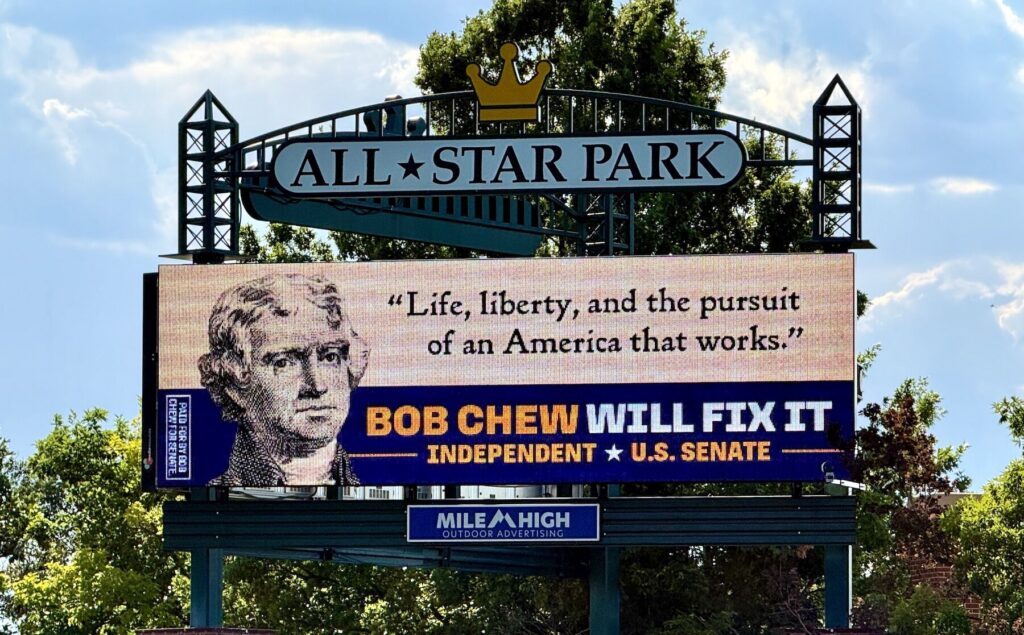
Bob Chew, the Colorado Forward Party nominee for the seat held by Democratic U.S. Sen. John Hickenlooper, plans to report donating $1.1 million to his campaign and raising an additional $20,000 in the most recent quarter, his campaign told Colorado...

Turnout surges and winning margins stretch as final returns post in Colorado’s 2026 primary
Ernest Luning
ernest.luning@coloradopolitics.com
Updated 2 weeks ago
County clerks finished posting unofficial results in Colorado’s primary election on Friday, drawing a line under a series of nominating contests that witnessed upsets, surprises and outright shockers by the time the votes were tallied. While the outcome changed in...
Gabe Evans challenger Manny Rutinel makes House Democrats’ ‘Red to Blue’ program in Colorado’s 8th CD
Ernest Luning
ernest.luning@coloradopolitics.com
Updated 2 weeks ago
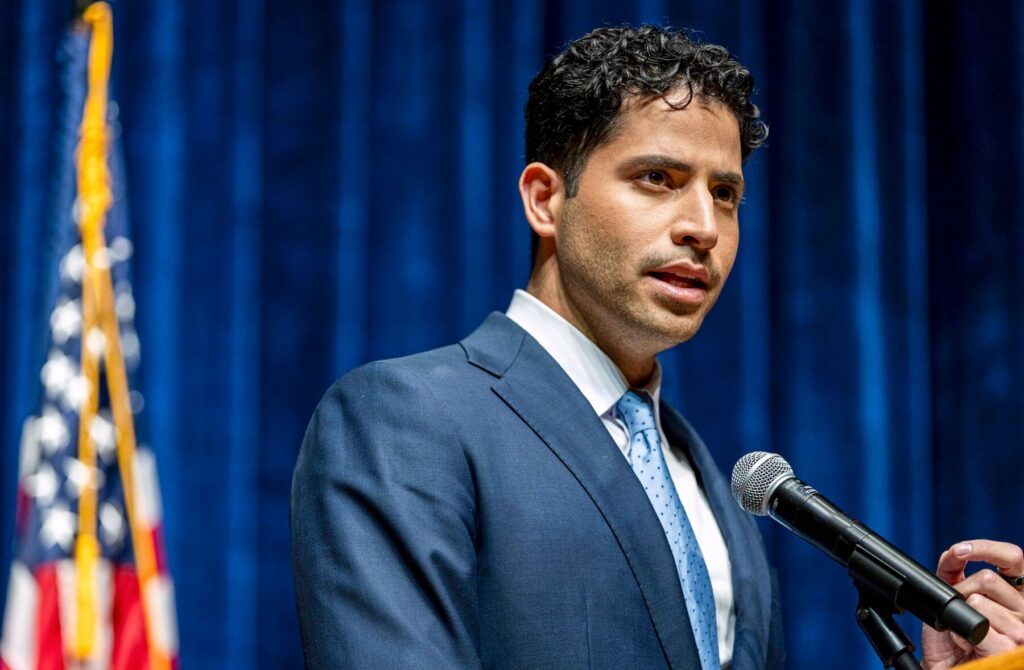
The House Democrats’ main campaign arm on July 9 added state Rep. Manny Rutinel to its “Red to Blue” program, saying the party’s freshly minted nominee in Colorado’s battleground 8th Congressional District is primed to flip the seat held by...
How Melat Kiros pulled Democratic Party left in upset win over Diana DeGette
Ernest Luning
ernest.luning@coloradopolitics.com
Updated 3 weeks ago
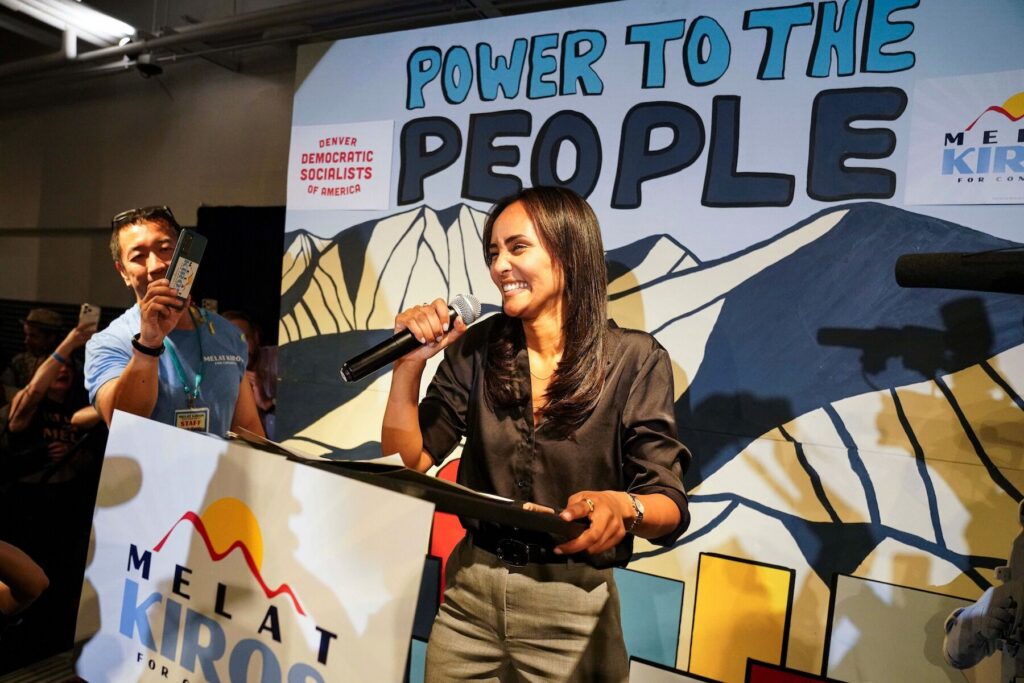
“It’s time for change,” Democratic congressional candidate Melat Kiros, a political newcomer and self-described democratic socialist, said in her campaign’s TV ad. On Tuesday night, primary voters in Denver agreed, giving the nomination to the 29-year-old, while at the same...

Melat Kiros shocks 15-term incumbent Diana DeGette, winning Colorado’s 1st CD Democratic primary
Ernest Luning
ernest.luning@coloradopolitics.com
Updated 3 weeks ago
In the equivalent of a political earthquake, 29-year-old Democratic socialist Melat Kiros defeated 15-term U.S. Rep. Diana DeGette in Colorado’s Denver-based 1st Congressional District primary, according to unofficial election results Tuesday night. The Associated Press called the race at 10:03...

Dwayne Romero wins Democratic primary, will face Republican Jeff Hurd in Colorado’s 3rd CD
Ernest Luning
ernest.luning@coloradopolitics.com
Updated 4 weeks ago
Democrat Dwayne Romero has defeated challenger Alex Kelloff in the primary in Colorado’s 3rd Congressional District, where Republican U.S. Rep. Jeff Hurd fended off a challenge from a former state lawmaker, according to The Associated Press. In returns posted at...

Democrat Jessica Killin claims victory in Colorado’s 5th Congressional District primary
Ernest Luning
ernest.luning@coloradopolitics.com
Updated 4 weeks ago
Jessica Killin walked out to the song American Girl in a bright red dress to claim victory in the democratic primary race for Congressional District 5 at a hotel in downtown Colorado Springs on Election Day. She beat her fellow...

Phil Weiser defeats Michael Bennet in Colorado’s Democratic gubernatorial primary
Ernest Luning
ernest.luning@coloradopolitics.com
Updated 4 weeks ago
Attorney General Phil Weiser took an early lead over three-term U.S. Sen. Michael Bennet in Colorado’s Democratic gubernatorial primary and held onto it, defeating the state’s longest-serving senator in more than 50 years to win a nomination that’s likely to...
PREV
PREVIOUS

Appeals court upholds convictions despite juror's dishonesty about criminal history
Colorado’s second-highest court declined to order a new trial last week for a Boulder County defendant, despite a juror’s concealment of his own prior conviction until after the verdict. A jury found Kasey James Arrington guilty of kidnapping and sex-related offenses in 2022. Afterward, the defense alleged that multiple jurors had responded untruthfully during jury […]

Colorado House ethics panel reviews complaint alleging misuse of Democratic caucus money
Colorado’s House Ethics Committee has begun reviewing a complaint accusing Rep. Mandy Lindsay of improperly handling Democratic caucus money, setting in motion a weeks‑long inquiry into her role and responsibilities as caucus co‑chair. The complaint was filed in January by Rep. Bob Marshall, D-Highlands Ranch. Lindsay has until April 30 to respond to the complaint. […]