

Proposal to ban appointed Colorado legislators from serving in next term fails to advance
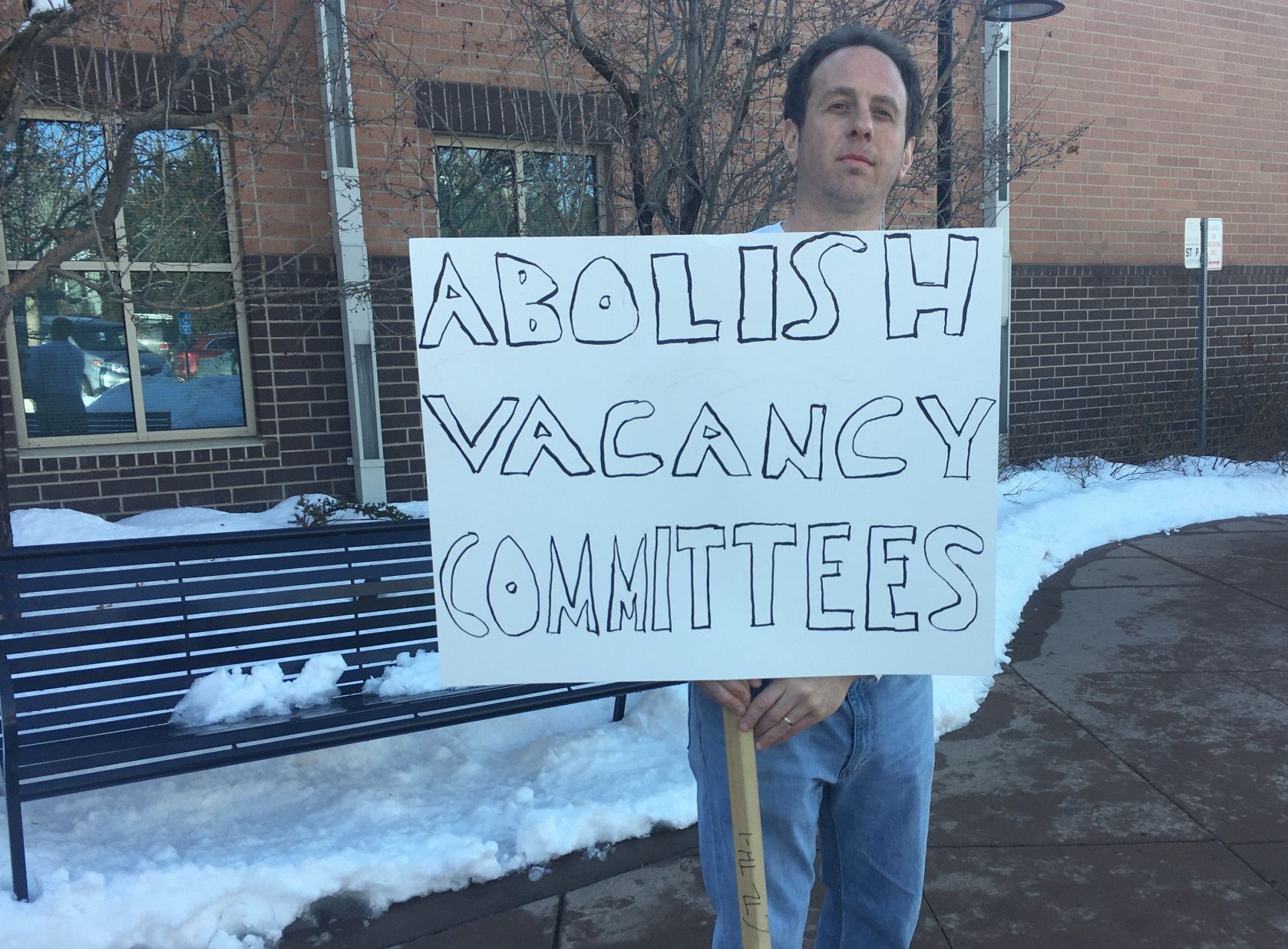
For the third year in a row, lawmakers have struck down a proposal that would have prohibited members of the Colorado General Assembly who were appointed through a vacancy committee from serving in the term immediately after.
Sponsored by Rep. Bob Marshall, D-Highlands Ranch, the referral would have put the question on the November ballot and required a 55% vote to pass.
Marshall has long advocated for changes to how vacancy committees pick legislators.
The process, in which a small group of party insiders selects an individual to fill a seat, has faced criticism in recent years as the number of lawmakers appointed by a vacancy committee has increased substantially. According to Marshall, 25 to 30% of current state lawmakers were originally appointed to their position by a vacancy committee.
Marshall first introduced the resolution in 2024, and while the measure successfully passed through its first committee, he claimed it “wasn’t allowed” to be debated on the House Floor. The following year, he brought Rep. Larry Don Suckla, a Cortez Republican, and Democratic Sen. Marc Snyder of Colorado Springs on to help push the proposal, which failed to pass through its first committee.
Lawmakers passed a different measure, House Bill 1315, in 2025, which established a number of new requirements, such as requiring members appointed via vacancy committee to run for office during the general election in even years or a special vacancy election in odd years, whichever comes first.
While supporters of 1315 lauded the measure as much-needed change to the state’s vacancy committee process, Marshall argued it “wasn’t real reform.”
“We still have the same issues,” he said.
Colorado is one of only four states that use the vacancy appointment process, Marshall told the State Civic, Military and Veterans Affairs Committee on Monday. Most states fill vacant seats through special elections, which can be costly and time-consuming — they can take anywhere from 60 to 90 days to run — not ideal in a state like Colorado, whose legislative session is only 120 days, he argued.
The resolution is not “a slam” on vacancy appointees, Marshall told the committee, “but from a systematic view, it’s really bad. It’s not the norm, it’s not supposed to be the norm — it never was supposed to be the norm— and we are making it a norm.”
Rep. Naquetta Ricks, D-Aurora, argued that prohibiting a vacancy appointee from running in the next election doesn’t make sense and could reduce representation from “marginalized” communities.
A number of members of color were appointed via the vacancy committee process, Ricks noted, including Senate President James Coleman, D-Denver, former Sen. Rhonda Fields, D-Aurora, Rep. Junie Joseph, D-Denver, and most recently, Rep. Kenny Nguyen, D-Broomfield.
“It’s not easy for minorities to even get here… I really do think it is a way that people are able to step into these roles and then do the work, and people see what they bring to their community and how they support their community, and then they want to elect them back,” Ricks said, adding that it is hard enough to get people to run for office as it is without the proposed restrictions.
Several members pointed out that many lawmakers have vacated their positions due to low pay, long hours, and alleged toxicity at the state Capitol.
“How do we address that?” asked Rep. Cecelia Espenoza, D-Denver.
Marshall argued that the real issue is term limits. Since the state imposed term limits on legislators in the 1990s, vacancies have increased exponentially, he said, adding that some members are “timing” their departures so their preferred candidate can take their seat.
“This bill doesn’t fix the problem, said Rep. Michael Carter, D-Aurora. “If we have an issue with vacancies, then we need to do special elections — period.”
Rep. Brandi Bradley, R-Roxborough Park, said she would be voting for the resolution because she doesn’t agree with the vacancy process.
“I would like to see the people vote to put someone in to represent their district and not just 40 people or sometimes 10 people,” she said. “I am completely against that.”
Rep. Chad Clifford, D-Greenwood Village, who was appointed via vacancy committee himself, also supported the resolution.
While he agrees that the bill doesn’t get to the root cause of the state’s many vacancies, Clifford said he would be voting the same way he did on the measure last year so that it could be debated and refined on the House Floor.
“I do feel that this is some kind of conversation that we should have at large, primarily so that we can start to address what causes vacancies,” he said.
The committee voted, 7-4, to kill the resolution, with Bradley, Clifford, and Reps. Scott Bottoms, R-Colorado Springs, and Lisa Feret, D-Arvada, voting in favor of the measure. Six Democrats and Rep. Stephanie Luck, R-Penrose, voted to postpone the resolution.


Denver police reopen 13 sex assault cases after retesting Missy Woods’ CBI work
Jenny Deam
jenny.deam@gazette.com
Updated 2 hours ago
Thirteen previously closed Denver sexual assault cases have been reopened after the city’s crime lab retested DNA evidence once analyzed by former Colorado Bureau of Investigation forensic analyst Yvonne Woods. A police spokesperson told The Denver Gazette the once-closed cases...

Ballot measure aims to shift Colorado sporting goods tax revenue to land, water and wildfire projects
Marissa Ventrelli
marissa.ventrelli@coloradopolitics.com
Updated 18 hours ago
Colorado voters this November will decide whether to direct a share of sales tax revenue from sporting goods — including bicycles and skiing equipment — toward land and water conservation, wildfire prevention and expanding outdoor recreation. Supporters say the measure...

‘The smell of jet fuel lingered for years’: Colorado veterans recall 9/11
Deborah Grigsby
deborah.smith@denvergazette.com
Updated 2 days ago
For many years after the Sept. 11 attacks in Washington, D.C., Mark Schoenrock said he could still smell the burning jet fuel from American Airlines Flight 77. “It was just such an overpowering sensation,” Schoenrock, a former Lone Tree resident...
Denver sues Trump to block armed ICE agents from polling sites
Deborah Grigsby
deborah.smith@denvergazette.com
Updated 3 days ago
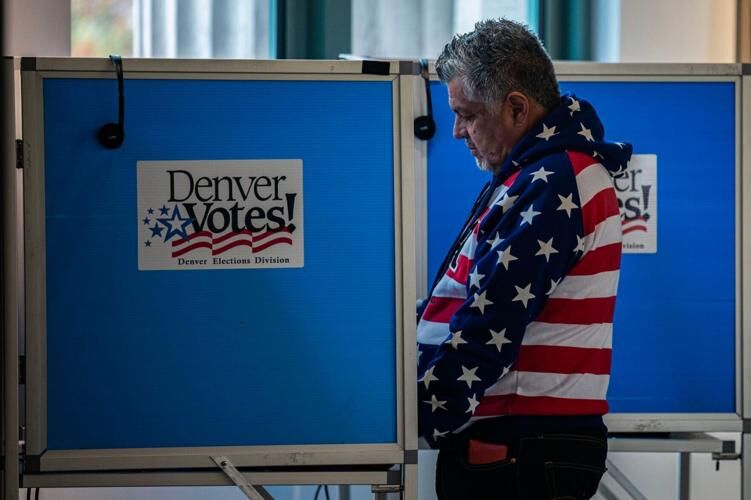
The city of Denver, along with several groups, sued the Trump administration Thursday, seeking to block U.S. Immigration and Customs Enforcement officers who are armed from polling sites during the upcoming midterm elections. In fact, there are no official orders...

Colorado Parks & Wildlife staff kill third wolf in 3 days
Marianne Goodland
marianne.goodland@coloradopolitics.com
Updated 18 hours ago
Colorado’s wildlife division on Thursday said that staff and contracted agents killed an uncollared female yearling wolf a pack after confirming she had been killing livestock in Grand County. Three wolves from three separate packs have been killed in the...

Evergreen High School marks one year since shooting on campus
Kyla Pearce
kyla.pearce@gazette.com
Updated 3 days ago
Thursday marks one year since the Evergreen High School shooting that injured two students and left the shooter dead. On Sept. 10, 2025, Desmond Holly, 16, entered the school armed with a Smith & Wesson .38 revolver and opened fire...
Denver mayor unveils 2027 budget after weeks of warning of tough choices
Nico Brambila
nico.brambila@denvergazette.com
Updated 3 days ago
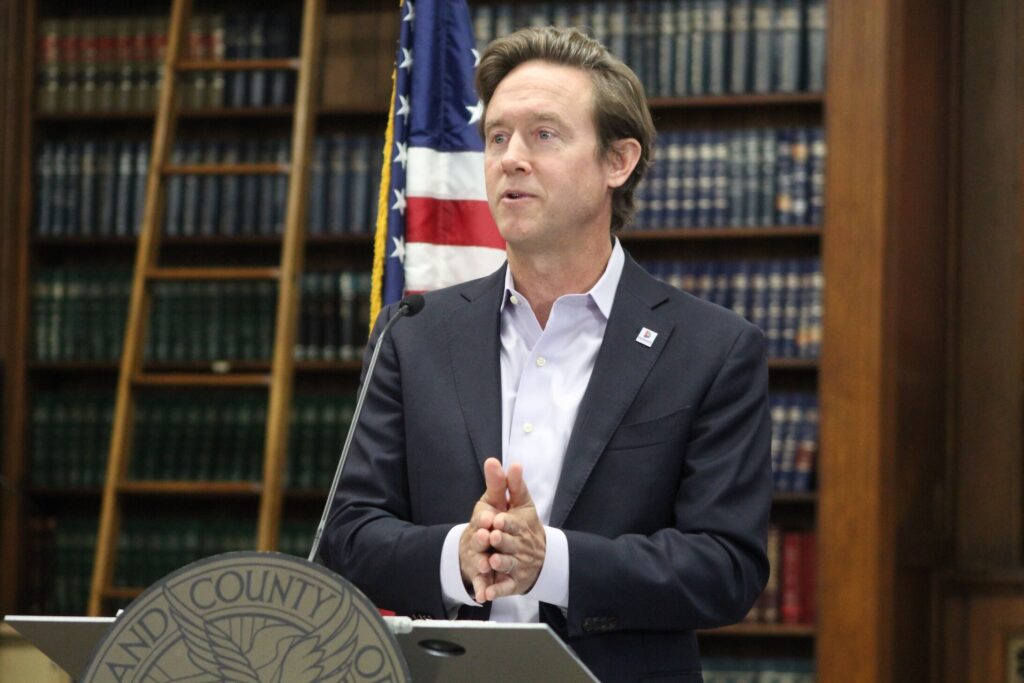
Denver Mayor Mike Johnston unveiled his proposed 2027 budget Thursday after weeks of warning that the city is entering a tighter financial era despite stronger-than-expected revenue collections this year. The projected general fund revenue for 2027 is $1.684 billion, the...

Lawsuit challenges Douglas County commissioners’ ballot actions
Nicholas Fogleman
nicholas.fogleman@denvergazette.com
Updated 3 days ago
A new lawsuit against Douglas County commissioners seeks to invalidate the board’s intervention in efforts to expand the commission from three members to five and restore the original ballot language approved by more than 20,000 petition signers. The suit marks...

United abruptly cancels flyover marking 9/11 anniversary after ‘concerns in the community’
Mark Samuelson Special to The Denver Gazette
mark.samuelson@denvergazette.com
Updated 2 days ago
United Airlines had planned a dramatic flyover in Denver on Friday to mark the 25th anniversary of the 9/11 attacks, when it lost two of the four U.S. passenger jetliners hijacked by terrorists. But the airline abruptly cancelled plans late...

Denver Water proposes 6% rate increase for 2027
Nico Brambila
nico.brambila@denvergazette.com
Updated 3 days ago
Water could be more expensive for Denver residents next year. Denver Water commissioners received a staff proposal for rate increases Wednesday expected to generate about 6% more revenue in 2027. What individual customers pay would depend on where they live...
PREV
PREVIOUS

Aurora council moves forward with statement of 'mourning' for police shooting victims
In Monday night’s Aurora City Council study session, councilmembers moved forward with a resolution stating that the City Council “stands in mourning” with people who have lost loved ones to officer-involved shootings. The resolution, which initially passed through the Public Safety, Courts and Civil Service Committee without much discussion, will go to an official vote […]
Colorado ethics panel to review complaint alleging misuse of Democratic caucus funds by chair
A legislative ethics panel in Colorado is scheduled to meet Wednesday to review a complaint alleging that Aurora Democrat Rep. Mandy Lindsay misused House Democratic caucus funds. Rep. Bob Marshall, D‑Highlands Ranch, filed the complaint on Jan. 26. Marshall’s complaint outlines the structure of caucus funds and details the responsibilities Lindsay has in managing them. […]