

Colorado pulls back from the brink | Denver Gazette
Voters stopped both of the state’s major political parties from walking off a cliff in Tuesday’s primaries. They resoundingly rejected most of each party’s fringe candidates — the noisemakers and rabble rousers who by and large had offered only radical rhetoric and baseless fear-mongering rather than addressing the pressing policy issues on voters’ minds.
Conventional wisdom holds that primary elections play to the extremes, but Colorado voters were having none of it this time. In races left and right — in Democratic-dominated Denver as well as rock-ribbed Republican Colorado Springs — the fringe went down in defeat.
It was refreshing and reassuring to see each party’s rank-and-file faithful keep its bearings in dismissing candidates who had jumped the rails.
Perhaps most telling was the crushing loss — by a two-to-one margin — of controversial state Republican Chair Dave Williams to Jeff Crank in Colorado’s 5th Congressional District primary. Though Crank still must face River Gassen, the likely winner of the yet-undecided Democratic primary in the district, Crank’s victory Tuesday makes him the presumptive successor to retiring U.S. Rep. Doug Lamborn in a district that only sends Republicans to Congress.
Stay up to speed: Sign up for daily opinion in your inbox Monday-Friday
Despite Williams’ clumsy attempts to outflank Crank on the right and cast himself as somehow more conservative, voters weren’t buying it. Crank’s conservative bona fides were too well known, and Williams wound up coming across as a fast-talking, say-anything pol.
Williams already had stirred controversy with his reckless control of the state party before throwing his own hat in the ring in a bid for the 5th. He refused to step down as party chair despite the glaring conflict and, in unprecedented disregard for a chair’s duties, proceeded to hijack the state party apparatus to promote his own candidacy and smear his opponent.
Voters’ overwhelming rejection of Williams in the Republican heartland of the Pikes Peak region amounted to no less than a repudiation of his dubious party leadership.
He employed the same outrageous tactics he used to bolster his own congressional campaign in promoting his allies running in other Republican primaries around the state. And for the most part they fared as poorly as he did.
Fourteen of 18 candidates the state party ill-advisedly endorsed in contested races were defeated. Williams’ losers included legislative hopefuls and at least a couple of other congressional contenders. The victors in those two congressional races — Gabe Evans, who won the Republican nomination for the 8th Congressional District, and Jeff Hurd, who became the GOP’s pick in the 3rd Congressional District — are highly qualified and capable candidates who can credibly face their Democratic opponents in very competitive races in November.
Across the political divide up in Denver, fringe candidates fizzled, as well.
In two highly publicized legislative races in historically Democratic Denver, voters had lost patience with two members of the state Legislature who reflexively embraced radical political causes and routinely stoked hot-button issues with bombast and invective. Denver Democratic Reps. Elisabeth Epps and Tim Hernandez were shown the door and got the boot.
It served as a gauge of sorts for just how much further Democratic voters are willing to let the Legislature’s ruling progressives veer to the left. The answer, it seems, is not that far.
That seems to capture the mood of primary voters in both parties. As if to say, “spare us the radicalism, the rhetoric and the reckless campaign politics.” What voters crave is solutions to the concerns the candidates will have to face if and when they win in November.
Denver Gazette Editorial Board

The relevance of Watergate more than a half-century later | SONDERMANN
By Eric Sondermann
by-eric-sondermann@coloradopolitics.com
Updated 3 days ago
It was the scandal for which all other scandals are now named. In June 1972, a small group of Cuban burglars with high-level connections broke into the headquarters of the Democratic National Committee. Those headquarters were located in the Watergate...
Colorado must continue finding common ground on wildfire policy | GUEST COLUMN
Colorado Politics
colorado-politics@coloradopolitics.com
Updated 2 days ago
By John Herrick Colorado has never lacked for opinions about wildfire policy. We debate forest management, climate change, prescribed burns, land use, air quality and budgets. Those debates are familiar territory, but a new discussion is beginning to happen around...

Proposition NN is the best investment for Colorado’s students and schools | GUEST COLUMN
Colorado Politics
colorado-politics@coloradopolitics.com
Updated 2 days ago
By Justin Ogden Colorado families know what it means to make difficult budget decisions. Inflation has driven up the cost of groceries, housing, utilities and just about everything else. Families like mine work hard to stretch every dollar while still...
Were the primaries a preview for consequential general election? | Paula Noonan
Paula Noonan
paula-noonan@coloradopolitics.com
Updated 3 days ago
Colorado’s political future will go the way of this election. Historically, the state has not had both chambers controlled by a supermajority. This election may change that. The primaries suggest how the general election may play out. Democrats had solid...

Disagreement doesn’t have to mean disrespect | GUEST COLUMN
Colorado Politics
colorado-politics@coloradopolitics.com
Updated 3 days ago
By Vincent Atchity These days, it doesn’t take long to feel overwhelmed by politics. Turn on the news, scroll through social media or read the comments on almost any political post and you’ll find anger, outrage and personal attacks. For...

Keeping Colorado’s kids’ trust online | PODIUM
Colorado Politics
colorado-politics@coloradopolitics.com
Updated 3 days ago
By Stuart Jenkins Almost every day, the kids and teens we serve across Colorado are introduced to new generative artificial intelligence and other emerging technology, including conversational AI systems designed to simulate human conversation. These tools are no longer a...
Marx’s ‘through line’ predates Trump, connects to Maes | FEEDBACK
Colorado Politics
colorado-politics@coloradopolitics.com
Updated 3 days ago
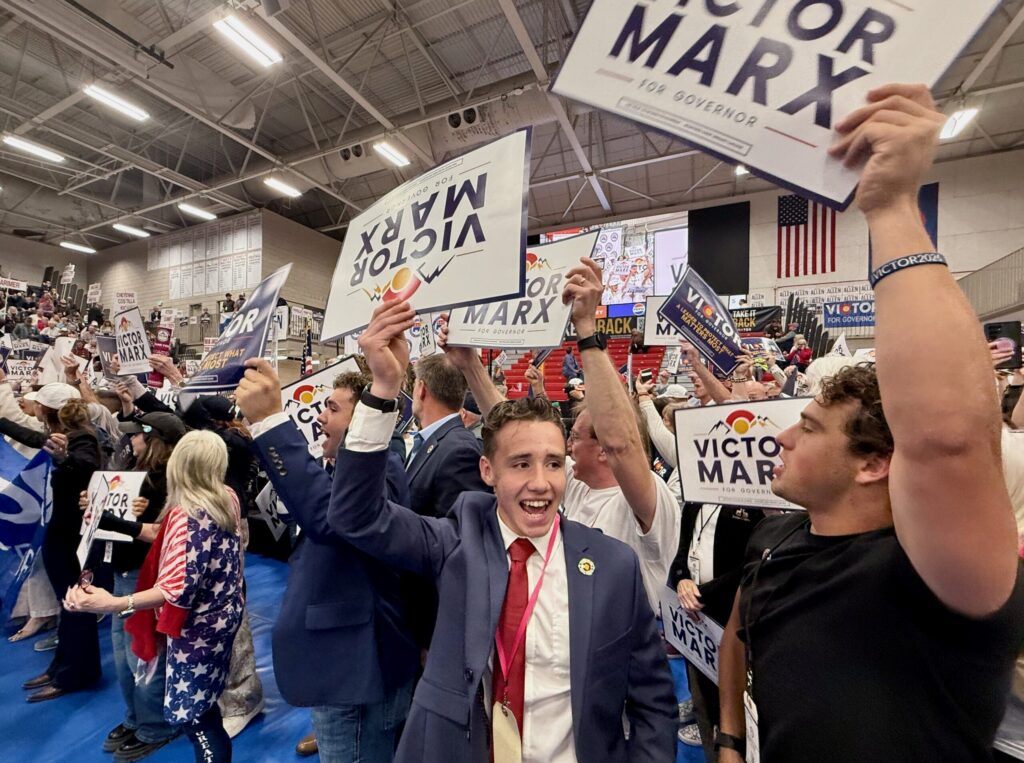
Eric Sondermann is of course correct Victor Marx is an unserious, unelectable, embarrassing Republican nominee for governor of Colorado. But I respectfully submit that the “through line,” as Mr. Sondermann describes it, is not from Trump to Marx, despite their...

Cedric Pride’s blueprint for opportunity through the trades | The OpEdge Podcast
Tony Olivero
tony.olivero@gazette.com
Updated 4 days ago
Cedric Pride, CEO of the nonprofit Pride Initiative in Denver, joins The OpEdge with a blueprint for workforce development, skilled trades, and economic opportunity. Pride tells host and investigative columnist Jimmy Sengenberger why he believes the trades offer a path...
Colorado’s No. 1 education ranking should raise our ambition | GUEST COLUMN
Colorado Politics
colorado-politics@coloradopolitics.com
Updated 4 days ago
By Scott Laband Colorado has earned the right to celebrate its new No. 1 ranking in education from U.S. News & World Report. Gov. Jared Polis called it “one of the proudest moments” of his time in office and shared the...

Colorado’s No. 1 education ranking reflects the power of school choice | GUEST COLUMN
Colorado Politics
colorado-politics@coloradopolitics.com
Updated 4 days ago
By Peter Mason Colorado is now the No. 1 state in the nation for education, according to the 2026 U.S. News & World Report Best States rankings. That is a distinction worth celebrating. It is also a distinction worth understanding....