

Colorado justices say conflicted lawyer not OK, but automatic reversal not required for defendant
Members of the Colorado Supreme Court agreed on Monday it was highly problematic that an El Paso County defense lawyer seemingly failed to tell his client he was simultaneously being prosecuted by the same district attorney’s office, but a majority stopped short of finding the conflict merited an automatic reversal of the defendant’s convictions.
Matthew Rodolfo Vansant Lopez’s appeal revolved around the question of whether he needed to prove the criminal proceedings of his now-disbarred attorney, Dennis Hartley, negatively affected his own case in order to receive a new trial. Previously, the state’s Court of Appeals rejected that idea, believing it would be too high a burden for defendants asserting their right to conflict-free representation.
By 5-2, the Supreme Court concluded there did, in fact, need to be a demonstration that Hartley did not pursue a reasonable strategy or tactic in Lopez’s case because of his own pending criminal matters. But Justice Richard L. Gabriel cautioned in the June 24 opinion that the court was disturbed at how Hartley and Lopez’s trial judge never explicitly confirmed Lopez knew his attorney might have an incentive not to upset the prosecution.
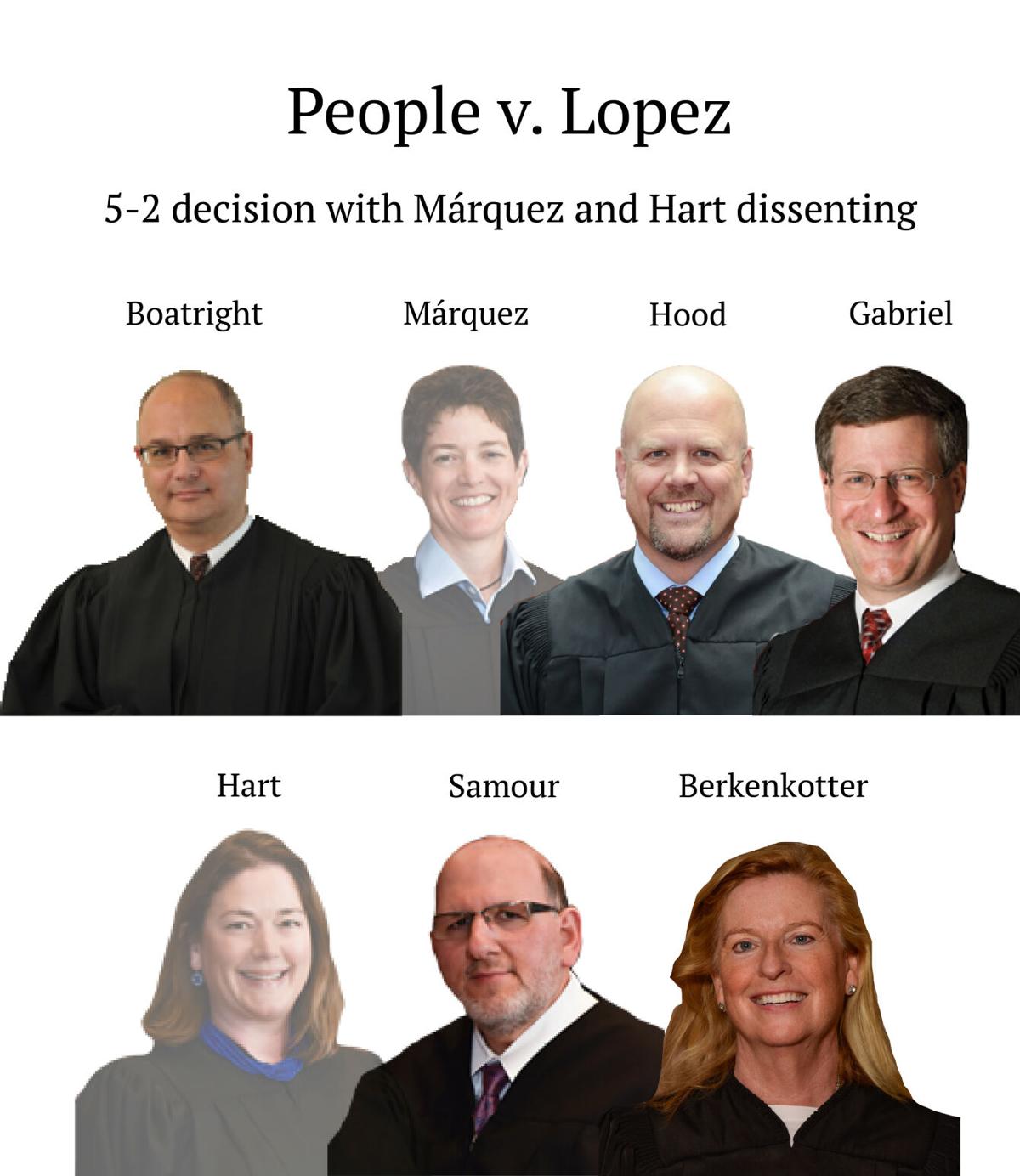

“Indeed, as far as the record reveals, it appears that everyone in the courtroom, except perhaps Lopez, was fully informed of the possible conflict,” Gabriel wrote.
Justice Monica M. Márquez, writing for herself and Justice Melissa Hart, disagreed that the conflict of interest needed further investigation. She believed Hartley’s personal circumstances necessarily rendered him ineffective, for which the remedy was a new trial.
“Consider the facts of this case, where defense counsel faced not one, but four separate criminal charges — brought by the same office prosecuting Lopez,” Márquez wrote. Hartley “would have been acutely aware that irritating the prosecution might lead to further restraint on his own freedom.”
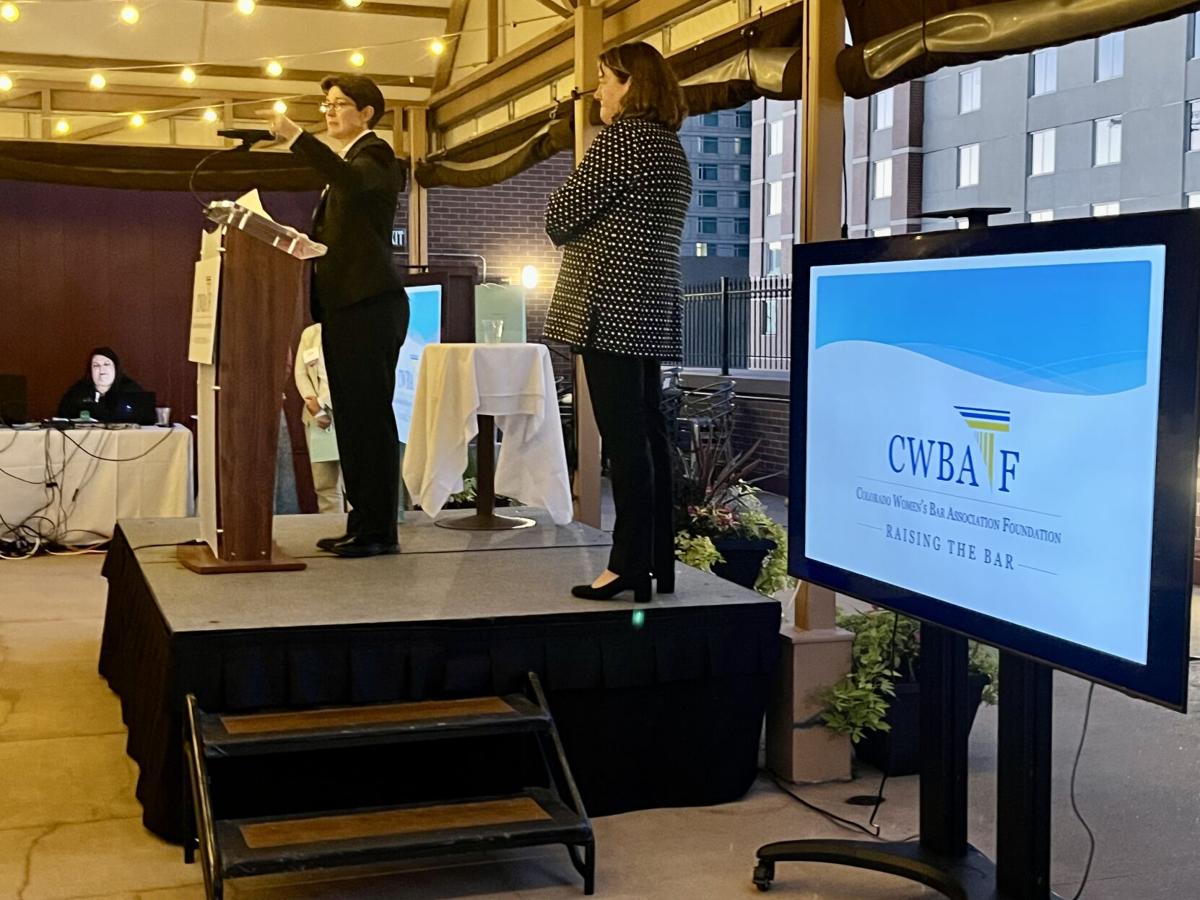
Justice Monica M. Márquez accepts the "Raising the Bar" award from the Colorado Women's Bar Association Foundation on Sept. 7, 2023 during a ceremony at the Denver Athletic Club. Justice Melissa Hart is at right.
Michael Karlik michael.karlik@coloradopolitics.com

Justice Monica M. Márquez accepts the “Raising the Bar” award from the Colorado Women’s Bar Association Foundation on Sept. 7, 2023 during a ceremony at the Denver Athletic Club. Justice Melissa Hart is at right.
Hartley was facing multiple drunk driving and vehicular charges even before he began representing Lopez. Days before Lopez’s trial, Hartley resolved four pending sets of charges with the Fourth Judicial District Attorney’s Office, resulting in a sentence of home detention and probation.
At one point in Lopez’s case, District Court Judge David A. Gilbert asked if Lopez was aware of “current circumstances,” without elaborating what those were, and if Lopez was fine with Hartley representing him. Yes, Lopez replied.
On the second day of trial, the prosecutor approached Gilbert to say then-District Attorney Dan May wanted to be sure Lopez knew Hartley was serving a probationary sentence in the same jurisdiction where Lopez was on trial, and the same DA’s office would be involved in prosecuting Hartley for any violation. Without speaking to Lopez directly, Gilbert asked Hartley if Lopez had any concerns
“No, none whatsoever,” Hartley responded.
A jury convicted Lopez for multiple sexual assault-related offenses. Soon after, Colorado’s presiding disciplinary judge disbarred Hartley for, among other things, failing to “diligently pursue clients’ interests,” disobeying a prior suspension order and misleading a client about his suspension.
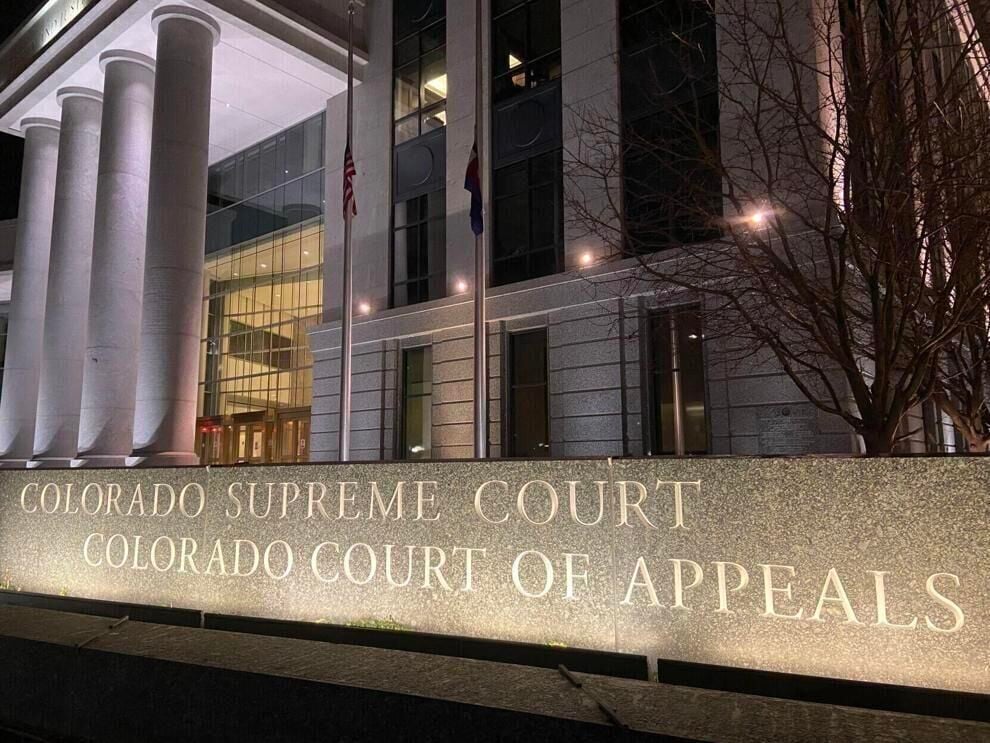
The Ralph L. Carr Colorado Judicial Center in downtown Denver houses the Colorado Supreme Court and Court of Appeals.
(Michael Karlik / Colorado Politics)

The Ralph L. Carr Colorado Judicial Center in downtown Denver houses the Colorado Supreme Court and Court of Appeals.
A three-judge panel for the state’s Court of Appeals subsequently reversed Lopez’s convictions. It reasoned Hartley had an actual conflict of interest while representing Lopez and a lawyer in that position would have the incentive to curry favor with the DA’s office to help his own criminal case.
Moreover, Gilbert had a duty to ensure Lopez knew he was giving up his right to conflict-free counsel. But “nothing in the record indicates that Lopez was informed of the nature and potential consequences of the conflict beforehand,” wrote retired Supreme Court Justice Alex J. Martinez, who sat on the appellate panel at the chief justice’s assignment.
On appeal to the Supreme Court, Lopez’s new lawyer, Elizabeth A. McClintock, maintained an attorney in Hartley’s position cannot operate effectively “from the get-go,” and it was unnecessary to analyze precisely how the conflict actually affected his decision-making.
“The defendant is put in such a situation that he’ll never know what could be different if his attorney was not in a situation where he’s beholden potentially to two masters,” McClintock said.
Gabriel, in the majority opinion, disagreed with McClintock and the Court of Appeals. He explained the U.S. Supreme Court has only recognized a handful of situations in which it is not necessary to prove the negative effects from ineffective counsel. Hartley’s conflict did not fall into those categories.
“Absent those scenarios, a defendant must show both a conflict of interest and an adverse effect resulting from that conflict,” he wrote.
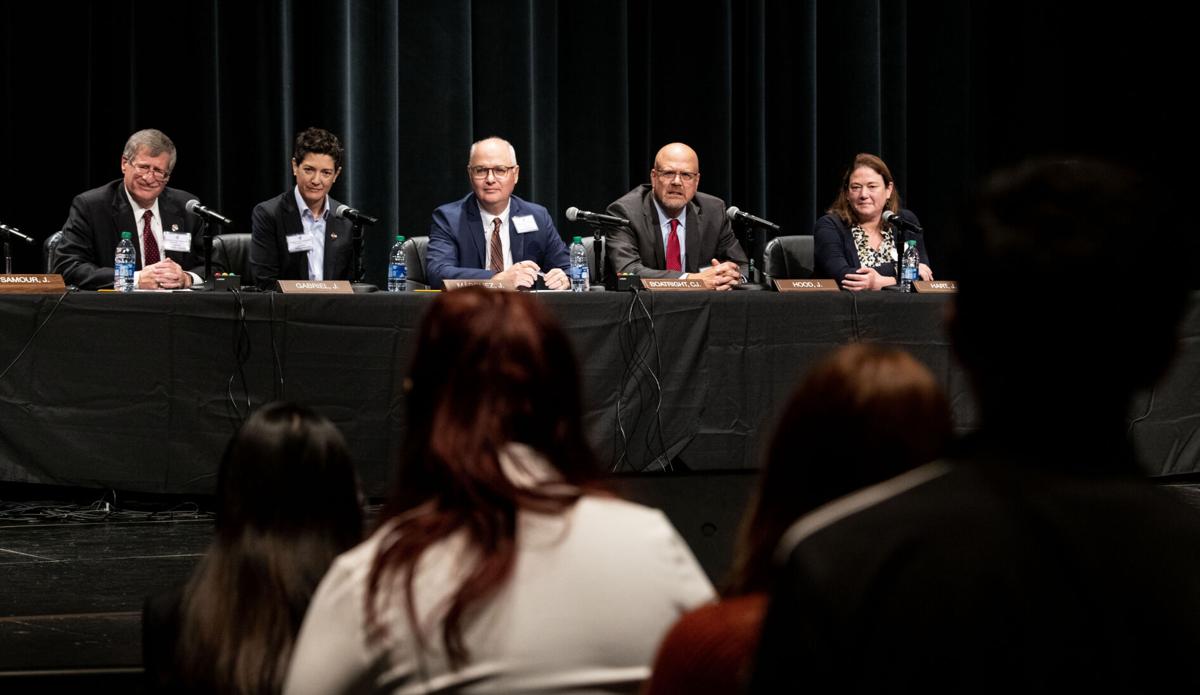
FILE PHOTO: Students from Pine Creek High School ask the justices of the Colorado Supreme Court questions after watching them hear arguments from two cases in the high school auditorium on Nov, 17, 2022. Pictured from left to right are Justice Richard L. Gabriel, Justice Monica M. Márquez, Chief Justice Brian D. Boatright, Justice William W. Hood III and Justice Melissa Hart.
Parker Seibold/The Gazette

FILE PHOTO: Students from Pine Creek High School ask the justices of the Colorado Supreme Court questions after watching them hear arguments from two cases in the high school auditorium on Nov, 17, 2022. Pictured from left to right are Justice Richard L. Gabriel, Justice Monica M. Márquez, Chief Justice Brian D. Boatright, Justice William W. Hood III and Justice Melissa Hart.
The justices returned the case to the trial court to analyze how Hartley’s conflict affected Lopez. Specifically, the defense will need to identify a “plausible alternative defense strategy or tactic” Hartley could have pursued, but did not pursue because of his own pending criminal cases.
Márquez, in dissent, stressed the “unique risk” of a defense lawyer putting his personal interests above his client’s weighed in favor of ordering a new trial for Lopez outright. She wrote that she struggled to understand how a defendant in Lopez’s position would ever be unaffected by his lawyer’s ongoing prosecution.
Such a conflict of interest “permeates the entire representation,” Márquez argued. “Counsel is forced to balance his obligation to zealously advocate for his client with preserving his own interests by avoiding antagonizing the prosecutor’s office in any way.”
The case is People v. Lopez.

10th Circuit finds no fair housing violation by Littleton landlord for worker’s alleged rape of tenant
Michael Karlik
michael.karlik@coloradopolitics.com
Updated 18 hours ago
The Denver-based federal appeals court concluded on Monday that Littleton’s housing authority could not be held liable for a maintenance worker’s alleged rape of a tenant, as the worker’s employment did not provide any special access to the victim. A...

Jeffco Public Schools sues Trump administration to protect funding after alleged transgender policies violation
Matt Kyle
matt.kyle@denvergazette.com
Updated 32 minutes ago
In the wake of several threats by the Trump administration to revoke federal funding, Jeffco Public Schools filed a lawsuit against the Department of Education seeking to protect that badly needed money. Jeffco has been under investigation by the DOE’s...
Denver detox center did not violate man’s rights with 10-hour hold, 10th Circuit says
Michael Karlik
michael.karlik@coloradopolitics.com
Updated 2 days ago
The Colorado-based federal appeals court concluded on Tuesday that Denver’s detoxification facility did not violate a man’s rights by holding him against his will for 10 hours until his blood alcohol content was projected to reach zero. Unusually, Brian Garrett’s...

Federal judge clarifies ex-GOP treasurer candidate’s burden to prove defamation claims
Michael Karlik
michael.karlik@coloradopolitics.com
Updated 2 days ago
A federal judge clarified last week that businessman and former Republican statewide candidate Brian Watson will need to surmount a higher hurdle in proving his claim that a party guest’s alleged description of him as a “criminal” amounted to defamation....
Colorado board permits state to appeal injunction against arthritis drug price cap
Marissa Ventrelli
marissa.ventrelli@coloradopolitics.com
Updated 2 days ago
A Colorado board voted Friday to allow the Attorney General’s Office to fight an injunction against a price cap on a drug that treats arthritis. A U.S. district court judge had granted the company Amgen a preliminary injunction, temporarily blocking...

Federal judge rejects constitutional claims, ‘expressions of hatred’ by Club Q defendant
Michael Karlik
michael.karlik@coloradopolitics.com
Updated 3 days ago
A federal judge rejected a defendant’s claims that he received constitutionally ineffective assistance of counsel while facing federal hate crime and firearms charges for murdering five people at a Colorado Springs LGBTQ nightclub in 2022. Anderson Lee Aldrich is serving...

Divided 10th Circuit upholds Colorado congestion fee on car rentals
Michael Karlik
michael.karlik@coloradopolitics.com
Updated 2 days ago
The Denver-based federal appeals court concluded on Monday that a 2024 “congestion impact fee” that lawmakers imposed on short-term vehicle rentals did not conflict with a federal prohibition on certain airport-related charges. Beginning in the 1970s, Congress began limiting the...
10th Circuit dismisses woman’s lawsuit following 10-year attempt to undo restraining order
Michael Karlik
michael.karlik@coloradopolitics.com
Updated 6 days ago
The Denver-based federal appeals court rejected a woman’s challenge on Friday to a restraining order imposed on her more than a decade ago, finding that she cannot credibly claim she will be prosecuted for violating the restraining order through her...
10th Circuit dismisses woman’s lawsuit following 10-year attempt to undo restraining order
Michael Karlik
michael.karlik@coloradopolitics.com
Updated 6 days ago
The Denver-based federal appeals court rejected a woman’s challenge on Friday to a restraining order imposed on her more than a decade ago, finding that she cannot credibly claim she will be prosecuted for violating the restraining order through her...
Colorado equal pay law does not require plaintiffs to allege gender-based retaliation, appeals court finds
Michael Karlik
michael.karlik@coloradopolitics.com
Updated 5 days ago
The 2019 Colorado law aimed at rooting out pay discrimination on the basis of sex does not require a plaintiff to allege their employer retaliated against them for sex- or gender-related reasons, the state’s second-highest court decided on Thursday. Lawmakers...