

Sixty years later, looking back at the Civil Rights Act of 1964 | CRONIN & LOEVY
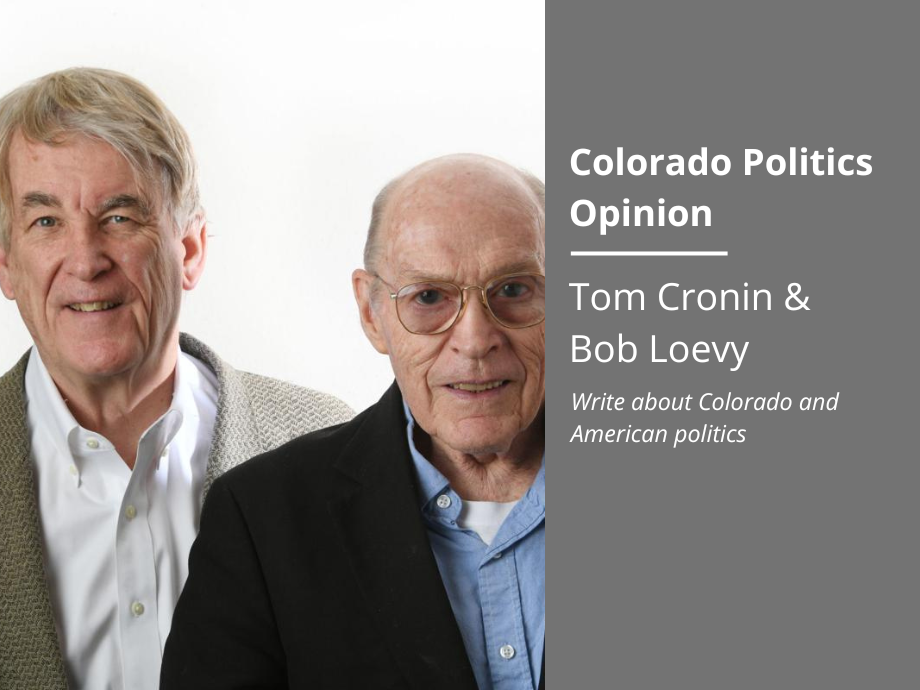
Tom Cronin and Bob Loevy

Tom Cronin and Bob Loevy
Tomorrow, June 10, 2024, is the 60th anniversary of the successful cloture vote in the U.S. Senate that enabled final enactment, on July 2, 1964, of the landmark Civil Rights Act of 1964. This was the law that made illegal all forms of racial segregation in public businesses throughout the entire United States.
The big obstacle to a civil rights bill in the Senate at that time was the filibuster. Senate rules provide for unlimited debate, which means a group of senators could kill a bill by simply talking it to death.
Over the years, southern Democratic senators had clearly established the idea they would filibuster any strong civil rights bill. As a result, no meaningful civil rights reform had ever been enacted by the U.S. Congress.
Stay up to speed: Sign up for daily opinion in your inbox Monday-Friday
In May of 1963, Martin Luther King and his Southern Christian Leadership Conference began a series of nonviolent demonstrations protesting the rigid segregation of public facilities in Birmingham, Alabama. King had been leading such demonstrations for many years prior and the cumulative effect was to slowly bring public opinion throughout the nation to support civil rights,
The city police chief, T. Eugene (Bull) Connor, was an avowed segregationist and brought out police dogs, fire hoses and electric cattle prods ordinarily used to drive reluctant cattle from the holding pen into the slaughterhouse.
Newspaper photographs and evening television reports of the violence in Birmingham further increased national support for civil rights, particularly in the north and west. The nation had seen firsthand the worst aspects of southern white oppression of blacks.
As a result of the civil rights demonstrations in Birmingham, U.S. President John F. Kennedy sent to Congress in June of 1963 a strong civil rights bill giving black Americans equal access to all “public accommodations” throughout the United States, including the south.
The new law would make illegal the segregated restaurants, cocktail lounges, hotels and motels, which were the most visible forms of racial discrimination in the American south. It also provided for the cut-off of any U.S. government aid programs in the south administered in a racially discriminatory fashion.
The assassin’s bullet that killed President Kennedy in Dallas in the fall of 1963 changed many things, but nothing quite so much as the political situation concerning civil rights.
Kennedy’s successor, Vice President Lyndon Johnson, was a Democrat from Texas. Civil rights advocates initially believed this might doom the civil rights bill, but the reverse was the case.
Although a southerner, Johnson was well aware public opinion in the United States had shifted and was continuing to shift in favor of civil rights. Also, Johnson seized on the civil rights bill as a good instrument for establishing his credentials with northern and western liberals. He also knew this was the right thing to do — even as it would weaken his Democratic Party in the south.
Five days after Kennedy’s assassination, the new President Johnson told a joint session of the House and Senate: “We have talked long enough in this country about equal rights… It is time now to write the next chapter — and to write it in the books of law.”
Senate rules at that time provided extended debate (a filibuster) could be ended by a two-thirds vote of those present and voting. Such a vote is called a cloture vote.
It was clear from the beginning a small group of Republican senators, mainly from midwestern and western states, would be needed to get a two-thirds vote for cloture. Among that group was Everett McKinley Dirksen of Illinois, the Republican leader in the Senate.
On June 10, 1964, for the first time in its history, the U.S. Senate voted cloture on a civil rights bill. Soon afterward, the Senate adopted the final bill. The House of Representatives quickly agreed to the Senate amendments.
On July 2, 1964, before an audience of more than 100 senators, representatives, cabinet members and civil rights leaders, President Johnson signed the Civil Rights Act of 1964 into law.
The Civil Rights Act of 1964 began to end most forms of public racial segregation in the nation, both north and south.
The threat of cutting off U.S. funds to government programs and business concerns that discriminate against minorities made “equal employment opportunity” and “affirmative action in hiring” fixed institutions in American life.
The act empowered the attorney general of the United States to sue for the desegregation of schools, a program that resulted in the use of school busing to achieve racial balance in the nation’s schools.
The civil rights act also was the first national law to guarantee significant equal rights for women in employment. It set the precedent for using cloture to stop a filibuster on any subsequent civil rights bill — a precedent that was used in 1965 to pass a national law guaranteeing equal voting rights to minorities.
There are times when a difficult domestic issue, such as racial segregation in public businesses, cannot be avoided. Tomorrow is the 60th anniversary of the day on which two-thirds of the U.S. Senate voted to cloture, and thus speed to final passage, the Civil Rights Act of 1964.
Tom Cronin and Bob Loevy write about Colorado and national politics.

The relevance of Watergate more than a half-century later | SONDERMANN
By Eric Sondermann
by-eric-sondermann@coloradopolitics.com
Updated 3 days ago
It was the scandal for which all other scandals are now named. In June 1972, a small group of Cuban burglars with high-level connections broke into the headquarters of the Democratic National Committee. Those headquarters were located in the Watergate...
Colorado must continue finding common ground on wildfire policy | GUEST COLUMN
Colorado Politics
colorado-politics@coloradopolitics.com
Updated 2 days ago
By John Herrick Colorado has never lacked for opinions about wildfire policy. We debate forest management, climate change, prescribed burns, land use, air quality and budgets. Those debates are familiar territory, but a new discussion is beginning to happen around...

Proposition NN is the best investment for Colorado’s students and schools | GUEST COLUMN
Colorado Politics
colorado-politics@coloradopolitics.com
Updated 2 days ago
By Justin Ogden Colorado families know what it means to make difficult budget decisions. Inflation has driven up the cost of groceries, housing, utilities and just about everything else. Families like mine work hard to stretch every dollar while still...

Were the primaries a preview for consequential general election? | Paula Noonan
Paula Noonan
paula-noonan@coloradopolitics.com
Updated 3 days ago
Colorado’s political future will go the way of this election. Historically, the state has not had both chambers controlled by a supermajority. This election may change that. The primaries suggest how the general election may play out. Democrats had solid...

Disagreement doesn’t have to mean disrespect | GUEST COLUMN
Colorado Politics
colorado-politics@coloradopolitics.com
Updated 3 days ago
By Vincent Atchity These days, it doesn’t take long to feel overwhelmed by politics. Turn on the news, scroll through social media or read the comments on almost any political post and you’ll find anger, outrage and personal attacks. For...

Keeping Colorado’s kids’ trust online | PODIUM
Colorado Politics
colorado-politics@coloradopolitics.com
Updated 4 days ago
By Stuart Jenkins Almost every day, the kids and teens we serve across Colorado are introduced to new generative artificial intelligence and other emerging technology, including conversational AI systems designed to simulate human conversation. These tools are no longer a...
Marx’s ‘through line’ predates Trump, connects to Maes | FEEDBACK
Colorado Politics
colorado-politics@coloradopolitics.com
Updated 4 days ago
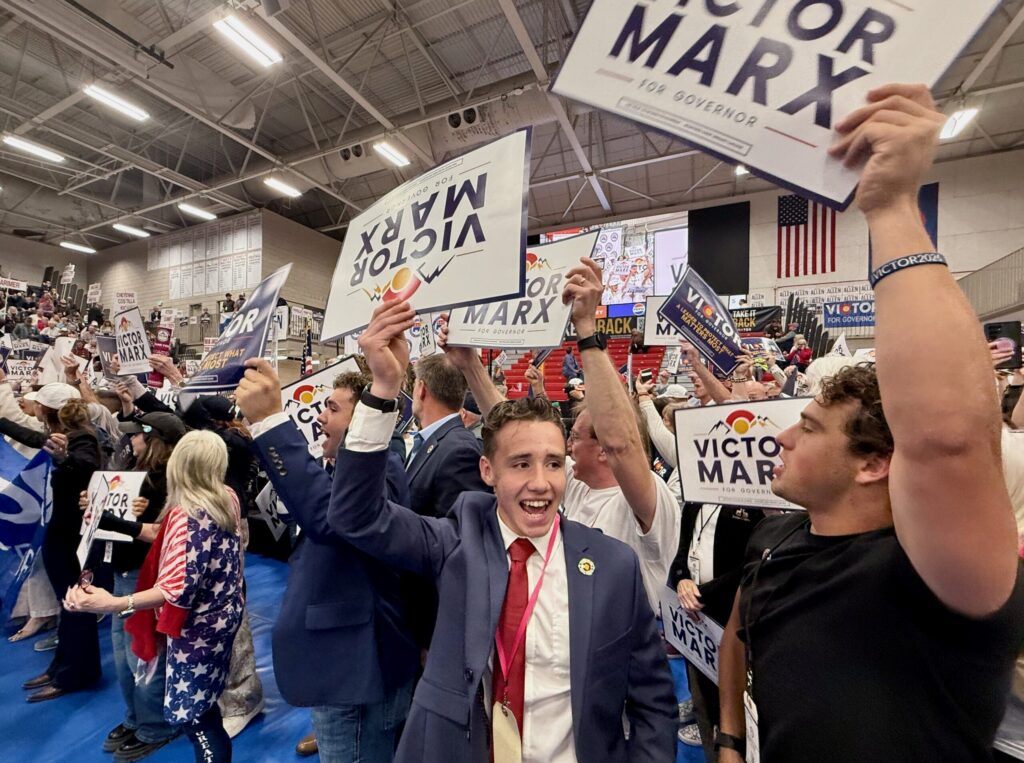
Eric Sondermann is of course correct Victor Marx is an unserious, unelectable, embarrassing Republican nominee for governor of Colorado. But I respectfully submit that the “through line,” as Mr. Sondermann describes it, is not from Trump to Marx, despite their...

Cedric Pride’s blueprint for opportunity through the trades | The OpEdge Podcast
Tony Olivero
tony.olivero@gazette.com
Updated 4 days ago
Cedric Pride, CEO of the nonprofit Pride Initiative in Denver, joins The OpEdge with a blueprint for workforce development, skilled trades, and economic opportunity. Pride tells host and investigative columnist Jimmy Sengenberger why he believes the trades offer a path...

Colorado’s No. 1 education ranking should raise our ambition | GUEST COLUMN
Colorado Politics
colorado-politics@coloradopolitics.com
Updated 5 days ago
By Scott Laband Colorado has earned the right to celebrate its new No. 1 ranking in education from U.S. News & World Report. Gov. Jared Polis called it “one of the proudest moments” of his time in office and shared the...

Colorado’s No. 1 education ranking reflects the power of school choice | GUEST COLUMN
Colorado Politics
colorado-politics@coloradopolitics.com
Updated 5 days ago
By Peter Mason Colorado is now the No. 1 state in the nation for education, according to the 2026 U.S. News & World Report Best States rankings. That is a distinction worth celebrating. It is also a distinction worth understanding....