

Colorado Supreme Court accepts 2 cases on Jeffco slip-and-fall, landlord-tenant dispute
The Colorado Supreme Court announced on Monday it will hear multiple cases that address when lawsuits may proceed if people are injured by dangerous conditions on government property, and what relief is available to tenants when the terms of their lease do not comply with state law.
At least three of the court’s seven members must agree to take up an appeal.
Although one of the cases arrived at the Supreme Court through the standard pathway — after the Court of Appeals issued a decision — the other dispute came by way of federal court, through a lesser-used mechanism permitting federal judges to ask the state Supreme Court to answer unsettled questions of Colorado law.
The dangerous condition
Krista Dozier was inside the Jefferson County courts and administration building in March 2019 when she slipped on a puddle of water and injured herself. Although employees in the building were aware of the spill and had requested a cleanup, Dozier’s fall happened within minutes of the request.
To proceed, Dozier needed to overcome the Colorado Governmental Immunity Act, which broadly shields government entities from lawsuits with some exceptions. For instance, if a person is injured due to a “dangerous condition of any public building,” immunity does not apply.
District Court Judge Tamara S. Russell dismissed Dozier’s lawsuit, finding Dozier had not shown Jeffco had a reasonable opportunity to clean up the spill. Therefore, it was not negligent in its maintenance and there was no dangerous condition. Consequently, the county kept its immunity.
But a three-judge panel for the Court of Appeals concluded Dozier did not yet need to show the county had enough time to respond to the water spill and acted negligently with its delay. Instead, the allegation that her injuries were caused by Jeffco’s failure to address the dangerous condition was sufficient for the case to proceed.
The county appealed its loss of immunity to the Supreme Court, taking issue with a specific statement from the Court of Appeals — that the reasonableness of a government entity’s response to a dangerous condition is not relevant to whether a judge can hear the case to begin with.
“Without negligence by the County, there cannot be a ‘dangerous condition,'” the Jeffco County Attorney’s Office insisted.
The Supreme Court agreed to answer whether plaintiffs must demonstrate a government entity acted unreasonably in order to proceed with their dangerous condition lawsuit and, relatedly, whether Dozier’s allegations were enough to show Jeffco’s actions were responsible for her injuries.
The case is Jefferson County v. Dozier.
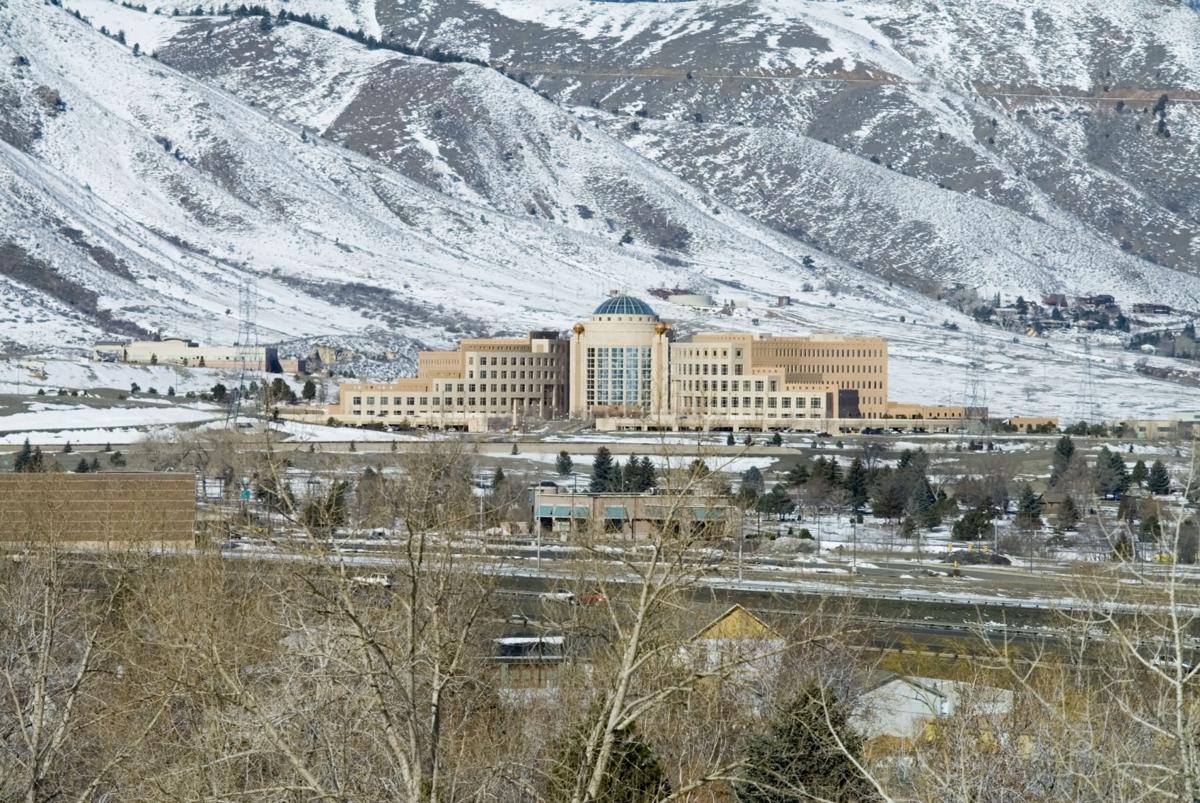
The Jefferson County Administration & Courts Facility in Golden, known as the "Taj Mahal." (iStock)
SWKrullImaging

The Jefferson County Administration & Courts Facility in Golden, known as the “Taj Mahal.” (iStock)
The Landlord Tenant Act
In 2023, two sets of tenants filed a proposed class action lawsuit against their landlord, Pathlight Property Management, alleging violations of state law. The plaintiffs argued their leases were contrary to the Colorado Landlord Tenant Act by improperly shifting the burdens of maintenance to the tenants. Further, they claimed Pathlight’s leases also violated the Colorado Consumer Protection Act by including provisions that were misleading or otherwise not allowed by state law.
Pathlight moved to dismiss those claims, arguing there could not be a consumer protection violation because all of the allegedly problematic lease terms were disclosed to tenants. Further, it contended the plaintiffs were arguing an unsupported legal theory that their leases alone could violate the Landlord Tenant Act even if their units otherwise met the standards for habitability.
“To protect both tenants and landlords, the legislature further determined that suits for damages and rent refunds are available, but only for actual habitability problems, and only if the tenant has given the landlord written notice and a chance to cure the problem,” the company’s lawyers wrote. “Instead, according to Plaintiffs, the existence of the ineffective terms alone entitles a tenant to damages or a rent refund.”
On May 7, U.S. District Court Judge Daniel D. Domenico formally asked the state Supreme Court to address whether the plaintiffs had viable claims after all, noting Colorado’s appellate courts had never addressed the question.
That ambiguity, combined with the potentially large number of tenants affected, is “such that I am uncomfortable resolving the issue absent further guidance,” Domenico wrote.
The Supreme Court agreed to take the case. Chief Justice Brian D. Boatright and Justice Maria E. Berkenkotter did not participate in the consideration.
The case is Curran et al. v. Home Partners Holdings LLC.


10th Circuit partially revives lawsuit over 2020 Denver protest injuries
Michael Karlik
michael.karlik@coloradopolitics.com
Updated 1 day ago
The Colorado-based federal appeals court revived a man’s claims against Denver on Friday after concluding a trial judge resolved the case in the city’s favor without analyzing two of the three instances of alleged excessive force and other constitutional violations....
Federal judges find Colorado immigration judge violated several orders
Michael Karlik
michael.karlik@coloradopolitics.com
Updated 1 hour ago
Multiple federal judges in Colorado have freed people from immigration custody after determining that one immigration judge violated their directives for properly conducting bond hearings. For nearly a year, Colorado’s U.S. District Court has faced a flood of habeas corpus petitions...
Misconduct complaints from ex-Colorado judicial discipline director dismissed against federal judges
Michael Karlik
michael.karlik@coloradopolitics.com
Updated 2 days ago
The administrative body for the Denver-based federal appeals court upheld a finding last week that misconduct complaints against Colorado’s chief federal trial judge and the chief appeals judge warranted dismissal and appeared to be a “litigation tactic” by the complaining...

First-ever Red Rocks naturalization ceremony draws most diverse group of new citizens
Michael Karlik
michael.karlik@coloradopolitics.com
Updated 1 day ago
Colorado’s federal trial court held its first-ever naturalization ceremony for nearly 300 new citizens on Thursday at Red Rocks Park and Amphitheatre. “We’re doing it to commemorate the 250th anniversary of the Declaration of Independence and the United States. Red...
Jeffco taxpayers could be on the hook for a possible child sex assault settlement
Matt Kyle
matt.kyle@denvergazette.com
Updated 1 day ago
Taxpayers may end up on the hook for a child sexual assault settlement, possibly worth up to $15 million, after Jeffco Public Schools failed to notify its insurance company in a timely manner about the case. The incident stems from...
10th Circuit finds no fair housing violation by Littleton landlord for worker’s alleged rape of tenant
Michael Karlik
michael.karlik@coloradopolitics.com
Updated 1 hour ago
The Denver-based federal appeals court concluded on Monday that Littleton’s housing authority could not be held liable for a maintenance worker’s alleged rape of a tenant, as the worker’s employment did not provide any special access to the victim. A...

Jeffco Public Schools sues Trump administration to protect funding after alleged transgender policies violation
Matt Kyle
matt.kyle@denvergazette.com
Updated 2 days ago
In the wake of several threats by the Trump administration to revoke federal funding, Jeffco Public Schools filed a lawsuit against the Department of Education seeking to protect that badly needed money. Jeffco has been under investigation by the DOE’s...
Denver detox center did not violate man’s rights with 10-hour hold, 10th Circuit says
Michael Karlik
michael.karlik@coloradopolitics.com
Updated 4 days ago
The Colorado-based federal appeals court concluded on Tuesday that Denver’s detoxification facility did not violate a man’s rights by holding him against his will for 10 hours until his blood alcohol content was projected to reach zero. Unusually, Brian Garrett’s...

Federal judge clarifies ex-GOP treasurer candidate’s burden to prove defamation claims
Michael Karlik
michael.karlik@coloradopolitics.com
Updated 4 days ago
A federal judge clarified last week that businessman and former Republican statewide candidate Brian Watson will need to surmount a higher hurdle in proving his claim that a party guest’s alleged description of him as a “criminal” amounted to defamation....
Colorado board permits state to appeal injunction against arthritis drug price cap
Marissa Ventrelli
marissa.ventrelli@coloradopolitics.com
Updated 4 days ago
A Colorado board voted Friday to allow the Attorney General’s Office to fight an injunction against a price cap on a drug that treats arthritis. A U.S. district court judge had granted the company Amgen a preliminary injunction, temporarily blocking...