

A tour through southeastern Colorado chock-full of eventful history | NOONAN
Paula Noonan

Paula Noonan
Summertime, where the livin’s not easy. The winds are blowing, and the land goes brown. That rewrite of George and Ira Gershwin’s most famous tune describes the big picture of southeastern Colorado this time of year.
Even so, a trip through the high plains in the southern portion of our square state brings many insights into our history. The Santa Fe Trail, 19th century army forts, the Sand Creek Massacre site, the Amache Internment Camp, towns like Eads, Granada, Pritchett and Kim, the big city of Trinidad and the Ludlow site where the state’s labor strife ended in many deaths — these all make up our Colorado legacy.
From the metro area, your history tour should head east on Interstate 70 and then cut south on a diagonal at Highway 40 in Limon to travel through Hugo to Eads. Eads is the Kiowa County seat with 657 residents, a yellow brick county building that contains the local library (no guns allowed), the courthouse, the sheriff’s office and public restrooms. Eads is the location of the Sand Creek Massacre Museum that tells the story of the Arapaho and Cheyenne peoples who sought refuge from war at a bend on Big Sandy Creek in November 1864.
Stay up to speed: Sign up for daily opinion in your inbox Monday-Friday
It was a wintery Nov. 29 when Colonel John Chivington and his 600 soldiers completed their long, cold slog from Denver through Booneville near Pueblo to the remote Big Sandy Creek site where Cheyenne Chief Black Kettle and numerous other Cheyenne and Arapaho leaders gathered their people based on a declaration from Gov. John Evans to secure safety at the old Fort Lyon in Otero County near La Junta. Today, from the site’s gate, the landscape shows the rise on the west that gave soldiers a view of the tipis along the creek and of the Indians’ ponies on the west.
Black Kettle stood in front of his lodge with an American flag and white flag to represent the protection he was supposed to receive from the U.S. Army based on a negotiation with Edward Wynkoop, commander of Fort Lyon. Even so, Chivington’s troops fired on the Indian camp while some cavalry dispersed the Indians’ ponies to prevent escape. Over nine hours, at least 163 Cheyenne and Arapaho men, women and children were killed. When word of the massacre reached beyond Denver, the U.S. government responded with an investigation, but none of the American leaders were prosecuted.
Chivington is buried at Fairmount Cemetery in Denver. Chief Black Kettle died in November 1868, killed by the U.S. Cavalry unit led by Lt. Col. George Armstrong Custer as the chief fled with his wife across the Washita River during the Battle of Washita in Oklahoma. Edward Wynkoop of the eponymous Wynkoop Street in downtown Denver, died in Santa Fe, New Mexico and is buried at the national cemetery there.
The most recent outcome of the massacre is the renaming of Mount Evans. Gov. John Evans, who died at 83 in 1897 and is buried at the Riverside Cemetery in Commerce City, lost his recognition because he authorized Chivington’s action. Mount Blue Sky now honors the Cheyenne and Arapaho. Arapaho are known as “Blue Sky people” and Cheyenne have an annual ceremony known as Blue Sky.
From the Big Sandy Creek site, travelers should head to Lamar, then south on Highway 287 to Granada, the site of the Granada Relocation Center — aka Amache Internment Camp named after a Cheyenne who married John Prowers, the cattle rancher for whom the county of its location is named.
Amache was saved for history due to the efforts of the Amache Preservation Society and the Granada High School students who operate the comprehensive Amache Museum in town. These students also perform archeology work in collaboration with the University of Denver to help the public understand how more than 7,600 Japanese and Japanese Americans were interned under U.S. Executive Order 9066 during World War II.
The camp’s internees, mostly from California and Washington state, landed in Granada’s wind-swept high plains far away from the vegetable and fruit farms they owned in California’s Central Valley or from their homes in cities such as Los Angeles, Oakland and Sacramento. The barbed-wire camp is marked today by its original water tower and one of eight guard towers that overlooked the one square mile “city.”
The camp was much larger than either Lamar or Granada in population. Many internees worked the 16-square-mile agricultural farm. Others worked as doctors, teachers, cooks, etc. to service the camp. It had a 150-bed hospital, an elementary school and a high school. A highlight for camp residents was the high school football game between Holly and Amache players. Gov.Roy Romer was on the Holly team that lost.
The American-style cafeteria food was unfamiliar to many internees and no privacy for everything from sleeping to privies made life extremely harsh. Among the deceased in the cemetery is an adult who died on Christmas Day in 1943 and a four-year-old child who died a day later. Families gave up their properties back home that were rarely recovered. In 1988, the U.S. Congress allotted $20,000 paid only to former living internees. A signature book at the museum shows people from across the nation visit the site.
Heading south and west from Amache, travelers can envision the hard life on the plains. The air is dry, warm and windy. No buffalo roam. Even cows are rare along Highway 287 from Granada, to Springfield, to Kim through the Comanche grasslands and on to Trinidad, where the Rockies miraculously rise up.
Trinidad, snuggled next to the mountains, has renovated its many turn-of-the-20th-century buildings and cobble roads. It hosts the oldest synagogue in the Rocky Mountain west as well as carrying the history of the miners from all over the world who took coal out of the mountains. The Ludlow Massacre historical monument, just north of Trinidad on I-25, marks the site where striking United Mine Worker (UMW) coal miners and their families were attacked by private security and Colorado National Guard on April 20, 1914. At least 21 people were killed, 12 of whom were young children, as listed on the monument.
The Colorado Fuel and Iron Company, owned by John D. Rockefeller Jr. at the time of the strike, was the dominant corporate player in the region. Railroads that carried coal north and south provided protection for mine owners. With no progress on negotiations, strikers were kicked out of the company towns. The UMW set up tents on the weedy, windy landscape of the plains that rises up to the mines. The strike breakers used an armored car called the “Death Special,” courtesy of Rockefeller’s company, to shoot into the camp.
Ironically, the miners and the guards played a baseball game to celebrate Orthodox Easter the day before the shooting began. The battle started in the morning and went on all day. Four women and 11 children died in a pit below a tent that was burned to the ground from a fire set by the guardsmen.
The strike ended Dec. 10, 1914 without wins by the UMW. But the legacy turned out differently. This action in labor history led to many reforms, including the 40-hour work week, improved working and living conditions for miners, and the beginning of the right to form unions to negotiate for worker rights. Today’s family leave law in Colorado, fortunately achieved through the legislature, provides a current example of this labor rights progression.
The southeastern history tour finally heads north on I-25 through Pueblo, with its spectacular river walk along the Arkansas River, Colorado Springs, Castle Rock and back to the metro area. This tour is the tip of the plains in terms of eastern Colorado’s contribution to the state’s history. Next spring or summer, the trip will head to central and northeastern Colorado to investigate what’s there.
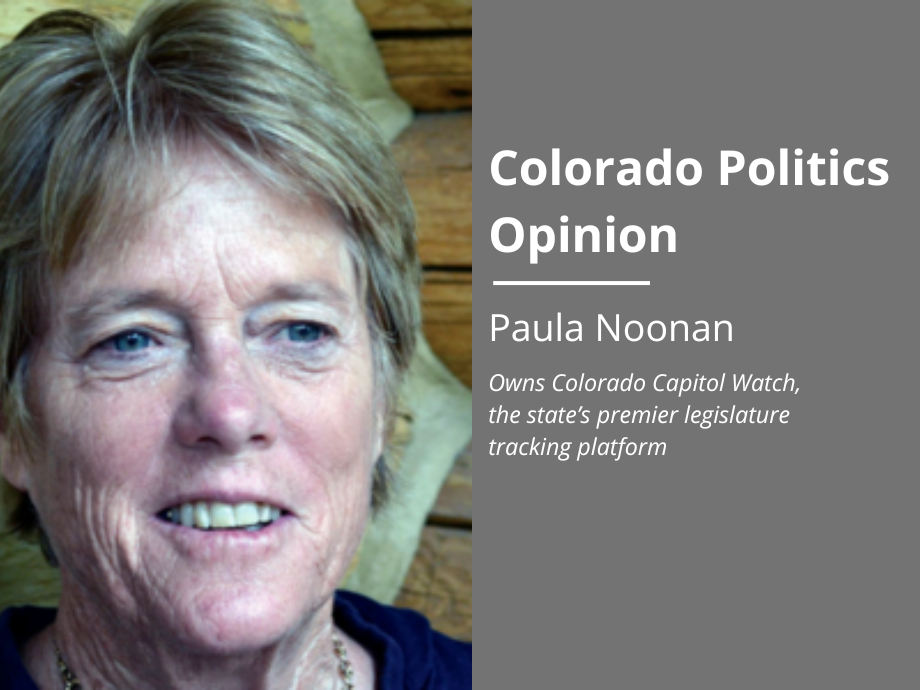
Paula Noonan owns Colorado Capitol Watch, the state’s premier legislature tracking platform.

The relevance of Watergate more than a half-century later | SONDERMANN
By Eric Sondermann
by-eric-sondermann@coloradopolitics.com
Updated 3 days ago
It was the scandal for which all other scandals are now named. In June 1972, a small group of Cuban burglars with high-level connections broke into the headquarters of the Democratic National Committee. Those headquarters were located in the Watergate...
Colorado must continue finding common ground on wildfire policy | GUEST COLUMN
Colorado Politics
colorado-politics@coloradopolitics.com
Updated 2 days ago
By John Herrick Colorado has never lacked for opinions about wildfire policy. We debate forest management, climate change, prescribed burns, land use, air quality and budgets. Those debates are familiar territory, but a new discussion is beginning to happen around...
Proposition NN is the best investment for Colorado’s students and schools | GUEST COLUMN
Colorado Politics
colorado-politics@coloradopolitics.com
Updated 2 days ago
By Justin Ogden Colorado families know what it means to make difficult budget decisions. Inflation has driven up the cost of groceries, housing, utilities and just about everything else. Families like mine work hard to stretch every dollar while still...
Were the primaries a preview for consequential general election? | Paula Noonan
Paula Noonan
paula-noonan@coloradopolitics.com
Updated 3 days ago
Colorado’s political future will go the way of this election. Historically, the state has not had both chambers controlled by a supermajority. This election may change that. The primaries suggest how the general election may play out. Democrats had solid...
Disagreement doesn’t have to mean disrespect | GUEST COLUMN
Colorado Politics
colorado-politics@coloradopolitics.com
Updated 3 days ago
By Vincent Atchity These days, it doesn’t take long to feel overwhelmed by politics. Turn on the news, scroll through social media or read the comments on almost any political post and you’ll find anger, outrage and personal attacks. For...
Keeping Colorado’s kids’ trust online | PODIUM
Colorado Politics
colorado-politics@coloradopolitics.com
Updated 4 days ago
By Stuart Jenkins Almost every day, the kids and teens we serve across Colorado are introduced to new generative artificial intelligence and other emerging technology, including conversational AI systems designed to simulate human conversation. These tools are no longer a...

Marx’s ‘through line’ predates Trump, connects to Maes | FEEDBACK
Colorado Politics
colorado-politics@coloradopolitics.com
Updated 4 days ago
Eric Sondermann is of course correct Victor Marx is an unserious, unelectable, embarrassing Republican nominee for governor of Colorado. But I respectfully submit that the “through line,” as Mr. Sondermann describes it, is not from Trump to Marx, despite their...

Cedric Pride’s blueprint for opportunity through the trades | The OpEdge Podcast
Tony Olivero
tony.olivero@gazette.com
Updated 4 days ago
Cedric Pride, CEO of the nonprofit Pride Initiative in Denver, joins The OpEdge with a blueprint for workforce development, skilled trades, and economic opportunity. Pride tells host and investigative columnist Jimmy Sengenberger why he believes the trades offer a path...
Colorado’s No. 1 education ranking should raise our ambition | GUEST COLUMN
Colorado Politics
colorado-politics@coloradopolitics.com
Updated 4 days ago
By Scott Laband Colorado has earned the right to celebrate its new No. 1 ranking in education from U.S. News & World Report. Gov. Jared Polis called it “one of the proudest moments” of his time in office and shared the...
Colorado’s No. 1 education ranking reflects the power of school choice | GUEST COLUMN
Colorado Politics
colorado-politics@coloradopolitics.com
Updated 5 days ago
By Peter Mason Colorado is now the No. 1 state in the nation for education, according to the 2026 U.S. News & World Report Best States rankings. That is a distinction worth celebrating. It is also a distinction worth understanding....