

Federal judge refuses to dismiss lawsuit against Jeffco jail contractor for detainee’s death
A federal judge earlier this month refused to dismiss a constitutional rights lawsuit filed against the Jefferson County jail’s medical contractor, involving multiple personnel who allegedly failed to provide adequate care to a detainee before she died of an infection.
Abby Angelo entered the Jeffco jail on June 19, 2021 following her arrest. Nine days later, deputies found her unresponsive. Her cause of death was allegedly tricuspid valve endocarditis, a heart infection that may not have been fatal had Angelo received antibiotics or even surgery.
Angelo’s surviving child and his legal guardian sued the jail’s medical contractor, Wellpath, as well as the five nurses who interacted with Angelo in the days leading up to her death. The plaintiffs alleged the defendants were liable for failing to provide medical care in violation of Angelo’s constitutional rights, as well as negligence and wrongful death.
In a May 20 order, U.S. District Court Judge Charlotte N. Sweeney denied Wellpath’s motion to dismiss. She noted the plaintiffs were arguing two theories: First, that the defendants failed to properly treat a serious medical condition and, second, they denied access to medical professionals who could have capably addressed Angelo’s illness. The lawsuit, Sweeney determined, credibly alleged both types of violations.
“The Wellpath Defendants also state that ‘it is unclear why Plaintiffs take issue with’ the course of treatment. The issue is clear: the treatment was woefully inadequate, and Ms. Angelo died,” she wrote.
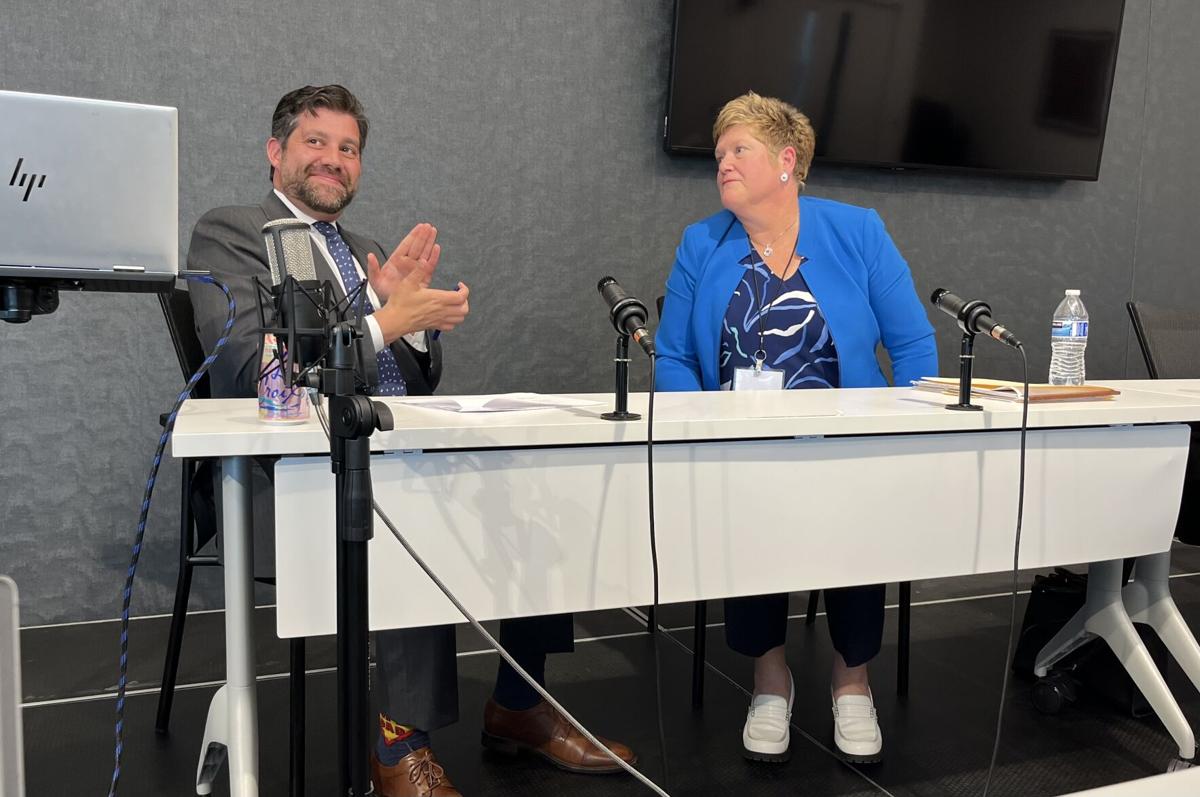
Attorney David Gartenberg applauds for U.S. District Court Judge Charlotte N. Sweeney at a legal event in Denver on July 21, 2023.
Michael Karlik michael.karlik@coloradopolitics.com

Attorney David Gartenberg applauds for U.S. District Court Judge Charlotte N. Sweeney at a legal event in Denver on July 21, 2023.
Sweeney is also handling a lawsuit involving another Jeffco jail detainee who allegedly had a life-threatening dental condition that Wellpath employees disregarded — including one of the nurses who saw Angelo. Sweeney repeatedly cited to her similar ruling declining to dismiss that case, while she analyzed the allegations underlying Angelo’s death.
According to the plaintiffs’ lawsuit, Wheat Ridge police took Angelo into custody on multiple warrants for failing to appear in court. At the jail, deputies saw Angelo’s health declining and contacted Wellpath employees for assistance. Among other things, Angelo was too weak to walk, felt sick, and had shortness of breath and low oxygen saturation levels.
One day before her death, a nurse put her on an opiate withdrawal protocol, which was not the source of her problems. The next afternoon, deputies found her dead of a heart infection, aged 29.
The plaintiffs sued licensed practical nurses Carrie Earle, Rebecca Strong and Courtney Slowey, as well as registered nurses Nicole Wolf and Esmeralda Ziegelmann. They claimed the nurses’ “wait and see” approach was an unreasonable response to Angelo’s obvious health problems.
The lawsuit also named Wellpath itself as a defendant, pointing to several other instances in Jeffco and beyond where detainees died or suffered from illness on Wellpath’s watch.
“The contract between the Jefferson County Defendants and Wellpath financially incentivizes reductions in the use of necessary off-site medical services for inmates,” the plaintiffs’ lawyers wrote. “Such a provision invites reckless risk-taking to save money.”
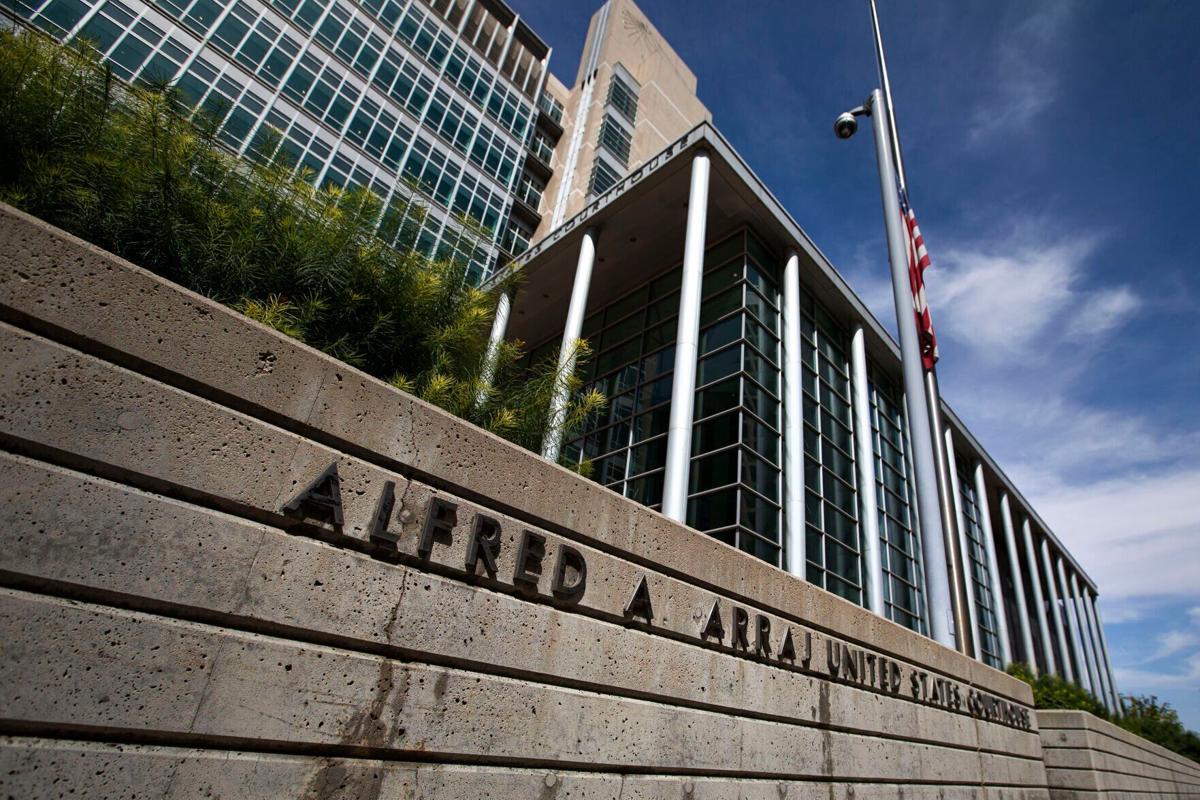
FILE PHOTO: The Alfred A. Arraj federal courthouse in Denver
Timothy Hurst, The Denver Gazette file

FILE PHOTO: The Alfred A. Arraj federal courthouse in Denver
The Wellpath employees moved to dismiss the claims against them, as did the other defendants, Jefferson County and elected Sheriff Reggie Marinelli. Jeffco brushed aside the plaintiffs’ reference to other medically injured detainees, calling them “a handful of dissimilar adverse medical events” that were “indicative only of the fact that incarcerated individuals, like the rest of our community, may have health issues with significant and even fatal outcomes regardless of the medical care they receive.”
Sweeney largely sided against the defendants. The allegations established Angelo had concerning symptoms, which even the non-medically trained deputies recognized, but the nurses neither adequately treated them nor escalated to someone who could. Wellpath’s own protocols were also allegedly behind the inaction.
“Plaintiffs have sufficiently alleged the existence of two informal policies: financial disincentives to providing off-site care, and nurses practicing beyond their abilities, failing to escalate care, and using a ‘wait and see’ approach,” she wrote. “Plaintiffs also established causation: if the nurses had been trained to escalate care, Ms. Angelo’s death could have been avoided if she had been seen by emergency care providers.”
Sweeney further concluded Marinelli, but not the county board, could be held liable for Wellpath’s constitutional violations under the theory that the sheriff could not delegate to a third party her ultimate obligation to provide adequate medical care. Sweeney noted the claims could proceed against Marinelli on those grounds, but not because Jeffco was on notice Wellpath’s procedures would allegedly lead to a constitutional violation, as the plaintiffs suggested.
“However,” Sweeney warned Jeffco, “over time, substantiation of similar allegations across multiple lawsuits may eventually serve as sufficient notice to Jefferson County.”
The case is Estate of Angelo et al. v. The Board of County Commissioners et al.


10th Circuit partially revives lawsuit over 2020 Denver protest injuries
Michael Karlik
michael.karlik@coloradopolitics.com
Updated 1 day ago
The Colorado-based federal appeals court revived a man’s claims against Denver on Friday after concluding a trial judge resolved the case in the city’s favor without analyzing two of the three instances of alleged excessive force and other constitutional violations....

Federal judges find Colorado immigration judge violated several orders
Michael Karlik
michael.karlik@coloradopolitics.com
Updated 7 hours ago
Multiple federal judges in Colorado have freed people from immigration custody after determining that one immigration judge violated their directives for properly conducting bond hearings. For nearly a year, Colorado’s U.S. District Court has faced a flood of habeas corpus petitions...

Misconduct complaints from ex-Colorado judicial discipline director dismissed against federal judges
Michael Karlik
michael.karlik@coloradopolitics.com
Updated 2 days ago
The administrative body for the Denver-based federal appeals court upheld a finding last week that misconduct complaints against Colorado’s chief federal trial judge and the chief appeals judge warranted dismissal and appeared to be a “litigation tactic” by the complaining...
First-ever Red Rocks naturalization ceremony draws most diverse group of new citizens
Michael Karlik
michael.karlik@coloradopolitics.com
Updated 5 hours ago
Colorado’s federal trial court held its first-ever naturalization ceremony for nearly 300 new citizens on Thursday at Red Rocks Park and Amphitheatre. “We’re doing it to commemorate the 250th anniversary of the Declaration of Independence and the United States. Red...
Jeffco taxpayers could be on the hook for a possible child sex assault settlement
Matt Kyle
matt.kyle@denvergazette.com
Updated 2 days ago
Taxpayers may end up on the hook for a child sexual assault settlement, possibly worth up to $15 million, after Jeffco Public Schools failed to notify its insurance company in a timely manner about the case. The incident stems from...
10th Circuit finds no fair housing violation by Littleton landlord for worker’s alleged rape of tenant
Michael Karlik
michael.karlik@coloradopolitics.com
Updated 8 hours ago
The Denver-based federal appeals court concluded on Monday that Littleton’s housing authority could not be held liable for a maintenance worker’s alleged rape of a tenant, as the worker’s employment did not provide any special access to the victim. A...

Jeffco Public Schools sues Trump administration to protect funding after alleged transgender policies violation
Matt Kyle
matt.kyle@denvergazette.com
Updated 3 days ago
In the wake of several threats by the Trump administration to revoke federal funding, Jeffco Public Schools filed a lawsuit against the Department of Education seeking to protect that badly needed money. Jeffco has been under investigation by the DOE’s...
Denver detox center did not violate man’s rights with 10-hour hold, 10th Circuit says
Michael Karlik
michael.karlik@coloradopolitics.com
Updated 4 days ago
The Colorado-based federal appeals court concluded on Tuesday that Denver’s detoxification facility did not violate a man’s rights by holding him against his will for 10 hours until his blood alcohol content was projected to reach zero. Unusually, Brian Garrett’s...

Federal judge clarifies ex-GOP treasurer candidate’s burden to prove defamation claims
Michael Karlik
michael.karlik@coloradopolitics.com
Updated 4 days ago
A federal judge clarified last week that businessman and former Republican statewide candidate Brian Watson will need to surmount a higher hurdle in proving his claim that a party guest’s alleged description of him as a “criminal” amounted to defamation....
Colorado board permits state to appeal injunction against arthritis drug price cap
Marissa Ventrelli
marissa.ventrelli@coloradopolitics.com
Updated 5 days ago
A Colorado board voted Friday to allow the Attorney General’s Office to fight an injunction against a price cap on a drug that treats arthritis. A U.S. district court judge had granted the company Amgen a preliminary injunction, temporarily blocking...