

10th Circuit underscores limited path federal prisoners face in suing government

The federal appeals court based in Denver underscored last month that incarcerated plaintiffs have essentially no path to suing federal officials for money for violating their constitutional rights.
A three-judge panel of the U.S. Court of Appeals for the 10th Circuit explained that the U.S. Supreme Court’s precedent, as well as its own, meant prisoners in federal facilities must rely on internal grievance protocols for alleged constitutional violations, not the courts.
That reality, however, has recently prompted some federal judges in Colorado to be uncharacteristically public in their dissatisfaction with the obstacles to suing the federal government, as the same hurdles do not exist for states and localities.
Lawsuits seeking money damages against federal employees for constitutional claims are legally known as a “Bivens remedy,” stemming from a 1971 Supreme Court decision, Bivens v. Six Unknown Named Agents. In that case, federal narcotics officers entered a man’s home without a warrant, arrested and strip searched him. A majority of the court decided plaintiff Webster Bivens could sue for a violation of the Fourth Amendment, which prohibits unreasonable searches and seizures.
Since then, the Supreme Court has recognized a Bivens remedy exists for two other scenarios: sex discrimination under the Fifth Amendment and deliberate indifference to an inmate’s serious medical needs under the Eighth Amendment.
However, in 2022, the court handed down a 6-3 decision in Egbert v. Boule, severely restricting the availability of any further Bivens remedies. The majority concluded Bivens remedies are not available when Congress or the executive branch is “better equipped” to create a method for addressing constitutional violations.
michael.karlik@coloradopolitics.com
Quickly, the 10th Circuit applied the new constraint to a federal prisoner’s excessive force case in Colorado. While the Supreme Court may have been open to such lawsuits in early Bivens remedy cases, it has “progressively chipped away at the decision – to the point that very little of its original force remains,” observed Senior Judge Bobby R. Baldock in the case of Silva v. United States.
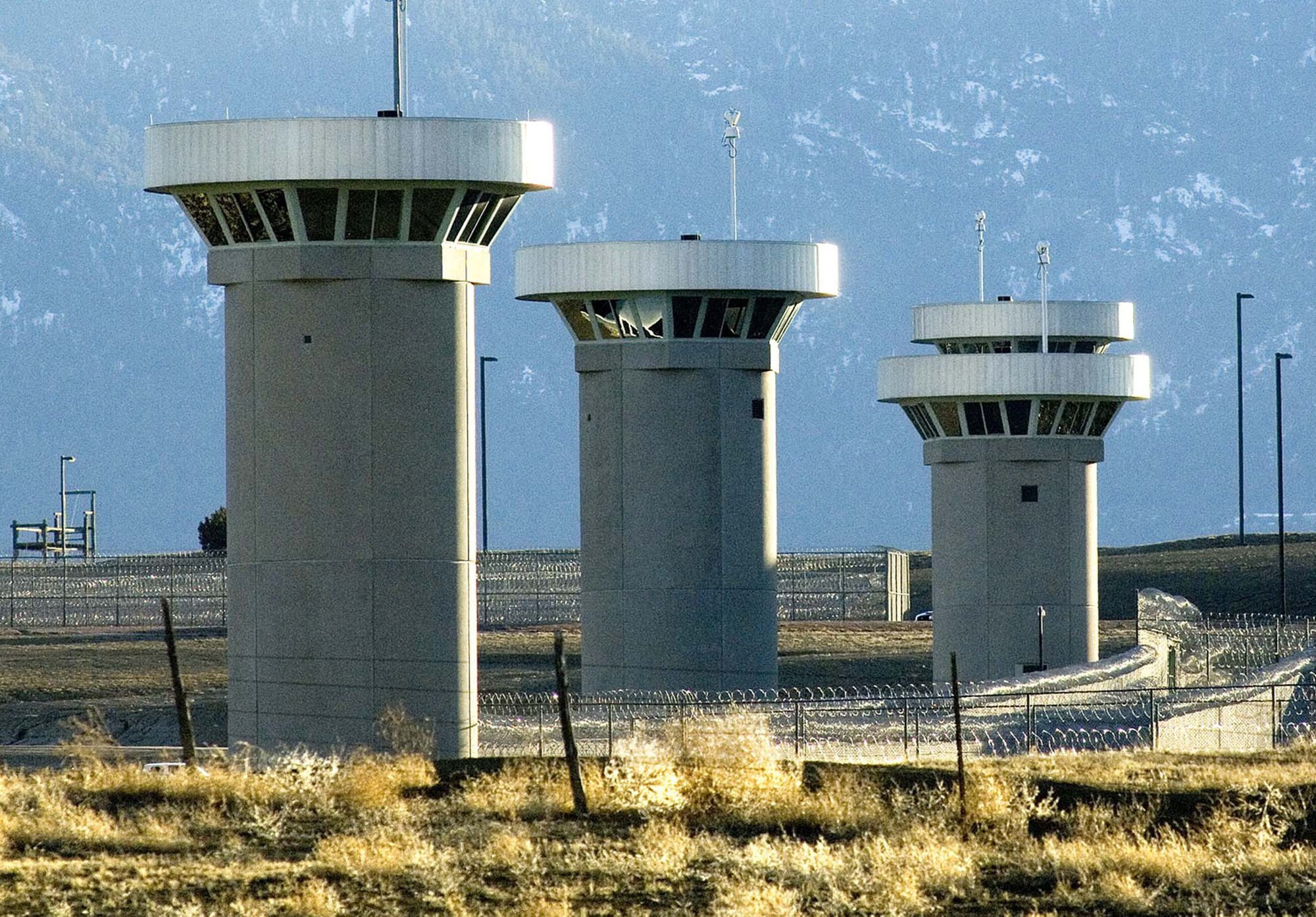
In the most recent Bivens case to reach the 10th Circuit, Peter George Noe alleged that during his incarceration at the U.S. Penitentiary – Administrative Maximum Facility in Florence, dental staff failed to adequately treat his severe tooth problems. He brought a lawsuit claiming, among other things, deliberate indifference to his serious medical needs under the Eighth Amendment.
Case: Noe v. United States Government
Decided: December 22, 2023
Jurisdiction: U.S. District Court for Colorado
Ruling: 3-0
Judges: Allison H. Eid (author)
Joel M. Carson III
Veronica S. Rossman
Background: Federal judge to Congress: Roll back Supreme Court’s limitations on suing federal officials
U.S. Magistrate Judge Scott T. Varholak, in reviewing Noe’s claim, acknowledged the Silva decision appeared to dictate the outcome: Because the Federal Bureau of Prisons had an internal grievance process available to Noe, there was nothing the courts could do. At the same time, Varholak wrote at length about his discomfort with that state of affairs.
“Under the rationale,” Varholak elaborated, “a federal prison official may sadistically beat an inmate to within an inch of his life and that inmate will not have a civil remedy against that prison official – after all, the inmate may file a grievance.”
Varholak added that deliberate indifference to serious medical needs is already one of the limited types of claims the Supreme Court previously endorsed for a Bivens remedy – but only when a prisoner dies as a result of officials’ actions. Because Noe merely alleged significant pain, there was no path forward.
A “factual similarity to previous cases no longer appears sufficient to permit a Bivens claim to proceed,” Varholak noted.
In a Dec. 22 order, the 10th Circuit panel reviewing Noe’s appeal agreed its own decision in Silva interpreting the Supreme Court’s guidance led to the conclusion that the prison grievance system – or “administrative remedy program” – is the only recourse for prisoners’ constitutional claims.
“And here, the ARP, which Silva says is an adequate alternative remedy, is available to Noe,” wrote Judge Allison H. Eid.
The frustration on the bench with the Supreme Court’s restrictions on suing the federal government is not limited to Varholak. In August, U.S. District Court Senior Judge William J. Martínez took the extraordinary step of calling on Congress to roll back the hurdles erected by the nation’s highest court. He believed a plaintiff had a credible case against prison officials for a physical attack, but because the facility was a federal one, Martínez was obligated to throw out the case.
“Had the alleged events in this case occurred in state correctional facilities, Plaintiff would have very strong claims,” he wrote in an order. “Congress must act promptly to rectify this gaping void in the remedies available to federal prisoners subjected to unconscionable misconduct.”
The case is Noe v. United States Government et al.

Colorado board permits state to appeal injunction against arthritis drug price cap
Marissa Ventrelli
marissa.ventrelli@coloradopolitics.com
Updated 15 hours ago
A Colorado board voted Friday to allow the Attorney General’s Office to fight an injunction against a price cap on a drug that treats arthritis. A U.S. district court judge had granted the company Amgen a preliminary injunction, temporarily blocking...

Federal judge rejects constitutional claims, ‘expressions of hatred’ by Club Q defendant
Michael Karlik
michael.karlik@coloradopolitics.com
Updated 15 hours ago
A federal judge rejected a defendant’s claims that he received constitutionally ineffective assistance of counsel while facing federal hate crime and firearms charges for murdering five people at a Colorado Springs LGBTQ nightclub in 2022. Anderson Lee Aldrich is serving...

Divided 10th Circuit upholds Colorado congestion fee on car rentals
Michael Karlik
michael.karlik@coloradopolitics.com
Updated 11 hours ago
The Denver-based federal appeals court concluded on Monday that a 2024 “congestion impact fee” that lawmakers imposed on short-term vehicle rentals did not conflict with a federal prohibition on certain airport-related charges. Beginning in the 1970s, Congress began limiting the...
10th Circuit dismisses woman’s lawsuit following 10-year attempt to undo restraining order
Michael Karlik
michael.karlik@coloradopolitics.com
Updated 4 days ago
The Denver-based federal appeals court rejected a woman’s challenge on Friday to a restraining order imposed on her more than a decade ago, finding that she cannot credibly claim she will be prosecuted for violating the restraining order through her...
10th Circuit dismisses woman’s lawsuit following 10-year attempt to undo restraining order
Michael Karlik
michael.karlik@coloradopolitics.com
Updated 4 days ago
The Denver-based federal appeals court rejected a woman’s challenge on Friday to a restraining order imposed on her more than a decade ago, finding that she cannot credibly claim she will be prosecuted for violating the restraining order through her...
Colorado equal pay law does not require plaintiffs to allege gender-based retaliation, appeals court finds
Michael Karlik
michael.karlik@coloradopolitics.com
Updated 3 days ago
The 2019 Colorado law aimed at rooting out pay discrimination on the basis of sex does not require a plaintiff to allege their employer retaliated against them for sex- or gender-related reasons, the state’s second-highest court decided on Thursday. Lawmakers...
Hudson faces lawsuit over ICE detention facility
Nicole C. Brambila
nicole-c-brambila@coloradopolitics.com
Updated 4 days ago
A nonprofit organization filed a lawsuit against the Town of Hudson Wednesday, challenging plans to reopen a former federal prison in the town as a U.S. Immigration and Customs Enforcement detention facility. Together Colorado, along with Janet E. Carlson, filed...
Senate committee advances Trump’s 10th Circuit nominee, as Domenico responds to questions about delays
Michael Karlik
michael.karlik@coloradopolitics.com
Updated 4 days ago
The U.S. Senate Judiciary Committee advanced President Donald Trump’s nominee to the Denver-based federal appeals court on Thursday by a party-line vote of 12-10. U.S. District Court Judge Daniel D. Domenico, who was Trump’s first-term appointee to Colorado’s federal trial...
Colorado justices to hear embryonic donation dispute
Michael Karlik
michael.karlik@coloradopolitics.com
Updated 5 days ago
The Colorado Supreme Court announced on Monday that it will decide whether lower court judges properly applied its framework for adjudicating disputes over the fate of pre-embryos, in which one person wants to use them to become a parent and...

Isolation, emotion, persona: Colorado judicial programming prepares people for life on the bench
Michael Karlik
michael.karlik@coloradopolitics.com
Updated 5 days ago
As a trial judge and now as a member of the Colorado Supreme Court, Justice Carlos A. Samour Jr. has heard the view that being a judge is isolating. “In neither court have I felt isolated. I’ve always interacted a...
PREV
PREVIOUS

Lamborn leaves behind $3 billion in local military installation investment
As U.S. Rep. Doug Lamborn prepares to leave office after 17 years, his contributions to the five Pikes Peak-region military installations can be measured in the billions. The preservation of Space Command in Colorado Springs tops the list of his accomplishments, with its $1 billion in annual economic impact. But Lamborn fought for many other […]

Raft of Republicans considering runs for Congress in wake of Doug Lamborn's retirement announcement
Within hours of Republican U.S. Rep. Doug Lamborn’s surprise announcement Friday morning that he won’t seek reelection in Colorado’s 5th Congressional District, more than a dozen potential GOP candidates emerged for the reliably Republican seat. At the same time, Democrats said they’re now eyeing the open El Paso County-based district, which has trended in their […]