

U.S. Fish & Wildlife Service issues final decision on Colorado’s reintroduction of gray wolves
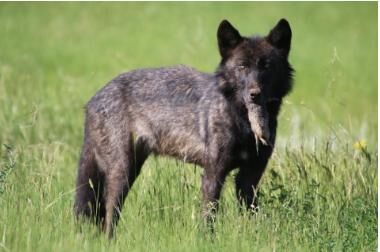
The U.S. Fish & Wildlife Service on Tuesday issued its final “record of decision” regarding Colorado’s reintroduction of gray wolves.
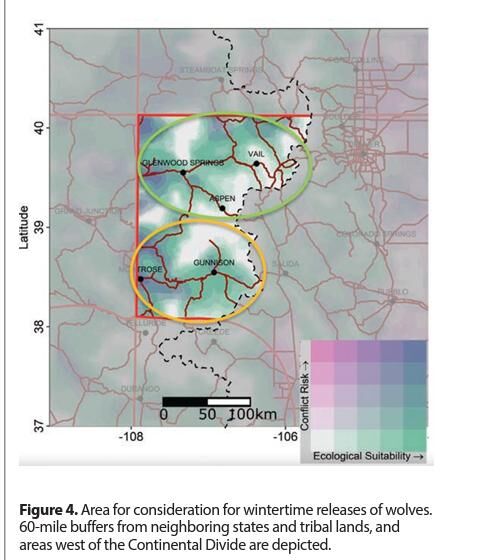
The final decision, known as a 10(j) rule under the Endangered Species Act, will go into effect in 30 days, on Dec. 8, 2023. Colorado Parks and Wildlife, which recently announced they would get 10 wolves from Oregon, will bring those wolves onto public lands in an area bordered by Glenwood Springs and Vail on the north and Aspen on the south. The parks reintroduction plan calls for 30 to 50 wolves to be reintroduced over the next three to five years.
The state had sought private lands, in addition to state-owned land, for reintroduction, but got no takers from private landowners.
Sen. John Hickenlooper announced the final record of decision Tuesday, saying “This final rule respects the will of Colorado voters, farmers, ranchers, and conservationists, and sets our state up for responsible gray wolf reintroduction.”
“It is encouraging to see the U.S. Fish and Wildlife Service and the State of Colorado making progress towards fulfilling Colorado’s commitment to return meaningful gray wolf populations to the State,” said Michael Saul, Rockies and Plains field director for Defenders of Wildlife. “The return of the wolf to Colorado has the potential to be an historic ecological success, but the restoration program will require careful scientific monitoring and commitment by all stakeholders to ensure wolves and humans can share the landscape, and to give returning wolves a real chance to thrive and transform ecosystems.”
Colorado voters, primarily in urban and suburban counties, narrowly voted to allow the state to reintroduce wolves under Proposition 114 in 2020, on a vote of 50.91% to 49.09%. Rural voters who live in the areas where wolves will be sited overwhelming rejected the ballot measure.
Under the 10(j) rule, wolves would no longer be considered an endangered species in Colorado, although they are still considered endangered in other states. Colorado now joins a list of Western states where gray wolves are no longer endangered, such as Idaho, Montana, Wyoming, north-central Utah and parts of Oregon and Washington. Under the 10(j) rule, wolves are now considered an experimental population.
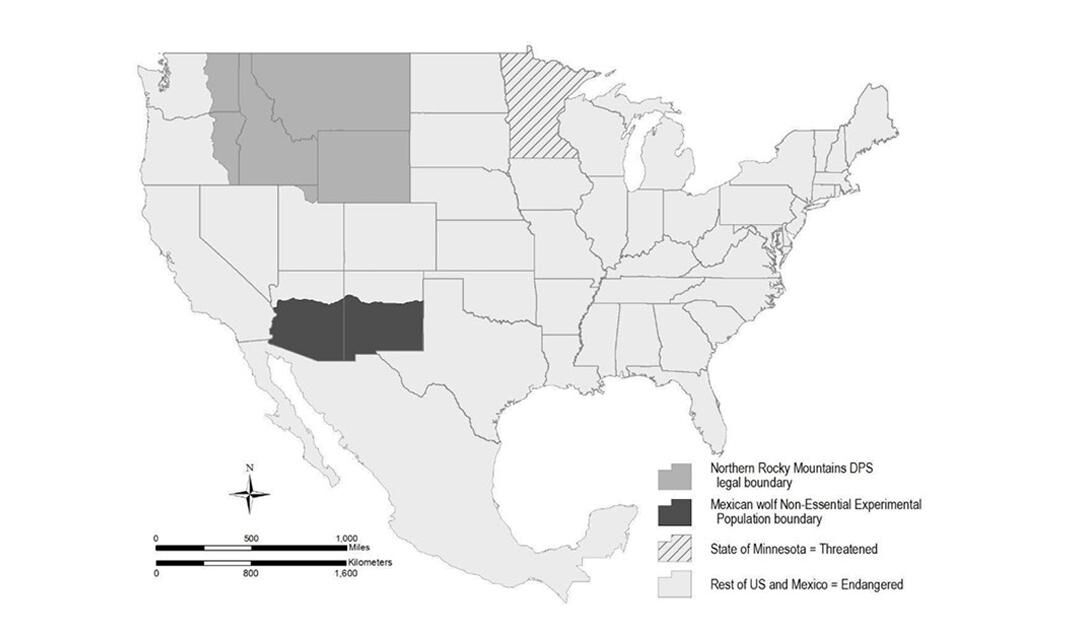
Without the 10(j) rule, wolves could be reintroduced in Colorado but only as an endangered species and under the management of U.S. Fish & Wildlife. Critics have said the federal agency doesn’t have the capacity to manage the wolf population.
Under the Colorado Parks and Wildlife reintroduction plan, wolves can be killed if they attack livestock, and ranchers can be compensated for livestock losses.
The Colorado General Assembly, during the 2023 session, approved bipartisan legislation setting up a $350,000 per year fund to pay ranchers who lose livestock to wolves.
The record of decision also clarifies that “taking” (killing) gray wolves that attack pets is not allowed but taking gray wolves that attack working dogs, or dogs that guard or herd livestock, is allowed. The record of decision recognizes the sovereignty of Tribal nations by adding a provision to allow taking of gray wolves that significantly impact “ungulate” populations (deer and elk) on the Ute Mountain Ute and Southern Ute tribal lands. The decision also said takings would not be allowed if there is any evidence of baiting gray wolves through using “unusual attractants, artificial feeding or intentional feeding.”
Wolves started showing up in Colorado in 2021, in Jackson and Routt counties, where they were suspected in at least a half-dozen attacks on livestock and ranch dogs.
marianne.goodland@coloradopolitics.com


Trump has a 96% endorsement success rate. Here are the Republicans he’s backed who have lost
Mabinty Quarshie
mabinty-quarshie@coloradopolitics.com
Updated 15 minutes ago
President Donald Trump’s 2026 primary endorsement success rate remains staggeringly high, but the president has seen a growing number of losses stack up in recent weeks. According to Ballotpedia, Trump has endorsed in 313 U.S. Senate, U.S. House, and state...
GOP gubernatorial candidate Victor Marx pushes aggressive water-storage expansion at Colorado Water Congress
Marianne Goodland
marianne.goodland@coloradopolitics.com
Updated 23 minutes ago
Victor Marx, the Republican nominee for governor, took the spotlight Wednesday during the opening day of the Colorado Water Congress, laying out how he says the state should approach its water future. Marx told the standing-room-only audience in Steamboat Springs,...

Colorado judge blasts state forensics lab in dismissing child sex case
Jenny Deam
jenny.deam@gazette.com
Updated 29 minutes ago
In a potentially widely consequential action, a Weld County district judge dismissed a child sexual assault case, citing the ongoing scandal at the Colorado Bureau of Investigation’s forensic lab that “has left a dark mark on the history of Colorado...

Colorado officials urge stronger water safety after 6 drownings and multiple Front Range rescues
Elizabeth Pond
elizabeth.pond@denvergazette.com
Updated 4 hours ago
At least eight people have drowned in Front Range waters since mid-March, including two at Eleven Mile Reservoir, three at Cherry Creek Reservoir, one at Rockbridge Lake and two at Lake Pueblo State Park. In the wake of these deaths,...

Vehicle registration crackdown across Front Range starts next week
Nick Smith
nick-smith@coloradopolitics.com
Updated 2 hours ago
Colorado drivers with expired tags or unregistered vehicles still have time to get registered before a scheduled enforcement crackdown starts next week. According to an announcement from the Colorado Springs Police Department, a multi-agency enforcement effort will happen across the...
Manitou refers second attempt at amusement tax increase to voters
Savannah Eller
savannah-eller@coloradopolitics.com
Updated 18 hours ago
Residents in Manitou Springs will once again see a question on their fall ballots that could raise municipal taxes on tickets and door fees. Tuesday night, the city council approved a ballot question for November’s election presenting voters with the...
Manitou refers second attempt at amusement tax increase to voters
Savannah Eller
savannah-eller@coloradopolitics.com
Updated 18 hours ago
Residents in Manitou Springs will once again see a question on their fall ballots that could raise municipal taxes on tickets and door fees. Tuesday night, the city council approved a ballot question for November’s election presenting voters with the...

Aurora grapples with affordable housing needs, deficits
Kyla Pearce
kyla.pearce@gazette.com
Updated 2 hours ago
Aurora is grappling with affordable housing needs as demand for project funding increases and the state cuts grant money. Currently, the city needs about 12,000 affordable housing units, Martin Petrov at Aurora Housing Authority told members of the Housing, Neighborhood...

Wheat Ridge considers ordinance to restrict drone use in public spaces
Matt Kyle
matt.kyle@denvergazette.com
Updated 2 hours ago
Drone users may soon have to abide by new restrictions should they wish to fly in Wheat Ridge. During Monday night’s City Council meeting, council members discussed a proposed ordinance that would restrict the use of remote-controlled drones within city...

Douglas County unveils plan to cut red tape, speed business approvals
Nicholas Fogleman
nicholas.fogleman@denvergazette.com
Updated 2 hours ago
Douglas County officials on Monday unveiled a Red Tape Reduction Action Plan aimed at streamlining permitting and development reviews to position the county as “the best place in America to invest.” The plan, developed through a partnership between the Douglas...
PREV
PREVIOUS

Shakeups in Colorado Senate raise eyebrows, with changes coming to ag, local government committees
Senate Majority Leader Robert Rodriguez on Tuesday announced new committee assignments for Senate Democrats, and at least two of the changes raised eyebrows. The Senate Agriculture and Natural Resources Committee lost its current vice-chair, Sen. Nick Hinrichsen of Pueblo, who was replaced by Sen. Jessie Danielson of Wheat Ridge. The committee remained a 4-3 Democratic […]

303 Creative returns to trial court in wake of SCOTUS ruling on LGBTQ discrimination
After the U.S. Supreme Court decided in June that certain businesses may refuse service to customers notwithstanding states’ anti-discrimination laws, the case that prompted the ruling quietly returned to Colorado’s federal trial court on Tuesday, more than seven years after it began. In 303 Creative v. Elenis, plaintiff Lorie Smith originally feared she would run afoul […]