

Appeals court, 2-1, says names of book ban advocates not subject to disclosure
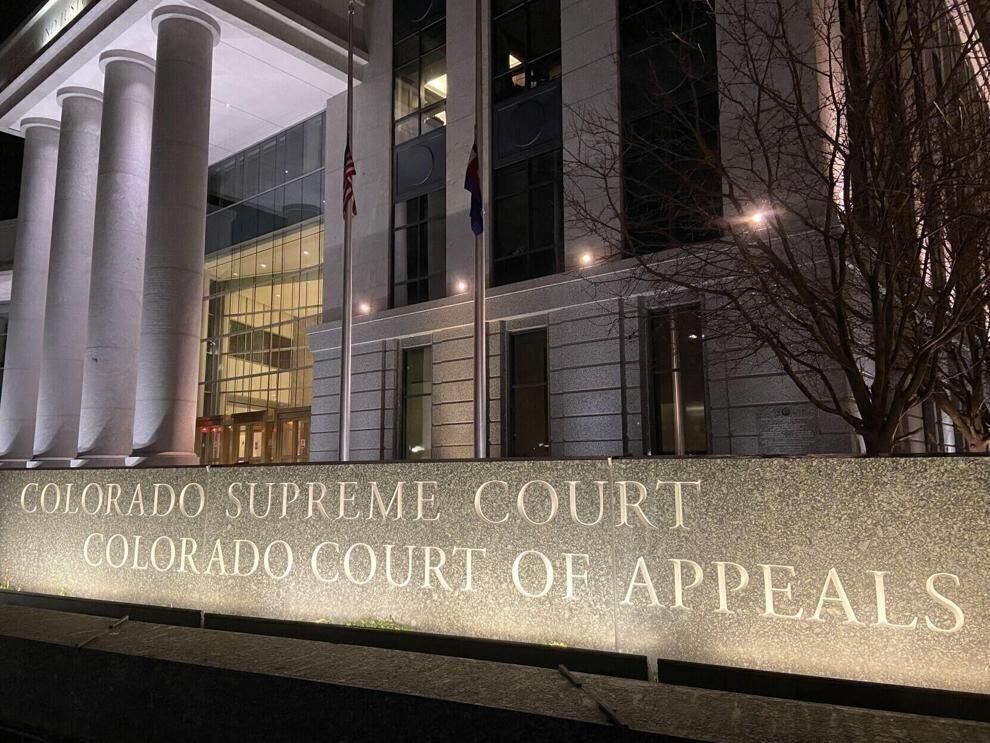
Colorado law does not permit libraries to disclose the identities of people who request the removal of certain books, the state’s second-highest court ruled last week.
A three-judge panel of the Court of Appeals did not weigh in on the broader movement to ban materials that touch on LGBTQ themes or race from library shelves. Instead, it examined whether those who seek to remove books and other media may do so confidentially, with names shielded from open records requests.
Although the panel decided 2-1 in the affirmative, there were several quirks unique to the case, which originated in Gunnison County. For example, all parties supported the disclosure of identities. Also, the library’s decision to make a form available for members of the public to seek the removal of materials placed the organization squarely under the non-disclosure guarantee in state law.
Andrew Brookhart, the executive director of the Gunnison County Library District, argued to the Court of Appeals that libraries should be allowed to share the identities of those seeking to influence the makeup of their collections. But the panel’s majority waved aside that concern, noting the request to ban materials itself is fully disclosable.
“We perceive no persuasive argument that the library’s objective assessment of the requests or the public good would be enhanced by revealing the identity of the requesters,” wrote Judge Lino S. Lipinsky de Orlov for himself and Judge Timothy J. Schutz.
Judge Daniel M. Taubman, citing the unusual circumstances of the case, indicated he would have dismissed the appeal. With both sides in agreement that disclosure of requesters’ names should happen, he believed no controversy existed. If the case was moot, Taubman reasoned, there was no need to go further, especially because no pressing issue needed addressing.
“While whether certain books should be banned or their circulation restricted in public libraries is being litigated and debated across the country,” he wrote, “that is not the issue presented here.”
Case: Brookhart v. Reaman
Decided: October 5, 2023
Jurisdiction: Gunnison County
Ruling: 2-1
Judges: Lino S. Lipinsky de Orlov (author)
Timothy J. Schutz
Daniel M. Taubman (dissent)
Background: Library district draws crowd over censorship
Mark Reaman, the editor of the Crested Butte News, filed a request in March 2022 under Colorado’s open records law. He sought all of the forms filed with the Gunnison County Library District since the beginning of 2022 to remove books and other materials.
The prior year, a woman requested the removal to the adult section of Gender Queer by Maia Kobabe, a graphic memoir that addresses sexuality. Although the woman identified herself publicly, she made a criminal complaint to the Seventh Judicial District Attorney’s Office over the library’s disclosure of her request.
The office declined to bring charges, looking to a Colorado law that generally prohibits disclosure of any information identifying a person who “requested or obtained specific materials or service” from the library, or who otherwise “used the library.” In response to Reaman’s request, Brookhart petitioned the district court seeking clarification on whether the book removal forms fell under the non-disclosure requirement.
Chief Judge J. Steven Patrick determined disclosure should occur for everything but the personal identifying information.
A library “user,” he wrote in May 2022, “is not limited to someone who reads material in the library, or, checks out material, but inclusive of any person ‘using’ library services.”
On appeal, Reaman cited reporting from the nonprofit advocacy group PEN America of 1,648 book titles banned between July 2021 and June 2022, occurring across 32 states. Most materials were fiction, and four in 10 addressed LGBTQ themes or characters.
“As this nationwide effort to ban books hits communities like Gunnison County, residents have a compelling interest in knowing who is responsible, and how to use the democratic process to secure their right to unimpeded access to information in their public library,” wrote attorney Rachael Johnson.
But during oral arguments, the panel repeatedly focused on the narrow question of whether the people who submitted forms obtained a “service” from the library, and were thus shielded from identification.
“The individuals in this case are not requesting services. They’re asking to remove information,” Johnson maintained.
“But doesn’t the library provide this form, which they completed, as a service?” Lipinsky pressed. “These individuals used a form the library created and put on its own website. Isn’t it a service?”
The majority agreed it could still decide the case, even though the parties were both arguing in favor of disclosure, because Brookhart did not know if he could legally release the names. The answer was no, given that the book removal forms constituted a “service.”
“The die was cast when the library district created and posted a form to allow any person to seek the removal or restriction of any item,” Lipinsky wrote in the Oct. 5 opinion.
Taubman, a retired judge who sat on the panel at the chief justice’s assignment, believed the correct move would have been to dismiss the case as moot and overturn the trial judge’s order.
“Brookhart has unequivocally declared that Reaman should be permitted to receive unredacted copies of the requesters’ forms. This is sufficient to moot the case,” he wrote.
Reaman and attorneys for Brookhart did not respond to emails seeking comment. Reaman disclosed to the Court of Appeals that the library provided the unredacted removal forms to his attorney. Although Reaman had not yet viewed them, there was no order blocking him from doing so.
The case is Brookhart v. Reaman.


10th Circuit partially revives lawsuit over 2020 Denver protest injuries
Michael Karlik
michael.karlik@coloradopolitics.com
Updated 22 hours ago
The Colorado-based federal appeals court revived a man’s claims against Denver on Friday after concluding a trial judge resolved the case in the city’s favor without analyzing two of the three instances of alleged excessive force and other constitutional violations....

Federal judges find Colorado immigration judge violated several orders
Michael Karlik
michael.karlik@coloradopolitics.com
Updated 22 hours ago
Multiple federal judges in Colorado have freed people from immigration custody after determining that one immigration judge violated their directives for properly conducting bond hearings. For nearly a year, Colorado’s U.S. District Court has faced a flood of “habeas corpus” petitions...

Misconduct complaints from ex-Colorado judicial discipline director dismissed against federal judges
Michael Karlik
michael.karlik@coloradopolitics.com
Updated 2 days ago
The administrative body for the Denver-based federal appeals court upheld a finding last week that misconduct complaints against Colorado’s chief federal trial judge and the chief appeals judge warranted dismissal and appeared to be a “litigation tactic” by the complaining...

First-ever Red Rocks naturalization ceremony draws most diverse group of new citizens
Michael Karlik
michael.karlik@coloradopolitics.com
Updated 23 hours ago
Colorado’s federal trial court held its first-ever naturalization ceremony for nearly 300 new citizens on Thursday at Red Rocks Park and Amphitheatre. “We’re doing it to commemorate the 250th anniversary of the Declaration of Independence and the United States. Red...
Jeffco taxpayers could be on the hook for a possible child sex assault settlement
Matt Kyle
matt.kyle@denvergazette.com
Updated 1 day ago
Taxpayers may end up on the hook for a child sexual assault settlement, possibly worth up to $15 million, after Jeffco Public Schools failed to notify its insurance company in a timely manner about the case. The incident stems from...
10th Circuit finds no fair housing violation by Littleton landlord for worker’s alleged rape of tenant
Michael Karlik
michael.karlik@coloradopolitics.com
Updated 21 hours ago
The Denver-based federal appeals court concluded on Monday that Littleton’s housing authority could not be held liable for a maintenance worker’s alleged rape of a tenant, as the worker’s employment did not provide any special access to the victim. A...

Jeffco Public Schools sues Trump administration to protect funding after alleged transgender policies violation
Matt Kyle
matt.kyle@denvergazette.com
Updated 2 days ago
In the wake of several threats by the Trump administration to revoke federal funding, Jeffco Public Schools filed a lawsuit against the Department of Education seeking to protect that badly needed money. Jeffco has been under investigation by the DOE’s...

Denver detox center did not violate man’s rights with 10-hour hold, 10th Circuit says
Michael Karlik
michael.karlik@coloradopolitics.com
Updated 4 days ago
The Colorado-based federal appeals court concluded on Tuesday that Denver’s detoxification facility did not violate a man’s rights by holding him against his will for 10 hours until his blood alcohol content was projected to reach zero. Unusually, Brian Garrett’s...

Federal judge clarifies ex-GOP treasurer candidate’s burden to prove defamation claims
Michael Karlik
michael.karlik@coloradopolitics.com
Updated 4 days ago
A federal judge clarified last week that businessman and former Republican statewide candidate Brian Watson will need to surmount a higher hurdle in proving his claim that a party guest’s alleged description of him as a “criminal” amounted to defamation....
Colorado board permits state to appeal injunction against arthritis drug price cap
Marissa Ventrelli
marissa.ventrelli@coloradopolitics.com
Updated 4 days ago
A Colorado board voted Friday to allow the Attorney General’s Office to fight an injunction against a price cap on a drug that treats arthritis. A U.S. district court judge had granted the company Amgen a preliminary injunction, temporarily blocking...
PREV
PREVIOUS

Board candidates fight for the future of Woodland Park School District — in separate forums
Attempts failed at hosting a Woodland Park School District RE-2 forum featuring all board candidates together, leading to two separate events Monday evening for one of the region’s most contentious races. Two slates of candidates – the incumbents and their challengers – offered dramatically divergent visions for the district’s future. Three of five seats are […]

Denver prayer vigil held after attack on Israel
The war that raged over the weekend in Israel came home to Colorado Monday evening as more than a thousand people from the Jewish community and other faiths joined for a prayer vigil at Temple Emanuel in Denver. “This is a moment we haven’t seen since 1973, unprecedented in my lifetime,” said Ben Lusher, board […]