

Colorado appeals court sides with customer sued over negative online review
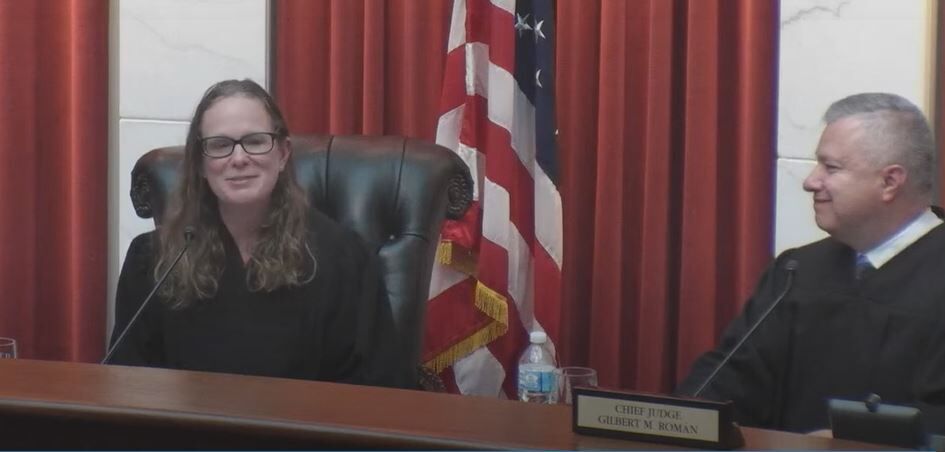
A series of statements a Colorado Springs woman made online and through the media about a plumbing company are protected under the law and do not amount to defamation, Colorado’s second-highest court ruled last month.
The decision from the Court of Appeals is the latest to address the tension between customers who leave critical online reviews of businesses, on the one hand, and those businesses’ desire to avoid negative publicity – especially if they believe the review fails to convey the whole story.
Smith Plumbing, Heating, Cooling & Electrical, based in Colorado Springs, demanded $10,000 from Elizabeth Watson after she posted on the company’s Facebook page an unflattering description of Smith’s offer to fix her home. The company allegedly quoted a much higher price for work she did not need, compared with other businesses Watson consulted. After Watson appeared in a television news story to talk about the $10,000 demand, Smith sued for defamation.
A trial judge initially declined to dismiss the lawsuit, but a three-judge panel for the Court of Appeals saw otherwise, finding Watson’s statements were either opinions or otherwise “substantially true.”
“Watson believed, based on information she received from other providers, that the company had tried to sell her products and services that exceeded her needs,” wrote Judge Christina F. Gomez in the panel’s April 27 opinion. “Watson wasn’t required to take the company’s opinion as conclusive fact over the estimates of the other providers she consulted.”
Watson’s attorney, Ian Speir, praised the ruling and said the First Amendment dictates that consumers “should be able to speak freely and honestly about businesses they patronize – or choose not to patronize – and the consuming public has a right to hear their opinions.”
In a statement, Smith countered that even a single negative review can cause businesses to lose sales, and potentially imperil the survival of “mom-and-pop” enterprises.
“Smith and its owners do not believe the First Amendment rights of consumers and protections for businesses have to be mutually exclusive – online reviews based on false information or material omissions as here hurt consumers, as well as businesses, at the end of the day by depriving the public of the facts they need to make informed decisions,” the company said.
The lawsuit implicated Colorado’s relatively new “anti-SLAPP” law, which stands for “strategic lawsuits against public participation.” The legislature enacted the law in 2019 to provide a mechanism to quickly dispose of litigation that implicates a person’s First Amendment rights – specifically, the rights to free speech and to petition the government.
Late last year, the Court of Appeals similarly dismissed an online review case involving a dental patient who complained about her dentist on Yelp and Google after other professionals opined the dentist had performed substandard work. That case, along with Watson’s, raised the question of how inflammatory consumer reviews can be in order to sustain a defamation suit.
“Where’s the boundary there?” asked Judge Stephanie Dunn during oral arguments in Watson’s appeal. “Is it your contention they are always protected no matter what the statements are?”
Watson argued companies should not be allowed to intimidate customers who offer their honest opinions about how others should spend their money. But to Smith, Watson’s post and subsequent television interview had real consequences, catalyzing a “smear campaign” that resulted in others leaving negative reviews and harassing company employees.
“Technicians were screamed at in public,” attorney Cassandra M. Kirsch told the appellate panel. “Smith had to take down their social media for approximately two weeks and the owners were concerned about going out in public with their small children based on the treatment of technicians. So this is not just about a consumer leaving a bad review.”
In May 2021, Watson called Smith for an estimate on repairs to the plumbing and HVAC system in her new home. Smith evaluated the house and provided her multiple quotes for various types of work, ranging from several hundred dollars to in excess of $20,000.
Watson then contacted competitor businesses and received much lower estimates for the relevant work. She posted on Smith’s Facebook page that the company wanted to charge her much more for servicing her home, adding, “They really tried to take advantage of this single parent.”
After Smith’s lawyer sent Watson a letter asking her to delete the review and pay $10,000, Watson spoke to a reporter at KOAA. The segment reportedly prompted other Internet users to post negative reviews for Smith, despite not actually being customers.
Smith filed a defamation lawsuit in El Paso County, which Watson moved to dismiss under the anti-SLAPP law. Last year, District Court Judge David A. Gilbert denied the motion, believing Watson had not shown the lower-quoted prices were for the same services that Smith would have provided. Therefore, the “gist” of Watson’s claim that she was being taken advantage of may not have been true.
On appeal, Watson contended her Facebook review did allude to differences between Smith and the other contractors, and her view was informed by the expert opinions of Smith’s competitors. The appellate panel was sympathetic to the notion that Watson’s online statements had a reasonable foundation.
“She gets a quote from one plumber. She gets a quote from another. As a layperson consumer, without a breadth of knowledge in this area, why does she have to accept (Smith’s) view as the truth?” questioned Judge Jaclyn Casey Brown.
Ultimately, the panel decided Smith had not shown it could prove Watson’s statements were largely false and that she made them with “reckless disregard” for the truth.
“At most, then, the company has shown that it denied the truth of her statements and believed its own estimates were the more accurate ones – but that in and of itself is insufficient to establish either falsity or actual malice,” Gomez wrote.
Kirsch, the attorney for Smith, said she planned to appeal to the state Supreme Court.
The case is I.L.M. Properties, LLC et al. v. Tibbetts.
Editor’s note: This article has been updated with a comment from Watson’s lawyer.

Colorado Supreme Court intervenes in Weld County prosecution dismissed due to Missy Woods misconduct
Michael Karlik
michael.karlik@coloradopolitics.com
Updated 3 hours ago
The Colorado Supreme Court ordered a Weld County trial judge last week to respond to the district attorney’s claim that he improperly dismissed a criminal case because of “outrageous” conduct by the Colorado Bureau of Investigation. Daniel Lee Eatinger stood...
Schoolchildren’s presence at child sex-related trial did not harm Arapahoe County defendant, appeals court says
Michael Karlik
michael.karlik@coloradopolitics.com
Updated 2 days ago
Colorado’s second-highest court decided on Thursday that the presence of a group of schoolchildren on the first day of a child sexual exploitation trial did not violate an Arapahoe County defendant’s constitutional right to a fair trial. Prosecutors charged Jerry...
Appeals court cites week-old Colorado law to reinstate child neglect case at child, father’s request
Michael Karlik
michael.karlik@coloradopolitics.com
Updated 2 days ago
Colorado’s second-highest court invoked a new state law for the first time on Thursday and reinstated a child neglect case that both the child and her father wished to reopen. House Bill 1227 took effect on Aug. 12, reversing a...
Colorado Supreme Court names William Hood as next chief justice
Michael Karlik
michael.karlik@coloradopolitics.com
Updated 3 days ago
The Colorado Supreme Court has selected Justice William W. Hood III to be the next chief justice, the judicial branch announced on Friday. Hood will succeed Chief Justice Monica M. Márquez, who took over the role in July 2024. “I...

Family of slain Lakewood teacher releases statement as murder suspect makes first court appearance
Matt Kyle
matt.kyle@denvergazette.com
Updated 4 hours ago
Patrick Theodore Barnett, the Lakewood man accused of killing his wife, a Jeffco Public Schools art teacher, made his first court appearance Friday morning as his wife’s family looked on. The status conference hearing was held before District Court Judge...

Appeals court upholds Park County trophy hunting conviction
Michael Karlik
michael.karlik@coloradopolitics.com
Updated 3 days ago
Colorado’s second-highest court clarified on Thursday that a defendant may stand convicted under the state’s trophy hunting laws if he abandons a bear carcass but returns later to remove the meat. Under Colorado law, it is a felony to detach...

Judge grants partial injunction to GEO in fight against state health inspection law
Kyla Pearce
kyla.pearce@gazette.com
Updated 4 days ago
A judge ruled Thursday that The GEO Group does not have to follow parts of a new state law requiring more frequent health and safety inspections at the U.S. Immigration and Customs Enforcement processing center in Aurora. Under the order...

Parker man faces 20 years to life for serial sexual assaults
Nicholas Fogleman
nicholas.fogleman@denvergazette.com
Updated 4 days ago
A 25-year-old Parker man who sexually assaulted three women in 2025 pleaded guilty Wednesday and will serve 20 years to life in prison. Javier Rodriguez-Andrade pleaded guilty to charges stemming from three sexual assaults involving women ages 19 to 24. ...
Divided appeals court upholds warrantless DNA collection in Colorado cold case, cautions of government overreach
Michael Karlik
michael.karlik@coloradopolitics.com
Updated 4 days ago
Colorado’s second-highest court upheld the warrantless collection of a suspect’s DNA from a discarded soda can as constitutional on Thursday, while warning about potential abuse of DNA privacy in the absence of further guardrails. By 2-1, a three-judge Court of...

Man charged in Northglenn homicide of wife
Matt Kyle
matt.kyle@denvergazette.com
Updated 4 days ago
A man has been formally charged with murder and burglary relating to a homicide last week in Northglenn. Alexei Munive-Rodriguez, 48, was arrested Sunday after he was at large following the homicide, which occurred Friday. Police were dispatched around 10:30...
PREV
PREVIOUS

Q&A with Julie Reiskin | A champion for those with disabilities eyes the road ahead
Julie Reiskin is the co-executive director of the Colorado Cross-Disability Coalition, the state’s leading advocate for disability rights. She’s been a familiar face at the state Capitol, advocating for those with disabilities, with a focus on health issues since 1996. The last three years have marked a dramatic change for representation of those with disabilities […]

Denver's Beacon Network appeals to state over zone revocation, files lawsuit
In the first test of a new Colorado law, the Beacon Network Schools Zone Board of Directors requested a state review of Denver Public Schools’ decision to revoke the network’s innovation zone status. The Beacon Zone Board also filed a lawsuit to keep the district from breaking up the zone, which has 750 students, while […]