

Q&A with Julie Reiskin | A champion for those with disabilities eyes the road ahead
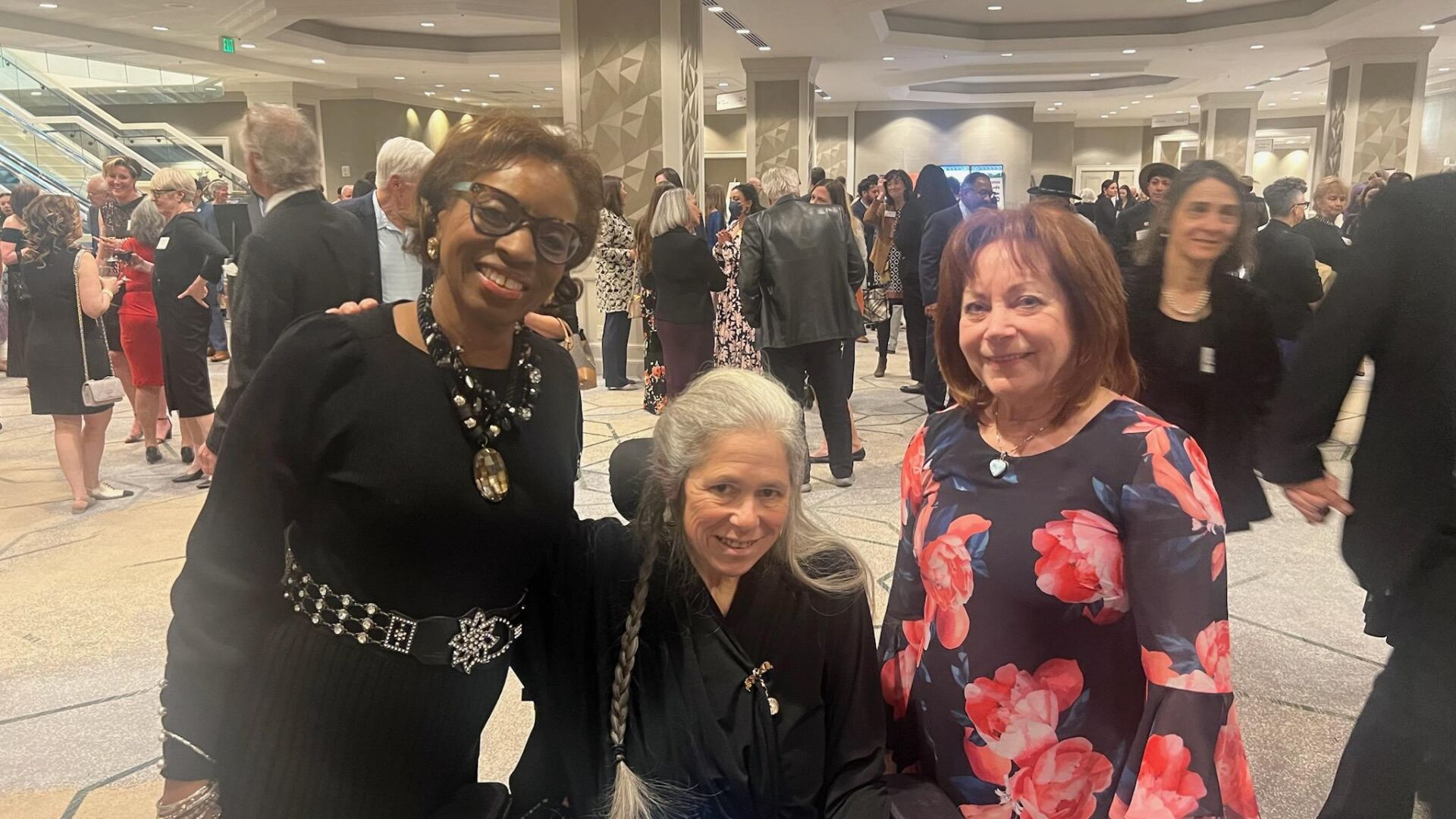
Julie Reiskin is the co-executive director of the Colorado Cross-Disability Coalition, the state’s leading advocate for disability rights. She’s been a familiar face at the state Capitol, advocating for those with disabilities, with a focus on health issues since 1996.
The last three years have marked a dramatic change for representation of those with disabilities at the state Capitol.
That’s largely due to the election of two lawmakers with disabilities: Rep. David Ortiz, D-Centennial, who uses a wheelchair, and Rep. Iman Jodeh, D-Aurora, who has epilepsy and has spoken about it several times as she works on policy around health care.
Fast Facts
Born in England, because her parents happened to be there at the time. Moved back to the state at age 2 and grew up primarily in a suburb outside of Hartford, Connecticut.
Reiskin moved to Colorado “for love,” meeting her partner at an ADAPT protest around community-based services in Washington, D.C
“We met in jail,” Reiskin joked. They actually met shortly before getting arrested. Her partner passed away in 2021.
Holds bachelor’s and master’s degrees in social work, University of Connecticut.
She was diagnosed with multiple sclerosis when she was 21, which is what put her into a wheelchair.
In 2022, Reiskin was honored with the Anti-Defamation League Mountain States annual Civil Rights Award, recognizing her three decades of influential work on disability issues. She also served on the Board of Directors of the Legal Services Corporation, nominated by President Barack Obama in 2009.
Colorado Politics: What led you to become an activist?
Julie Reiskin: I’ve always been an activist. My first act of civil disobedience was literally in the first grade when I didn’t want to say the Pledge of Allegiance because I didn’t believe that adults cared about justice for all. The Vietnam War was going on. We had moved from a racially-integrated neighborhood in Chicago to an all-white suburb in Connecticut and I noticed everyone has nice houses and it’s clean, and then there are other places we drive and they’re all white, and there are other places where we drive and the housing looks horrible and everyone’s black. I got that something was wrong. Little kids have a really strong sense of fairness, I think.
CP: How did you get involved with CCDC?
JR: When I was diagnosed with MS, I was young, like 20 or 21. I was going into kind of a social justice field and had just finished my bachelor’s. I was working on women’s justice stuff. But I realized I needed to have an advanced degree because I was going to need an increased earning capacity.
That was before I knew anything about how messed up our healthcare and benefit system was. So I got a master’s degree, and then when I finished my master’s degree, I said I think I’ll change jobs and use my degree a little more.
This was before Obamacare, even before Kennedy Kasselbaum (the Health Insurance Portability and Accountability Act of 1994). So I changed jobs and became forever uninsurable.
When you’re in your twenties, you don’t think much about health or health insurance, or at least in those days you didn’t. That got me really interested in looking at healthcare issues. I was involved in Connecticut with healthcare reform. When I came here, I hardly knew anyone, and I asked one of the few people I knew, what’s a good organization that I could get involved with, where I could work on healthcare policy. And I was directed to CCDC.
CP: Who do you look to as a role model?
JR: My parents and my grandmother, who was really an incredible woman. She was widowed at a very young age when her kids were 10 and 12, and just did amazing things with her life. My mother, who’s in her late eighties, went to a racially integrated school as a white kid. Back then, that was not common.
(Her grandmother) started this like very integrated arts organization, while working as a secretary, as a single mom, but supported herself and her kids.
There’s one professional who I really admire and look up, Dr. Carolyn Love. She’s in a nonprofit space, pretty well known, a leadership consultant (She owns Kebaya Consulting and teaches in the nonprofit management program at Regis University).
I just really, really respect the way she thinks about things.
CP: What are the biggest issues that face those with disabilities right now? And how can the legislature help with that?
JR: I think an underlying issue is being isolated, and decades of being told, that you can’t and shouldn’t work. We’ve solved some of the work issues in Colorado, at least with Medicaid. But there’s still this big divide where people have not ever been able to accumulate anything. Someone might be in their thirties, forties, fifties, and have never had a job.
The isolation of not knowing how things work in the world and just even if you think about how fast things change, I mean, could you imagine being out of the workforce for three years and coming back in?
So imagine being out for 10 years or never being in it at all.
I think the task force that hopefully will get through the Senate today and tomorrow (House Bill 23-1296), where we’re going to really look at housing and access to government and then rewriting the Anti-Discrimination Act as well as some outdoor stuff. (Editor’s note: This interview was conducted March 4)
I think that’s really going to help us look at things in a more holistic way. Things have just been piecemeal and that’s not a good, but that’s how a lot of policy gets done. I’m usually not a fan of task forces, but I think this one was really well thought out and is a good idea.
Supporting what comes out of that task force is helpful. But I also think it’s just including us in the conversation. Our motto [at CCDC] is “nothing about us without us…ever.” And so we always ask legislators at the beginning every year, when you’re considering a bill that’s going to affect people with disabilities, please include us in a conversation. You don’t have to agree with us. You just have to include us, because we’re so often left out.
There are a lot of areas where they’re not really considering how this works on the ground. There might be some something in law or policy or program, but no one’s really talking to the end user, or the people that live with it.
CP: What was the reaction of the folks at CCDC when Ortiz was elected?
JR: Oh my God, we were so excited. As a nonprofit we don’t endorse candidates, but having someone you know, we were was super excited, and when Rep. Jodeh talked on the floor about having epilepsy her first year.
We now have several people with disabilities, and that’s really, really exciting. In the past we’ve had champions, through family members, such as Reps. Dave and Mary Young, they’re guardians of his sister. Irene Aguilar has a daughter with a significant disability.
So when we have legislators like that who have that direct lived experience with our systems, it helps in a way that is just totally impenetrable from the outside. They develop relationships with their colleagues.
For example, when the Republicans filibustered on the anti-discrimination act bill, and Rep. Holtorf said something offensive, which happens. We all got mad, of course, but what Rep. Ortiz was able to do is have a conversation with him. None of us would’ve been able to have that conversation with him because we don’t have that kind of relationship and never will.
It’s the same reason why we want to see people with disabilities in state government. Josh Winkler (Disability Funding Committee and Policy Advisor in the Polis administration) is the same thing. He has relationships with people that we never will and can explain our perspective, which again, doesn’t mean we always get our way, it just means that that just gives you representation at such a different level.
It means everything. It’s also the optics. When someone in a wheelchair is at the Capitol, these are people who are part of the business of the capitol.
CP: What’s the one thing you’d want people to know about, about people who live with a disability?
JR: That disability is not a tragedy. Being excluded and marginalized can be tragic, but having the disability is part of the normal human experience. The problems that we face are not necessarily because we have a disability, it’s usually because of systems not being accessible. Accessible is more than a ramp, that might be program access or having a sign language interpreter. But having a disability in and of itself is not a bad thing. It’s just something different.
That doesn’t mean that there aren’t things about it that are hard, there are. But it means that we don’t want to be be seen as like objects of pity or as incapable. It’s called a disability for a reason. There are things that we cannot do, but that, even like with employment, there’s a difference between being able to do maybe like a totally traditional 40 hour week where you have to be somewhere job and sitting on the couch doing absolutely nothing. There’s a whole lot in between.
If you’re not in a coma, you can do something. We have people with very, very significant disabilities who contribute, who do things. Sometimes it’s paid work, sometimes it’s volunteer work, but everyone has something to offer.
CP: What are the biggest challenges that you and your allies face when you’re dealing with lawmakers?
JR: I think a lot of lawmakers do see disability as kind of like tragic and pitiful. You don’t have equal respect when you’re feeling sorry for someone. There’s still that attitude out there.
I also think being part of a very poor community, we are the poorest demographic of any group, so we have a lot less money as a community than other organizations, and we get out-lobbied. We don’t have a contract lobbyist. We have volunteers who are awesome, but we don’t have paid people to sit there all day, every day.
Remote access has been a huge game changer, especially when they do these really late night sessions and these hours are very, very challenging, for us to keep up with that. But at least with the remote, it does make it more manageable.
There are a lot of unwritten rules. When someone isn’t doing it full-time, it takes longer to learn all of those rules. We provide training, but a lot of it is relationship development. So even though the remote access is great, when you’re not there, you’re not developing the relationships as much.
Fun Facts
What she does to chill: She has two dogs, a German Shepherd and a lab-pit mix. Her son, who lives in an ADU right behind her house, has a rat terrier.
She also reads and has an accessible exercise bike that “I am very much addicted to.”
She also loves to travel, although with a wheelchair airplane travel is a challenge. But when she goes, one of her favs is Las Vegas.
In Colorado, she likes to visit Wilderness on Wheels in Grant, Colorado.
She also loves live theater, small theaters in particular, and is a fan of the classics.
Favorite restaurant: Brewability, which does pizza and its own microbrewed beer. Its employees are all people with disabilities.

marianne.goodland@coloradopolitics.com

Federal judge hears arguments about Colorado’s 3-day gun purchase waiting period
Michael Karlik
michael.karlik@coloradopolitics.com
Updated 10 hours ago
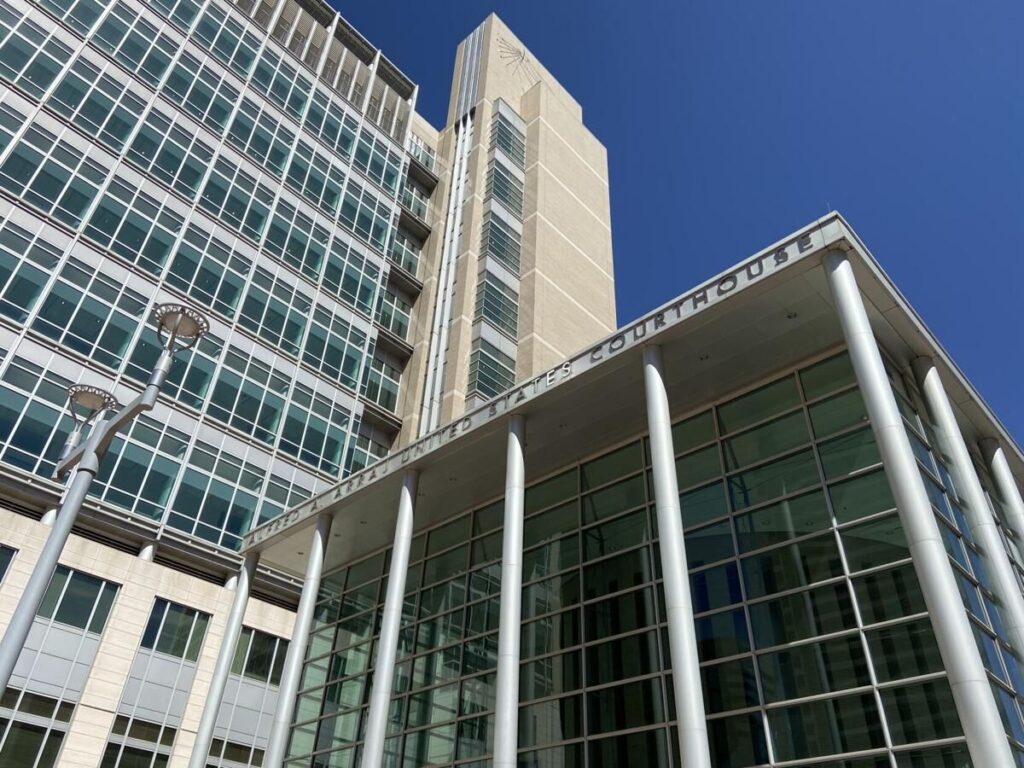
A federal judge heard arguments on Monday about the constitutionality of a 2023 Colorado law that generally imposes a three-day waiting period on firearm purchases after the initiation of a background check. The test that the U.S. Supreme Court created...

U.S. Supreme Court clears way for Trump mail voting order in advance of midterms
Wire Services
wire-services@coloradopolitics.com
Updated 14 hours ago
WASHINGTON • The U.S. Supreme Court on Monday cleared the way for President Donald Trump to move ahead with an executive order that seeks to restrict the mailing of ballots to American citizens in an eligible voters list. The executive...
Colorado Supreme Court intervenes in Weld County prosecution dismissed due to Missy Woods misconduct
Michael Karlik
michael.karlik@coloradopolitics.com
Updated 14 hours ago
The Colorado Supreme Court ordered a Weld County trial judge last week to respond to the district attorney’s claim that he improperly dismissed a criminal case because of “outrageous” conduct by the Colorado Bureau of Investigation. Daniel Lee Eatinger stood...

Trump opens ‘economic D-Day’ offensive against Iran as war nears six-month mark
Christian Datoc
christian-datoc@coloradopolitics.com
Updated 19 hours ago
President Donald Trump is seeking to increase the financial pressure on Iran with new secondary sanctions on nations and foreign actors propping up the regime’s economy as the war between the United States and Tehran nears the six-month mark. Treasury...

Trump announces 50% tariffs on Canadian cars, auto parts, and steel
Naomi Lim
naomi-lim@coloradopolitics.com
Updated 19 hours ago
President Donald Trump escalated the trade war with Canada after talks collapsed last week, announcing Monday that the United States would impose 50% tariffs on cars, trucks, automotive components, and steel starting Jan. 1, 2027. “Canada has been ripping off...

Iran puts out propaganda video tracking Barron Trump’s location, offering $10 million for his assassination
Timothy Nerozzi
timothy-nerozzi@coloradopolitics.com
Updated 20 hours ago
The Islamic Revolutionary Guard Corps is putting a hit out on President Donald Trump’s son, Barron Trump, with an inflammatory video claiming to track his location. State-run television in Iran is broadcasting a propaganda video claiming to show the locations...
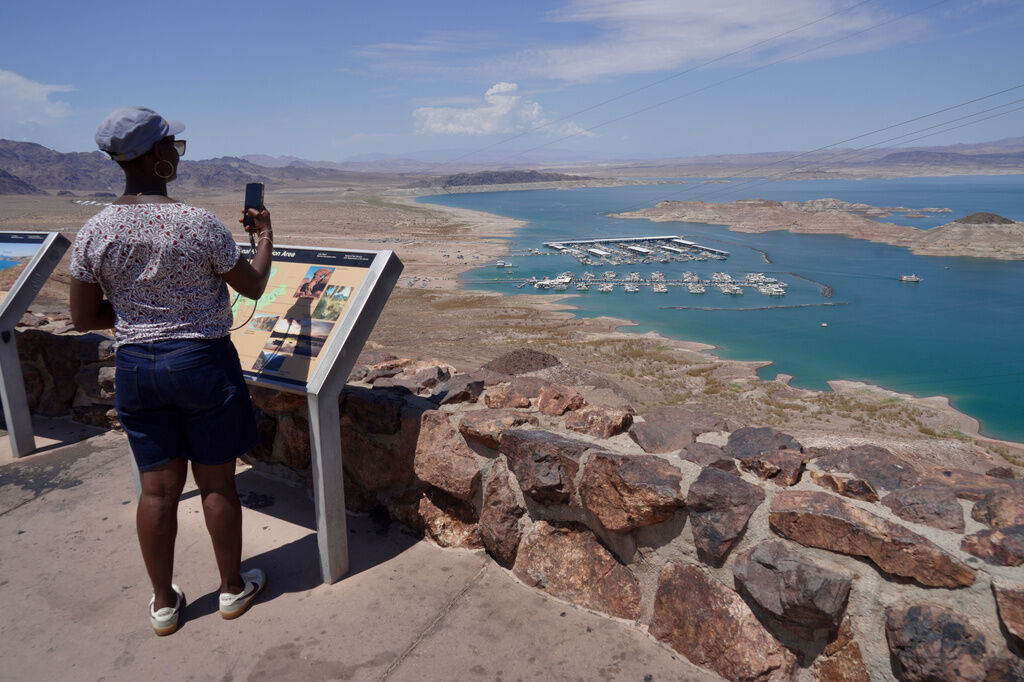
Nevada sues Trump administration over Colorado River cuts
Marianne Goodland
marianne.goodland@coloradopolitics.com
Updated 12 hours ago
On Monday, the state of Nevada filed a lawsuit against the Trump administration and Interior Secretary Doug Burgum, seeking to block the Colorado River management plan. On Friday, Burgum released a “record of decision” that would reduce water allocations to...

Healthcare Freefall: Longer drives, fewer options for maternity care in Colorado
Thelma Grimes
thelma.grimes@coloradopolitics.com
Updated 22 hours ago
Editor’s Note: Colorado’s healthcare system is entering a period of accelerating instability — a “tsunami,” as multiple leaders describe it — driven by collapsing hospital finances, shrinking Medicaid reimbursements, disappearing services and a political fight over who is responsible for...
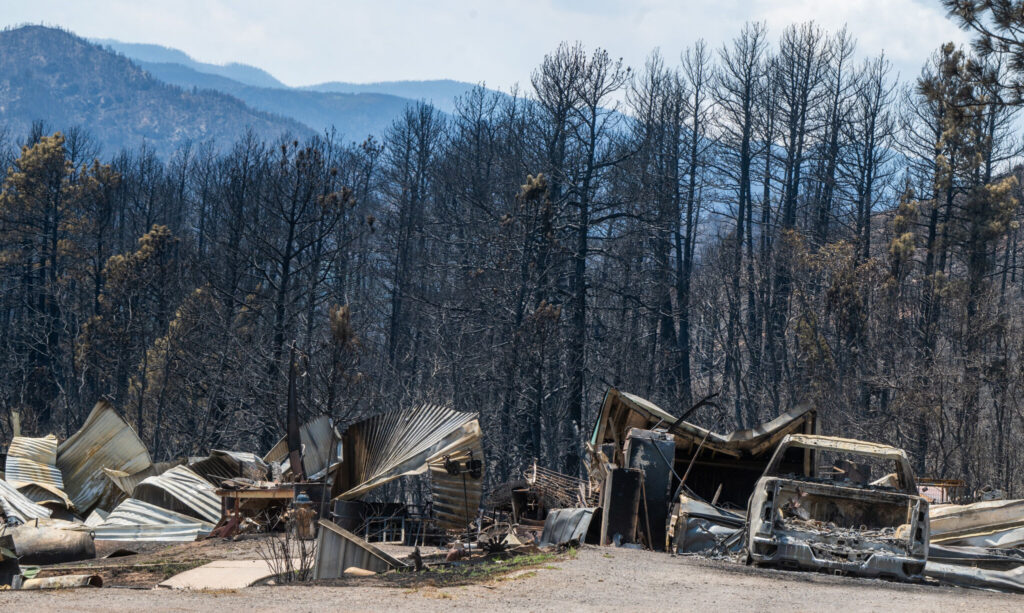
Polis requests federal disaster declaration for Colorado wildfires and floods
9News
9news@coloradopolitics.com
Updated 16 hours ago
On Sunday, Gov. Jared Polis officially requested a Major Disaster Declaration from President Donald Trump and the Federal Emergency Management Agency to support recovery from two wildfires and the subsequent flooding and debris flows on both burn scars. Polis requested a declaration...

US strikes another boat in eastern Pacific, killing two, Pentagon says
The Associated Press
the-associated-press@coloradopolitics.com
Updated 23 hours ago
U.S. forces have struck another vessel in the eastern Pacific, killing two people the Pentagon says were trafficking drugs. The U.S. Southern Command announced the strike in a social media post early Monday. The death toll from the Trump administration’s...
PREV
PREVIOUS

Colorado lawmakers seek new digs with new bill
A member of the General Assembly recently jokingly referred to the state building where roughly half of Colorado lawmakers’ offices are housed as a “leper colony,” because “no one ever wants to go over there.” Under a bill introduced in the state Senate Wednesday, lawmakers would remain on Sherman Street, but move from the first […]

Colorado appeals court sides with customer sued over negative online review
A series of statements a Colorado Springs woman made online and through the media about a plumbing company are protected under the law and do not amount to defamation, Colorado’s second-highest court ruled last month. The decision from the Court of Appeals is the latest to address the tension between customers who leave critical online […]