

Veteran tax relief bills from Colorado Springs lawmakers killed in committee | FOCUS ON THE SPRINGS

Two bills to provide tax relief for veterans sponsored by Colorado Springs Republicans were killed in committee on Thursday – the day before the state legislature celebrated Military and Veterans Appreciation Day.
Senate Bill 106, sponsored by Sen. Bob Gardner and Rep. Mary Bradfield, would have made permanent the military retirement benefits tax deduction, which is set to expire this year. Senate Bill 107, sponsored by Sen. Larry Liston, would have expanded the property tax exemption for seniors and disabled veterans.
Both of the bills were rejected in the Senate State, Veterans and Military Affairs Committee along party lines, with all Republicans voting in support of the bills and all Democrats voting against them.
Republicans disavowed the Democratic opposition to the bills, accusing them of partisanship, while Democrats argued their opposition was due to improper processes.
“My Democrat colleagues’ actions have continued to demonstrate they have little intention of addressing the rising cost of property taxes in this state,” Liston said. “Once again our colleagues across the aisle opted to play party politics instead of delivering something meaningful for our state’s most vulnerable.”
Liston’s bill, SB 107, would have increased the maximum value impacted by the homestead property tax exemption. The exemption would go from deducting 50% of the first $200,000 of a home’s value, up to $300,000 immediately and, beginning in 2028, up to $500,000.
The bill would have also loosened the requirement that seniors and disabled veterans live in the same home for at least 10 years to qualify – allowing those who downsize for medically necessary reasons to continue claiming the tax credit.
Gov. Jared Polis called for this change himself in this year’s State of the State address.
“We should also make the senior homestead tax exemption portable,” Polis said. “Our seniors should be able to downsize without having to pay higher property taxes, freeing up their larger old homes for younger, growing families.”
Despite backing from the governor, Democrats in the committee said they couldn’t support the bill because it is a longstanding practice and precedent that revenue raising policies must begin in the House, not the Senate.
“My ‘no’ vote today is not based on not supporting seniors or elders in our community, it’s not based on not supporting veterans in our community, it is truly a function of process within this building,” said Sen. Julie Gonzales, D-Denver. “I welcome you, Sen. Liston, to bring back this effort and start it in the House so we can properly consider it.”
During the committee, Liston said he “accepts full responsibility” if he started the bill in the wrong chamber, but he later criticized his Democratic colleagues for voting the bill down.
“Due to inflation, rising costs of homeownership and increased property taxes, the senior and disabled veterans tax exemption in place is almost useless to these groups,” Liston said. “Seniors and disabled veterans are being taxed out of their homes. … There really is no such thing as a $200,000 home anymore.”
SB 106 was rejected for similar procedural reasons. The bill would have indefinitely extended the military retirement benefits deduction for taxpayers under age 55, which is scheduled to expire after 2023.
Democratic opponents said they were rejecting the bill in favor of passing House Bill 1084 instead. The bill, also sponsored by Bradfield and Gardner, would extend the tax benefit for five years, rather than indefinitely. HB 1084 cleared its first committee vote last week.
The Colorado Springs Chamber and Economic Development Corporation supported the indefinite version of bill, saying it would incentivize military retirees to remain in Colorado or move to Colorado, and align Colorado with states that receive much more funding from the Department of Defense – in addition to showing appreciation for veterans.
Gardner said he will continue to fight for the passage of HB 1084, though it is “not as expansive” as the bill he had hoped to pass.
“I’m disappointed to see this bill killed in committee,” Gardner said. “This bill recognizes the sacrifices made by our veterans, and ensures that they receive the benefits they deserve well into the future.”
Ironically, the bills’ failures came on the eve of the legislature’s recognition of Military and Veterans Appreciation Day on Friday. During which, lawmakers spent more than three hours giving speeches and passing resolutions to honor military service.



Michael Dougherty is literally running for attorney general in Colorado Democrat’s 1st TV ad
Ernest Luning
ernest.luning@coloradopolitics.com
Updated 11 hours ago
Democratic attorney general candidate Michael Dougherty, the Boulder County district attorney, runs laps around the judicial complex in Denver that houses the office he’s seeking in a TV ad released Friday that includes a subtle dig at one of his...

Group aims to add right to hunt and fish to Colorado Constitution
Marissa Ventrelli
marissa.ventrelli@coloradopolitics.com
Updated 9 hours ago
A group is seeking to make Colorado the 25th state in the nation with an established constitutional right to hunting and fishing through a proposed ballot initiative. Backed by the International Order of T. Roosevelt, a group dedicated to preserving...

Colorado Politics Calendar June 15-21
Rachael Wright, Special to Colorado Politics
rachael.wright@coloradopolitics.com
Updated 4 days ago
CoPo’s weekly political calendar helps you find political and public policy events throughout Colorado. It includes candidate and issue campaign events, public policy meetings, court hearings, state and local party conventions, assemblies, debates, rallies, parades, speaking engagements, traveling dignitary appearances,...

A primary brings out primal instincts | SONDERMANN
Eric Sondermann
eric-sondermann@coloradopolitics.com
Updated 3 days ago
There are no Stanley Cup finals or NBA title showdowns involving local teams this June. In their place, we are inundated with primary election campaign ads. Coloradans can be excused for missing the diversion and alternate programming. But life can...

Dem-GOP tension dominates 1,000-bill legislative session | A LOOK BACK
Rachael Wright, Special to Colorado Politics
rachael.wright@coloradopolitics.com
Updated 3 days ago
Forty-Five Years Ago This Week: “I can honestly say that until now, we got along well with the governor’s office,” said House Minority Leader Federico Peña, D-Denver. “We visited frequently with the staff. And you didn’t see certain legislators speaking...
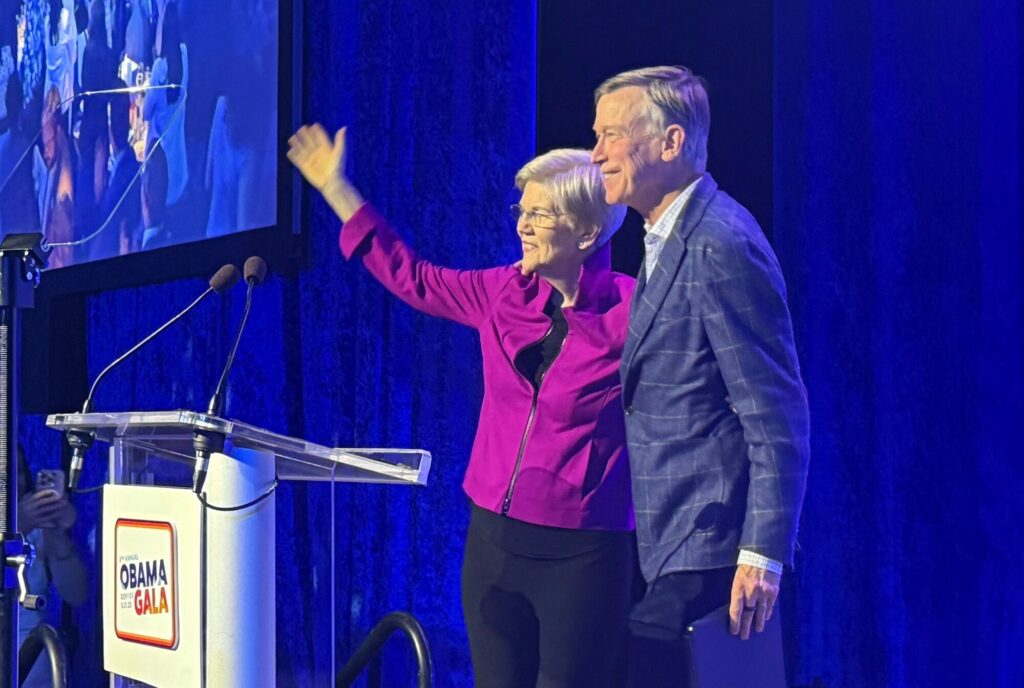
Hickenlooper lands endorsements from Elizabeth Warren, Ministerial Alliance in US Senate primary
Ernest Luning
ernest.luning@coloradopolitics.com
Updated 1 day ago
U.S. Sen. John Hickenlooper won endorsements this week from a progressive Democratic colleague and a coalition of metro-area African American faith leaders as voting began in Colorado’s primary election. U.S. Sen. Elizabeth Warren of Massachusetts and the Greater Metro Denver...
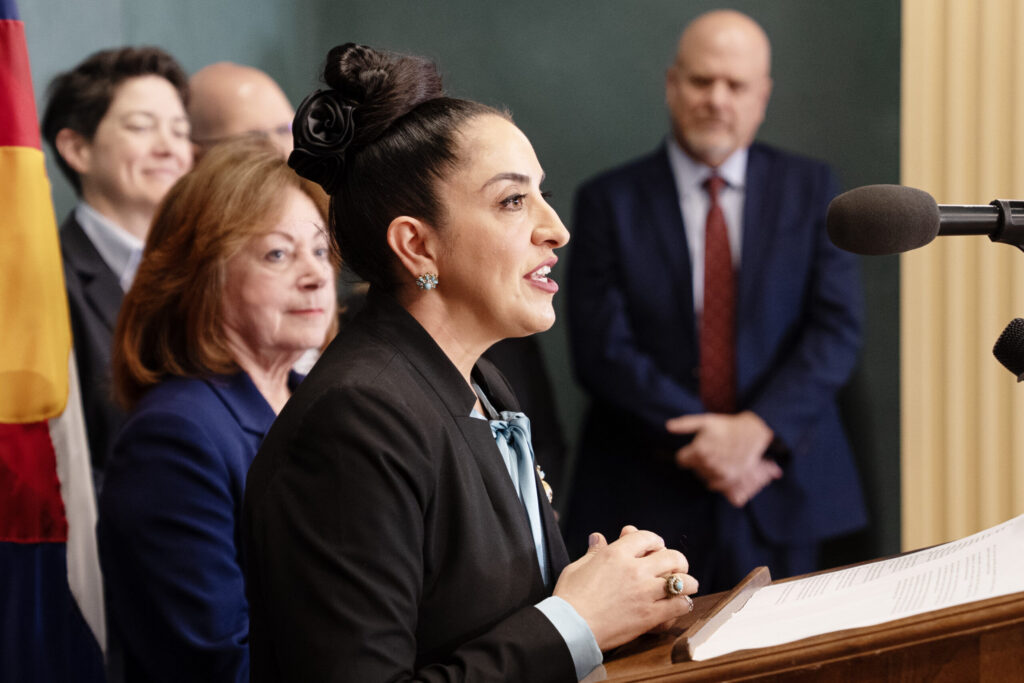
Colorado justices say insurers may access policyholders’ medical info in denied-benefits litigation
Michael Karlik
michael.karlik@coloradopolitics.com
Updated 1 day ago
The Colorado Supreme Court declined on Monday to expand its narrow prohibition on insurance companies accessing policyholders’ medical information, clarifying that a dispute over an insurer’s bad-faith decision to deny benefits is the only situation where a company is limited...

House District 14: Businesswoman, consultant square off in GOP primary
Mary Shinn
mary-shinn@coloradopolitics.com
Updated 1 day ago
Firearms training company owner Ava Flanell will face Troy Vanderhule, the chief fundraising officer for Dobson Philanthropic, in the June 30 Republican primary for state House District 14, an area in northern Colorado Springs. Flanell was appointed to the seat...
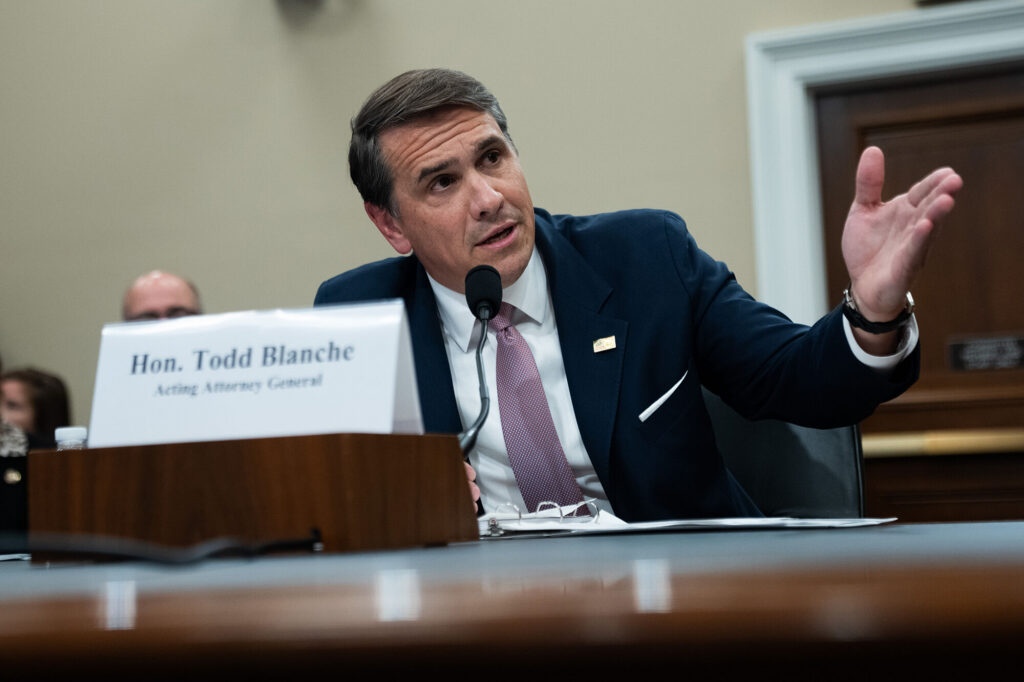
Federal judge wants Todd Blanche to swear in writing anti-weaponization fund won’t be revived
Jack Birle, Washington Examiner
jack.birle.washington.examiner@gazetteedit.wpenginepowered.com
Updated 1 day ago
A federal judge maintained a block on the Department of Justice’s $1.776 billion anti-weaponization fund Friday, despite the DOJ claiming they have abandoned the planned fund aimed at compensating allies of President Donald Trump and others who say they were politically targeted by...

Colorado Supreme Court declines to loosen requirements for insurance company defendants
Michael Karlik
michael.karlik@coloradopolitics.com
Updated 9 hours ago
The Colorado Supreme Court declined last week to reconsider its longstanding expectations for insurance company defendants, and agreed that an insurer failed to properly raise its defenses against a policyholder’s breach-of-contract lawsuit. When an insured driver has an accident with...
PREV
PREVIOUS

No death penalty for Colorado man accused of selling government secrets, feds confirm
The federal government confirmed on Friday it would not seek the death penalty against a Colorado Springs man who stands accused of attempting to transmit information about national defense to a foreign agent. “It’s a significant outcome,” said U.S. District Court Judge Raymond P. Moore. “But I don’t think there’s anything terribly surprising about that […]

IRS won't tax TABOR refunds, agency decides after Colorado delegation exerts pressure
The Internal Revenue Service won’t treat refund checks distributed last year to Colorado taxpayers as taxable income, the agency announced Friday afternoon after the state’s federal lawmakers called on the IRS commissioner to stick to longstanding policy. Earlier this week, the federal tax-collection agency told taxpayers in Colorado to delay filing their 2022 income tax […]