

Beware legislating sweeping ag veterinarian changes | GABEL
The shortage of veterinarians, especially large animal and food animal practitioners in rural areas, is a palpable problem the livestock industry must cooperatively address. Deferring to the legislature to solve the problem, with animal rights groups in their ears, is dicey, though a solution may require changes to current laws. I anticipate a bill will soon be introduced that proposes sweeping changes to the Veterinary Care Act and creates an avalanche of unintended consequences with the creation of a mid-level veterinary practitioner.
Ahead of any bill introductions, the Colorado Veterinary Medicine Association has been examining whether a new type of veterinary professional could positively impact veterinary care in the state. CVMA said they sent a survey to their members anticipating the low response rate typical of their surveys. Overwhelming numbers of responses poured in and, according to CVMA, most veterinarians in Colorado expressed concern about the concept.
The key concerns of the CVMA members are serious and should carry more gravity as they come directly from the veterinarians in the field in all areas of the state. Members are concerned a mid-level practitioner would struggle to successfully perform surgery with limited schooling; the liability burden would be shouldered by the supervising veterinarian; and many veterinarians said existing veterinary technicians are often underutilized and, as such, expanding their responsibilities is a more reasonable option than creating an entirely new professional.
Of course, Colorado State University’s School of Veterinary Medicine would be potentially able to create and benefit from a new degree program that is less expensive to operate than a school of veterinary medicine and would appeal to students who, for whatever reason, are unable or unwilling to be accepted into and complete the rigorous and expensive DVM program. If ever there were a cash cow, this might be it.
Rep. Karen McCormick, DVM, who is the chair of the House Agriculture Committee, convened a stakeholder group of about 35 professionals, including nine appointed CVMA members. The group heard 10 presentations by the country’s foremost experts on topics including accreditation, liability insurance, professional science master’s degrees, economics of the profession, a workforce analysis of the profession and the role of veterinary technician specialists. The stakeholder group agreed there is no cut and dry answer to veterinary care in Colorado that can be applied with a broad stroke. I cheered reading it, thinking how many other topics that could be applied to in the state.
Dr. Wayne Jensen, head of the CSU Department of Clinical Sciences, and Dr. Apryl Steele, president and CEO of the Dumb Friends League and past CVMA president, wrote of their support of the creation of the mid-level practitioner in an open letter to their veterinarian peers.
The problems facing the professions, they said, are unsustainable and using such a practitioner could enhance productivity, limit burnout and allow increased access to care. The pair also spoke to a proposed master’s program at CSU that includes five semesters of coursework, the first three online.
CVMA, in their series of articles about the topic, said the specifics of the admissions criteria to the proposed CSU program – prerequisites, knowledge, skills, abilities and curriculum – have been only loosely articulated. Additionally, graduates would diagnose, initiate treatment, prescribe and perform surgery of “uncomplicated cases” under the direct supervision of a licensed veterinarian.
Despite the support of Drs. Jensen and Steele, CVMA said it is not a workable concept and it comes with major roadblocks: The FDA allows only licensed veterinarians to prescribe medications; USDA accreditation is available only to licensed veterinarians; the laws of the state and the U.S. allow only licensed veterinarians to diagnose, initiate treatment, prescribe and perform surgery, meaning the proposed mid-level practitioners would not be legally able to perform these tasks in this state or others without changes to individual state laws; there are no assurances of competence in place for this professional; the amount of veterinarian oversight needed could prove difficult to provide; and the projected salary of $80,000 does not fit the current reality.
CVMA has now issued an official position statement strongly opposing the mid-level practitioner position. CVMA does support increased utilization and education of veterinary technicians, a group widely identified as being wholly underutilized. This is by utilizing these professionals, offering educational opportunities, improving engagement and retention of the technicians, and by paying them a living wage that reflects their importance are all reasonable steps.
Even if the creation of the program were approved despite opposition from the veterinary professionals in the state, there is no guarantee the mid-level practitioners would be tempted to practice in rural areas. The promise of less expensive veterinary care would likely be short-lived and at the expense of small, independent veterinarians who would be unable to compete with less expensive care – even if it is delivered by a less qualified individual overseen by a veterinarian in an office far from the ranch and the consequences of potentially lower quality care.
This is most certainly a real problem in need of a solution but legislating a new type of professional is not it.
Rachel Gabel writes about agriculture and rural issues. She is assistant editor of The Fence Post Magazine, the region’s preeminent agriculture publication. Gabel is a daughter of the state’s oil and gas industry and a member of one of the state’s 12,000 cattle-raising families, and she has authored children’s books used in hundreds of classrooms to teach students about agriculture.

The relevance of Watergate more than a half-century later | SONDERMANN
By Eric Sondermann
by-eric-sondermann@coloradopolitics.com
Updated 3 days ago
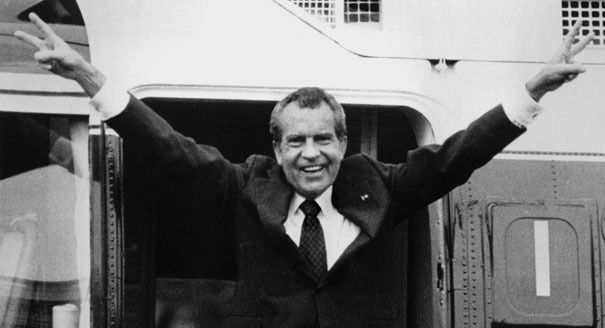
It was the scandal for which all other scandals are now named. In June 1972, a small group of Cuban burglars with high-level connections broke into the headquarters of the Democratic National Committee. Those headquarters were located in the Watergate...
Colorado must continue finding common ground on wildfire policy | GUEST COLUMN
Colorado Politics
colorado-politics@coloradopolitics.com
Updated 2 days ago
By John Herrick Colorado has never lacked for opinions about wildfire policy. We debate forest management, climate change, prescribed burns, land use, air quality and budgets. Those debates are familiar territory, but a new discussion is beginning to happen around...
Proposition NN is the best investment for Colorado’s students and schools | GUEST COLUMN
Colorado Politics
colorado-politics@coloradopolitics.com
Updated 2 days ago
By Justin Ogden Colorado families know what it means to make difficult budget decisions. Inflation has driven up the cost of groceries, housing, utilities and just about everything else. Families like mine work hard to stretch every dollar while still...
Were the primaries a preview for consequential general election? | Paula Noonan
Paula Noonan
paula-noonan@coloradopolitics.com
Updated 3 days ago
Colorado’s political future will go the way of this election. Historically, the state has not had both chambers controlled by a supermajority. This election may change that. The primaries suggest how the general election may play out. Democrats had solid...
Disagreement doesn’t have to mean disrespect | GUEST COLUMN
Colorado Politics
colorado-politics@coloradopolitics.com
Updated 3 days ago
By Vincent Atchity These days, it doesn’t take long to feel overwhelmed by politics. Turn on the news, scroll through social media or read the comments on almost any political post and you’ll find anger, outrage and personal attacks. For...
Keeping Colorado’s kids’ trust online | PODIUM
Colorado Politics
colorado-politics@coloradopolitics.com
Updated 4 days ago
By Stuart Jenkins Almost every day, the kids and teens we serve across Colorado are introduced to new generative artificial intelligence and other emerging technology, including conversational AI systems designed to simulate human conversation. These tools are no longer a...

Marx’s ‘through line’ predates Trump, connects to Maes | FEEDBACK
Colorado Politics
colorado-politics@coloradopolitics.com
Updated 4 days ago
Eric Sondermann is of course correct Victor Marx is an unserious, unelectable, embarrassing Republican nominee for governor of Colorado. But I respectfully submit that the “through line,” as Mr. Sondermann describes it, is not from Trump to Marx, despite their...

Cedric Pride’s blueprint for opportunity through the trades | The OpEdge Podcast
Tony Olivero
tony.olivero@gazette.com
Updated 4 days ago
Cedric Pride, CEO of the nonprofit Pride Initiative in Denver, joins The OpEdge with a blueprint for workforce development, skilled trades, and economic opportunity. Pride tells host and investigative columnist Jimmy Sengenberger why he believes the trades offer a path...
Colorado’s No. 1 education ranking should raise our ambition | GUEST COLUMN
Colorado Politics
colorado-politics@coloradopolitics.com
Updated 5 days ago
By Scott Laband Colorado has earned the right to celebrate its new No. 1 ranking in education from U.S. News & World Report. Gov. Jared Polis called it “one of the proudest moments” of his time in office and shared the...
Colorado’s No. 1 education ranking reflects the power of school choice | GUEST COLUMN
Colorado Politics
colorado-politics@coloradopolitics.com
Updated 5 days ago
By Peter Mason Colorado is now the No. 1 state in the nation for education, according to the 2026 U.S. News & World Report Best States rankings. That is a distinction worth celebrating. It is also a distinction worth understanding....
PREV
PREVIOUS

Time for men to be believed | CALDARA
Jon Caldara A recent near-death experience brought me too close to what many men deal with at this time of the year but find too shameful to discuss. Societal gender norms still run deep. I fear women often simply have no idea how dangerously close to the edge their men get sometimes. I was in […]
Much to consider with classified info | HUDSON
Miller Hudson Truth be told, I never knew what my Dad really did during his 20 years with the Atomic Energy Commission (AEC). He must have had his fingers in the design of nuclear weapons as he regularly attended aerial, surface and underground blasts in Nevada. He even flew to the South Pacific to observe […]