

State Supreme Court explores role of shifting explanations in race-based juror dismissals
Over 30 years ago, the U.S. Supreme Court recognized that purposeful racial discrimination in jury selection is unconstitutional, requiring prosecutors to now cite a “race-neutral reason” if a defendant challenges their decision to remove a juror of color.
This week, the Colorado Supreme Court considered a narrow question implicating that protocol: If an appeals court examines a juror challenge years later and orders a review of the race-neutral reasoning, what information can trial judges consider other than the original explanation of the prosecutor?
Complicating matters, the case before the court, People v. Madrid, involved a judge who initially supplied his own race-neutral reasons in support of dismissing a Black juror from a criminal trial, which the Supreme Court has established is improper. Further, the judge in question is now their colleague – Carlos A. Samour Jr., who presided over Theodore Israel Madrid’s 2012 trial when he was an Arapahoe County judge.
Samour is not participating in the appeal.
Between 2012 and now, Madrid’s case has been before the state’s Court of Appeals twice on the question of whether Samour wrongly permitted prosecutors to remove a Black man, identified as Juror T, from the jury. Initially, in 2017, the appellate court handed the case back to Samour to “take additional evidence and allow further argument” in order to reach an answer.
Samour did so, but once the case returned to the Court of Appeals last year, the appellate court decided Samour should have only considered the prosecutor’s original reasons in 2012 for removing Juror T. Concluding the decision to dismiss Juror T was wrong, the court reversed Madrid’s murder conviction and lifetime sentence.
During oral arguments on Tuesday, the justices questioned whether trial judges, reviewing a juror challenge after a remand from a higher court, should be barred from considering anything new the prosecution wants to offer. In doing so, they recognized that shifting explanations may actually be a belated attempt to manufacture a more plausible race-neutral reason.
“I’m concerned about this notion of the second bite at the apple,” said Justice Maria E. Berkenkotter.
In the 1986 decision of Batson v. Kentucky, the U.S. Supreme Court ruled that intentional dismissals, or strikes, of jurors based on race harm the defendant, the juror and the public’s confidence in the justice system. Consequently, a defendant may now raise a “Batson challenge” when the prosecution seeks to dismiss a juror of color.
There are three steps to a Batson challenge. First, the defendant must make a plausible case of racial discrimination. Then the prosecution will offer a race-neutral reason for removing the juror. At the third step, the trial judge must then weigh the credibility of the race-neutral explanation and decide if intentional racial discrimination is likely taking place.
Madrid stood trial for first-degree murder in the death of his girlfriend’s 2-year-old son. The defense argued it was an accident, but jurors convicted him as charged. During jury selection, the prosecution briefly questioned Juror T. One of the prosecutors asked if there were “any issues” Juror T had with what the lawyers or the judge had already sad about the law.
“No, not yet,” he responded. The prosecutor then asked if Juror T had any concerns about potentially looking at autopsy photos. No, replied Juror T.
Finally, the prosecutor asked him: “Do you have a good joke?”
“I’m the joke,” said Juror T.
The prosecutor then sought to dismiss Juror T. Madrid raised a Batson challenge, and the prosecutor immediately justified her decision by saying the problem was “we don’t know very much about him.”
“He has a hearing issue it appears and he’s sort of completely nonresponsive. We have very little information on him from the questionnaire and no time to really have a very detailed conversation,” the prosecutor said. “Terribly uncomfortable with him.”
Samour, in evaluating the Batson challenge, added his own observations of Juror T, saying the man “didn’t seem like he wanted to be here” and “seemed disappointed that I called his name.” He then denied the Batson challenge under step one, ruling Madrid had not even made a plausible claim of race discrimination.
When the case reached the Court of Appeals, the court found Samour incorrectly rejected the challenge on the first step and remanded the case so he could make further findings about the prosecutor’s race-neutral reasoning.
At a 2017 hearing, the prosecutor now offered a different rationale for striking Juror T. Adopting Samour’s observations, she said she was “concerned that there was some reason why he did not want to be here.” She added that Juror T was slow to take his seat, sighed and seemed displeased. None of those concerns were noted at trial, except by Samour.
Samour again denied the Batson challenge, but relied heavily on the new claim from the prosecutor that Juror T did not want to be there. Samour also cited other reasons, none of which had to do with the prosecutor’s explanation during trial for removing Juror T.
Last year, a three-judge panel for the Court of Appeals overturned Madrid’s conviction, finding it was improper for Samour to have injected his own race-neutral reasons into the discussion, and to then rely upon them when ruling on remand.
The “reversible error in this case was the district court’s consideration of and reliance on different justifications for the strike than the ones the prosecutor articulated at trial,” wrote Judge Jaclyn Casey Brown for the panel.
During oral arguments, the justices puzzled over the sprawling nature of the controversy, which involved the prosecutor’s reasoning at trial, the judge’s reasoning at trial, the prosecutor’s reasoning on remand and the judge’s reasoning on remand.
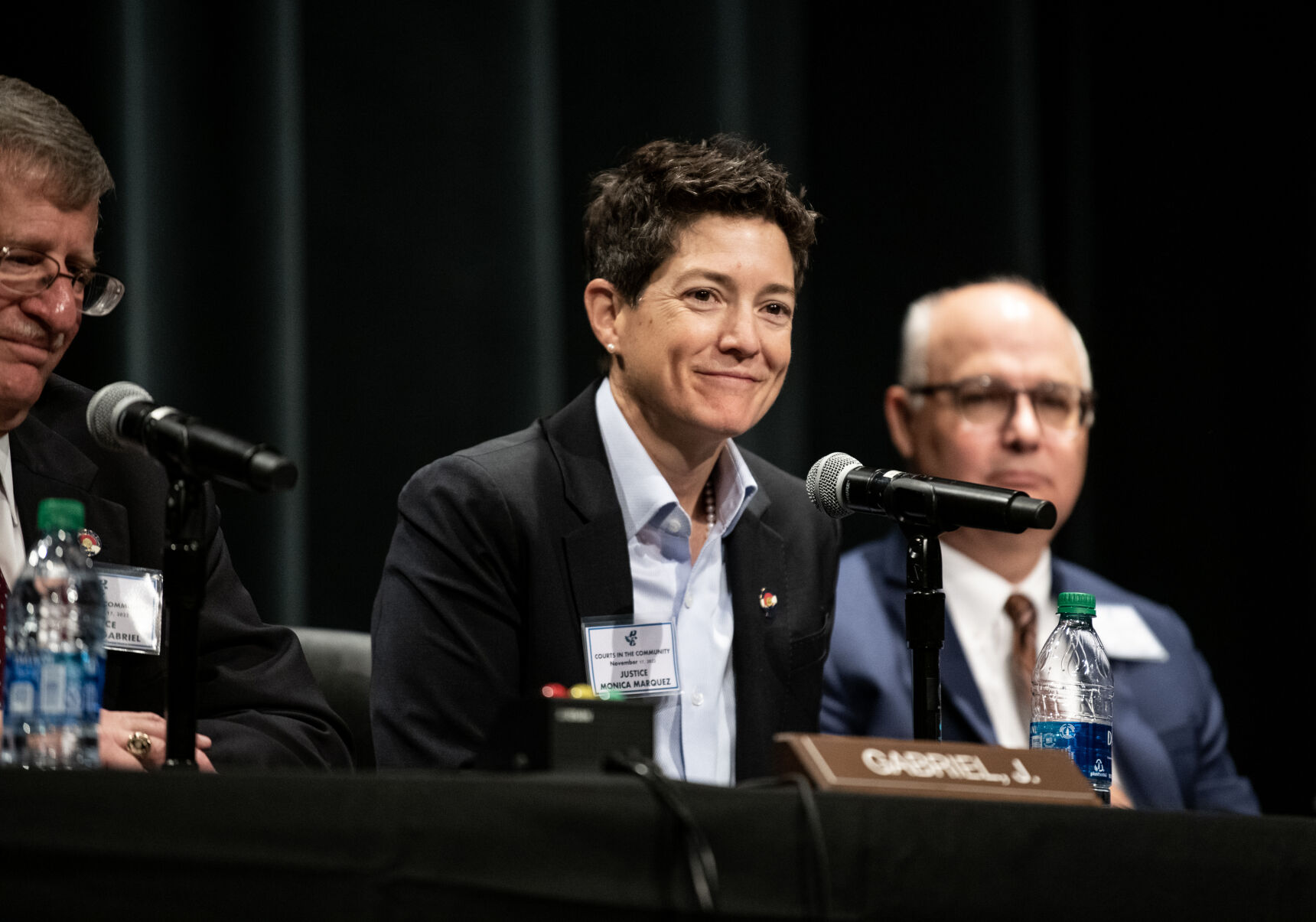
“Let’s say I gave reasons 1, 2, and 3” at trial, said Justice Monica M. Márquez. “But what you can’t do is add reasons 4 or 5. I think the concern here is the record suggests that the prosecution was shifting directions a little bit and not only adding at least a reason 4, but adopting a reason 4 that the trial court had articulated.”
She added, “That’s what I find really troubling.”
Erin Grundy, representing the Colorado Attorney General’s Office, advocated in response that prosecutors be permitted to offer new information on remand, which the trial judge could then discount if viewed as suspicious.
Madrid’s attorney, public defender Lynn Noesner, struggled to describe a rule the Supreme Court should issue for trial judges, but she argued it would render the original Batson decision “totally useless” if prosecutors are given license to create new explanations years later for potentially race-motivated juror strikes.
“Here, when the prosecution offers rationales on the record and then they later shift to new explanations and they dump their previous ones, it’s because the previous ones were garbage,” Noesner said.
The state Supreme Court recognized that the U.S. Supreme Court has previously weighed in on the topic. In the 2005 decision of Miller-El v. Dretke, in which 19 out of 20 Black jurors did not end up serving in the defendant’s trial, the Supreme Court noted a prosecutor’s new race-neutral explanation on remand “reeks of afterthought.” It added that a prosecutor should “stand or fall on the plausibility of the reasons he gives” at trial.
“Can the prosecutor offer whatever they want? Five years down the road it’s up to the trial court to decide if it’s pretext or not?” wondered Justice Richard L. Gabriel during oral arguments in Madrid’s case. “That seems inconsistent to me with Miller-El.”
Chief Justice Brian D. Boatright, however, suggested it would not be unfair to allow trial judges to at least hear new explanations, and the defense could call out anything the prosecution did not say originally.
“I think the argument would be, ‘Judge, if you look at the record, you said those things. They didn’t say those things. You can’t credit that,'” he elaborated.
Justice Melissa Hart asked what the defense would think of a rule permitting new evidence at a remand hearing, but only in support of the prosecutor’s original race-neutral reasons for the juror strike, given that shifting explanations raise doubts about the original reasoning.
“I would agree with that,” Noesner responded. “What’s improper is when the trial court backfills for the prosecution and supplies a rationale at trial and then clarifies that at the remand hearing. That’s the error here.”
Batson challenges arise somewhat frequently on appeal in Colorado, but findings of racial pretext are infrequent. Just last week, the Court of Appeals determined that Adams County prosecutors who dismissed a Hispanic juror had misrepresented the law, cited unverified research, misremembered what the juror said and offered a dubious race-neutral explanation. Nevertheless, it found no intentional racial discrimination.
The case is People v. Madrid.


10th Circuit partially revives lawsuit over 2020 Denver protest injuries
Michael Karlik
michael.karlik@coloradopolitics.com
Updated 18 hours ago
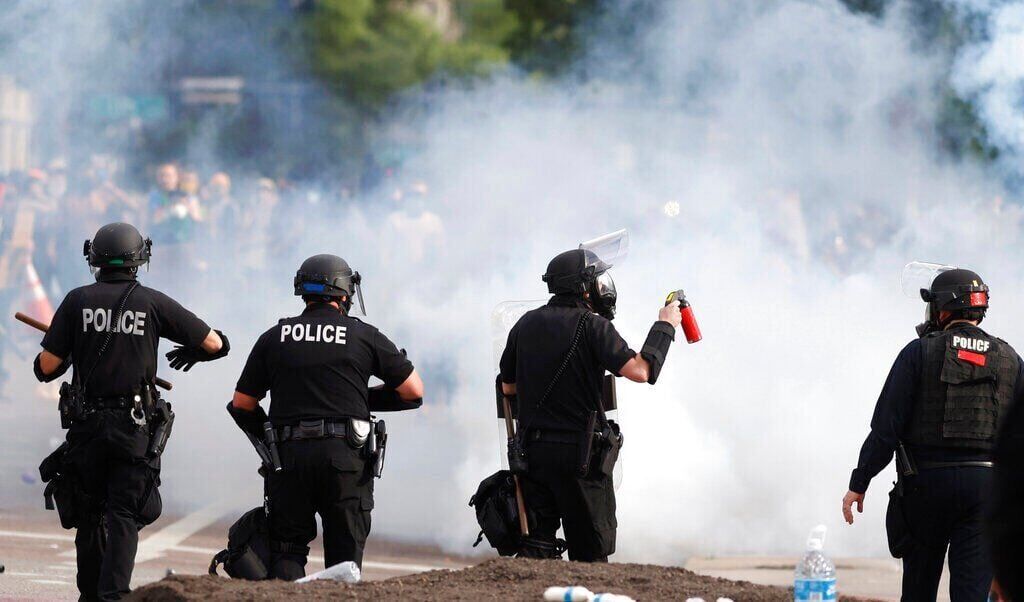
The Colorado-based federal appeals court revived a man’s claims against Denver on Friday after concluding a trial judge resolved the case in the city’s favor without analyzing two of the three instances of alleged excessive force and other constitutional violations....

Federal judges find Colorado immigration judge violated several orders
Michael Karlik
michael.karlik@coloradopolitics.com
Updated 19 hours ago
Multiple federal judges in Colorado have freed people from immigration custody after determining that one immigration judge violated their directives for properly conducting bond hearings. For nearly a year, Colorado’s U.S. District Court has faced a flood of “habeas corpus” petitions...

Misconduct complaints from ex-Colorado judicial discipline director dismissed against federal judges
Michael Karlik
michael.karlik@coloradopolitics.com
Updated 2 days ago
The administrative body for the Denver-based federal appeals court upheld a finding last week that misconduct complaints against Colorado’s chief federal trial judge and the chief appeals judge warranted dismissal and appeared to be a “litigation tactic” by the complaining...

First-ever Red Rocks naturalization ceremony draws most diverse group of new citizens
Michael Karlik
michael.karlik@coloradopolitics.com
Updated 19 hours ago
Colorado’s federal trial court held its first-ever naturalization ceremony for nearly 300 new citizens on Thursday at Red Rocks Park and Amphitheatre. “We’re doing it to commemorate the 250th anniversary of the Declaration of Independence and the United States. Red...
Jeffco taxpayers could be on the hook for a possible child sex assault settlement
Matt Kyle
matt.kyle@denvergazette.com
Updated 24 hours ago
Taxpayers may end up on the hook for a child sexual assault settlement, possibly worth up to $15 million, after Jeffco Public Schools failed to notify its insurance company in a timely manner about the case. The incident stems from...
10th Circuit finds no fair housing violation by Littleton landlord for worker’s alleged rape of tenant
Michael Karlik
michael.karlik@coloradopolitics.com
Updated 17 hours ago
The Denver-based federal appeals court concluded on Monday that Littleton’s housing authority could not be held liable for a maintenance worker’s alleged rape of a tenant, as the worker’s employment did not provide any special access to the victim. A...

Jeffco Public Schools sues Trump administration to protect funding after alleged transgender policies violation
Matt Kyle
matt.kyle@denvergazette.com
Updated 2 days ago
In the wake of several threats by the Trump administration to revoke federal funding, Jeffco Public Schools filed a lawsuit against the Department of Education seeking to protect that badly needed money. Jeffco has been under investigation by the DOE’s...

Denver detox center did not violate man’s rights with 10-hour hold, 10th Circuit says
Michael Karlik
michael.karlik@coloradopolitics.com
Updated 4 days ago
The Colorado-based federal appeals court concluded on Tuesday that Denver’s detoxification facility did not violate a man’s rights by holding him against his will for 10 hours until his blood alcohol content was projected to reach zero. Unusually, Brian Garrett’s...
Federal judge clarifies ex-GOP treasurer candidate’s burden to prove defamation claims
Michael Karlik
michael.karlik@coloradopolitics.com
Updated 4 days ago
A federal judge clarified last week that businessman and former Republican statewide candidate Brian Watson will need to surmount a higher hurdle in proving his claim that a party guest’s alleged description of him as a “criminal” amounted to defamation....
Colorado board permits state to appeal injunction against arthritis drug price cap
Marissa Ventrelli
marissa.ventrelli@coloradopolitics.com
Updated 4 days ago
A Colorado board voted Friday to allow the Attorney General’s Office to fight an injunction against a price cap on a drug that treats arthritis. A U.S. district court judge had granted the company Amgen a preliminary injunction, temporarily blocking...
PREV
PREVIOUS
Coloradans join Biden at the White House for Respect for Marriage Act signing
A handful of Coloradans joined President Joe Biden at the White House for the signing of federal legislation that codifies same-sex marriage. Among them was state Rep. Leslie Herod, D-Denver,, who earlier tweeted out a picture of the invitation she got from the White House. Matthew Haynes, a co-owner of Club Q, where five died […]
Club Q survivors testify before U.S. House committee
A bartender, the Club Q nightclub founder and a wounded survivor shared real-life horror stories from the Nov. 19 mass shooting in Colorado Springs with the U.S. House Committee on Oversight and Reform Wednesday morning. The panel is investigating the surge of anti-LGBTQ+ rhetoric and violence in America. Colorado Springs LGBTQ+ community has long struggled […]