

In rare move, appeals court reverses itself to concede unlawful search

After taking an extraordinary third look at a criminal appeal out of Gilpin County, Colorado’s second-highest court this week made the rare move of withdrawing its prior decisions and reversing the defendant’s drug conviction.
Nearly 11 months after it first concluded a sheriff’s deputy lawfully seized a sunglasses case from Robert Scott Schweizer’s van that contained methamphetamine, a three-judge panel for the Court of Appeals has now conceded the deputy lacked the reasonable suspicion required to search the case.
“There is nothing inherently criminal in possessing a sunglasses case,” wrote Judge David Furman in the Nov. 10 opinion. “And only after the officer conducted a further search – by opening the sunglasses case – did it become apparent that the item was associated with criminal activity.”
The appellate panel’s reversal came after Schweizer’s repeated insistence that the judges based their prior decisions on arguments never raised in the trial court and on evidence that never materialized.
Just before 5 a.m. in September 2018, Deputy Grant Collins saw a blue van driving 15 mph under the speed limit, with two cars following close behind. Noticing a lack of license plates, he pulled over the vehicle.
Schweizer, the sole occupant, indicated he had just bought the van and had not yet registered it, and he did not have proof of insurance immediately at hand. While speaking with Schweizer, Collins noticed his pupils were dilated, he was sweating despite the cold temperature and his speech was slurring.
At one point, Schweizer fell asleep during a short window when Collins returned to his patrol car. The deputy then had Schweizer undergo road sobriety maneuvers, which Schweizer struggled to perform. Collins suspected Schweizer was under the influence of methamphetamine.
Schweizer asked to speak to an attorney, which Collins declined. In turn, Schweizer declined to take a blood test. The deputy then placed Schweizer under arrest for driving under the influence.
It was unclear what the two men discussed regarding Collins’ right to enter the van. But Collins testified he “went to secure” the vehicle “and also conducted a search for any evidence related to the crime.”
Collins opened the van’s door, reportedly so he could lock it, and noticed a sunglasses case on the floor of the driver side. He picked up the case, opened it and saw a clear glass pipe with a baggie inside. The baggie contained a crystal substance later confirmed to be methamphetamine.
Schweizer sought to suppress the evidence from the sunglasses case from being used at trial, arguing Collins violated his Fourth Amendment right against unreasonable searches and seizures. He contended Collins had no indication, beyond a hunch, that the case would contain evidence of a crime.
In response, Collins testified that based on his experience, “people like to hide their drugs and paraphernalia in little cases.”
Then-District Court Judge Dennis J. Hall upheld the search as lawful, finding an officer has “reasonable cause to believe” there is evidence of a crime in the vehicle itself when, as here, an officer arrests someone for suspected methamphetamine use.
“And I think it’s also important to note here that the search conducted by the officer was a very limited one,” Hall added. “He only searched the car in the area of the driver’s compartment and only the floor in front of the driver’s seat where he found a case which he said (was) the kind of thing commonly used to conceal illegal drugs.”
A jury subsequently found Schweizer guilty.
Schweizer then appealed, arguing the U.S. Supreme Court has outlined the scenarios in which an officer may lawfully search a vehicle after arresting its occupant – namely, when it is reasonable to believe there is evidence within the car of the suspected crime.
“Collins provided no factual basis for any reasonable belief that the van contained evidence of the DUI offense,” wrote Deputy State Public Defender Emily Hessler.
The Court of Appeals panel reviewing the case initially disagreed with her, ruling in December 2021 that the circumstances of the encounter – including all of the signs of Schweizer’s impairment – made it reasonable to think there was evidence of drug use in the van.
“We reach this conclusion because Schweizer agreed that the officer could secure the van (instead of towing it), the sunglasses case was in plain view of the officer when he opened the van door, and the officer’s training and experience led him to believe that drug users hide drugs like methamphetamine in little cases,” Furman wrote.
Hessler quickly filed a petition asking the panel to reconsider. Nowhere, she maintained, was it established that Collins had the authority to open the door to “secure” the van. Further, the prosecution had never argued in the trial court that the sunglasses case’s location in plain view of the deputy permitted him to seize and open it.
In March, the appellate panel declined to reverse its ultimate ruling, but instead slightly modified its opinion. The panel inserted the statement that Schweizer had “consented to the officer opening the door,” adding that the appellate judges did not consider that to be “part of the search.”
Again, Hessler slammed the panel for misreading the evidence. No one, until now, had argued Collins’ search was legal because Schweizer had allegedly consented, she wrote.
“This Court has now repeatedly let the State off the hook,” Hessler warned.
The appellate panel then took the uncommon step of asking the parties to submit an entirely new set of briefs to address multiple questions about the legal basis for Collins’ search. Hessler continued to insist the case needed to be decided on the issue litigated at the trial court: Whether Collins had reasonable suspicion there was evidence of a DUI in the vehicle.
“A sunglasses case, particularly in a car, is commonplace and innocuous. Presumably, many people keep glasses cases in cars,” Hessler wrote. “If this Court were to conclude Collins’ generalized testimony here provided probable cause, it would amount to authorizing a top-to-bottom search of the car of every driver arrested on suspicion of any drug-related activity.”
The Colorado Attorney General’s Office countered that Schweizer was “okay with the officer locking the van,” which provided Collins the authority to open the door to lock it. Therefore, Collins was lawfully at the open door when he saw the sunglasses case in plain view and, given what he knew about drug users, he had probable cause to believe the case contained evidence.
But this time, the appellate judges agreed with Schweizer. The prosecution had not argued to the trial court that the sunglasses case was in plain view, Furman acknowledged, and the government “must be prepared to abide by the consequences.”
The panel ruled that Collins had not identified any reason to suspect there would be evidence of a controlled substance in Schweizer’s van. Therefore, he lacked reasonable suspicion of a crime and the search was unlawful.
Because the prosecution relied heavily on the illegally-obtained evidence to convict Schweizer, the Court of Appeals overturned his conviction and ordered a new trial.
The case is People v. Schweizer.



A new day? Colorado’s troubled guardianship office pursues ‘cultural reset’
Marianne Goodland
marianne.goodland@coloradopolitics.com
Updated 4 days ago
Colorado’s guardianship program, long criticized for mismanagement and high staff attrition, is undergoing a “cultural reset,” as its new director works to repair partnerships and prepare for a major expansion under recent legislation. Created by lawmakers in 2017, the Office...
Local party leaders, incoming judge among members of judicial performance commission that violated law
Michael Karlik
michael.karlik@coloradopolitics.com
Updated 2 days ago
A local Democratic leader and 2024 presidential elector. A legislative aide and leader in the Young Republicans. An incoming county court judge freshly appointed by the governor. They are among the eight members of the northeastern Colorado judicial performance commission...
Judge dismisses lawsuit seeking records from Colorado Democratic group
Marianne Goodland
marianne.goodland@coloradopolitics.com
Updated 2 days ago
A lawsuit seeking to obtain records from Democratic lawmakers affiliated with a caucus has been thrown out by a Denver District Court judge. On July 17, Judge Ericka Englert dismissed the April lawsuit filed by progressive activist Derrick Blanton, who...
Colorado Springs mother Deborah Nicholls’ murder conviction overturned
Nick Smith
nick-smith@coloradopolitics.com
Updated 3 days ago
A Colorado Springs mother convicted in 2008 of murdering her three children in a house fire might get a new trial after a judge ruled that prosecutors withheld key evidence that could have impacted the jury’s verdict. Deborah Nicholls, whose...
Colorado court overturns illegal $7,000 restitution order
Michael Karlik
michael.karlik@coloradopolitics.com
Updated 2 days ago
Colorado’s second-highest court overturned a Weld County defendant’s obligation to pay more than $7,000 in crime victim restitution on Thursday because a trial judge failed to issue a legally compliant restitution order at the time of sentencing. In Colorado, as...
Appeals court rejects former DougCo commissioner’s legal fee claim
Nicholas Fogleman
nicholas.fogleman@denvergazette.com
Updated 3 days ago
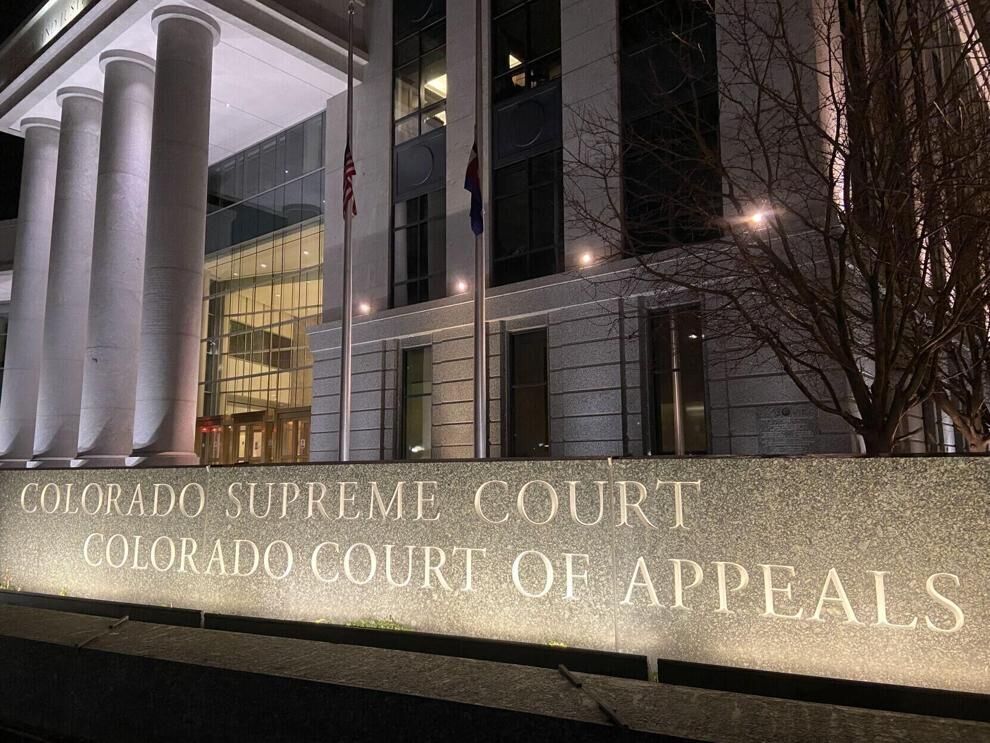
The Colorado Court of Appeals rejected a former Douglas County commissioner’s bid for reimbursement of attorney fees she incurred while responding to multiple investigations into her conduct. The dispute stemmed from a 2019 anonymous letter sent to county officials alleging...
Appeals court orders second look at Denver Water’s immunity for cyclist’s injury
Michael Karlik
michael.karlik@coloradopolitics.com
Updated 3 days ago
Colorado’s second-highest court ordered another look at a bicyclist’s negligence lawsuit against Denver Water on Thursday, concluding that a trial judge needed to evaluate the utility’s potential immunity using the state Supreme Court’s new guidance. Joseph A. “Joey” Scott alleged...
Labels, duration not definitive proof of ‘intimate relationship,’ Colorado court rules in domestic violence case
Michael Karlik
michael.karlik@coloradopolitics.com
Updated 3 days ago
Colorado’s second-highest court clarified on Thursday that the length of a couple’s relationship and the labels they attach to it are not conclusive evidence of whether it is an “intimate relationship” that can give rise to a domestic violence prosecution....

Colorado AG urges Supreme Court to let Boulder climate lawsuit proceed
Marissa Ventrelli
marissa.ventrelli@coloradopolitics.com
Updated 3 days ago
Colorado Attorney General Phil Weiser has filed a court brief with the U.S. Supreme Court in a lawsuit brought by Boulder city officials seeking to hold oil companies liable for their environmental impact. The case began in 2018, when the...
10th Circuit says landowner cannot sue ex-Routt County judge for statements in decision
Michael Karlik
michael.karlik@coloradopolitics.com
Updated 4 days ago
A Routt County landowner cannot sue a former judge for his allegedly inaccurate statements in a case where the landowner was not a party, the Denver-based federal appeals court decided on Wednesday. Anne Fitzsimmons, who lives in Germany, owns a...
PREV
PREVIOUS

U.S. Olympic and Paralympic Committee covered up sexual abuse of athlete, lawsuit alleges
Paralympic swimmer Parker Egbert was repeatedly assaulted and raped by teammate Robert Griswold for over a year, and the Colorado Springs-based U.S. Olympic & Paralympic Committee was complicit and negligent in allowing it to happen, according to a lawsuit filed Friday in the U.S. District Court of Colorado. Egbert, 19, a Paralympic swimmer who was […]

A LOOK BACK | Dodge takes chief lobbyist gig for Denver, sets off musical chairs
Thirty-Five Years Ago This Week: State Sen. Clifford Dodge, R-Denver, announced he was resigning his seat to accept a post as chief lobbyist for the City and County of Denver, and no one seemed to have fully anticipated how much upheaval it would cause. Rep. Dorothy “Dottie” Wham, R-Denver, was appointed by vacancy committee to […]