

Colorado Supreme Court justices haven’t recused despite apparent conflicts of interest in investigation
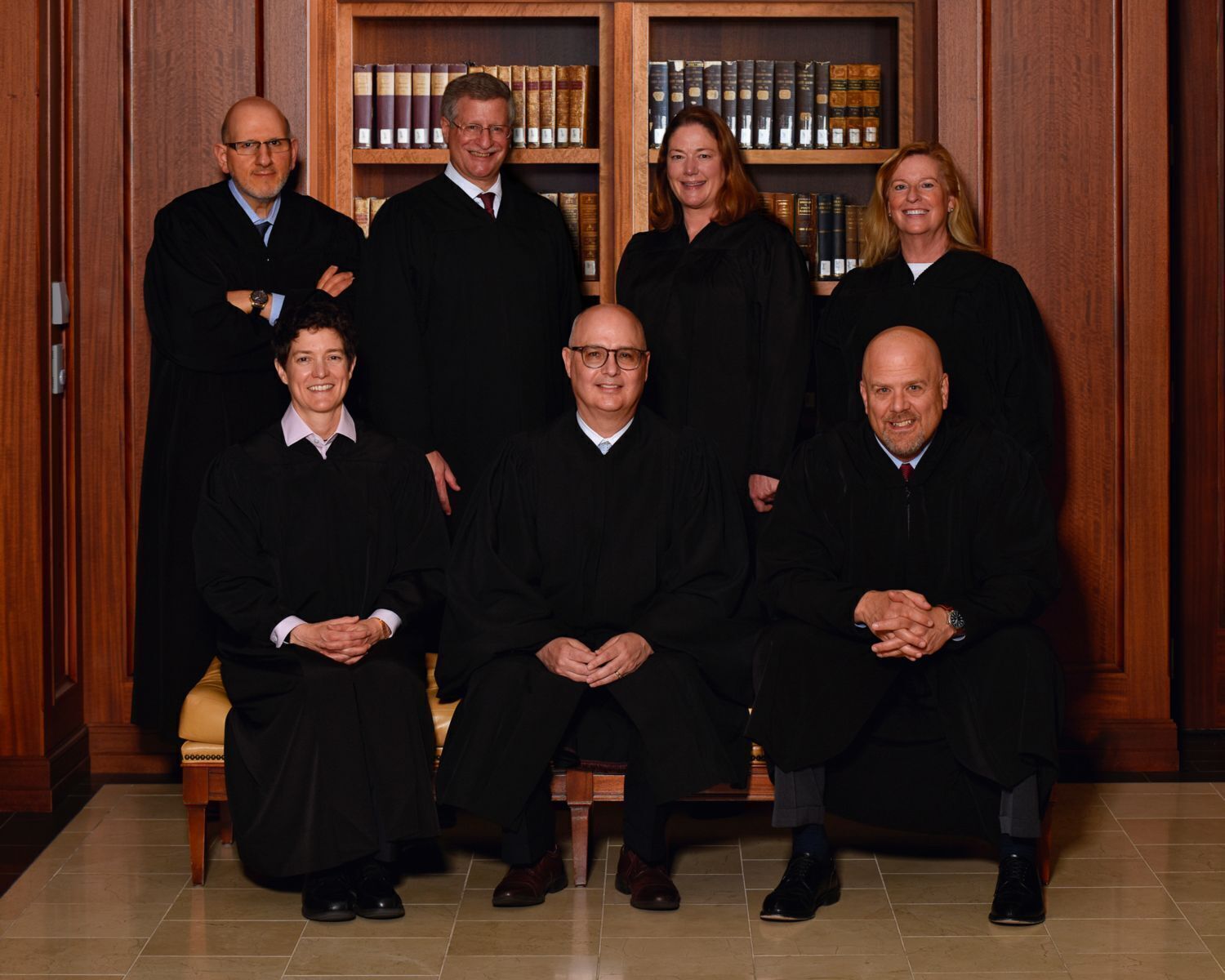
At least six of Colorado’s Supreme Court justices – including its Chief Justice Brian Boatright and incoming Chief Justice Monica Marquez – have known about conflicts of interest they allegedly have with ongoing disciplinary investigations into the conduct of at least two of their colleagues but have done nothing about it, according to letters obtained by The Gazette.
The ongoing inquiry is into a yearslong judiciary scandal tied to a multi-million-dollar contract given to a former department official who threatened a tell-all sex-discrimination lawsuit.
The state’s Commission on Judicial Discipline in June sent personalized letters to each of the justices outlining their conflicts and their obligation under judicial conduct rules to recuse themselves from the entire investigative process, according to a letter Boatright wrote the commission in reaction to the correspondence.
Yet despite those apparent conflicts, none of the justices has stepped aside throughout the 20 months the inquiries have been ongoing and the group has even occasionally offered its own public opinion on the validity of the accusations being investigated, a prohibited practice under judicial canons for jurists who might be asked to decide a case.

It is the first publicly disclosed document indicating the Supreme Court justices – Justice Maria Berkenkotter was not on the court at the time the scandal broke – should excuse themselves from any involvement in any part of the ongoing disciplinary investigation. Until now it was only a general concern by legislators, the discipline commission and even justices that a Supreme Court justice could have a conflict in any discipline matter, and that rules were not in place to deal with such a happenstance.
The court, in response to a request from The Denver Gazette for comment, leaned on the secrecy of the proceedings in refusing to offer any explanation.
“Investigations by the Commission are confidential under state law, and therefore the Department cannot comment on them,” according to a spokesman’s emailed statement.
But in his response to the commission about the letters, Boatright slammed the discipline panel saying it had “inaccurately” suggested the justices were “somehow unaware of potential recusal issues or our obligations under the Code of Judicial Conduct” to remove themselves, according to a copy of Boatright’s letter obtained by the Gazette under the Judicial Department’s open-records policies.
Boatright’s letter explained the justices were “open to creative approaches to address those concerns” and had already been drafting their own potential changes to rules governing the disciplinary process that would handle any recusal issues.
But the commission’s letters to the six justices clearly irked the chief justice, who seemed to liken it to a public airing of private laundry.
“These letters were delivered the day before a public committee hearing where the Judicial Department was prepared to discuss this issue and potential solutions,” Boatright wrote, referring to a legislative committee considering changes to the discipline process. “Why Mr. (Christopher) Gregory thought this approach was preferable to a simple letter responding to my invitation months ago to discuss this issue with the Court is unclear.”
Gregory is the executive director of the 10-member discipline commission and was its former chairman when the scandal broke.
The court has refused a Gazette request to review the commission’s letters to each justice, claiming they contain information that by law is to be kept secret, so it is unclear the extent or nature of the justices’ alleged conflicts of interest.
Records of the Judicial Department are not subject to the state’s open records laws. Rather, the department relies on rules of its own creation and, unlike the Colorado Open Records Act, there is no way to appeal the court’s rejection other than to file a lawsuit that could ultimately be reviewed by the Supreme Court.
The discipline commission will not release the correspondence because it is not subject to either CORA or the department’s open-records rules.
The commission’s work is by law secret, but indications from various public hearings and other correspondence are that it is investigating allegations that former Supreme Court Chief Justice Nathan “Ben” Coats was at the center of a multimillion-dollar consulting contract given to a former employee to stave off her sex-discrimination lawsuit.
Part of that scandal included a two-page memo that alleged some misconduct by judges was intentionally kept from the commission. One of them was that a then-Court of Appeals judge was caught up in a harassment allegation that was quietly settled so as not to impact his chances at being named to the high court. That judge is currently a Supreme Court justice.
In a letter to legislators last month, the commission pointed to the allegation against the former Court of Appeals judge as a key example of the conflicts of interest that can run from one court to the next.
What seems to be at issue, according to public comments and correspondence from the two sides over nearly the past two years, is that any investigation into a current or past member of the Supreme Court – whether about their actions or their tangential knowledge on the subject – could put the entire court into a compromised position.
And because the court is involved at every stage of the disciplinary inquiry, from the gathering of evidence to sitting in judgment of any recommended discipline, the conflicts could have serious legal ramifications and impact on the public trust.
“All confidence would be lost if the public believes the guilt or innocence of an individual is determined before the presentation of evidence,” former Pueblo County Chief District Court Judge Dennis Maes told legislators in July. “The same result occurs if the court determines the credibility of witnesses prior to trial. That is what the Boatright court did here.”
That came in February 2021 after newspaper reports exposed the explosive allegation by a former Judicial Department official that a quid pro quo contract came with the approval of the state’s highest jurist.
“Chief Justice Boatright went on to back Coats and (his counsel, Andrew) Rottman with the weight and credibility of the entire Supreme Court by declaring that any statement to the contrary was simply false,” Maes testified. “All of this before any investigation or trial.”
Shortly after Boatright’s public statement, the court said it was seeing the two-page memo for the first time, but it was later learned through court documents that at least two members of the court were previously aware of the document and generally its contents.
Maes said it all amounts to one outcome: recusal by the court “from any further involvement in the proceedings.”
Additionally, Gregory wrote the legislative committee in August that the Supreme Court had already hampered the commission’s work.
“Members of the Colorado Supreme Court, directly and through its senior staff, made a series of decisions and took a series of actions throughout 2021 and 2022 that limited the ability of the Commission … to do its Constitutionally mandated work,” Gregory wrote. “The Court chose to share documents and information with 3 other investigations, but not with the Discipline Commission. It chose delay, mixed messages, and obfuscation.”
In all, because the court has been less than hands-off, Gregory said its been a huge problem.
“The overt actions of the leadership of the Department to promote publicly a specific narrative and avoid an impartial judicial discipline investigation themselves illustrate the depth of the flaws in the functionality and credibility of Colorado’s current system of judicial discipline that need to be remedied,” Gregory told legislators.
Boatright’s letter admonishing the commission made an initial offer to change the commission’s disciplinary rules: A justice with a conflict of interest would step aside and be replaced by the most senior judge from the Court of Appeals.
The commission has stood firm in its assertion that if one Supreme Court justice has a conflict of interest, then they all do, according to letters the commission has written to the legislative committee. And because of the collegial nature of the Court of Appeals – coupled with the fact that its judges are frequently next in line for a Supreme Court appointment – any replacement should come from a pool of eligible people that includes trial judges.
The Supreme Court stepped away from that suggestion, according to a letter Justice William Hood III wrote the commission in early September, saying discussions between the court and commission on the matter were unfruitful and would rely on the legislature to resolve it.
“Like you, I’m sure, we are disappointed that we have been unable to reach agreement,” Hood wrote the commission, noting that a former or current Supreme Court justice being the subject of a disciplinary proceeding was only a “potential circumstance.”
The legislative committee last week unanimously approved a measure for the General Assembly’s consideration that would replace the Supreme Court by Court of Appeals judges, but only when the high court is asked to review a recommendation of formal discipline.
Current rules written and approved by the Supreme Court give it the sole authority to name a three-judge panel to oversee any formal disciplinary proceeding, even if it were of a sitting or former justice.
The legislative committee’s recommendations, including a constitutional amendment for voters to consider on changing how judicial discipline will occur, head to the General Assembly’s Legislative Council. If approved there, they would move as bills to the House, followed by the Senate.



Denver murder conviction reversed for incomplete self-defense instruction
Michael Karlik
michael.karlik@coloradopolitics.com
Updated 4 minutes ago
Colorado’s second-highest court reversed a defendant’s murder conviction last week because a Denver judge gave an incomplete instruction to the jury about the man’s right to self-defense. Donald R. Gonzales and Gary McLaughlin met up in a Capitol Hill parking...
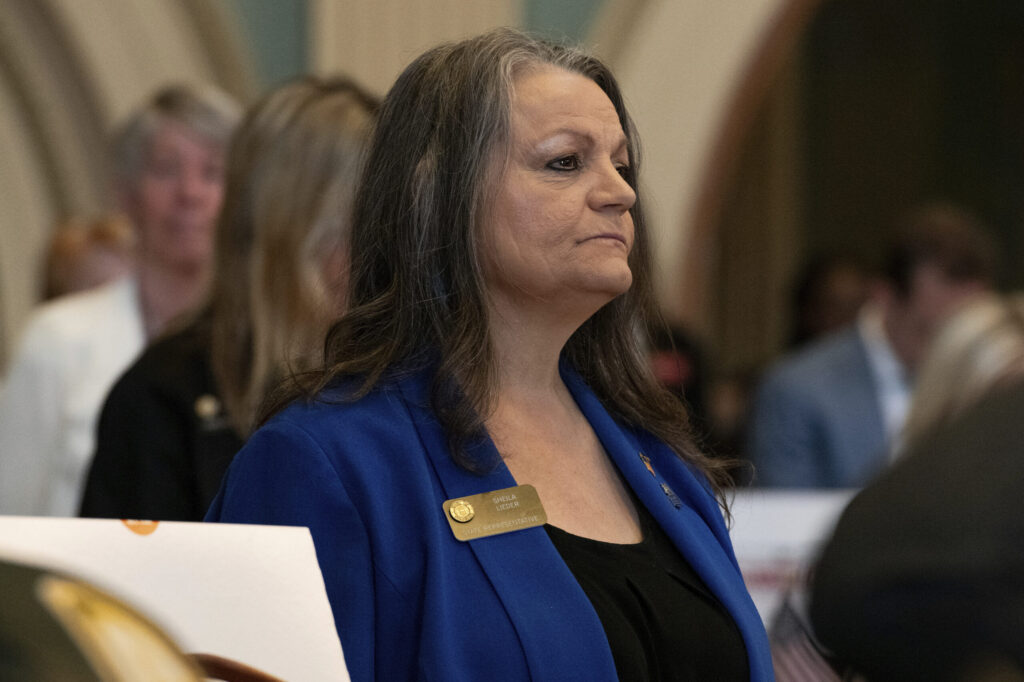
Colorado lawmaker, House leaders named in workplace-retaliation lawsuit
Marianne Goodland
marianne.goodland@coloradopolitics.com
Updated 3 hours ago
A former legislative aide has filed a lawsuit alleging she was mistreated, illegally directed to perform campaign work and harmed by a House leadership structure she charged was fragmented, politicized and ineffective at protecting employees. The lawsuit, filed by Jennifer...
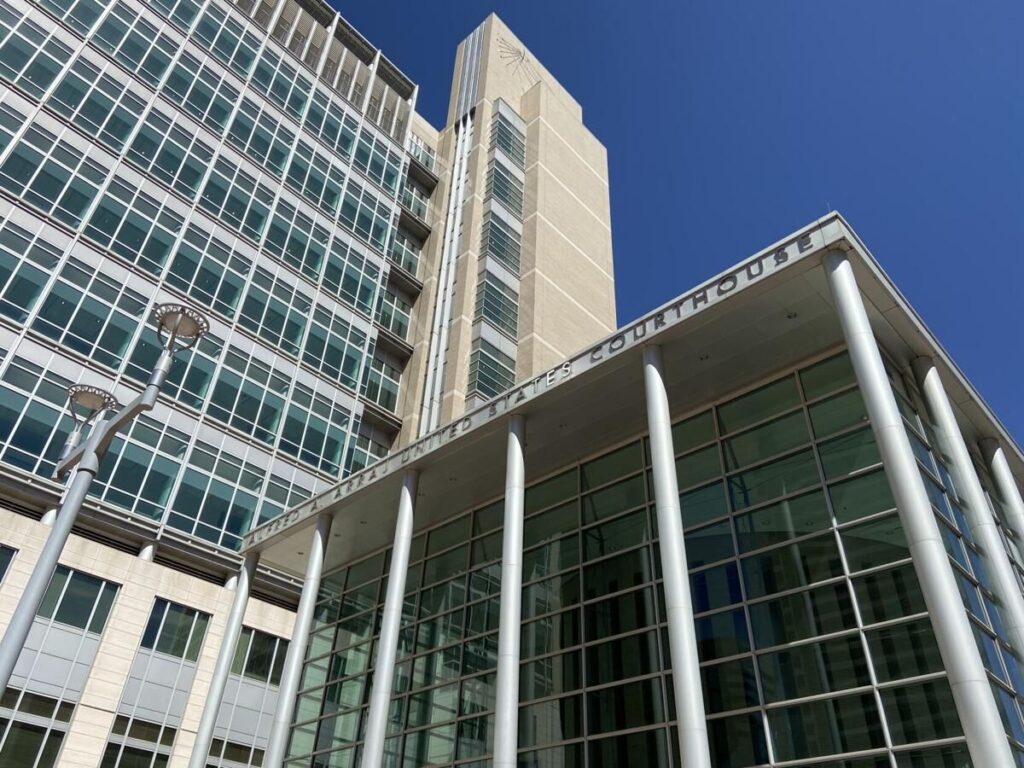
Federal judge hears arguments about Colorado’s 3-day gun purchase waiting period
Michael Karlik
michael.karlik@coloradopolitics.com
Updated 8 hours ago
A federal judge heard arguments on Monday about the constitutionality of a 2023 Colorado law that generally imposes a three-day waiting period on firearm purchases after the initiation of a background check. The test that the U.S. Supreme Court created...
Colorado Supreme Court intervenes in Weld County prosecution dismissed due to Missy Woods misconduct
Michael Karlik
michael.karlik@coloradopolitics.com
Updated 23 hours ago
The Colorado Supreme Court ordered a Weld County trial judge last week to respond to the district attorney’s claim that he improperly dismissed a criminal case because of “outrageous” conduct by the Colorado Bureau of Investigation. Daniel Lee Eatinger stood...
Schoolchildren’s presence at child sex-related trial did not harm Arapahoe County defendant, appeals court says
Michael Karlik
michael.karlik@coloradopolitics.com
Updated 3 days ago
Colorado’s second-highest court decided on Thursday that the presence of a group of schoolchildren on the first day of a child sexual exploitation trial did not violate an Arapahoe County defendant’s constitutional right to a fair trial. Prosecutors charged Jerry...
Appeals court cites week-old Colorado law to reinstate child neglect case at child, father’s request
Michael Karlik
michael.karlik@coloradopolitics.com
Updated 3 days ago
Colorado’s second-highest court invoked a new state law for the first time on Thursday and reinstated a child neglect case that both the child and her father wished to reopen. House Bill 1227 took effect on Aug. 12, reversing a...
Colorado Supreme Court names William Hood as next chief justice
Michael Karlik
michael.karlik@coloradopolitics.com
Updated 4 days ago
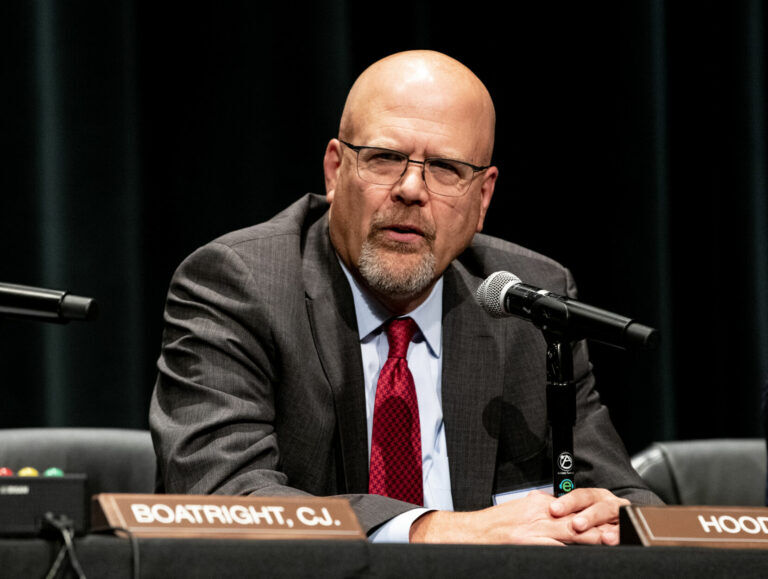
The Colorado Supreme Court has selected Justice William W. Hood III to be the next chief justice, the judicial branch announced on Friday. Hood will succeed Chief Justice Monica M. Márquez, who took over the role in July 2024. “I...
Family of slain Lakewood teacher releases statement as murder suspect makes first court appearance
Matt Kyle
matt.kyle@denvergazette.com
Updated 1 day ago
Patrick Theodore Barnett, the Lakewood man accused of killing his wife, a Jeffco Public Schools art teacher, made his first court appearance Friday morning as his wife’s family looked on. The status conference hearing was held before District Court Judge...
Appeals court upholds Park County trophy hunting conviction
Michael Karlik
michael.karlik@coloradopolitics.com
Updated 4 days ago
Colorado’s second-highest court clarified on Thursday that a defendant may stand convicted under the state’s trophy hunting laws if he abandons a bear carcass but returns later to remove the meat. Under Colorado law, it is a felony to detach...

Judge grants partial injunction to GEO in fight against state health inspection law
Kyla Pearce
kyla.pearce@gazette.com
Updated 5 days ago
A judge ruled Thursday that The GEO Group does not have to follow parts of a new state law requiring more frequent health and safety inspections at the U.S. Immigration and Customs Enforcement processing center in Aurora. Under the order...
PREV
PREVIOUS

A LOOK BACK | Congressional candidate calls government growth ‘unavoidable’
Fifty-Five Years Ago This Week: Speaking to concerned farmers, ranchers and campaign supporters in the City of Limon, Conrad McBride, Democratic candidate for Colorado’s 2nd Congressional District, said that there was “an obvious price squeeze between static farm prices and inflated land prices today,” and added that – short of perfect cooperation – would require […]

Federal judge for Colorado Springs formally sworn in
Maritza Dominguez Braswell, a former corporate litigator and high-ranking official in the Colorado Attorney General’s Office, was formally sworn in on Friday as the lone federal judge stationed in Colorado Springs. “It strikes me that we have formed a society that sometimes makes life difficult. For some, life is more difficult than for others – the marginalized, […]