

A LOOK BACK | Congressional candidate calls government growth ‘unavoidable’

Fifty-Five Years Ago This Week: Speaking to concerned farmers, ranchers and campaign supporters in the City of Limon, Conrad McBride, Democratic candidate for Colorado’s 2nd Congressional District, said that there was “an obvious price squeeze between static farm prices and inflated land prices today,” and added that – short of perfect cooperation – would require government intervention.
McBride, a political scientist from the University of Colorado, pointed out that while many farmers regularly made substantial investments affecting their operating costs, they had little chance of seeing a fair return on those investments.
“The free market – the supply and demand market – will not work in today’s world,” McBride argued, “because it allows the processors of farm produce to control the distribution and farm market prices, as well as the flow of operating capital for agriculture.”
Instead, McBride advocated for a system that would separate investment capital and operating capital so that small farm operators could stay in business.
“The American farmer, like the American consumer,” McBride said, “should be protected against the type of vertical integration that enables monopolies to operate even if such protection requires the government to assume the role of market and production regulator.”
To his Limon supporters McBride stated that the best way to handle the issues facing farmers would be to form a private co-operative, keeping out both monopolies and government.
“But it requires perfect cooperation or else it will fail as co-operatives in the past have failed,” McBride said.
At another meeting at CU Boulder McBride told the assembled crowd that government growth and centralization was both “reasonable and unavoidable.”
“It is a matter of indisputable fact that some of the problems in our modern society have grown beyond the scope of state government and state boundaries.”
Thirty-Five Years Ago: After a sharply-worded complaint from Senate President Ted Strickland, R-Westminster, that stemmed from incidents the previous legislative session, House Speaker Carl Bledsoe, R-Hugo, Strickland and nearly 200 of the state’s 520 professional lobbyists gathered for a briefing by General Assembly officials.
Bledsoe and Strickland were keen that lobbyists be made aware that some lobbyists had overstepped the mark and meddled in the selection process for legislative officials. General Assembly staff made lobbyists aware of the problems and breaches of protocol by the “third house of the legislature.”
Douglas Brown, director of the Legislative Drafting Office, whose staff of 30-40 lawyers and clerks drafts and reviews all bills submitted to the General Assembly, spoke at the briefing.
“There is a delicate balance,” Brown said, “between legislators, lobbyists and the legislative staff. The legislature is your boss, yet due to lack of legislative staff, the pressures of time and the growing complexity of legislation, at times we are working more with lobbyists than legislators.”
Brown said lines became particularly hazy when “legislators communicate with us through lobbyists…”
Several heads of departments outlined “horrible but not typical” examples, one which a lobbyists told a senior LDO attorney not to bother showing a legislator a revised bill because “The legislator will do whatever I tell him to do.”
But it was Vicki Lindsey, a staff member from Secretary of State Natalie Meyer’s office, who drew barks of laughter when she mentioned “nightgowns” in listing examples of gifts to legislators.
When asked by a Colorado Statesman reporter to confirm whether lobbyists had truly listed nightgowns among their gifts to legislators, she said they had.
“In the past when they used to itemize everything. They don’t have to itemize hardly anything anymore,” Lindsey said. “And they give hardly any gifts anymore.”
At the close of the briefing, Meyer told the assembled, chastened lobbyists, “You are an honorable profession, just as legislators are.”
Rachael Wright is the author of the Captain Savva Mystery series, with degrees in Political Science and History from Colorado Mesa University and is a contributing writer to Colorado Politics and The Gazette.



Wyoming governor sues state board, asks court to enforce property tax cap | OUT WEST ROUNDUP
The Associated Press
the-associated-press@coloradopolitics.com
Updated 4 days ago
WYOMING Governor sues over property tax cap Gov. Mark Gordon filed a lawsuit on June 16 to force the State Board of Equalization to certify residential property tax values after the panel concluded it could not do so due to...
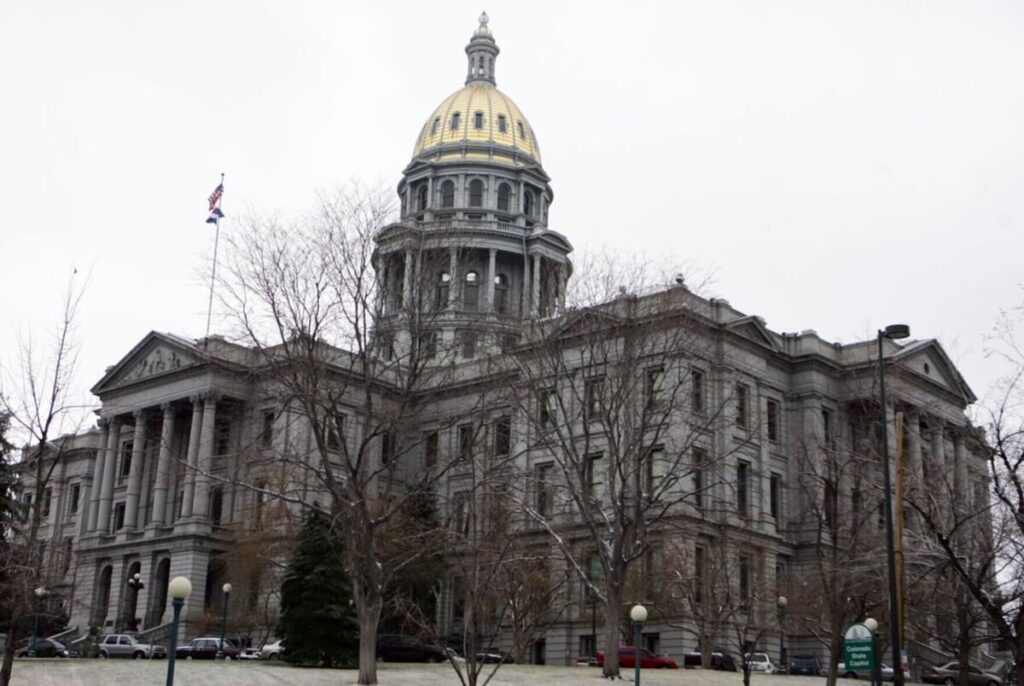
Democratic Colorado rural congressman threatens to caucus with GOP to preserve PILT | A LOOK BACK
Rachael Wright, Special to Colorado Politics
rachael.wright@coloradopolitics.com
Updated 3 days ago
Forty-Five Years Ago This Week: “It’s sometimes like talking to a brick wall,” said Colorado Congressional District 3 U.S. Rep. Ray Kogovsek. Kogovsek was frustrated at the lack of support from congressional representatives from the East Coast and the Midwest...

25 lessons and wishes to celebrate America’s 250th | SONDERMANN
By Eric Sondermann
by-eric-sondermann@coloradopolitics.com
Updated 4 days ago
The 250th celebration of America’s birth is upon us. There is undoubtedly much to salute. Despite plenty of strife and discontent at home, America remains a beacon to much of the world. The wisdom of our founders has largely withstood...

Colorado Politics Calendar July 6-12
Rachael Wright, Special to Colorado Politics
rachael.wright@coloradopolitics.com
Updated 4 days ago
CoPo’s weekly political calendar helps you find political and public policy events throughout Colorado. It includes candidate and issue campaign events, public policy meetings, court hearings, state and local party conventions, assemblies, debates, rallies, parades, speaking engagements, traveling dignitary appearances,...

Victor Marx holds a steady lead over Barbara Kirkmeyer in Colorado Republican governor contest
Thelma Grimes
thelma.grimes@coloradopolitics.com
Updated 2 days ago
Victor Marx overtook state Sen. Barbara Kirkmeyer in the Republican primary for governor on Wednesday evening, seizing a narrow lead after trailing her since polls closed. Kirkmeyer, one of three candidates, opened the night with a clear advantage, at one...

Democrats confront shift as socialist-aligned candidates win races in Colorado
Thelma Grimes
thelma.grimes@coloradopolitics.com
Updated 1 day ago
Democratic socialists’ recent electoral gains — punctuated by Melat Kiros’ victory on Tuesday over U.S. Rep. Diana DeGette, the dean of Colorado’s congressional delegation — are the result of a movement that has been taking shape in metro Denver for...
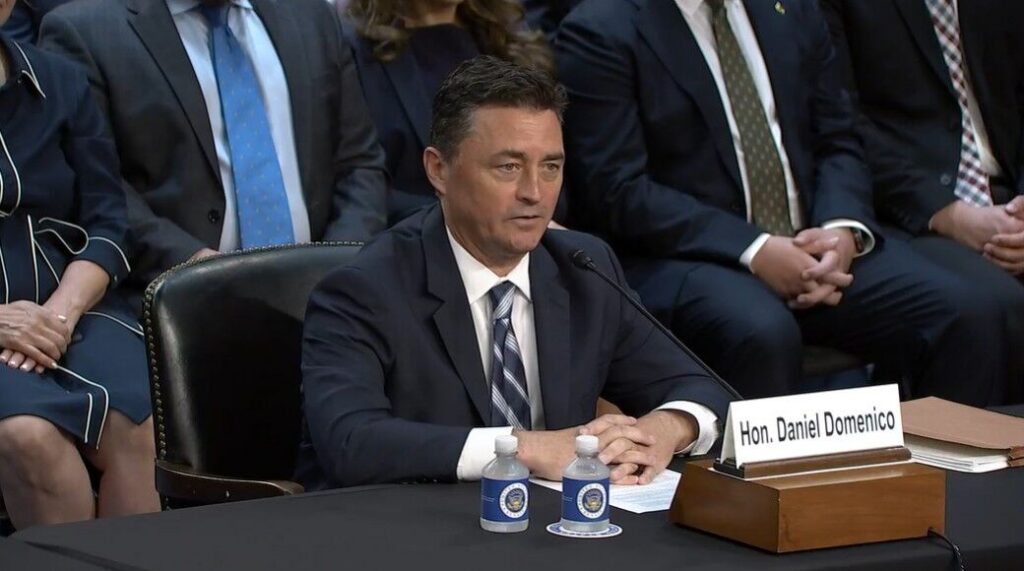
Trump’s judicial nominee orders bond in wave of cases after 10th Circuit rejects government’s position
Michael Karlik
michael.karlik@coloradopolitics.com
Updated 3 days ago
Within 24 hours of the Denver-based federal appeals court rejecting the government’s expansive view of its immigration detention authority, the lone judge in Colorado to embrace that view ordered bond hearings for detainees in at least 20 cases. U.S. District...

Cherry Creek spent $65K on investigation, but invoices remain secret, records show
Nico Brambila
nico.brambila@denvergazette.com
Updated 3 days ago
After previously refusing to disclose the cost associated with the investigation into the former superintendent and his wife, the former human resources chief, Cherry Creek School District officials partially released records showing the cost to taxpayers: $65,054.85. The Denver Gazette...
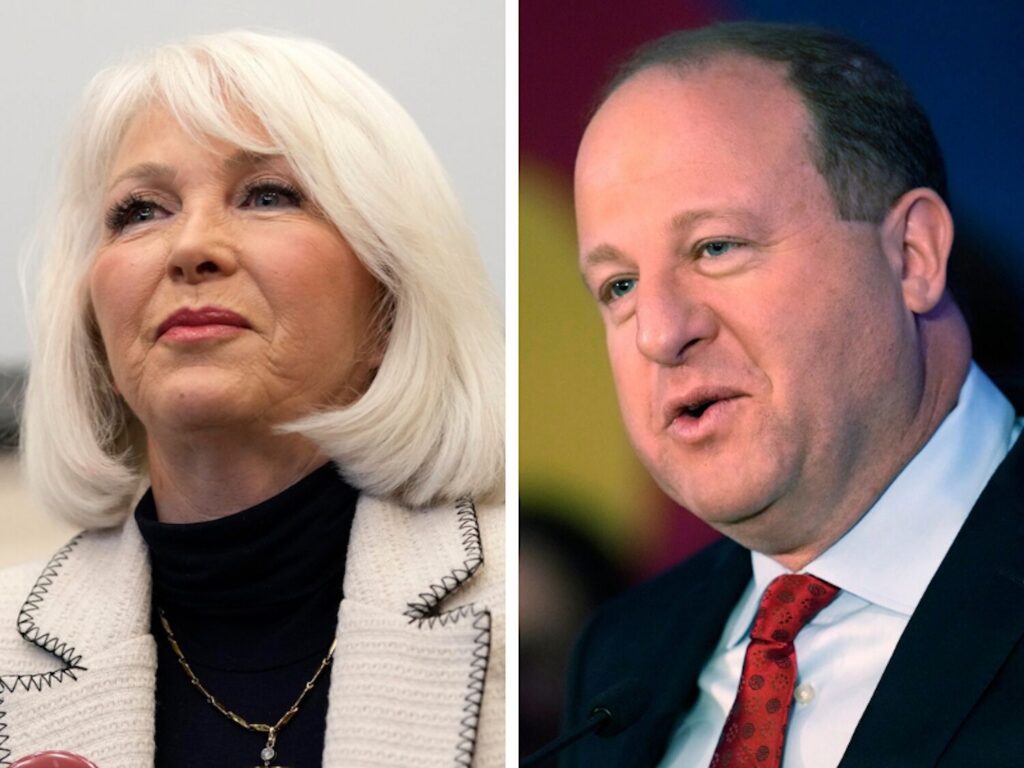
Colorado governor fires clemency board members who opposed Tina Peters commutation
Marissa Ventrelli
marissa.ventrelli@coloradopolitics.com
Updated 3 days ago
Gov. Jared Polis has fired two members of his clemency board who opposed his commutation of Tina Peters’ sentence, according to Colorado Politics news partner 9News. In firing Azra Taslimi and Hannah Seigel Proff, Gov. Jared Polis said they had...
Democrats supercharge court fight after campaign finance ruling
James A. Downs
james.a..downs@washingtonexaminer.com
Updated 3 days ago
Democrats are hoping to dampen the GOP’s midterm cash advantage after Republicans scored a major win allowing unlimited coordination between political parties and candidates. Republican campaign arms say they can access discounted TV ad rates after the Supreme Court lifted...
PREV
PREVIOUS

COVER STORY: Kirkmeyer, Caraveo square off in battleground 8th CD, Colorado's new US House district
Editor’s note: This is part a series that looks into Colorado’s biggest general election contests. If Coloradans are up late on election night awaiting results in this year’s midterms, there’s a good chance the race that will have local and national political watchers on the edge of their seat will be the barnburner in […]
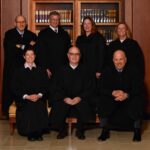
Colorado Supreme Court justices haven't recused despite apparent conflicts of interest in investigation
At least six of Colorado’s Supreme Court justices – including its Chief Justice Brian Boatright and incoming Chief Justice Monica Marquez – have known about conflicts of interest they allegedly have with ongoing disciplinary investigations into the conduct of at least two of their colleagues but have done nothing about it, according to letters obtained by The Gazette. The […]