

COURT CRAWL | Eyes on judicial vacancies, governmental immunity under microscope

Welcome to Court Crawl, Colorado Politics’ roundup of news from the third branch of government.
Colorado’s senators have presented the White House with a list of three candidates to fill another upcoming judicial vacancy and the state’s second-highest court has continued its streak of plaintiff-friendly rulings that interpret Colorado’s governmental immunity law.
Federal vacancies
• Colorado’s two senators have sent their three preferred candidates to the White House to fill the seat of retiring U.S. District Court Judge Raymond P. Moore. The finalists are U.S. Magistrate Judges Gordon P. Gallaher and S. Kato Crews and civil litigator Sundeep K. “Rob” Addy.
• If those names sound familiar, it’s because they are the same three men recommended in April for another upcoming vacancy, taking effect in February when U.S. District Court Judge William J. Martínez also steps down from active service. Barring something unforeseen, that means two out of the three finalists will be nominated, and it will likely bring a close to the Biden administration’s judicial nominations in Colorado for the near future. The next eligible retirement on the seven-member federal trial won’t arise until 2024.
• In screening candidates for the vacancies, U.S. Sens. Michael Bennet and John Hickenlooper have established a committee to evaluate applications and perform interviews. Last week, two members of the committee spoke to lawyers and judges to give insight into their process. Here are some pieces of advice they provided for future judicial aspirants:
“How important is political involvement/connections? We don’t care about that. We honestly don’t. We’ve sent names up that honestly the senators have never heard of.” —Michelle Lucero, general counsel of Children’s Hospital Colorado and co-chair of the advisory committee
“I spend a lot of time going through writing samples because to me it’s an indication of whether people are gonna keep their butt in the chair and do their work. It is important to be involved in the community and go out and give speeches, but at the end of the day you’ve got to get the work done.” —Frances Koncilja, former commissioner of the Colorado Public Utilities Commission

FILE PHOTO: The Alfred A. Arraj U.S. Courthouse in downtown Denver. (Photo courtesy of United States District Court - Colorado)
Courtesy photo, U.S. District Court

Governmental immunity
• Colorado’s Court of Appeals has weighed in multiple times within the past month on the ability of plaintiffs to sue the government for their injuries, deciding in each instance the lawsuits were allowed to proceed. First, a three-judge panel said the town of Olathe and one of its officers could be sued after the officer crashed into a minivan while pursuing a suspect, killing the two occupants. The officer kept his lights and siren off for the majority of the pursuit, which the Court of Appeals concluded had opened him up to liability.
• The court also green-lit a lawsuit against the University of Colorado, after a student on the Boulder campus slipped and fell down just-mopped stairs in a dormitory. The university provided no warning that the floor was wet.
• As a reminder, earlier in July a woman who tripped and hurt herself in a Jefferson County parking garage also received a favorable ruling from the appellate court in her personal injury lawsuit.
Retired disciplinary judge recalls time on bench
• Two decades ago, the Colorado Supreme Court modified its attorney disciplinary system to create a professional presiding disciplinary judge who would hear allegations of lawyer misconduct. The second person to hold that position, William R. Lucero, retired this May after 18 years on the bench. He spoke to Colorado Politics for a Q&A about the details of this unique facet of the justice system. Here is an excerpt:
Colorado Politics: During your time as presiding disciplinary judge, were there trends in the types of cases that you saw? Did certain complaints become more common or less common over time?
Lucero: When I first started, the cases were what I would call relatively simple and straightforward. Most decisions were made in a hearing and most hearings would last one day or two days. What I saw as a trend generally is the complexity of the cases is increasing.
There are a number of lawyers, and I think some of them were in Colorado, who were encouraging or arguing in court that the (2020 presidential) election was stolen. Their evidence of that was zilch, basically. That’s an issue the Office of Attorney Regulation Counsel may end up having to look at, if the lawyer is licensed in Colorado. So cases like that can be very complex. There were a couple of times we had oil and gas cases.
A lot of law students want to clerk for an appellate judge — Supreme Court or Court of Appeals or federal 10th Circuit. That’s great experience because you learn how to write and you learn a lot about written advocacy. Some people want to go and work as a clerk for a district court judge that hears cases. And that’s wonderful for hearing in-court advocacy on your feet — the kind of advocacy that led me to want to become a trial lawyer.
And in the presiding disciplinary judge’s court, you get both. Here’s the other nuance to it: It might be a divorce case. It might be an oil and gas case. It might be an election fraud case. Those are the facts in which the case takes place. But there’s also the overlay of how are the rules of professional conduct implicated in these cases? Then you have to write an opinion. Those cases provide guidelines for lawyers in how they should conduct themselves.
CP: Are you allowed to say whether any 2020 election cases came to the PDJ in your final months there?
Lucero: That’s still percolating. I think Rudy Giuliani has been temporarily suspended in New York. Nothing like that has ever reached the presiding disciplinary judge here.
It doesn’t have to be that issue. Anytime a lawyer takes a position in court that they know or should know not to be true, it becomes an issue. Lawyers shouldn’t do that. I understand completely that lawyers have to be zealous in representing their clients, but the other side of the issue is a responsibility, as an officer of the court, to the judicial system and the legal profession.
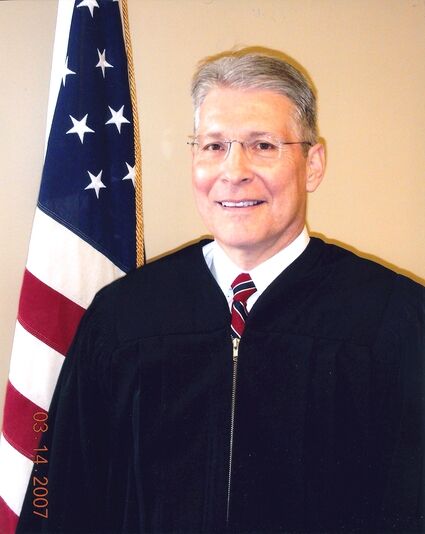
William R. Lucero, the retired presiding disciplinary judge for Colorado

Federal appeals
• The U.S. Court of Appeals for the 10th Circuit has previously said judges may not sentence a person “in advance” by committing to a punishment before knowing the nature of the offense. But a federal judge in Colorado did not do that, the 10th Circuit clarified, by following his prior promise to abide by the sentencing range if the defendant appeared before him again.
• By 2-1, the 10th Circuit declined to overturn the deportation order of a man who came to the U.S at the age of six months and was tortured twice after his first return to Mexico.
• A jury will hear the discrimination lawsuit of a Hispanic former insurance agent in Greeley, after the 10th Circuit ruled an alleged comment calling him a “crazy brown man running around with a gun” was admissible as evidence.
• Barely two months had passed since the U.S. Supreme Court severely restricted the types of lawsuits plaintiffs could bring against government officials for constitutional violations when the 10th Circuit, based on SCOTUS’ directive, tossed a lawsuit an inmate had filed against a federal prison guard alleging excessive force.
• The 10th Circuit upheld a jury’s verdict in favor of Xcel Energy that found the utility did not discriminate against a former employee on the basis of her race and sex.

FILE PHOTO
DNY59.iSTOCK

Elsewhere in federal court
• A federal jury in Denver found dentist Larry Rudolph guilty of foreign murder and mail fraud for the killing of his wife on a 2016 African safari.
• Colorado Springs police did not violate the constitutional rights of a church leader by briefly being present on her property on two occasions, a judge ruled.
• A Parker man was arrested for stealing a roll of synthetic turf from an Aurora warehouse — even though he didn’t, a warehouse clerk made a mistake and the responding police officer conducted a minimal investigation. A federal judge dismissed the man’s subsequent claims against the city of Aurora, while noting the man might have plausibly stated a claim of racial discrimination had he utilized additional available evidence.
• An Adult Protective Services caseworker in Morgan County did not violate the rights of a man during her investigation into his possible abuse of an at-risk adult, a judge found.
Vacancies and appointments
• The governor has appointed criminal defense attorney Joshua T. Nowak as well as former prosecutor and current Magistrate Lara M. Jimenez to the Adams County Court. They will succeed Judges Byron L. Howell and Cindy Dang.
• Magistrate Kelley R. Southerland will also be the next district judge in the 17th Judicial District (Adams and Broomfield counties). She will succeed retiring Judge Katherine R. Delgado.
• There are three finalists to succeed retiring Judge Charles Unfug on the Weld County Court: Sarah Babb, Renee Doak and Havilah Lilly.
• The governor also has six names from which to choose two new judges on the Denver District Court, succeeding Brian R. Whitney and Ross B.H. Buchanan. The candidates are: Mark T. Bailey, Heidi L. Kutcher, Jon J. Olafson, Victor W. Scarpato III, Sarah Wallace and Eang M. Man. All are from Denver, with the exception of Man, who is from Cheyenne, Wyo.
• There is a Sept. 2 deadline to apply for a part-time Custer County Court vacancy, following the elevation of Judge Amanda Hunter to the district court. The deadline is Aug. 12 to apply for the seat of retiring Judge Elizabeth A. Weishaupl on the district court of the 18th Judicial District (Arapahoe, Douglas, Elbert and Lincoln counties).

The Ralph L. Carr Colorado Judicial Center in downtown Denver houses the Colorado Supreme Court and Court of Appeals. (Michael Karlik/Colorado Politics)
Michael Karlik/Colorado Politics

A few updates
• Colorado Politics previously reported about a federal judge’s decision to deny qualified immunity to a Fort Collins police officer who used a “rowing arm takedown” to slam Michaella Lynn Surat chin-first into the ground because she was acting belligerently. Although U.S. District Court Judge William J. Martínez labeled the officer’s appeal of that decision as frivolous and refused to halt the civil trial, Martínez has now backed down and will wait until the 10th Circuit decides the outcome of the qualified immunity appeal.
• Appellate courts in Colorado have occasionally weighed in on the propriety of using drug-detection dogs trained to sniff marijuana in the aftermath of Colorado voters’ decision to legalize retail marijuana in 2012. The state’s Court of Appeals, once again, has affirmed the use of such dogs post-legalization means searches require probable cause of a crime because they can detect legal activity — that is, the possession of cannabis.
Miscellaneous decisions
• Mesa County Clerk and Recorder Tina Peters was arraigned on 10 felony and misdemeanor counts stemming from her alleged attempts at election interference.
• The state’s Court of Appeals clarified that someone can commit bribery by paying off a potential witness even before the filing of criminal charges.
• The Colorado Commission on Judicial Discipline has accused the state Judicial Department of failing to provide documents related to an investigation of judicial misconduct, while willingly providing records to third-party investigators.


10th Circuit partially revives lawsuit over 2020 Denver protest injuries
Michael Karlik
michael.karlik@coloradopolitics.com
Updated 18 hours ago
The Colorado-based federal appeals court revived a man’s claims against Denver on Friday after concluding a trial judge resolved the case in the city’s favor without analyzing two of the three instances of alleged excessive force and other constitutional violations....

Federal judges find Colorado immigration judge violated several orders
Michael Karlik
michael.karlik@coloradopolitics.com
Updated 2 days ago
Multiple federal judges in Colorado have freed people from immigration custody after determining that one immigration judge violated their directives for properly conducting bond hearings. For nearly a year, Colorado’s U.S. District Court has faced a flood of habeas corpus petitions...

Misconduct complaints from ex-Colorado judicial discipline director dismissed against federal judges
Michael Karlik
michael.karlik@coloradopolitics.com
Updated 3 days ago
The administrative body for the Denver-based federal appeals court upheld a finding last week that misconduct complaints against Colorado’s chief federal trial judge and the chief appeals judge warranted dismissal and appeared to be a “litigation tactic” by the complaining...

First-ever Red Rocks naturalization ceremony draws most diverse group of new citizens
Michael Karlik
michael.karlik@coloradopolitics.com
Updated 2 days ago
Colorado’s federal trial court held its first-ever naturalization ceremony for nearly 300 new citizens on Thursday at Red Rocks Park and Amphitheatre. “We’re doing it to commemorate the 250th anniversary of the Declaration of Independence and the United States. Red...
Jeffco taxpayers could be on the hook for a possible child sex assault settlement
Matt Kyle
matt.kyle@denvergazette.com
Updated 3 days ago
Taxpayers may end up on the hook for a child sexual assault settlement, possibly worth up to $15 million, after Jeffco Public Schools failed to notify its insurance company in a timely manner about the case. The incident stems from...
10th Circuit finds no fair housing violation by Littleton landlord for worker’s alleged rape of tenant
Michael Karlik
michael.karlik@coloradopolitics.com
Updated 2 days ago
The Denver-based federal appeals court concluded on Monday that Littleton’s housing authority could not be held liable for a maintenance worker’s alleged rape of a tenant, as the worker’s employment did not provide any special access to the victim. A...

Jeffco Public Schools sues Trump administration to protect funding after alleged transgender policies violation
Matt Kyle
matt.kyle@denvergazette.com
Updated 4 days ago
In the wake of several threats by the Trump administration to revoke federal funding, Jeffco Public Schools filed a lawsuit against the Department of Education seeking to protect that badly needed money. Jeffco has been under investigation by the DOE’s...

Denver detox center did not violate man’s rights with 10-hour hold, 10th Circuit says
Michael Karlik
michael.karlik@coloradopolitics.com
Updated 6 days ago
The Colorado-based federal appeals court concluded on Tuesday that Denver’s detoxification facility did not violate a man’s rights by holding him against his will for 10 hours until his blood alcohol content was projected to reach zero. Unusually, Brian Garrett’s...

Federal judge clarifies ex-GOP treasurer candidate’s burden to prove defamation claims
Michael Karlik
michael.karlik@coloradopolitics.com
Updated 6 days ago
A federal judge clarified last week that businessman and former Republican statewide candidate Brian Watson will need to surmount a higher hurdle in proving his claim that a party guest’s alleged description of him as a “criminal” amounted to defamation....
Colorado board permits state to appeal injunction against arthritis drug price cap
Marissa Ventrelli
marissa.ventrelli@coloradopolitics.com
Updated 6 days ago
A Colorado board voted Friday to allow the Attorney General’s Office to fight an injunction against a price cap on a drug that treats arthritis. A U.S. district court judge had granted the company Amgen a preliminary injunction, temporarily blocking...
PREV
PREVIOUS

Appeals court reinstates lawsuit against CU over failing to place 'wet floor' sign on staircase
The state’s second-highest court has reversed a Boulder County judge and decided the University of Colorado’s failure to warn a student about a recently-mopped and slippery staircase means the institution cannot claim immunity from being sued. The lawsuit involving then-freshman Jordan Galef is one of multiple plaintiff-friendly rulings from the Court of Appeals in recent weeks […]
Judicial Discipline Commission says Supreme Court lied, misled, misinformed public during probe
On July 29, 2011, the chief justice of Colorado’s Supreme Court quietly met in a Denver parking garage with the executive director of the state’s Commission on Judicial Discipline to discuss the latter’s press for information in its inquiry into misconduct allegations tied to an alleged contract-for-silence scheme at the Judicial Department. During the rendezvous, […]