

Appeals court reverses another Adams County conviction due to judge’s faulty analogy
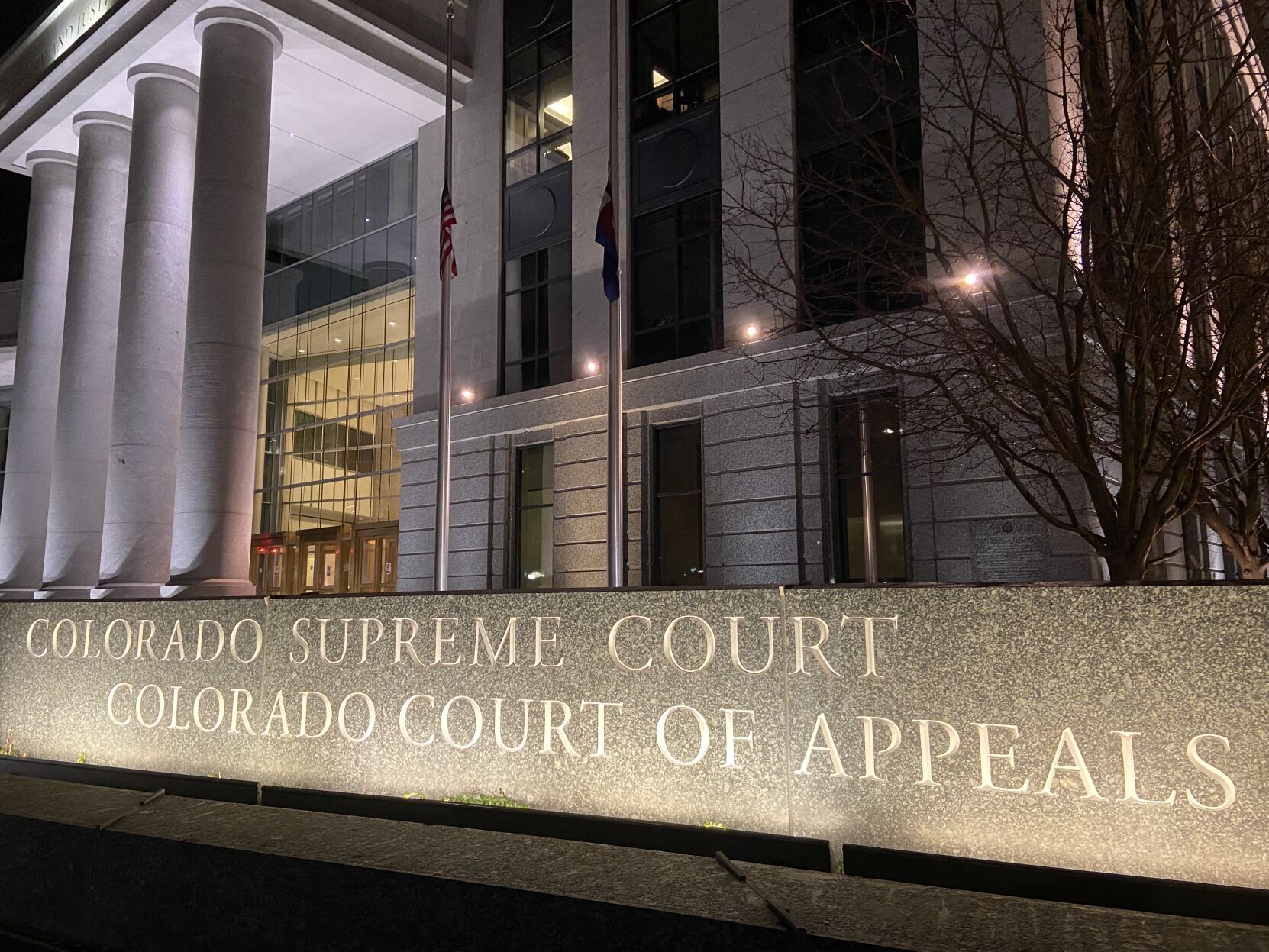
Another man convicted in Adams County will receive a new trial because the judge described reasonable doubt to jurors using an analogy very similar to one the Colorado Supreme Court recently deemed problematic.
The Court of Appeals’ reversal of Darren Ross Hoffman’s attempted murder convictions is the second time in recent weeks that an Adams County judge’s improper description of reasonable doubt ran afoul of the Supreme Court’s precedent. On Feb. 17, the appellate court similarly granted a new trial in a murder case after District Court Judge Sharon D. Holbrook likened reasonable doubt to a significant crack in a house while attempting to elaborate on the legal definition for the jury.
Now, a three-judge appellate panel has found former District Court Judge Tomee Crespin made a reversible error in Hoffman’s trial when she described cracks in the drywall of a home to jurors and told them, “That’s reasonable doubt.”
After the Court of Appeals had warned trial judges in various decisions over two decades to steer clear of using analogies to everyday scenarios when describing reasonable doubt to jurors, the Supreme Court stepped in and reversed a conviction in January because the judge, also from Adams County, had improperly lowered the burden of proof for the prosecution with his analogy.
In that case, Tibbels v. People, the judge had asked jurors whether they would buy an otherwise “perfect” home that had a structurally-significant crack in the foundation. When a juror responded in the negative, the judge agreed that there was “a reason” not to proceed with the purchase.
The Supreme Court pointed out that it is the responsibility of the government to prove criminal allegations beyond a reasonable doubt, and defendants do not have to present any reason – a structurally-significant crack, in the analogy’s terms – to convince a jury to acquit. The court added that such illustrations, even at the very beginning of a trial, may influence how jurors understand reasonable doubt during deliberations.
“In our view, the trial court’s focus on this nonlegal, real-world example made the illustration highly significant and ensured that the jury would give it undue weight,” Justice Richard L. Gabriel explained in the court’s Jan. 10 opinion.
A Colorado Politics analysis of cases that challenged judges’ reasonable doubt illustrations found Adams County was the source of the vast majority of appeals – around 80% of cases between 2001 and last fall.
In Hoffman’s case, a jury convicted him in 2018 after he shot at police officers who were responding to a 911 call. Crespin, the trial judge, read the legal definition of reasonable doubt to potential jurors during jury selection. The concept is defined as a doubt that causes people “to hesitate to act in matters of importance to themselves.”
However, Crespin then raised the example of someone purchasing a “dream house” that had a crack in the drywall, among other defects.
“Who’s going to buy the home? We’re pausing, right? That’s reasonable doubt,” she told the jury.
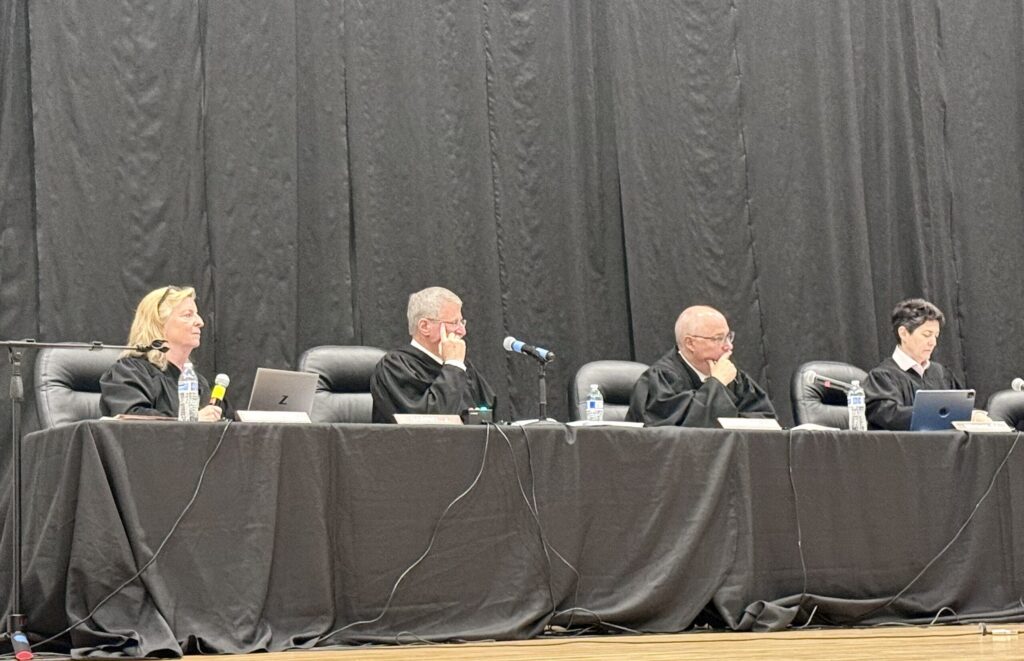
A three-judge panel for the Court of Appeals applied the Supreme Court’s decision in Tibbels and found it was likely that Crespin’s example, as the jury understood it, allowed for Hoffman to be convicted on a standard lower than beyond a reasonable doubt.
“(W)e conclude that the trial court’s description of finding the dream house, noticing the drywall crack, noticing pieces of drywall below the crack and then discovering problems with a door in the same area arguably suggested to the jury that they should start with a presumption of Hoffman’s guilt and look for evidence of reasonable doubt to acquit him as the evidence unfolded,” wrote Judge Rebecca R. Freyre in the March 10 opinion. “Such a suggestion violates the presumption of innocence and misplaces the burden of proof on the defendant.”
The case is People v. Hoffman.

Parole, appeals deadlines and restitution: Colorado justices accept cases
Michael Karlik
michael.karlik@coloradopolitics.com
Updated 1 hour ago
The Colorado Supreme Court announced on Monday that it will determine how a defendant’s parole-eligibility date should be calculated in instances where a new trial results in a sentence being imposed retroactively to the date of the original, since-overturned sentence....

Federal judge rejects DOJ bid to force Colorado to hand over voter information
Marissa Ventrelli
marissa.ventrelli@coloradopolitics.com
Updated 5 hours ago
A U.S. district court judge has dismissed a lawsuit filed by the U.S. Department of Justice against Colorado Secretary of State Jena Griswold for refusing to provide the agency with personal voter information. Last December, the DOJ’s Civil Rights Division asked...
3 Colorado judges receive unfavorable retention recommendation as one performance commission violates rules
Michael Karlik
michael.karlik@coloradopolitics.com
Updated 9 hours ago
Of the 123 Colorado judges standing for retention on the November ballot, citizen-led performance commissions found that three did not meet the required performance standards. However, in an unprecedented move, the commission charged with evaluating Supreme Court and Court of...
10th Circuit weighs Gross Reservoir expansion, judge’s ‘punishment’ of Denver Water
Michael Karlik
michael.karlik@coloradopolitics.com
Updated 1 day ago
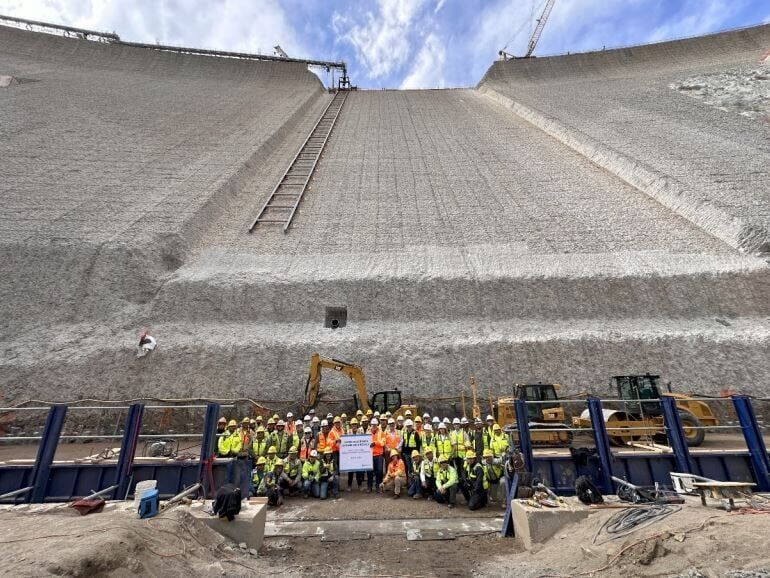
Members of the Denver-based federal appeals court considered on Friday whether they could intervene in an ongoing infrastructure project to enlarge a Boulder County dam after a trial judge deemed the underlying permit unlawful nearly two years ago. Denver Water...

10th Circuit upholds federal prohibition on juvenile handgun possession
Michael Karlik
michael.karlik@coloradopolitics.com
Updated 4 hours ago
The Denver-based federal appeals court concluded on Monday that Congress acted within its constitutional powers to make it a crime for juveniles to possess handguns in most instances. The decision from the U.S. Court of Appeals for the 10th Circuit...

Senate advances judicial nominee, Montezuma County judge agrees to discipline | COURT CRAWL
Michael Karlik
michael.karlik@coloradopolitics.com
Updated 1 day ago
Welcome to Court Crawl, Colorado Politics’ roundup of news from the third branch of government. A U.S. Senate committee advanced a judicial nominee from Colorado, plus a Montezuma County judge agreed to receive discipline for his misconduct that stops short...
Judge denies Calderon injunction case against Denver, Johnston
Deborah Grigsby
deborah.smith@denvergazette.com
Updated 2 days ago
A U.S. District Court judge has denied a preliminary injunction in the case of Jessica Calderon, the Denver city employee who won a temporary restraining order preventing the City and County of Denver from terminating her amid the 2025 citywide...

10th Circuit partially revives lawsuit over 2020 Denver protest injuries
Michael Karlik
michael.karlik@coloradopolitics.com
Updated 2 days ago
The Colorado-based federal appeals court revived a man’s claims against Denver on Friday after concluding a trial judge resolved the case in the city’s favor without analyzing two of the three instances of alleged excessive force and other constitutional violations....
Federal judges find Colorado immigration judge violated several orders
Michael Karlik
michael.karlik@coloradopolitics.com
Updated 3 days ago
Multiple federal judges in Colorado have freed people from immigration custody after determining that one immigration judge violated their directives for properly conducting bond hearings. For nearly a year, Colorado’s U.S. District Court has faced a flood of habeas corpus petitions...

Misconduct complaints from ex-Colorado judicial discipline director dismissed against federal judges
Michael Karlik
michael.karlik@coloradopolitics.com
Updated 5 days ago
The administrative body for the Denver-based federal appeals court upheld a finding last week that misconduct complaints against Colorado’s chief federal trial judge and the chief appeals judge warranted dismissal and appeared to be a “litigation tactic” by the complaining...
PREV
PREVIOUS

Uproar in San Luis Valley over district attorney's actions
The honeymoon is over in the San Luis Valley between its freshman District Attorney, the Alamosa police chief and residents – who last week begged the City Council to use taxpayers’ money in an effort to recall the man some nicknamed “Let’em Go Alonzo.” The council listened to sentiment during the three hour meeting that District […]

Attorney leaves RWR project, lawmakers weigh in
Kevin Kinnear, the attorney for Renewable Water Resources, notified Douglas County commissioners last week he is no longer attached to the project. In his March 11 letter to the commissioners, Kinnear said he accepted a full-time mediator job, which begins Monday, March 14. He wrote that he remains firmly in favor of the project, which […]