

COURT CRAWL | State Supreme Court has busy week, update on vaccination cases

Welcome to Court Crawl, Colorado Politics’ roundup of news from the third branch of government. The Colorado Supreme Court handed down several key decisions last week and held oral arguments in a pair of consequential cases, while the federal courts continue to weigh in on challenges to government vaccination mandates.
Make My Day, judicial analogies get clarity from justices
? The state Supreme Court considered the question of whether the basement of a multifamily building is a place where a resident can use lethal force in self-defense against an intruder. The answer is: yes.
? Under the state’s “Make My Day” law, which Colorado Politics described in depth last year, occupants of “dwellings” get immunity from prosecution if they are acting in self-defense against an unlawful intruder. What wasn’t clear was whether the common areas of multifamily buildings count as a dwelling. The Supreme Court clarified that they weren’t answering “yes” to every nook and cranny of every structure – but in the case of Patrick Rau, who killed a man in his Colorado Springs building’s basement, that common area was part of his dwelling.
? The justices also sent a message to the state’s trial court judges: be very careful about explaining the concept of “reasonable doubt” to a jury. The Supreme Court found one Adams County judge crossed the line when he went off script during jury selection and likened reasonable doubt to the crack in the foundation of a home.
? Colorado Politics similarly explored the use of reasonable doubt illustrations last year, and why defendants claim those can lower the burden of proof needed to convict them. For years, the Court of Appeals has told judges – particularly those in Adams County – to be careful, but a handful of trial judges has continued to ignore those warnings.
? Finally, the Supreme Court issued a 6-1 decision that found defendants may claim that they committed harassment in the name of self-defense.

Justices ponder immunity (and not the COVID kind)
? In oral arguments last week, the Supreme Court considered a logistical pickle: the General Assembly has said explicitly that pretrial detainees can sue jail operators for injuries due to negligence. But what if the jail operator had a policy of causing injuries? Can they not be held accountable because they knew what they were doing?
? The case arose after El Paso County Sheriff Bill Elder detained a man upon the request of federal immigration authorities, even though the detainee had bonded out of jail. Because Elder wasn’t negligent – he was deliberate – he argued he can’t be held liable for the prolonged detention. The justices weren’t so sure.
? That interpretation is “not only counterintuitive to me, but absurd.” -Justice Carlos A. Samour Jr.
? On a related subject, the justices attempted to untangle a web of laws intended to hold insurance companies responsible for unreasonably delaying or denying payments. The question is whether the General Assembly also wanted individual claims handlers to share in that liability. Multiple industry groups cautioned the Supreme Court against allowing employees to be personally sued for their decisions on insurance payouts, a message some justices heard clearly.
? “Who in their right mind would wanna take this job of being a claims adjuster if you’re staring down the barrel of this kind of liability on a regular basis?” -Justice William W. Hood III

? Also of note: The oral arguments returned to an online-only format, likely owing to the spread of the omicron variant.
Vaccine cases
? A federal judge tossed a lawsuit filed in Colorado seeking to stop the COVID-19 vaccination mandate for the military, especially for service members who allegedly have “natural immunity” from a prior infection.
? The U.S. Supreme Court also blocked the Biden administration’s vaccine or testing mandate for larger employers, while allowing a directive for health care worker vaccinations to take effect.
Vacancies and appointments
? The governor has appointed Magistrate William H. Moller to be a district court judge in the Fourth Judicial District of El Paso and Teller counties. He succeeds Timothy J. Schutz, who received an appointment to the Court of Appeals last year.
? There is another pending vacancy in the Fourth Judicial District with the retirement of Judge G. David Miller. Applications are due by Feb. 11.
? The Denver County Court is seeking to fill a magistrate vacancy, and applications are due by Feb. 1.
? The U.S. Senate Committee on the Judiciary postponed a vote last week on the nomination of Charlotte N. Sweeney to be a federal judge in Colorado. A vote is now scheduled for this Thursday.
A look at Title IX
? This week, the Colorado Politics cover story looks at the Title IX lawsuits that have been filed in Colorado over the past 30 years, bringing claims under the 50-year-old civil rights law that bars sex-based discrimination in federally-funded educational activities. The lawsuits have covered inequitable spending on athletics, victims of sexual harassment claiming their schools were deliberately indifferent, and accused perpetrators being railroaded through investigations. Here is an excerpt:
Attorney General Phil Weiser, a professor and dean of the University of Colorado Law School prior to his election, said he received annual training on equity and equal treatment. Now, his office defends many state institutions being sued for Title IX violations. Weiser said that equity in athletics was a “first-generation issue” for Title IX, and that schools, policymakers and courts have moved on to other sources of tension.
He acknowledged the potential for injustice that exists for both complainants and respondents.
“Due process, as it’s commonly understood by lawyers, means you’re given notice and an opportunity to be heard. So, if you manage to have some investigation where the alleged perpetrator was never talked to, and never given the opportunity to tell their side of the story, and you had a decision that adversely affected that person, that’s a concern,” he said.
“The other side is probably the one I’ve heard more commonly happen,” he continued, speaking of victims. “They’re subject to a sustained amount of harassment or even assault, and the question for the university is: Are you maintaining a safe environment where you’re preventing these assaults from happening, you’re addressing harassment?”
Miscellaneous decisions
? The state’s Court of Appeals has established that indigent people facing government-initiated contempt proceedings have the right to an attorney.
? Campaign contributions to local elected officials may, under rare circumstances, require them to recuse themselves to prevent a possible constitutional violation.
? A Jefferson County judge should have halted a virtual parental rights hearing while the father struggled to log on, the Court of Appeals found.
? Because Denver’s sheriff was not the final policymaker over payroll, the deputies’ union could not hold the city liable for the sheriff’s response to a dispute over dues.


10th Circuit weighs Gross Reservoir expansion, judge’s ‘punishment’ of Denver Water
Michael Karlik
michael.karlik@coloradopolitics.com
Updated 11 hours ago
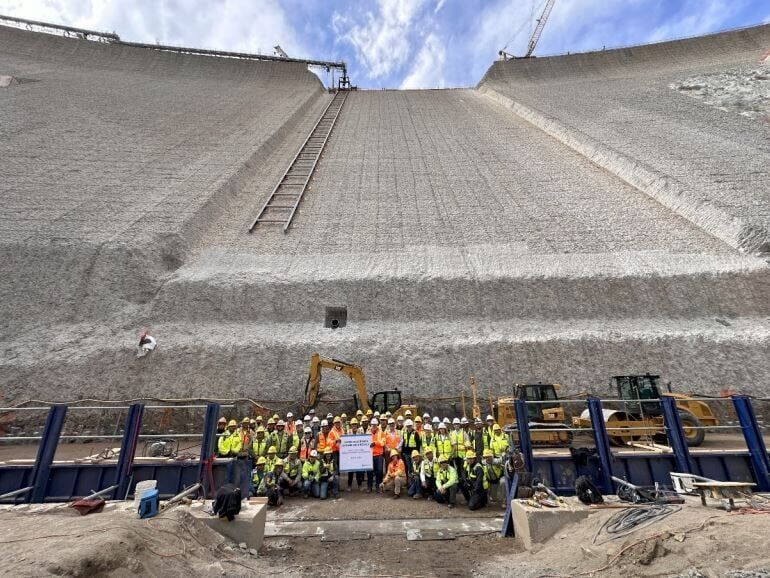
Members of the Denver-based federal appeals court considered on Friday whether they could intervene in an ongoing infrastructure project to enlarge a Boulder County dam after a trial judge deemed the underlying permit unlawful nearly two years ago. Denver Water...
10th Circuit upholds federal prohibition on juvenile handgun possession
Michael Karlik
michael.karlik@coloradopolitics.com
Updated 15 hours ago
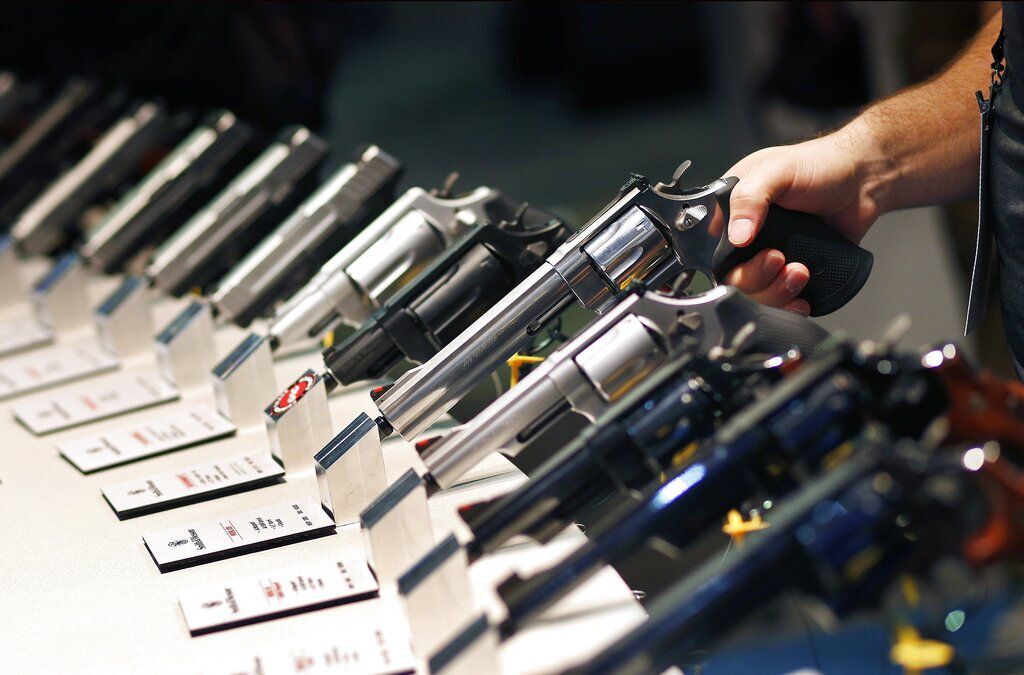
The Denver-based federal appeals court concluded on Monday that Congress acted within its constitutional powers to make it a crime for juveniles to possess handguns in most instances. The decision from the U.S. Court of Appeals for the 10th Circuit...

Senate advances judicial nominee, Montezuma County judge agrees to discipline | COURT CRAWL
Michael Karlik
michael.karlik@coloradopolitics.com
Updated 19 hours ago
Welcome to Court Crawl, Colorado Politics’ roundup of news from the third branch of government. A U.S. Senate committee advanced a judicial nominee from Colorado, plus a Montezuma County judge agreed to receive discipline for his misconduct that stops short...
Judge denies Calderon injunction case against Denver, Johnston
Deborah Grigsby
deborah.smith@denvergazette.com
Updated 22 hours ago
A U.S. District Court judge has denied a preliminary injunction in the case of Jessica Calderon, the Denver city employee who won a temporary restraining order preventing the City and County of Denver from terminating her amid the 2025 citywide...

10th Circuit partially revives lawsuit over 2020 Denver protest injuries
Michael Karlik
michael.karlik@coloradopolitics.com
Updated 2 days ago
The Colorado-based federal appeals court revived a man’s claims against Denver on Friday after concluding a trial judge resolved the case in the city’s favor without analyzing two of the three instances of alleged excessive force and other constitutional violations....
Federal judges find Colorado immigration judge violated several orders
Michael Karlik
michael.karlik@coloradopolitics.com
Updated 3 days ago
Multiple federal judges in Colorado have freed people from immigration custody after determining that one immigration judge violated their directives for properly conducting bond hearings. For nearly a year, Colorado’s U.S. District Court has faced a flood of habeas corpus petitions...

Misconduct complaints from ex-Colorado judicial discipline director dismissed against federal judges
Michael Karlik
michael.karlik@coloradopolitics.com
Updated 4 days ago
The administrative body for the Denver-based federal appeals court upheld a finding last week that misconduct complaints against Colorado’s chief federal trial judge and the chief appeals judge warranted dismissal and appeared to be a “litigation tactic” by the complaining...

First-ever Red Rocks naturalization ceremony draws most diverse group of new citizens
Michael Karlik
michael.karlik@coloradopolitics.com
Updated 2 days ago
Colorado’s federal trial court held its first-ever naturalization ceremony for nearly 300 new citizens on Thursday at Red Rocks Park and Amphitheatre. “We’re doing it to commemorate the 250th anniversary of the Declaration of Independence and the United States. Red...

Jeffco taxpayers could be on the hook for a possible child sex assault settlement
Matt Kyle
matt.kyle@denvergazette.com
Updated 4 days ago
Taxpayers may end up on the hook for a child sexual assault settlement, possibly worth up to $15 million, after Jeffco Public Schools failed to notify its insurance company in a timely manner about the case. The incident stems from...
10th Circuit finds no fair housing violation by Littleton landlord for worker’s alleged rape of tenant
Michael Karlik
michael.karlik@coloradopolitics.com
Updated 19 hours ago
The Denver-based federal appeals court concluded on Monday that Littleton’s housing authority could not be held liable for a maintenance worker’s alleged rape of a tenant, as the worker’s employment did not provide any special access to the victim. A...
PREV
PREVIOUS
Eagle County decides not to extend indoor mask order, citing improved COVID numbers
A month after its omicron surge began, Eagle County has decided not to extend its emergency indoor mask order, which expired Monday. The county’s board of health instituted the order, with a Jan. 17 expiration date, three days before Christmas, as the omicron variant surged into the area and sent positivity rates skyrocketing above 30%. […]
Colorado's justices take on five cases, ranging from insanity defense to oil and gas
Five more cases made it onto the Colorado Supreme Court’s docket last week, implicating the insanity defense, the right of the accused to question alternate suspects at trial, and disputes over oil and gas production. At least three of the seven members of the court must agree to hear a case in order for the […]