

Sen. Michael Bennet touts Outdoor Restoration Act as investment in Colorado’s forest health
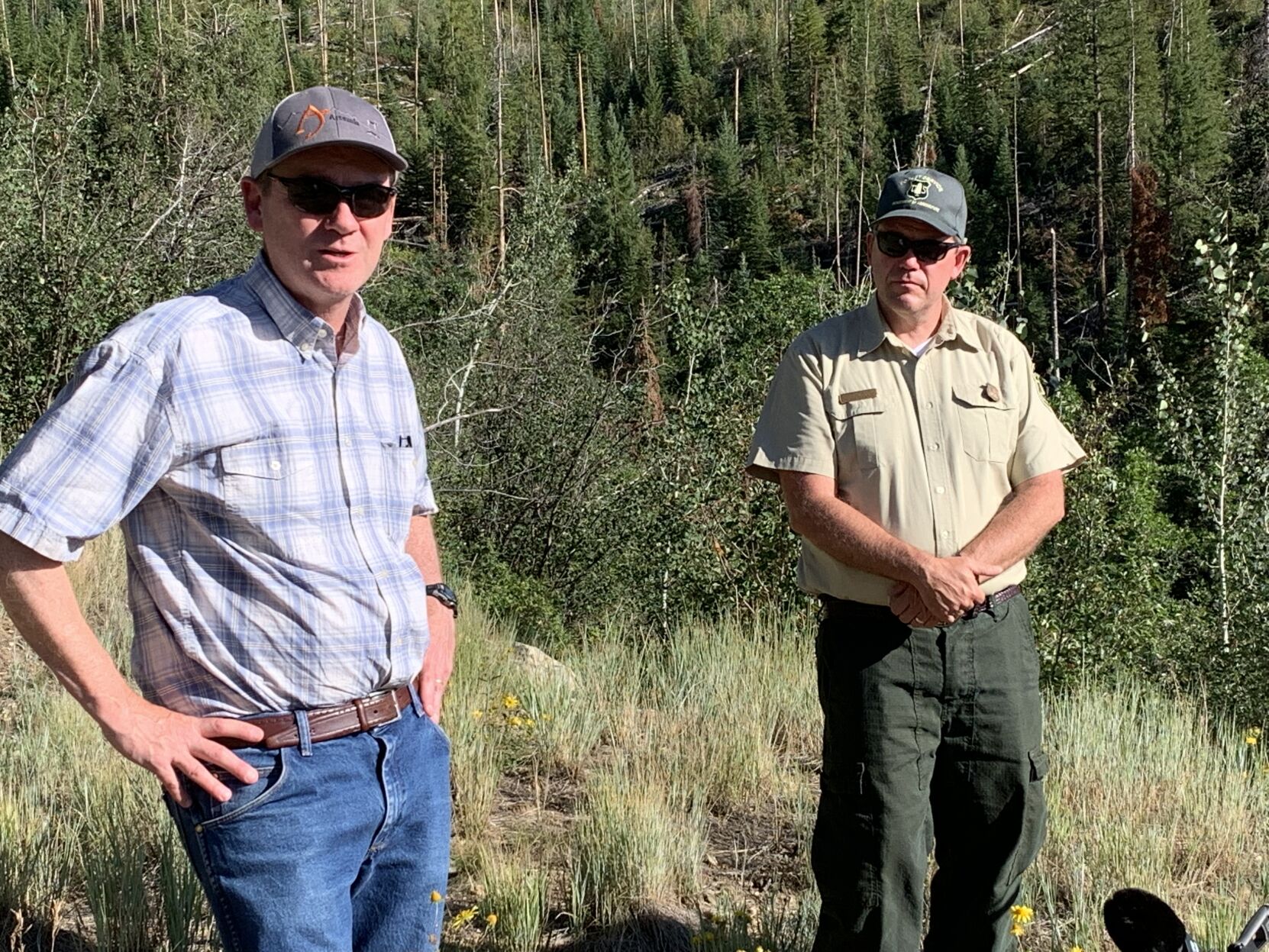
Sen. Michael Bennet, D-Colo., has wrapped up a busy Tuesday touting the money that could come Colorado’s way with the passage of his Outdoor Restoration Partnership Act legislation.
Bennet visited Clear Creek County to talk with outdoor business, ski industry and local government representatives; in Grand County he spoke with ranchers and their local government officials; and then he wrapped up the day on the side of Mount Werner in Steamboat Springs.
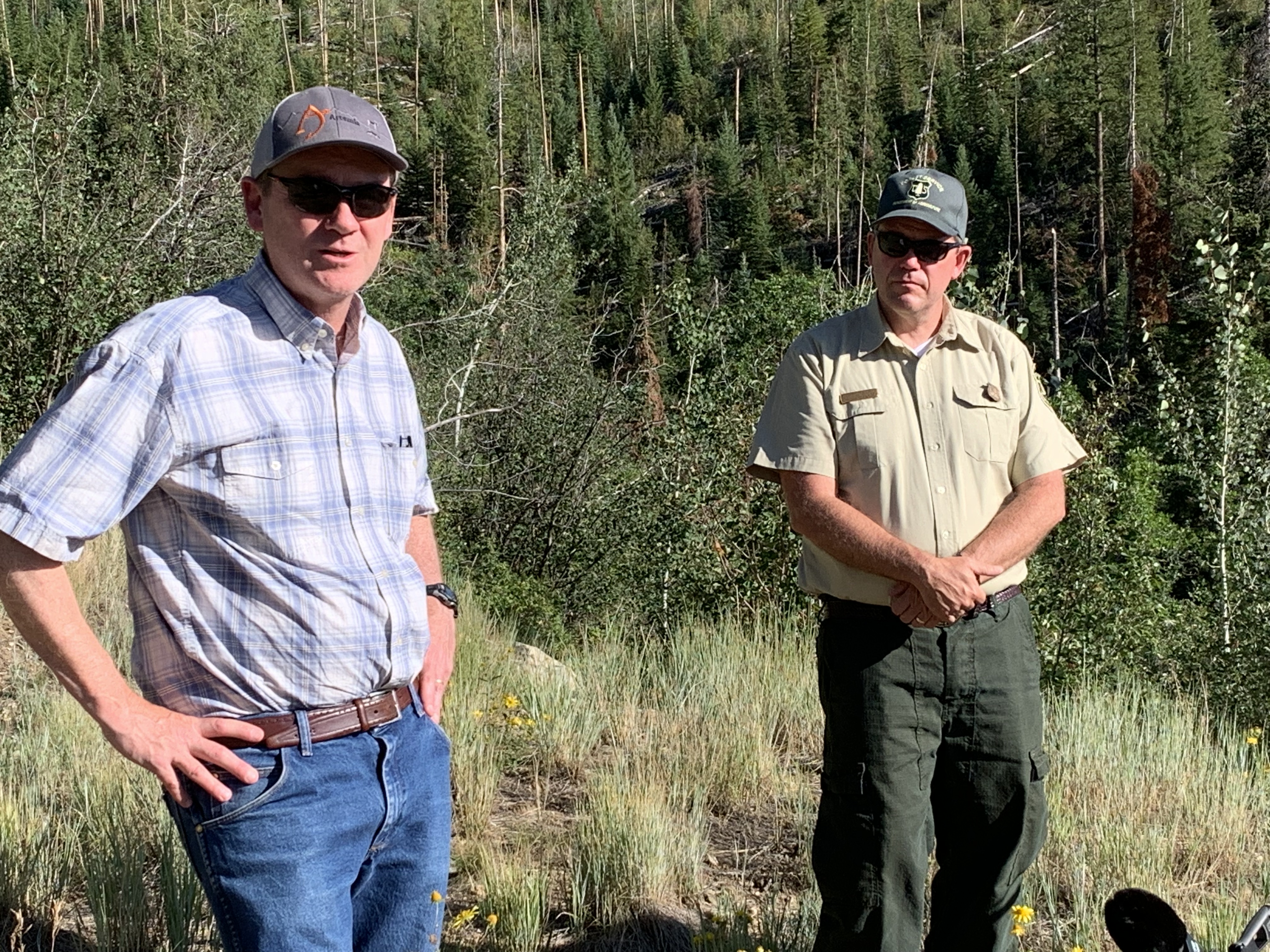
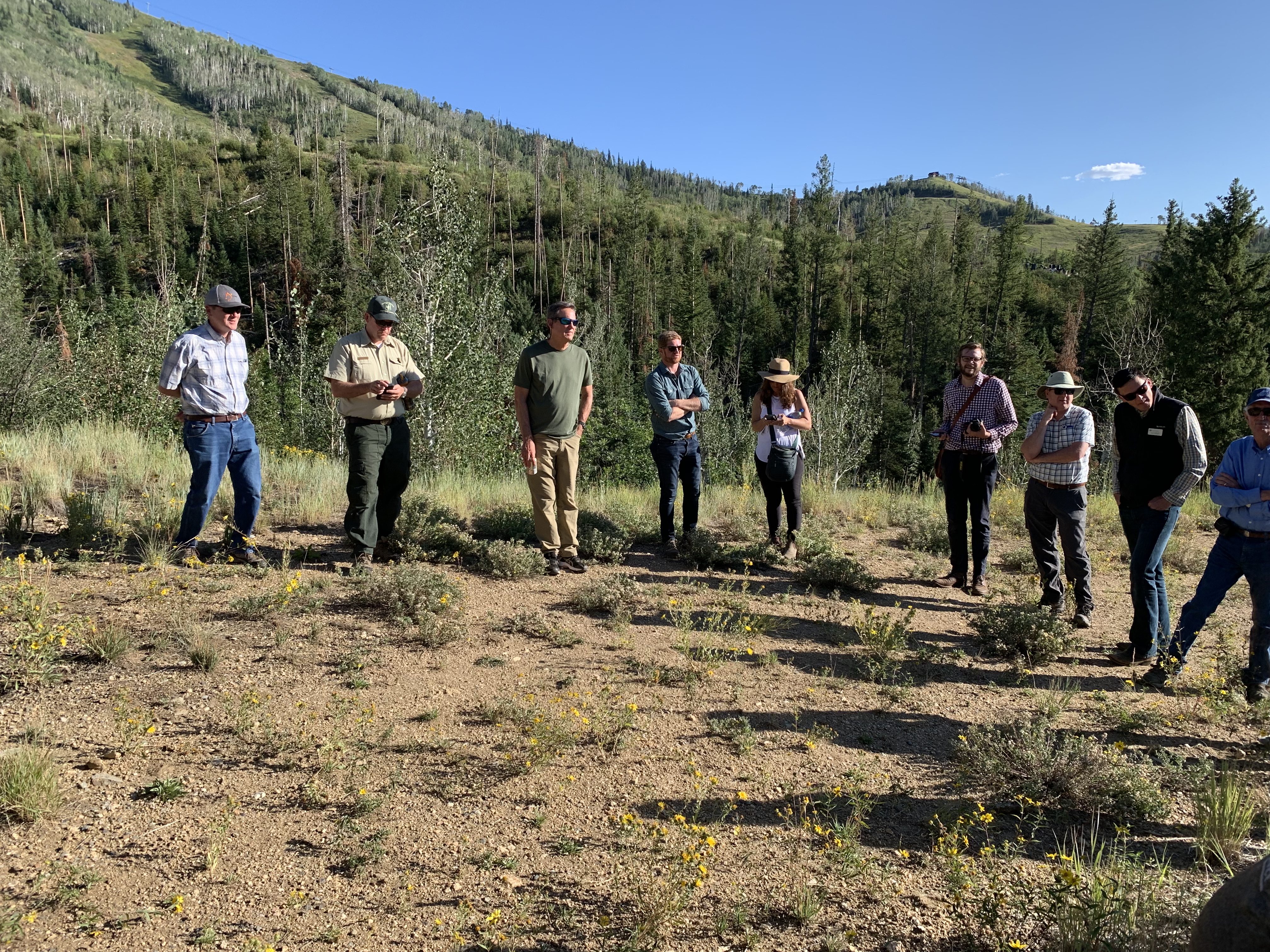
The Mount Werner stop drew U.S. Forest Service, Colorado State Forest Service, ski industry and city representatives to talk about the biggest part of the Act: $60 billion for forest health and watersheds.
“Send us the money, we’ll figure out how to spend it,” several said.
Russ Bacon, supervisor for the Medicine Bow Routt National Forest and Thunder Basin National Grasslands at the U.S. Forest Service, pointed out they’ve spent $190 million in the last five years on wildfires covering a half million acres in his area, which he said is ten times the normal budget.
“What I wouldn’t give for even ten percent of that to be proactive, rather than reactive” he told Bennet. That doesn’t take into account costs for reforestation, dealing with noxious weeds that spring up after a fire and soil stabilization. Then there’s the long term costs to local communities, Bacon said.
Communities rely on clean drinking water, including Steamboat, and the sediment from those fires impacts those water supplies. He also noted the impact to public access. In Routt County, 50% of the land is public, but the Morgan Creek fire, which started in July and will burn until the snow starts, closed off 70,000 acres of public land, in one of the most popular areas in the county. Last year, a half million acres were closed because of wildfires, and those closed areas lead to increased use in other areas, he added.
“We have to focus on the WUI but we also got to take the strategic look at the landscape as a whole,” to break up the landscape so it’s not a continuous line of available fuels even 20 miles away. “We can’t be in the 500 acres a year [treatment] mentality when Mother Nature is burning 500,000 acres a year.”
Bennet noted President Joe Biden has incorporated his bill into the budget reconciliation act, with $60 billion needed just to treat the landscape in the west. That sounds like a lot, he said, but the federal government spent $60 billion on fighting wildfires in the past five years. There’s another $20 billion on soil health coming as well, and he attributed Congress’s willingness to sign onto the bill to the fact that the smoke from California has reached the East Coast. People now realize it’s not just him complaining, it’s a national problem, he said. It’s a toxic combination – climate change and the lack of federal investment on landscapes. He’s optimistic Washington will do its job.
Of the $60 billion, $40 billion goes to the U.S. Forest Service and another federal agencies, but $20 billion will head to local communities, Bennet said.
But aside from the funding, one of the bigger issues is working across boundaries , be it federal, state, local and private. “We’ve all woken up,” said John Twitchell of the Colorado State Forest Service. “We’re on a good path but we’re strapped. I see [the bill] as our future and as sustainable.”
“Many nights I don’t sleep very well,” worrying about how to keep water flowing to the area’s 13,000 permanent residents, said Frank Alfone, the general manager of the Mt. Werner Water and Sanitation District. He noted the road the group was standing on is on the way to one of the district’s large storage tanks, and wildfires that could cut off access to that tank. Ten years ago, they started thinking about what happened if access to Fish Creek, which provides 90% of the city’s water supply, was cut off by wildfires. It took $8 million but they will have enough water if a fire cut off that access.
For a water provider, it’s about protecting infrastructure, Albon said. “We’ll take your money,” he told Bennet.
Tim Corrigan, a Routt County commissioner, told Bennet he recently hiked the local Flattop Mountain, where he usually sees only two or three people. There were 50 that day. “Please send us the money. We’ve shown we can cooperate.”
Bennet and Sen. John Hickenlooper, D-Colo., are scheduled to speak later Wednesday at the Colorado Water Congress, also in Steamboat Springs. Hickenlooper is appearing remotely as he is still in quarantine due to a positive COVID-19 test last week.
marianne.goodland@coloradopolitics.com
marianne.goodland@coloradopolitics.com

Flesh-eating cattle parasite spreads beyond Texas as new screwworm cases found | OUT WEST ROUNDUP
The Associated Press
the-associated-press@coloradopolitics.com
Updated 3 days ago
NEW MEXICO Screwworm spreads beyond Texas Three more cases of the New World screwworm have been confirmed, including one found in a dog in New Mexico, outside the main cluster in Texas, demonstrating the difficulty of stopping a resurgent pest...
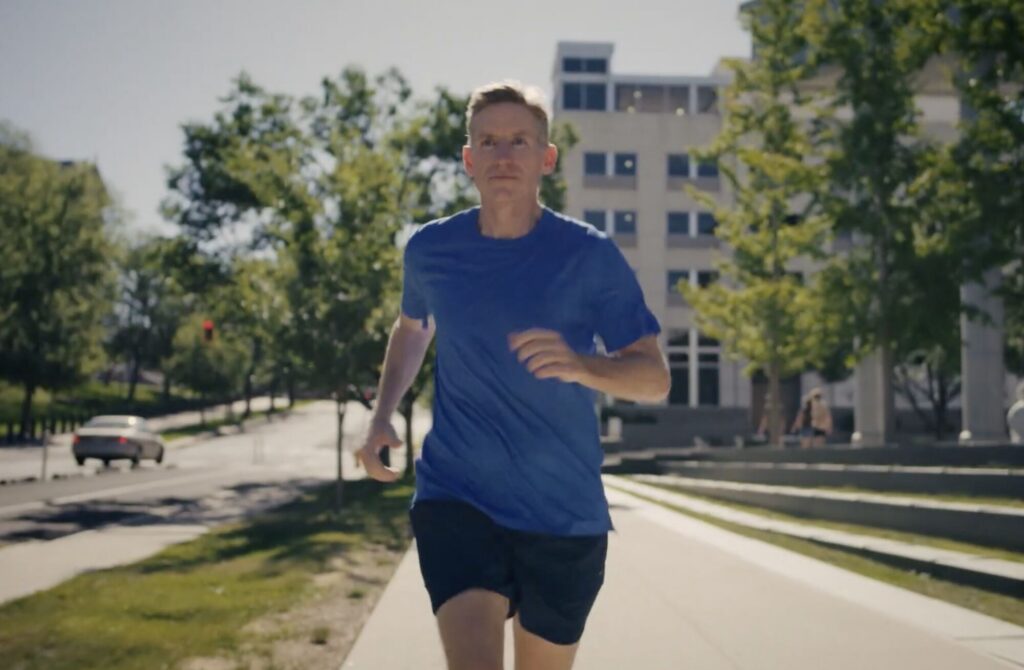
Michael Dougherty is literally running for attorney general in Colorado Democrat’s 1st TV ad
Ernest Luning
ernest.luning@coloradopolitics.com
Updated 16 hours ago
Democratic attorney general candidate Michael Dougherty, the Boulder County district attorney, runs laps around the judicial complex in Denver that houses the office he’s seeking in a TV ad released Friday that includes a subtle dig at one of his...

Group aims to add right to hunt and fish to Colorado Constitution
Marissa Ventrelli
marissa.ventrelli@coloradopolitics.com
Updated 14 hours ago
A group is seeking to make Colorado the 25th state in the nation with an established constitutional right to hunting and fishing through a proposed ballot initiative. Backed by the International Order of T. Roosevelt, a group dedicated to preserving...

Colorado Politics Calendar June 15-21
Rachael Wright, Special to Colorado Politics
rachael.wright@coloradopolitics.com
Updated 4 days ago
CoPo’s weekly political calendar helps you find political and public policy events throughout Colorado. It includes candidate and issue campaign events, public policy meetings, court hearings, state and local party conventions, assemblies, debates, rallies, parades, speaking engagements, traveling dignitary appearances,...

A primary brings out primal instincts | SONDERMANN
Eric Sondermann
eric-sondermann@coloradopolitics.com
Updated 3 days ago
There are no Stanley Cup finals or NBA title showdowns involving local teams this June. In their place, we are inundated with primary election campaign ads. Coloradans can be excused for missing the diversion and alternate programming. But life can...
Dem-GOP tension dominates 1,000-bill legislative session | A LOOK BACK
Rachael Wright, Special to Colorado Politics
rachael.wright@coloradopolitics.com
Updated 3 days ago
Forty-Five Years Ago This Week: “I can honestly say that until now, we got along well with the governor’s office,” said House Minority Leader Federico Peña, D-Denver. “We visited frequently with the staff. And you didn’t see certain legislators speaking...
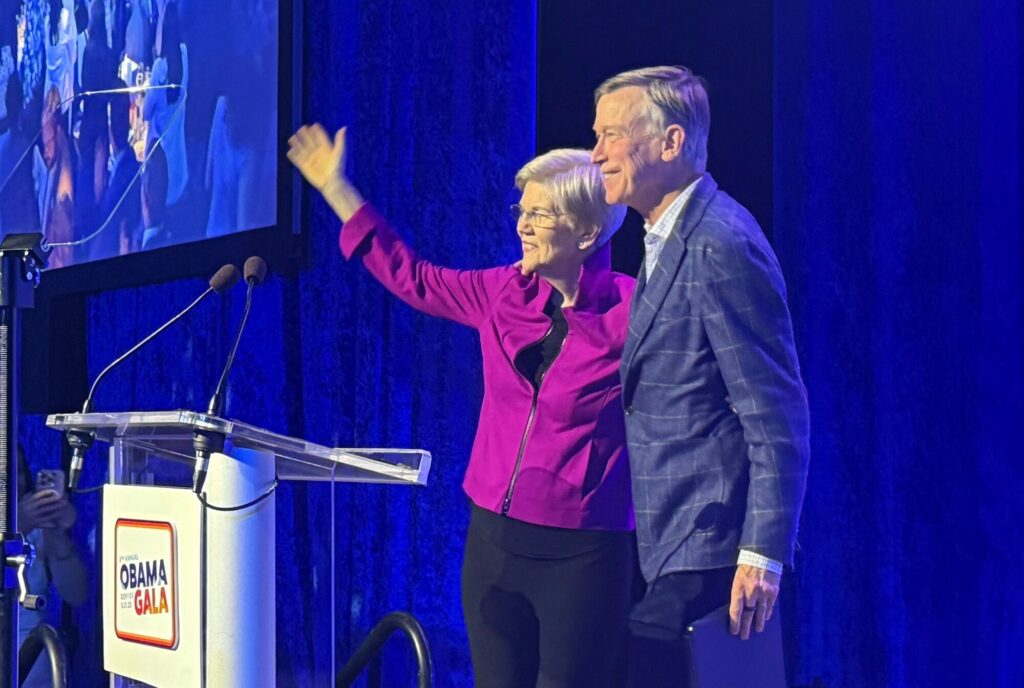
Hickenlooper lands endorsements from Elizabeth Warren, Ministerial Alliance in US Senate primary
Ernest Luning
ernest.luning@coloradopolitics.com
Updated 2 days ago
U.S. Sen. John Hickenlooper won endorsements this week from a progressive Democratic colleague and a coalition of metro-area African American faith leaders as voting began in Colorado’s primary election. U.S. Sen. Elizabeth Warren of Massachusetts and the Greater Metro Denver...
Colorado justices say insurers may access policyholders’ medical info in denied-benefits litigation
Michael Karlik
michael.karlik@coloradopolitics.com
Updated 2 days ago
The Colorado Supreme Court declined on Monday to expand its narrow prohibition on insurance companies accessing policyholders’ medical information, clarifying that a dispute over an insurer’s bad-faith decision to deny benefits is the only situation where a company is limited...

House District 14: Businesswoman, consultant square off in GOP primary
Mary Shinn
mary-shinn@coloradopolitics.com
Updated 2 days ago
Firearms training company owner Ava Flanell will face Troy Vanderhule, the chief fundraising officer for Dobson Philanthropic, in the June 30 Republican primary for state House District 14, an area in northern Colorado Springs. Flanell was appointed to the seat...
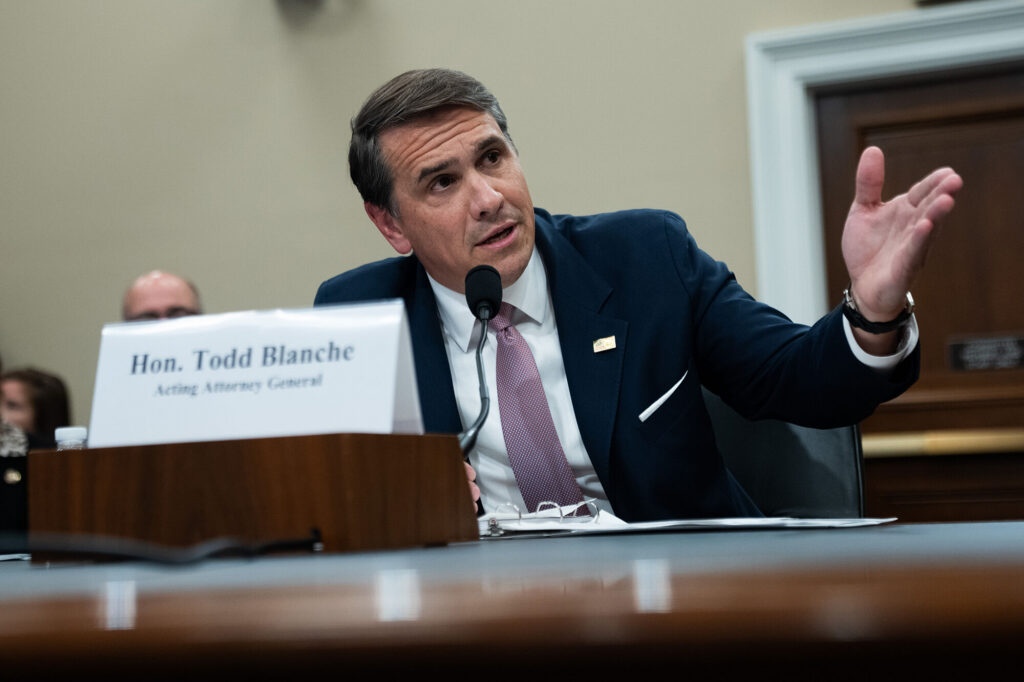
Federal judge wants Todd Blanche to swear in writing anti-weaponization fund won’t be revived
Jack Birle, Washington Examiner
jack.birle.washington.examiner@gazetteedit.wpenginepowered.com
Updated 2 days ago
A federal judge maintained a block on the Department of Justice’s $1.776 billion anti-weaponization fund Friday, despite the DOJ claiming they have abandoned the planned fund aimed at compensating allies of President Donald Trump and others who say they were politically targeted by...
PREV
PREVIOUS
Neguse helps lead House passage of Democrats' voting rights bill
U.S. Rep. Joe Neguse helped lead House Democrats Tuesday ahead of a party-line vote to pass legislation aimed at restoring provisions of the 1965 Voting Rights Act. The Lafayette Democrat, a member of the powerful House Rules Committee, managed the floor debate over a procedural rule that set up passage of the bill, dubbed the […]
The drinking water crisis on tribal lands and how the federal government is finally stepping up
It can be taken for granted that when you turn on your faucet, clean drinking water will come out at any time, day or night. That’s not true if you live on one of many Native American reservations, including in southwestern Colorado, home to the Southern Ute and Ute Mountain Ute tribes. Depending on where […]