

2020 VISION | Colorado Politics takes a look back at the year’s twists and turns

It was the year superlatives fell short.
From a jam-packed January that opened in the midst of a presidential primary and plunged head-long into only the third impeachment trial in the nation’s history, to February and its leap day, which couldn’t explain why it felt like the month that would never end, until March arrived and time slowed to a glacial crawl – from the start, 2020 was all about jerking from one extreme to the next.
“We’ve had a pandemic with the flu in 1918; we’ve had economic strife with the Great Recession and the Great Depression; we’ve had civil unrest in the late ’60s, early ’70s. But we haven’t had them all at the same time,” said Denver Police Chief Paul Pazen last summer, before the divisive election that also played out against that backdrop.
As the disorienting year nears its conclusion, with the COVID-19 pandemic reaching new heights amid an uncertain economic outlook and the defeated president resisting his loss, we thought it would be a good time to page through Colorado Politics in an attempt to establish where we’ve been – and then put the year firmly in the rear-view mirror.
JANUARY
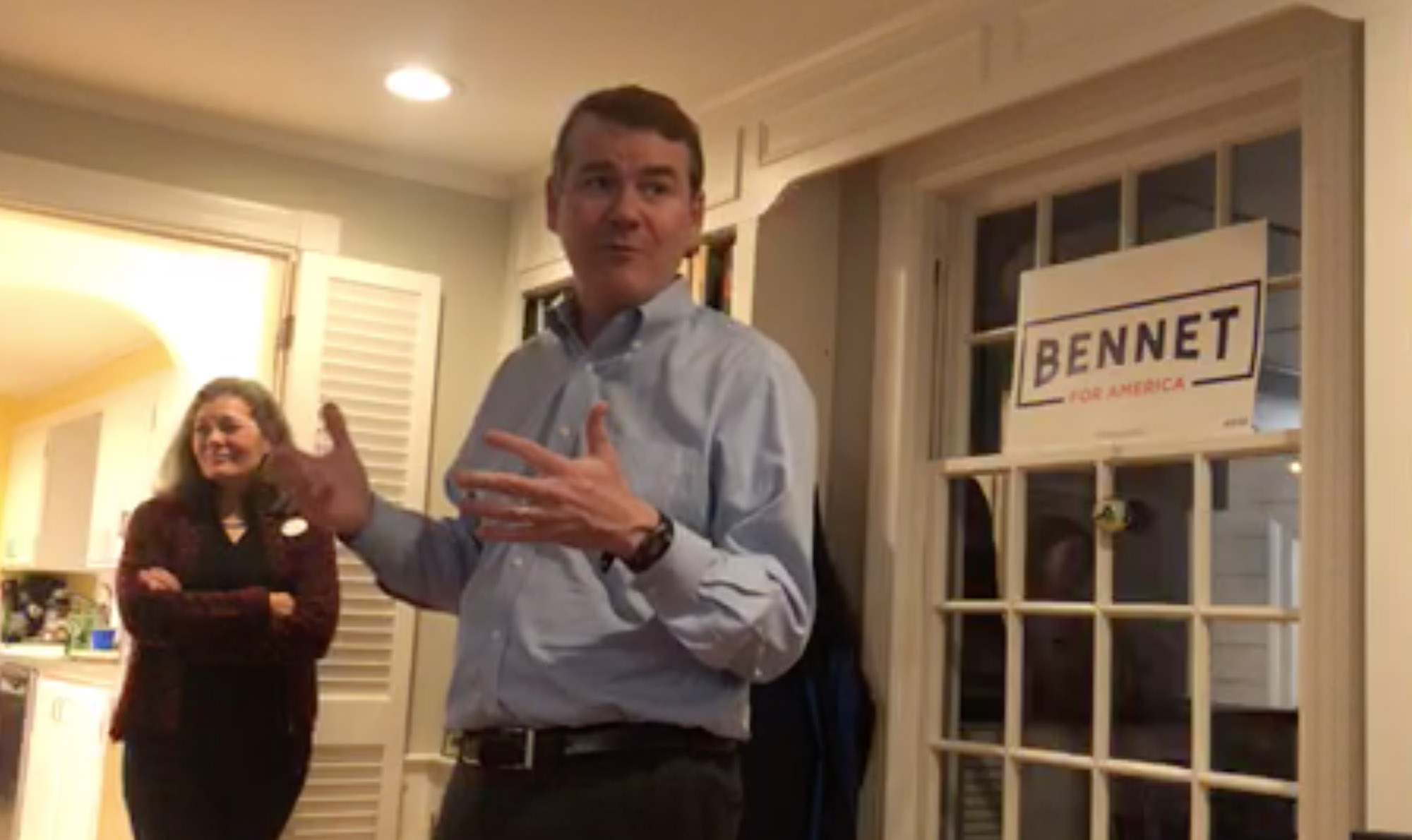
? Democratic Michael Bennet, Colorado’s senior senator, kicked off 2020 just a minute after midnight at a supporter’s home in New Hampshire, where the underdog presidential candidate said his New Year’s resolution was to finish in the top three in the state’s first-in-the-nation primary on Feb. 11.
While polls showed Bennet ranking dead last among the 15 Democrats still in the running to take on President Donald Trump, Bennet was sticking with his strategy to bypass the Iowa caucuses in hopes of bursting to contender status in the Granite State, looking to Gary Hart and John McCain for inspiration.
? Former Gov. John Hickenlooper, who jumped months earlier from the Democratic presidential primary to a crowded field seeking the nomination to run against Republican U.S. Sen. Cory Gardner, announced he would take two paths to the June primary ballot, gathering petition signatures and going through the caucus and assembly process.
Primary rival Andrew Romanoff said he was going the caucus-assembly route, and nonprofit director Lorena Garcia was planning to petition, though she was going to use volunteers to gather the signatures due March 17.
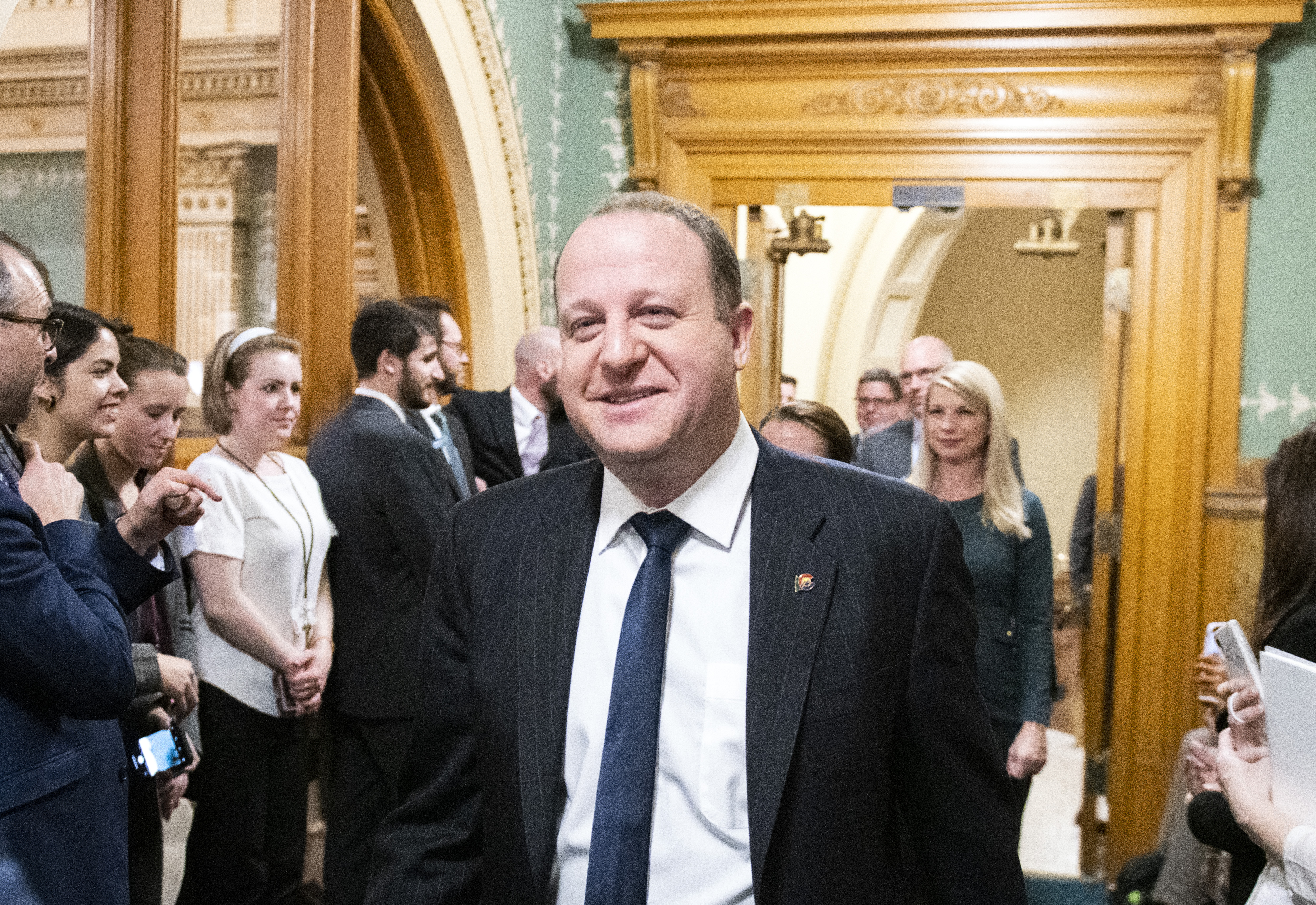
? At the state Capitol, legislative leaders and Gov. Jared Polis kicked off the state’s 72nd General Assembly with the customary series of speeches, detailing their wish lists in an attempt to set the tone for the 120-day session ahead.
House Speaker KC Becker, House Minority Leader Patrick Neville, Senate President Leroy Garcia and Senate Minority Leader Chris Holbert talked about jobs, education and transportation in the wake of a 2019 session hailed by Democrats as filled with achievements and derided by Republicans as littered with over-reach.
Polis talked about the residents left behind by the state’s surging economy, noting that too many Coloradans worried that “one hardship – a job loss, a medical emergency, a recession, a natural disaster, or some other unforeseen challenge” could send their lives into a tailspin. Polis also vowed to work on expanding access to preschool and take steps to tackle climate change, as well as address issues with school safety, rural economic development, industrial hemp, public lands, jobs for veterans and student debt relief.
? Republican Susan Beckman, who finished second to U.S. Rep. Ken Buck in a close race for state Republican Party chair nine months earlier, announced she was leaving the state House of Representatives to take a job with the Trump administration. Newcomer Richard Champion was elected by a GOP vacancy committee to take her place.
? Denver Democrat Lois Court announced she was resigning her Senate seat to fight the autoimmune disorder Guillain-Barré Syndrome. Up-and-comer state representative Chris Hansen was appointed by a Democratic vacancy committee to fill Court’s seat, and Hansen’s House seat was filled by attorney Steven Woodrow by another vacancy committee.
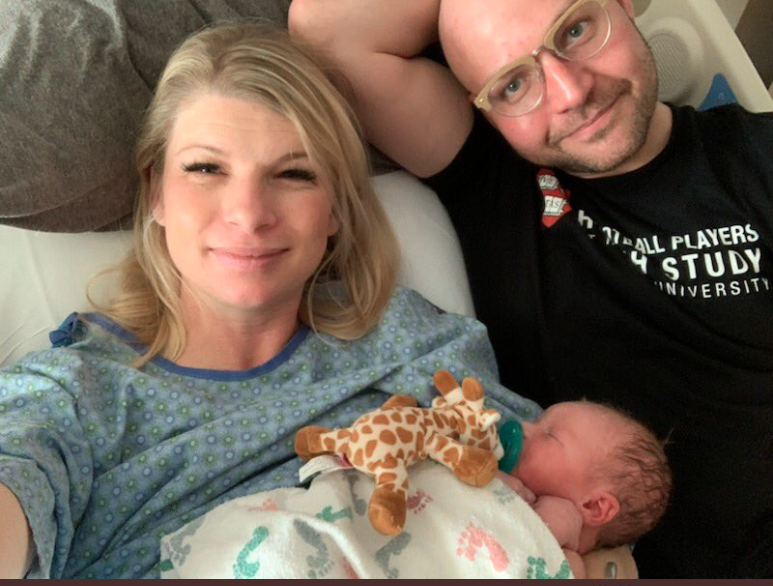
? In other news under the Gold Dome, Senate Democrat Brittany Pettersen gave birth to a baby boy, Davis James Silverii.
? Back in Washington, D.C., Democrats shifted into overdrive to impeach Trump over allegations he leaned on the Ukrainian president to produce dirt on one of his chief Democratic challengers, former Vice President Joe Biden, and then obstructed a congressional investigation into his actions.
Colorado’s U.S. Rep. Diana DeGette presided as the House of Representatives voted 228-193, nearly on party lines, to send impeachment articles to the Senate. All four Democrats in the Colorado delegation voted to impeach Trump, and all three Republicans voted against it.
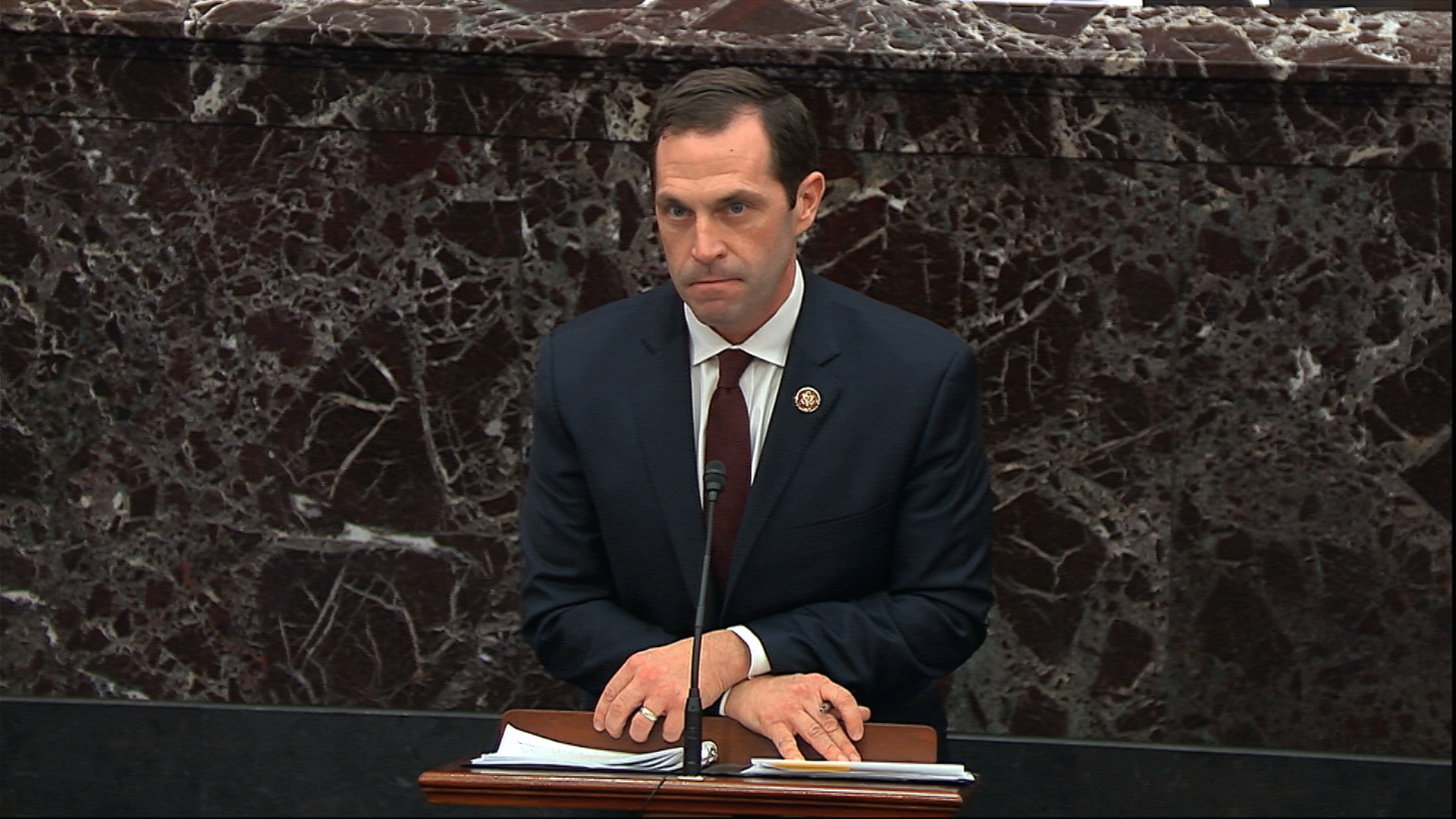
In a surprise move, House Speaker Nancy Pelosi named first-term U.S. Rep. Jason Crow, an Aurora Democrat, as one of seven House “managers,” tasked with prosecuting the articles of impeachment. “It’s my solemn responsibility to lay out the facts and give the Senate – and the American people – confidence in the process,” Crow said. “It is the duty of Congress to protect the rule-of-law and hold the President accountable. Our democracy depends on it.”
As the impeachment trial sped toward its conclusion, Gardner landed in the spotlight briefly amid speculation he might break with Trump and Senate GOP leadership by voting to call more witnesses, but he announced just days before the Senate vote that he believed senators had heard enough.
? Just days before January drew to a close, the Colorado Department of Public Health and Environment said the risk to the public from the novel coronavirus was low, even as worries grew over news about the respiratory disease. Three Coloradans who had traveled to China were being tested for the new illness but no confirmed cases had yet made it to the state. Gardner, meanwhile, announced that he had contacted the Centers for Disease Control and Prevention and the Department of State to ensure Congress was adequately briefed about the emerging disease.
FEBRUARY

? February opened with Trump’s State of the Union address, followed the next day by a Senate vote to acquit the president in the Senate trial almost entirely along party lines, with only Utah Sen. Mitt Romney joining the Democrats to convict Trump on one count.
“We are being asked to save the democracy. And we’re going to fail that test today in the United States Senate,” Bennet said before the vote. Gardner, for his part, said after the vote that he believed it was never OK to ask a foreign government to meddle in a U.S. election but didn’t think the Democrats had proven their case.
? Denver’s City Council advanced a proposal by Chris Herndon to replace the city’s pit-bull ban with a licensing process, but council members were unable to muster the super-majority required to override Mayor Michael Hancock’s first-ever veto of the measure.
? Bennet’s fellow Democratic presidential candidates were staffing up in Colorado ahead of the state’s looming March 3 Super Tuesday primary, the first time Coloradans would vote in a presidential primary in 20 years. Billionaire Michael Bloomberg was hiring operatives left and right amid an office-opening spree and Vermont Sen. Bernie Sanders was amassing an army of volunteers, building on an organization first formed four years earlier when he won Colorado’s caucuses.
? Following a poor showing near the back of the pack in New Hampshire, Bennet withdrew from the race that night, tweeting: “I love our country. I love the idea of democracy. And I want to pass it on to the next generation. I feel nothing but joy tonight as we conclude this campaign and this chapter. Tonight wasn’t our night. But New Hampshire, you may see me once again.”
Back home, candidates who remained in the hunt for the nomination stormed Colorado, with Sanders, Elizabeth Warren and Pete Buttigieg holding massive rallies, and others – including Julian Castro and Tulsi Gabbard – also making stops. Biden dropped in for a private fundraiser at the home of Ken Salazar, the Obama-era secretary of the interior.
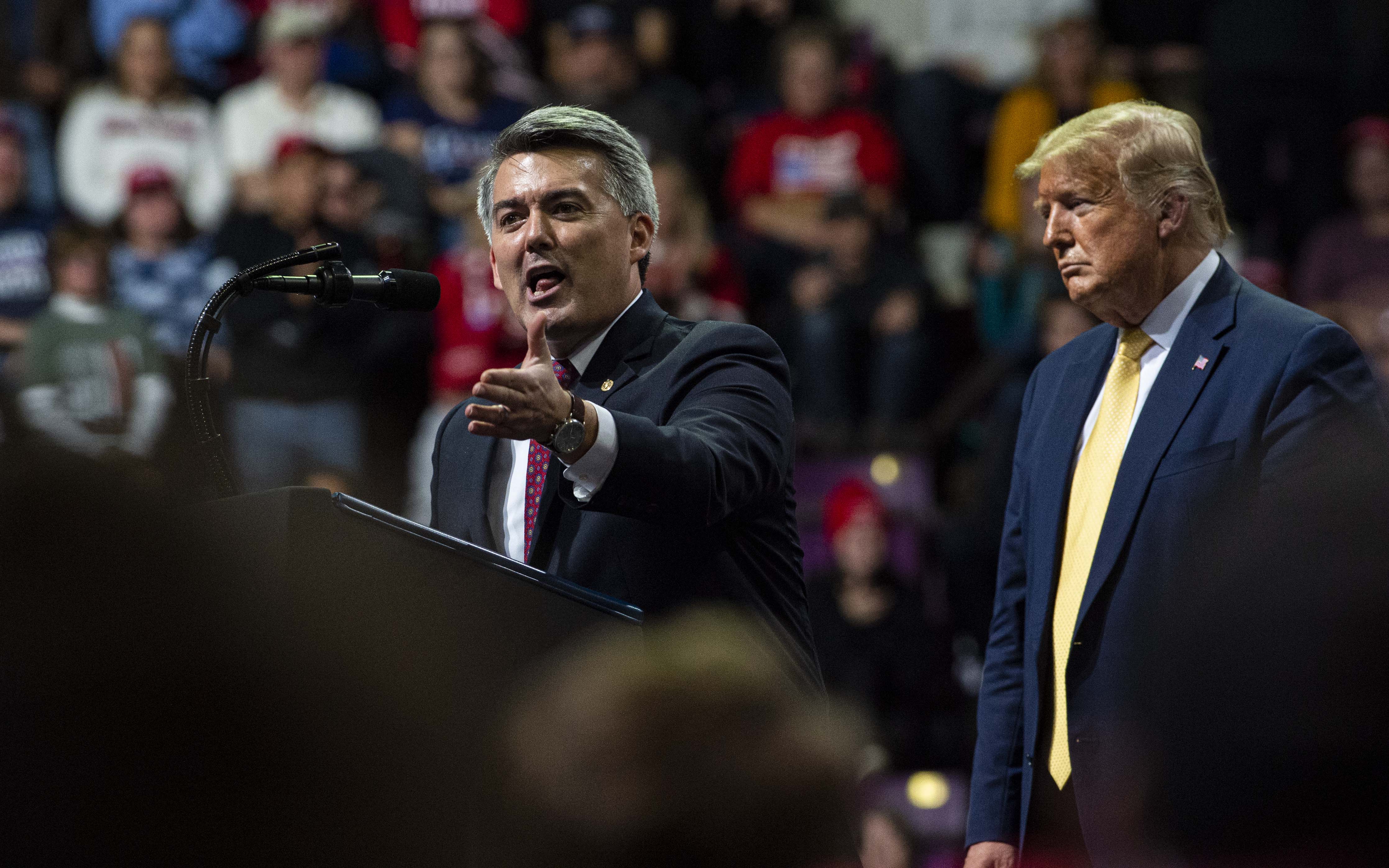
? Although he didn’t face significant opposition in Colorado’s GOP presidential primary, Trump filled an arena and the surrounding parking lot in Colorado Springs for one of his signature rallies, revving up tens of thousands of supporters.
In a line that would be repeated endlessly in ads run by Democrats, Trump embraced Gardner on stage and thanked him for his loyalty. “And you’re going to help us get Cory Gardner across that line because he’s been with us 100%,” Trump said to cheers. “There was no waver. He’s been with us. There was no waver with Cory.”
Gardner promised the crowd Republicans would carry the state in the November election. “Colorado, we are going to win,” he said. “We are going to win because we believe in Colorado! We are going to win because we believe in America!”
? Amid a flurry of legislative activity, Democrats passed a death penalty repeal for crimes committed “on or after July 1, 2020” – sidestepping the fate of three Black men from Arapahoe County already on the state’s death row – and sent it to Polis, who had indicated he was likely to sign it.
MARCH
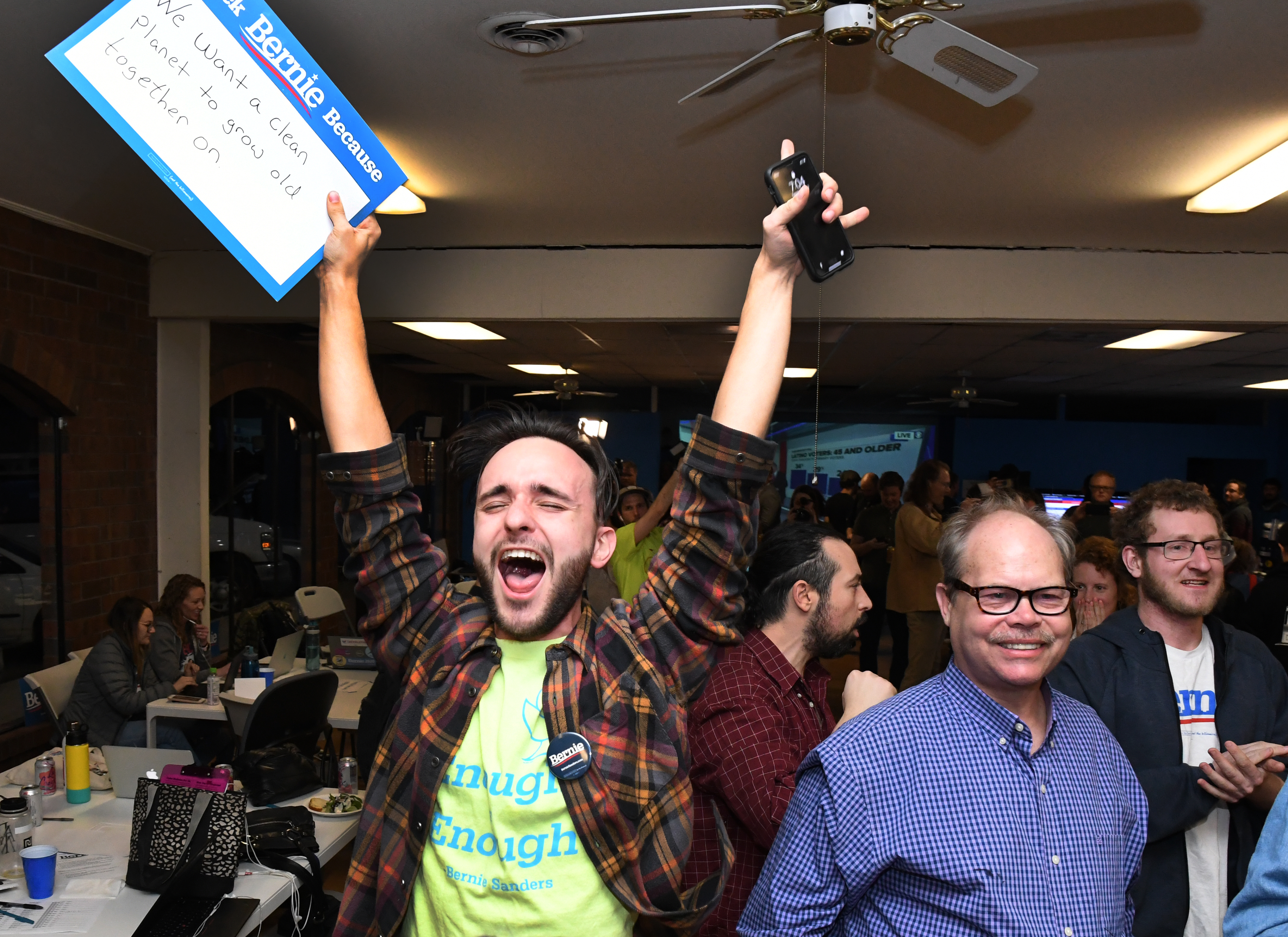
? March opened with Democrats Buttigieg and Minnesota Sen. Amy Klobuchar withdrawing from the race the day before the Super Tuesday primary. In Colorado, Trump easily won the GOP primary, and on the Democratic side Sanders carried the state, with Biden finishing second on the heels of a convincing win days earlier in the South Carolina primary.
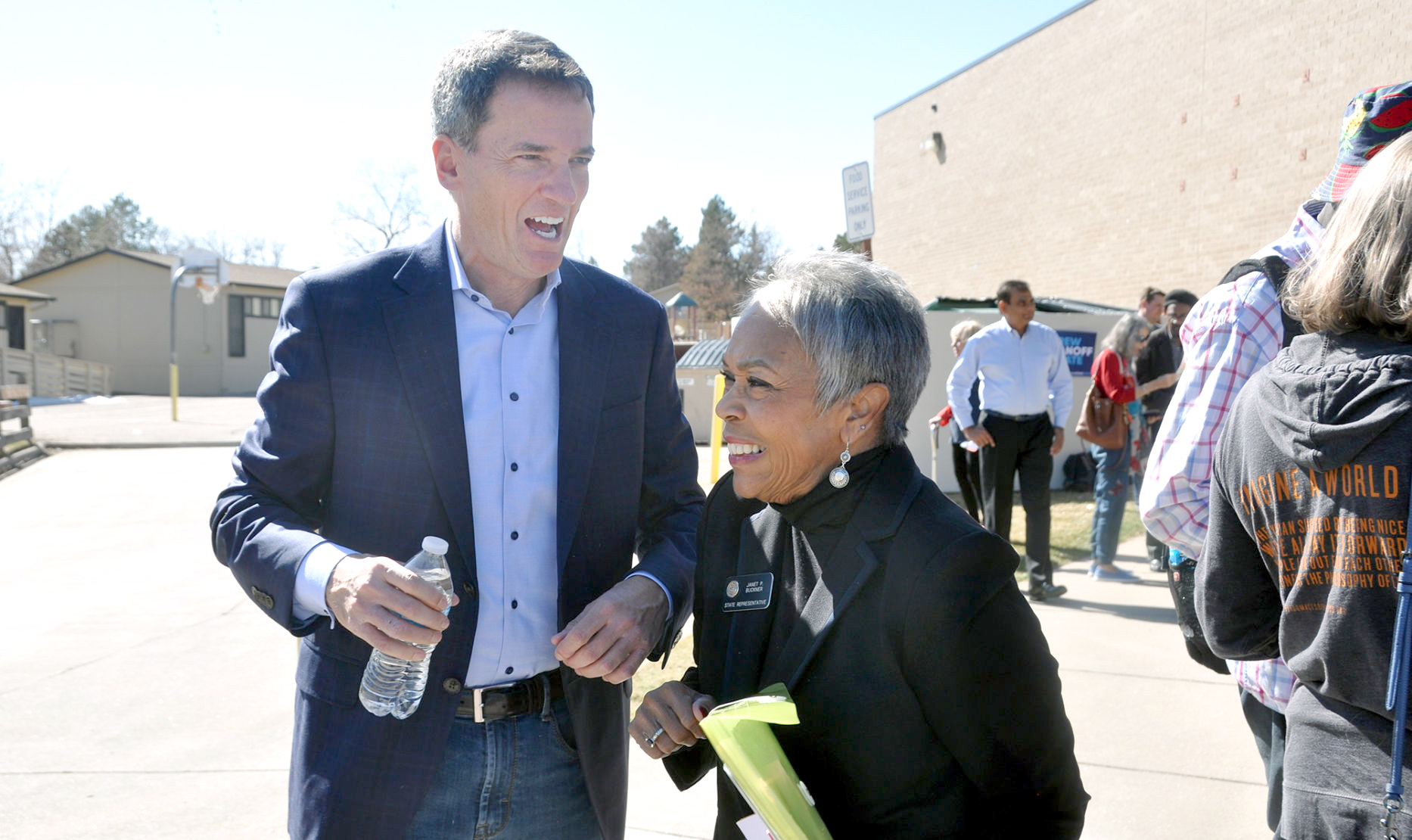
? Hand sanitizer was ubiquitous later that week at precinct caucuses across the state – held on a Saturday instead of the typical Tuesday, due to the presidential primary. A day earlier, the state announced officials had identified its first case of COVID-19, the disease caused by the new coronavirus, in a tourist in Summit County. In the Democratic Senate contest, Romanoff appeared to have captured the lion’s share of delegates, followed by Hickenlooper, with scientist Trish Zornio a distant third and former congressional candidate Stephany Rose Spaulding coming in fourth place.
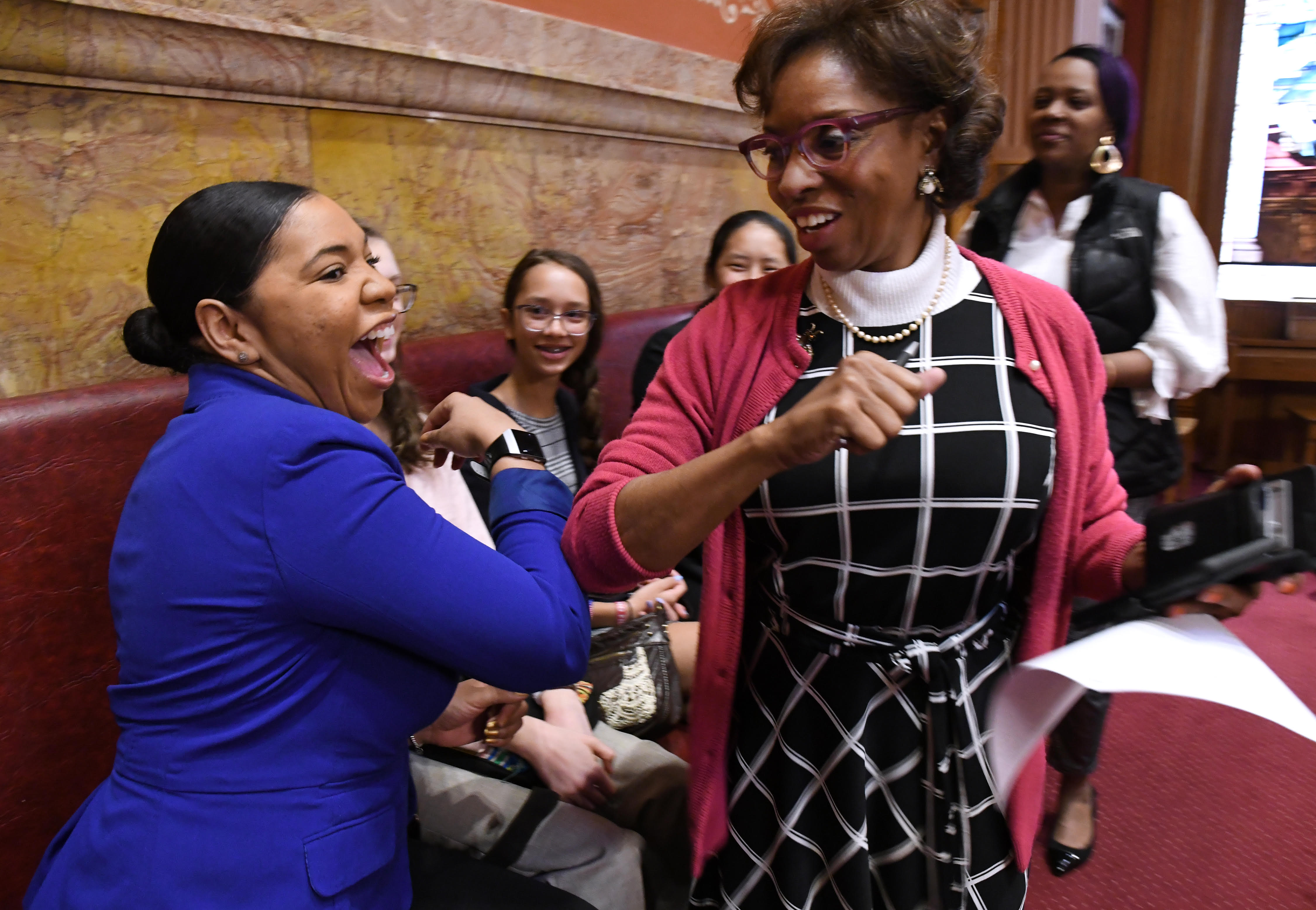
? Things happened quickly after that as the virus swept into the state and the global pandemic took hold, with Polis declaring the state was in a disaster emergency and a week later ordering preschool through 12th grade schools closed to in-person learning. In a rush of executive orders, Polis canceled elective and non-essential surgery to help preserve hospital capacity, restricted evictions and foreclosures and required Coloradans to work from home wherever possible.
By the end of the month, counties were implementing their own “stay-at-home” orders, capped by Polis issuing a statewide order set to last one month.
The same day Trump declared Colorado a major disaster area, Gunnison and Eagle counties were reportedly among the top four counties nationwide with confirmed COVID-19 cases, outside New York and Louisiana, which were experiencing massive outbreaks.
? As the state effectively shut down, lawmakers worked to adjust the rules so that county and other political party gatherings could take place despite bans on public gatherings so that candidates could advance to the June primary ballot.
? Casper Stockham, the Aurora Republican who had run unsuccessfully twice against U.S. Rep. Diana DeGette in the neighboring 1st Congressional District, said that he was jumping from a run against Crow in the 6th CD across town to face U.S. Rep. Ed Perlmutter in the 7th CD.
? Democratic Senate candidate Lorena Garcia turned in her petition signatures but cautioned that she’d had to suspend most petition-gathering weeks before the deadline, when public events ground to a halt. Candidates Michelle Ferrigno Warren and Diana Bray both came up short in their petition drive but turned in what they’d collected, followed by a lawsuit filed by Warren asking a judge to declare she “substantially complied” with the requirements, considering the unprecedented effects of the pandemic.
? Polis signed the death penalty repeal and commuted the sentences of the three Coloradans on death row to life in prison.
? A divided Colorado Supreme Court ruled that the General Assembly didn’t need to serve its constitutionally mandated 120 days consecutively, opening the way for legislators to break for a while due to the pandemic and pick up pressing business later.
APRIL

? As April opened, the state health department reported that Colorado had 3,342 cases of COVID-19 and 80 had died from the virus, less than a month after the novel coronavirus had first been detected in the state.
? The Colorado Department of Labor and Employment reported it had received close to 225,000 applications for unemployment during the three-week period beginning when the state shut down and had processed just over half of them. By comparison, only around one-third of that number of Coloradans had received unemployment benefits during all of 2018.
? In state assemblies held virtually over videoconferencing platforms, Colorado Republicans unanimously nominated Gardner to a second term, while Democrats gave Romanoff overwhelming support to join Hickenlooper on the primary ballot after the former governor had already learned he had qualified by petition.
Meanwhile, Ferrigno Warren was joined in court by Garcia, Bray and longshot candidate Erik Underwood, who all argued they should be allowed onto the Democratic Senate primary ballot despite coming up short with their petitions – or, in Underwood’s case, at the assembly. Each would go on to lose their cases, with the courts eventually ruling that legislators had changed the rules to permit assemblies to take place during the pandemic but hadn’t adjusted petition requirements.
? Biden had sewn up the Democratic nomination by early April and won endorsements from many of his former primary opponents, including Bennet, as well as prominent Colorado Democrats, including DeGette.
? About a month after imposing the “Stay at Home” order, Polis put in place “Safer at Home,” leaving schools closed through the end of the 2020 school year, advising vulnerable Coloradans to stay home and urging everyone to wear face masks. As the month drew to a close, Polis informed the General Assembly that state revenues were falling short and ordered spending reductions through the remainder of the fiscal year.
MAY

? As restaurant owners across the state bristled at requirements they only serve take-out meals – and some openly defied the restriction – Republican congressional candidate Lauren Boebert made headlines for defying public health orders to open Shooters Grill, the restaurant she owns in Rifle featuring an armed waitstaff. The first-time candidate who was challenging five-term U.S. Rep. Scott Tipton in a primary argued that it was no more dangerous than big-box stores full of customers. She limited service to patrons eating outdoors on a makeshift patio, authorities cracked down and ordered her to close.
? Days after Polis suspended the license of a Castle Rock coffee shop that ignored the shutdown order and drew national attention when it packed in customers on Mother’s Day, the governor traveled with state health department director Jill Hunsaker Ryan to the White House to meet with Trump to discuss COVID-19 supplies and the state of the pandemic in Colorado.
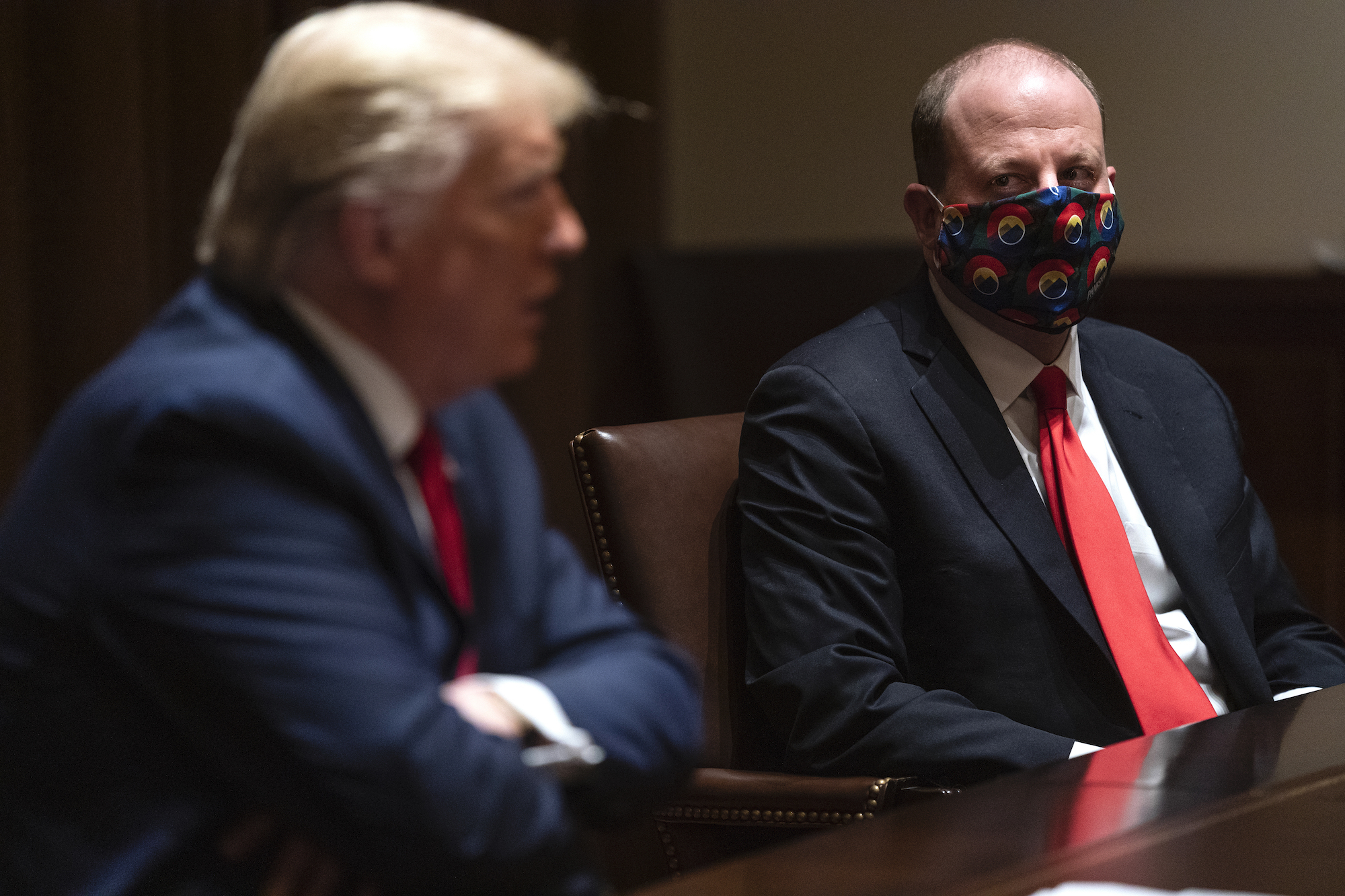
During the hourlong meeting, which was also attended by Gardner and Secretary of the Interior David Bernhardt, a Colorado native, Trump criticized states that conduct balloting by mail, something Colorado had done for years when it moved to all-mail elections under a Republican secretary of state in 2013. Mail ballots, Trump said, lead to corruption and cheating and are an attempt by Democrats to keep Republicans from winning elections.
? The national death toll from coronavirus topped 100,000 near the end of May and Colorado reported more than 1,420 dead with COVID-19, even as models showed the number of cases had been dropping after restrictions were put in place. Restaurants in Colorado began to re-open under new occupancy and safety guidelines, with many applying to use outdoor dining options.
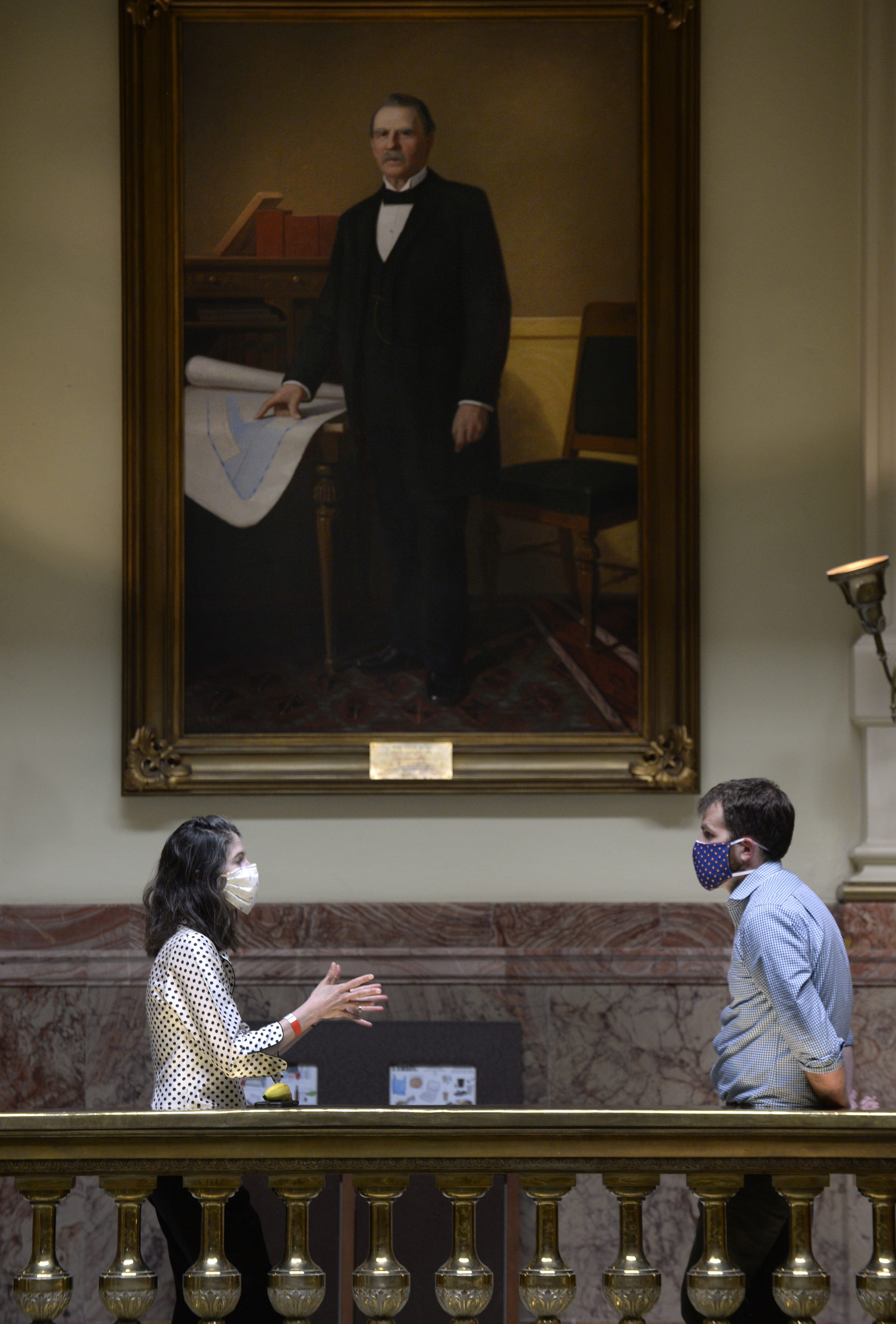
? Legislators returned to work with protective gear in place to consider $3.3 billion in general fund cuts and other legislation to deal with the pandemic, but proceedings were suspended again after a wave of protests took over the neighborhoods surrounding the Capitol.
After a cellphone video went viral showing a Minneapolis police officer kneeling on the neck of George Floyd for minutes, leading to his death, thousands of Coloradans took to the streets for days in initially peaceful protests for racial justice and police reform. Early instances of vandalism turned violent as police departments fired tear gas and rubber bullets into the crowds.
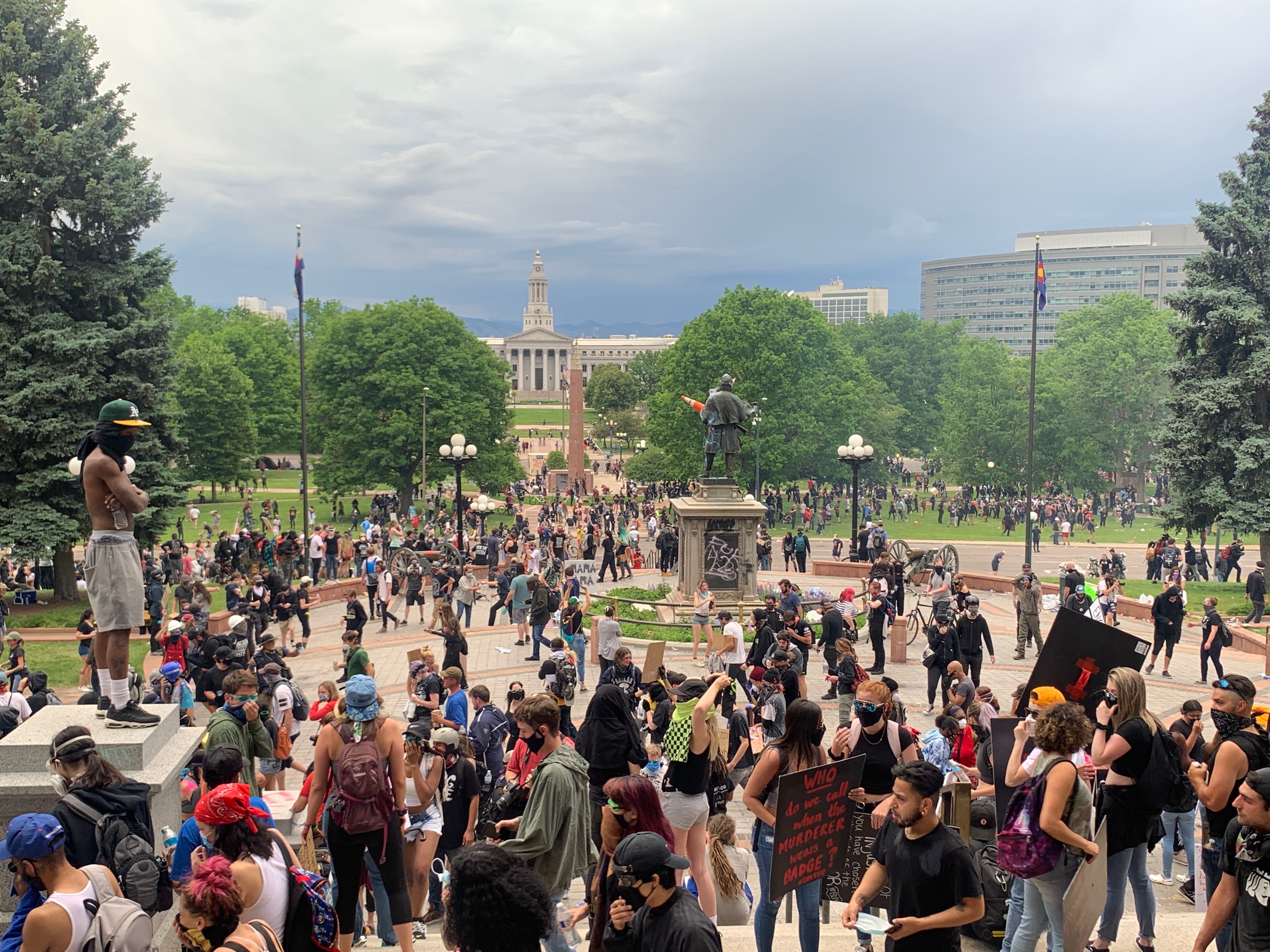
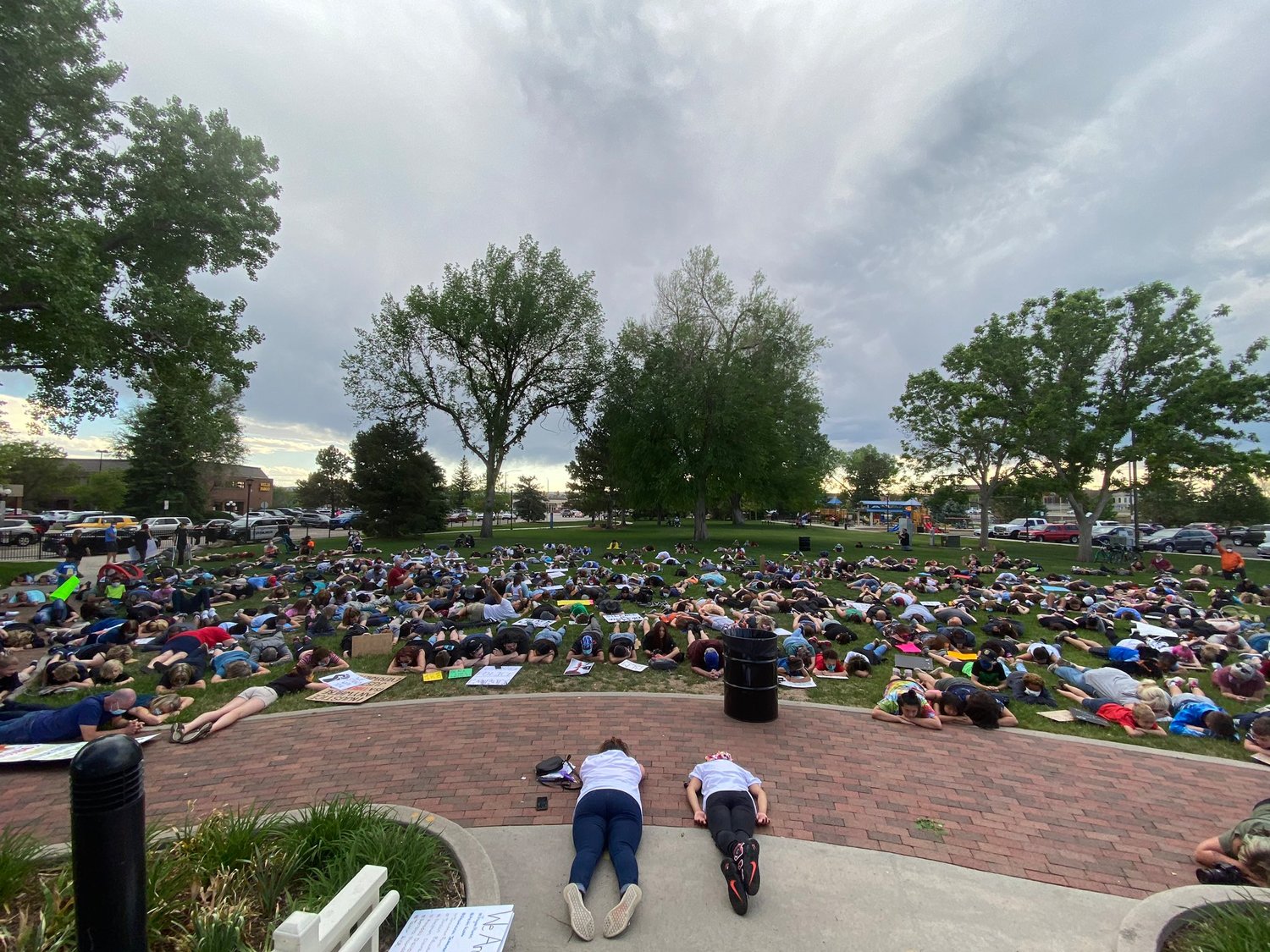
As more violence erupted surrounding the protests, Hancock announced a citywide curfew, RTD suspended service in downtown Denver and Polis called in the Colorado National Guard to provide further support to law enforcement officers already augmented by personnel from suburban forces.
JUNE
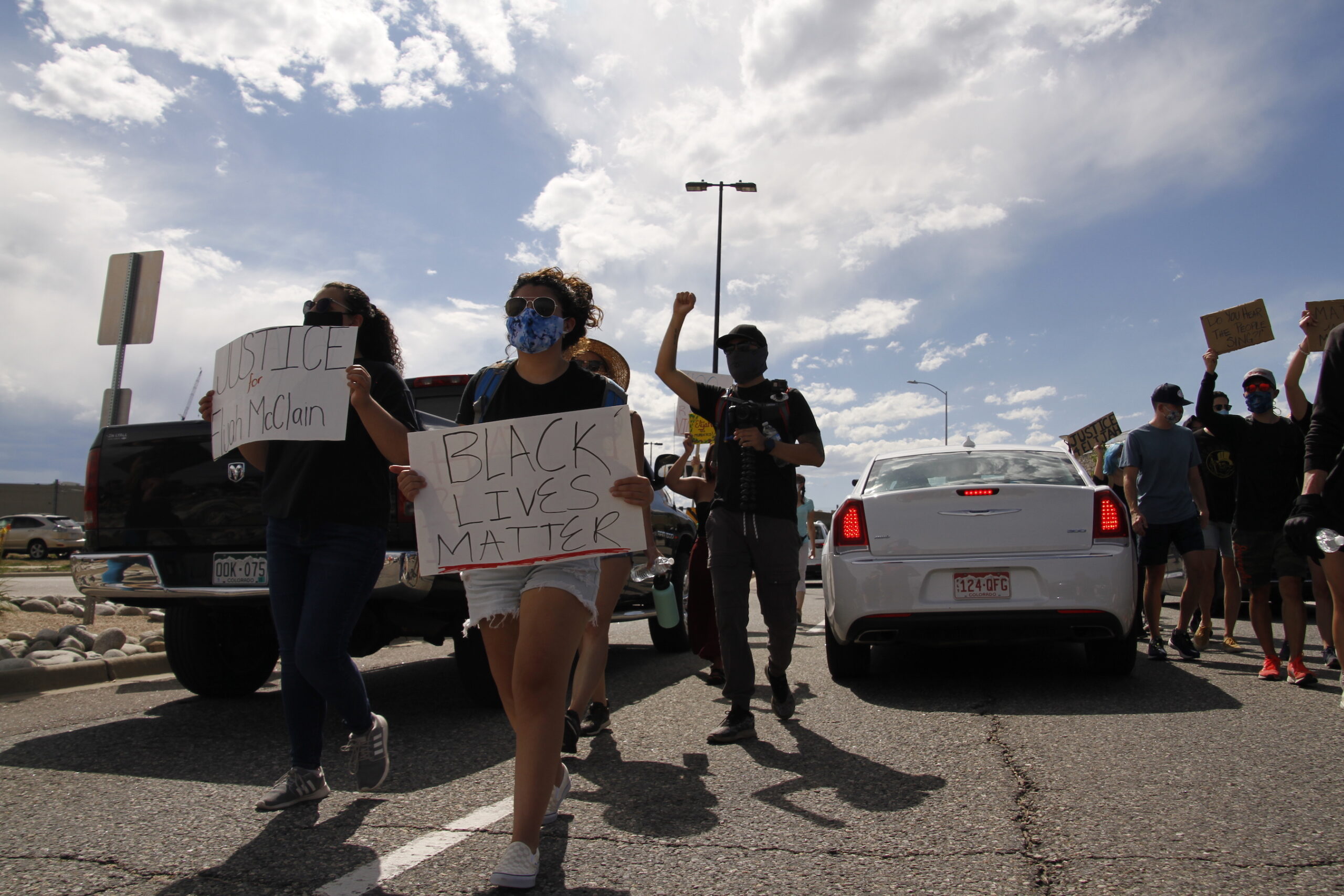
? More than a million people signed an online petition to reopen the investigation into the involvement of Aurora police in the death of Elijah McClain, an unarmed 23-year-old Black man who died 10 months earlier following an encounter with the police and paramedics. Soon, protests were occurring on a regular basis in Aurora demanding “justice for Elijah,” pointing to District Attorney Dave Young’s decision in November not to bring charges against the officers involved in McClain’s death.
? After initially snubbing a subpoena to appear remotely to testify in a long-simmering state Independent Ethics Commission investigation – leading to a contempt citation – Hickenlooper answered questions for three hours about complaints filed by a Republican group alleging violations of Amendment 41, the state’s ethics law, when he accepted private plane rides during his last year as governor. The panel ruled Hickenlooper had violated the state gift ban twice and fined him $2,750.
With the primary against Romanoff just weeks away, national Republicans almost immediately began airing ads attacking Hickenlooper over the ethics violations. Gardner also went on the air before the primary with a positive ad highlighting his work securing protective gear for Coloradans early in the pandemic and an ad lacing Hickenlooper for saying he wasn’t cut out to be a senator.
? Hickenlooper and Romanoff met for three debates as voters started returning ballots. Romanoff – and some of the debate moderators – hammered Hickenlooper over the ethics violations, but the primary frontrunner rebuffed the criticism, repeating that he had taken the trips to promote Colorado and its economy. Romanoff also contrasted his more left-leaning positions with the centrist Hickenlooper.
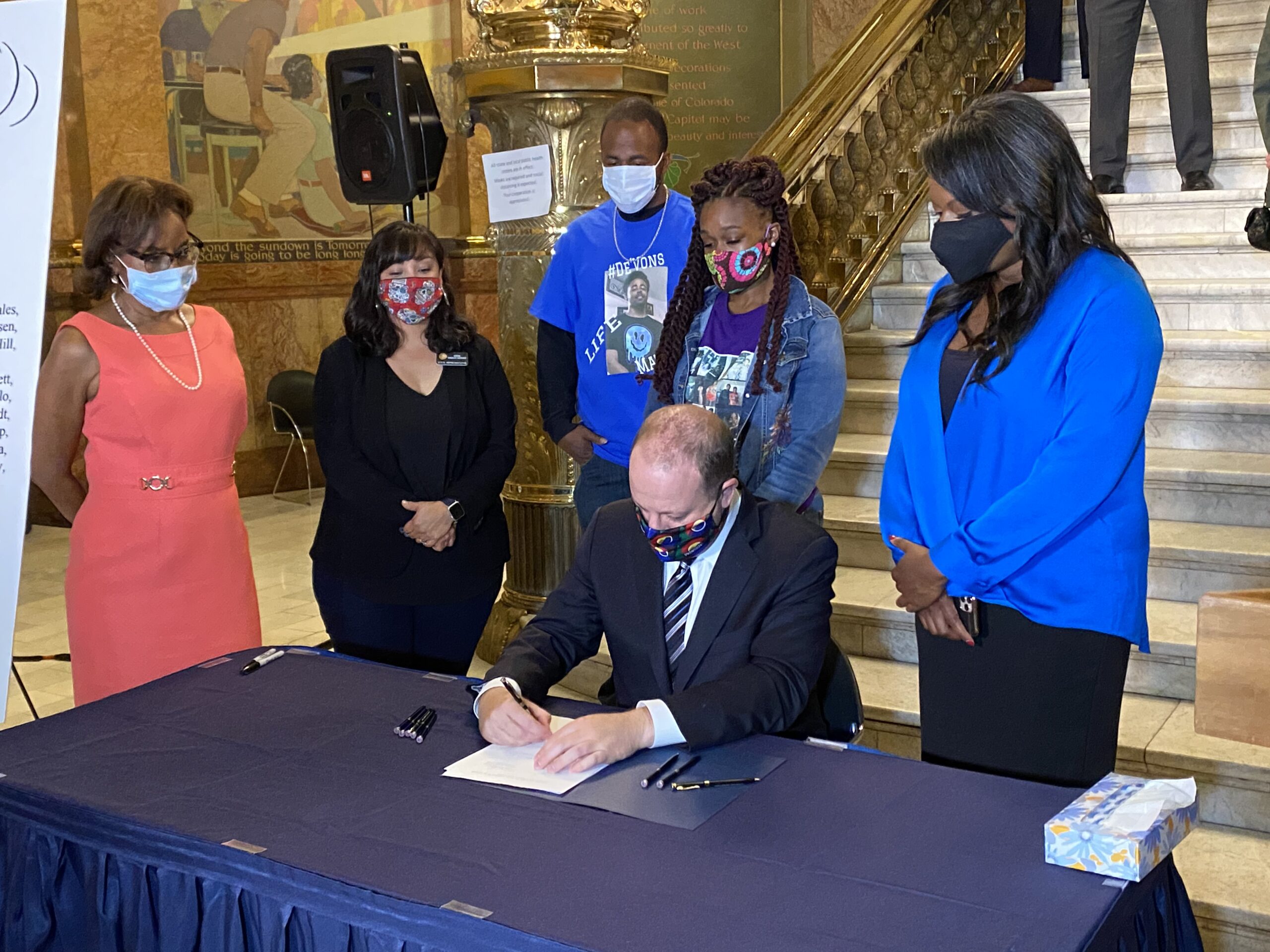
? At the Capitol, police reform legislation drew broad bipartisan support as it made its way through the General Assembly. The bill, sponsored by Garcia and Rhonda Fields in the Senate and Leslie Herod and Serena Gonzales-Gutierrez in the House, was considered the most sweeping attempt in the country to address accountability and transparency issues raised by the deaths of Floyd, McClain and others.
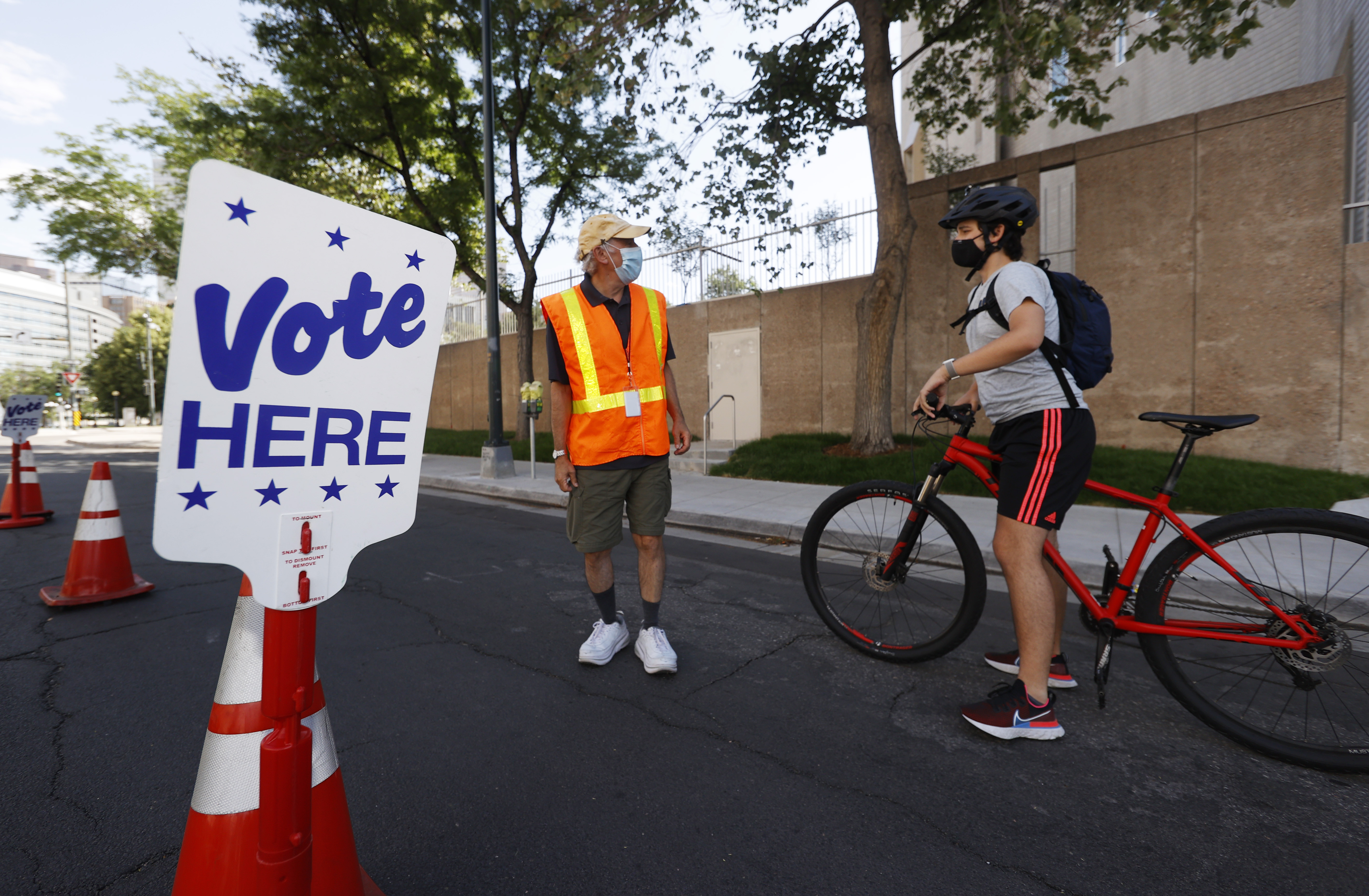
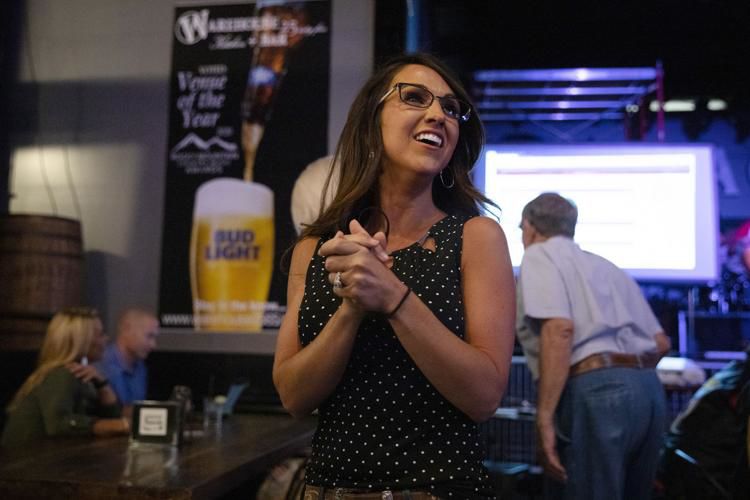
? When the votes were counted on June 30, Hickenlooper won the nomination to take on Gardner by a comfortable margin, but the real surprise on primary night was Boebert’s win over Tipton. Immediately, the gun-rights activist’s flirtation with the QAnon conspiracy theory captivated national media, though she denied she was “a follower.” Trump, who had earlier endorsed Tipton, threw his support behind Boebert, who promptly hit the road to Mount Rushmore for a meeting with Trump.
? The Colorado Supreme Court upheld the state’s ban on large capacity ammunition magazines, concluding a series of legal challenges to gun-control legislation passed in 2013 by Democratic legislators and signed by Hickenlooper.
? Polis reversed a recent decision allowing bars and nightclubs to reopen with certain modifications and declared that the gathering places could not be operated safely during a resurgence of the pandemic.
JULY
? The U.S. Supreme Court ruled unanimously that states can require presidential electors to vote for the candidate who wins the state’s popular vote in a case spurred by three of Colorado’s 2016 Hillary Clinton electors – Polly Baca, Micheal Baca and Bob Nemanich, who adopted the mantle of “Hamilton electors” in an attempt to derail Trump’s victory.
? As states grappled with anticipated difficulties of holding an election during a pandemic, officials across the country began moving to expand mail balloting, with Colorado’s system held up as a “gold standard” model. At the same time, Trump ramped up allegations that the method was ripe for widespread fraud, leading to charges the president would try to suppress the vote in the upcoming election.
“We cannot let ourselves believe this is a far-fetched scenario,” wrote former Sen. Tim Wirth in a Newsweek column, adding that Americans also needed to be ready if Trump tried to overturn the results of the election using emergency powers.
? Polis created a 15-member Geographic Naming Advisory Board tasked with “ensuring that we have inclusivity and transparency around the naming process.” As envisioned, the board would consider renaming places named after historic figures who have lost their luster, like frontiersman Kit Carson, who led massacres of Native Americans across the Southwest.
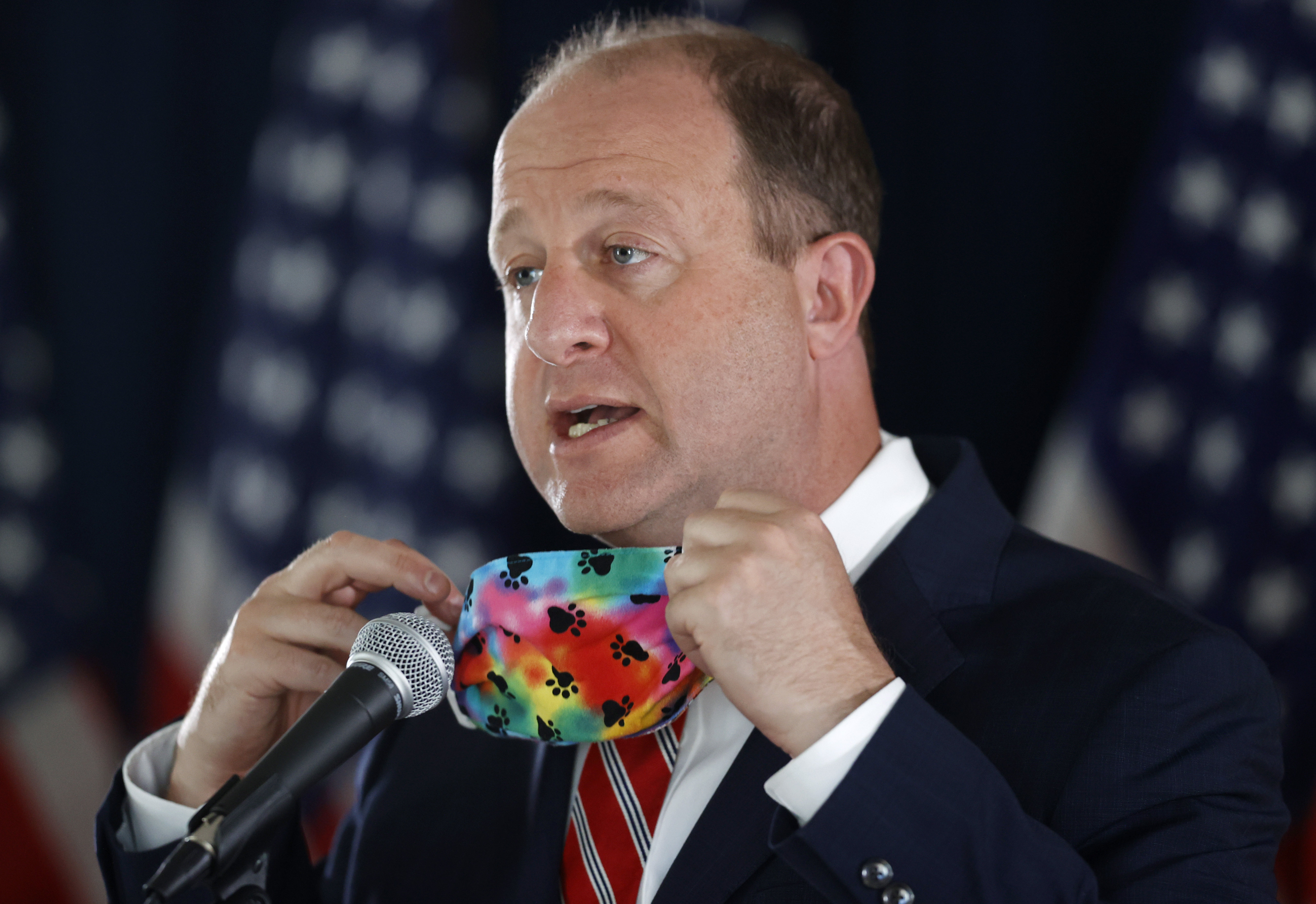
? In the face of an “alarming” uptick in COVID-19 cases, Polis issued a statewide mask mandate, covering all residents older than 10. Colorado, he said, has a choice – either wear masks and socially distance or lose more lives. Douglas County announced it was leaving the Tri-County Health Department over a local mask order, prompting Polis to remark, “Wearing a mask is not a political statement. The virus doesn’t care what political party you’re in, what belief system you have.”
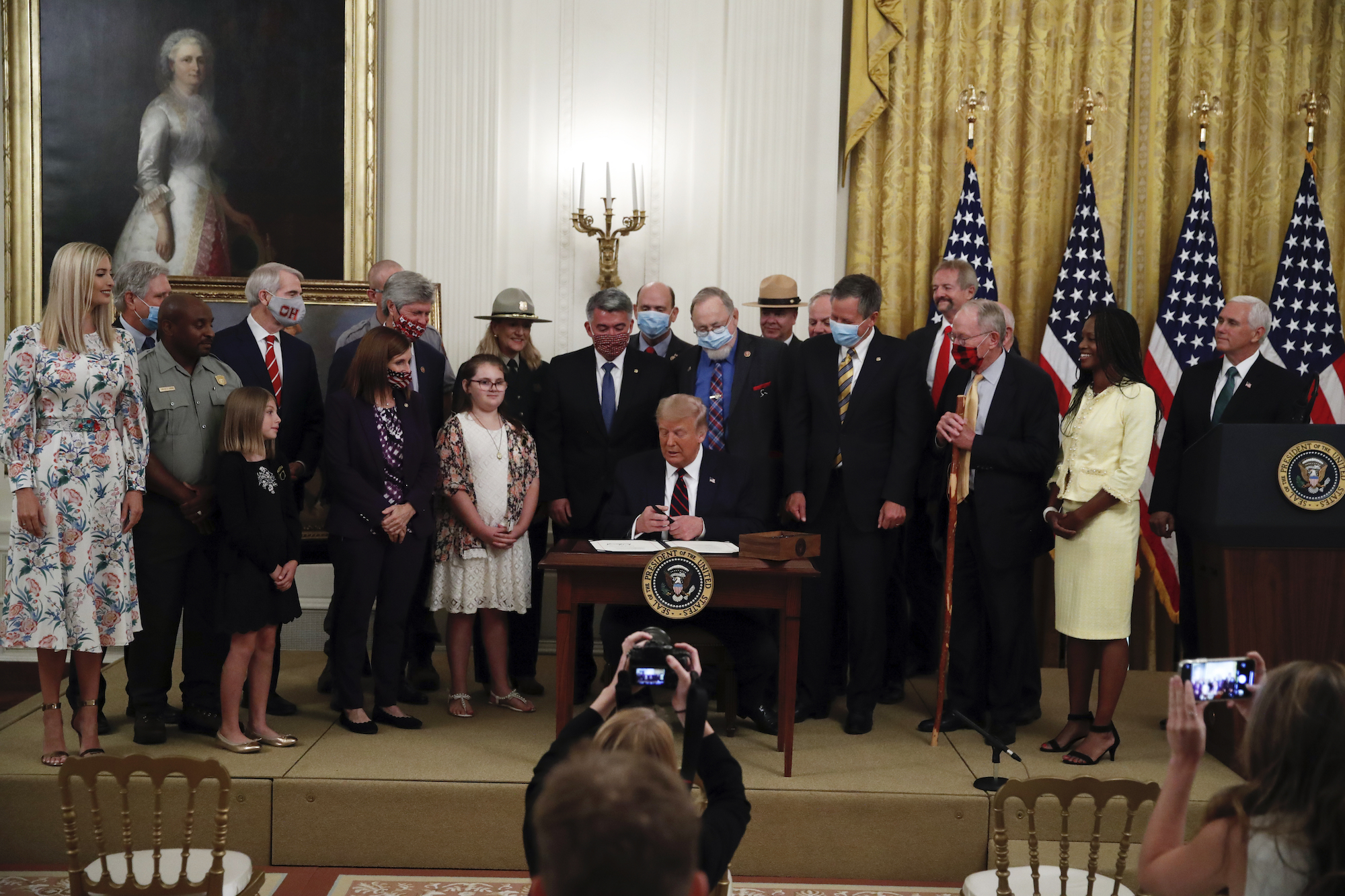
? Congress passed the Great American Outdoors Act, landmark conservation legislation co-sponsored by Gardner, to fund the Land and Water Conservation Fund and address a deferred maintenance backlog in the national parks and other public lands. Environmental groups usually opposed to Gardner applauded his work steering the bill, which would soon be signed by Trump.
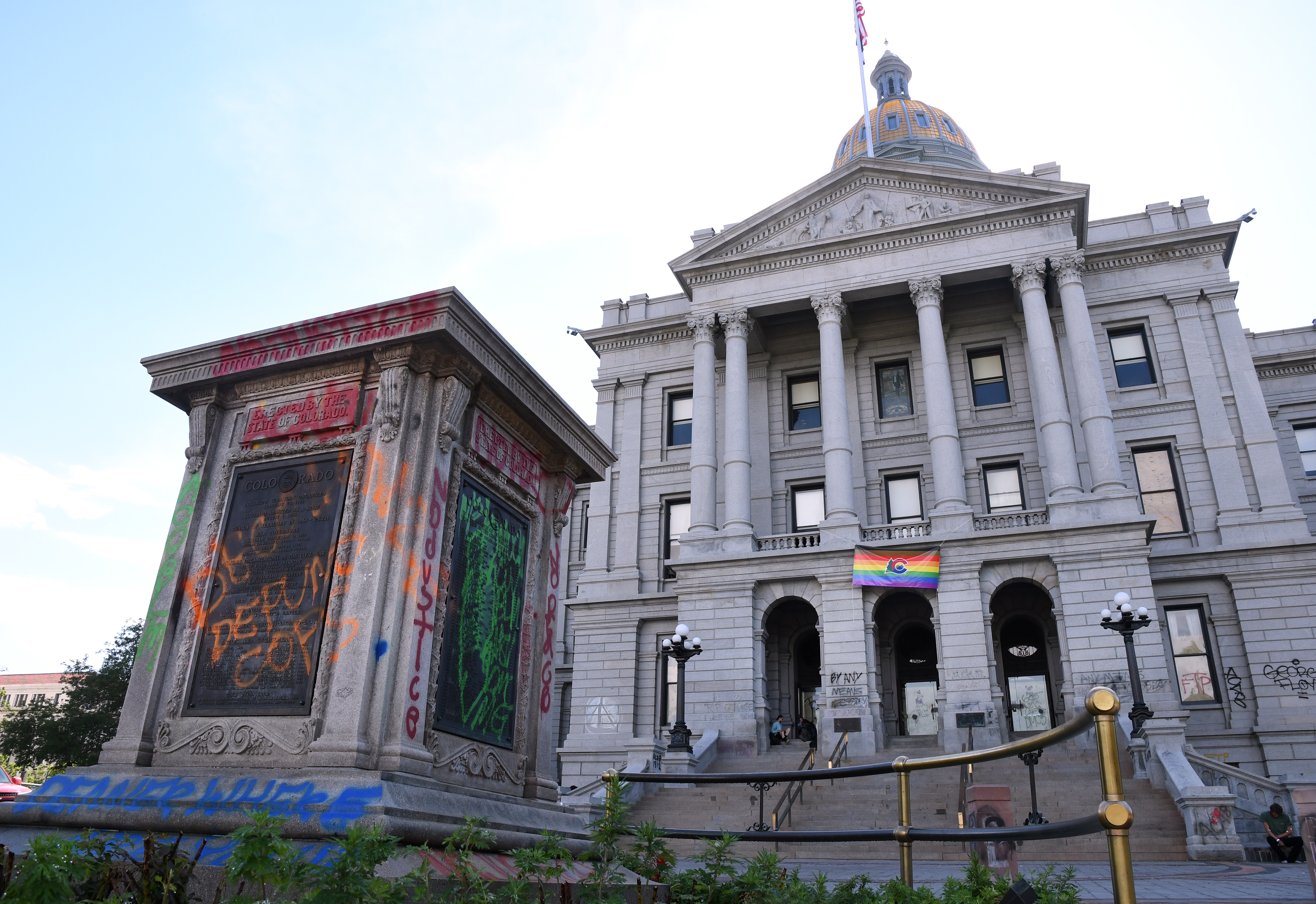
? Estimates to clean up the state Capitol in the wake of the summer’s protests – removing graffiti, replacing broken windows and repairing security doors – topped $1 million. Restoration experts warned that well-meaning but misguided attempts by Republican officials and candidates, including Boebert and a number of GOP legislators, to scrub the building’s porous granite with household cleansers were only increasing the cost.
? The Gardner and Hickenlooper campaigns were arguing over debates, with the incumbent proposing a slew of the meet-ups starting in early September and his challenger instead suggesting they wait until October, when voters would nearly have ballots in hand.
AUGUST
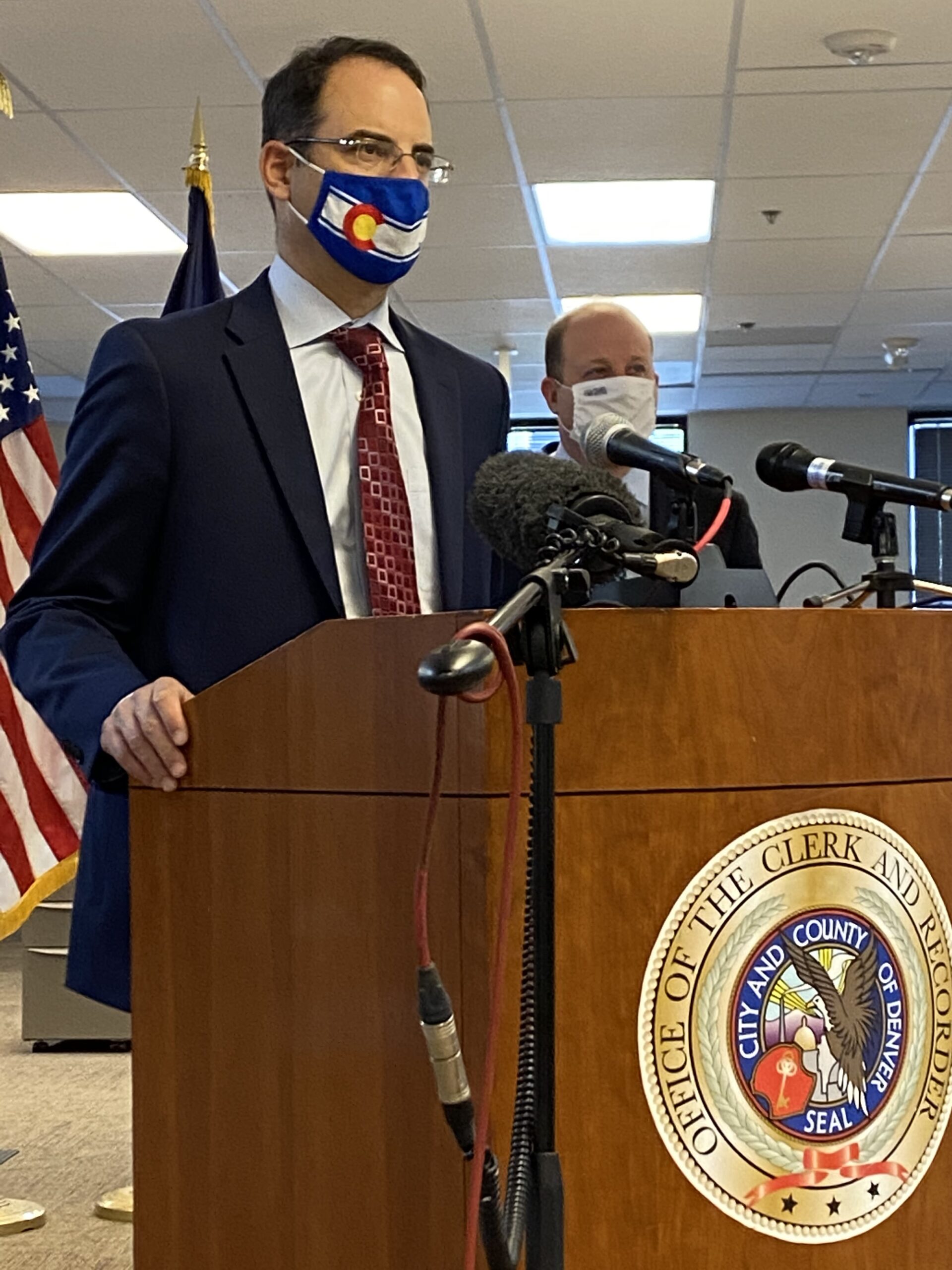
? Colorado joined a federal lawsuit claiming that cuts to the Postal Service instituted by Postmaster General Louis De Joy threatened to undermine the national election. Polis, Attorney General Phil Weiser and Secretary of State Jena Griswold said recent actions by De Joy, a major donor to Trump and the Republican Party, could lead to delays delivering prescription medicine and ballots.
? Rapper and longtime Trump ally Kanye West qualified for Colorado’s presidential ballot with the help of Republican operatives and a former GOP candidate and Republican Party official, fueling speculation the stunt campaign was an attempt to divert votes from Biden to throw the election to Trump. Rachel George, a former spokeswoman for Gardner and then-State Treasurer Walker Stapleton, enticed potential West electors to sign on in emails saying she had “the most random favor to ask of you ever,” adding, “I realize this is hilarious.”
? The campaigns were revving up on both sides of a statewide measure to ban abortions after 22 weeks of gestation. “Let’s be absolutely clear. This is another attempt to ban abortion in our state,” said Justine Sandoval of Cobalt, which used to be known as NARAL Pro-choice Colorado, but the backers of Proposition 115, dubbed “Due Date Too Late,” said it was an effort to align Colorado with the 43 states that restrict the procedure late in pregnancy.
? Castle Rock real estate agent Timothy Shea was among four men indicted by federal prosecutors for their alleged roles in a $25 million scam surrounding We Build the Wall, a private effort to build a border wall with Mexico led by veteran Brian Kolfage with the assistance of former top Trump adviser Stephen Bannon. The indictments alleged the defendants defrauded hundreds of thousands of donors to raise millions of dollars, including funds that were secretly diverted to fund Kolfage’s “lavish lifestyle.”
? Colorado’s Oil and Gas Conservation Commission was embarking on rewriting the rules governing the industry following passage of a 2019 bill shifting the panel’s mission from advocating for fossil fuel interests to regulating “responsible development and production” of oil and gas while protecting public health, safety and the environment.
SEPTEMBER
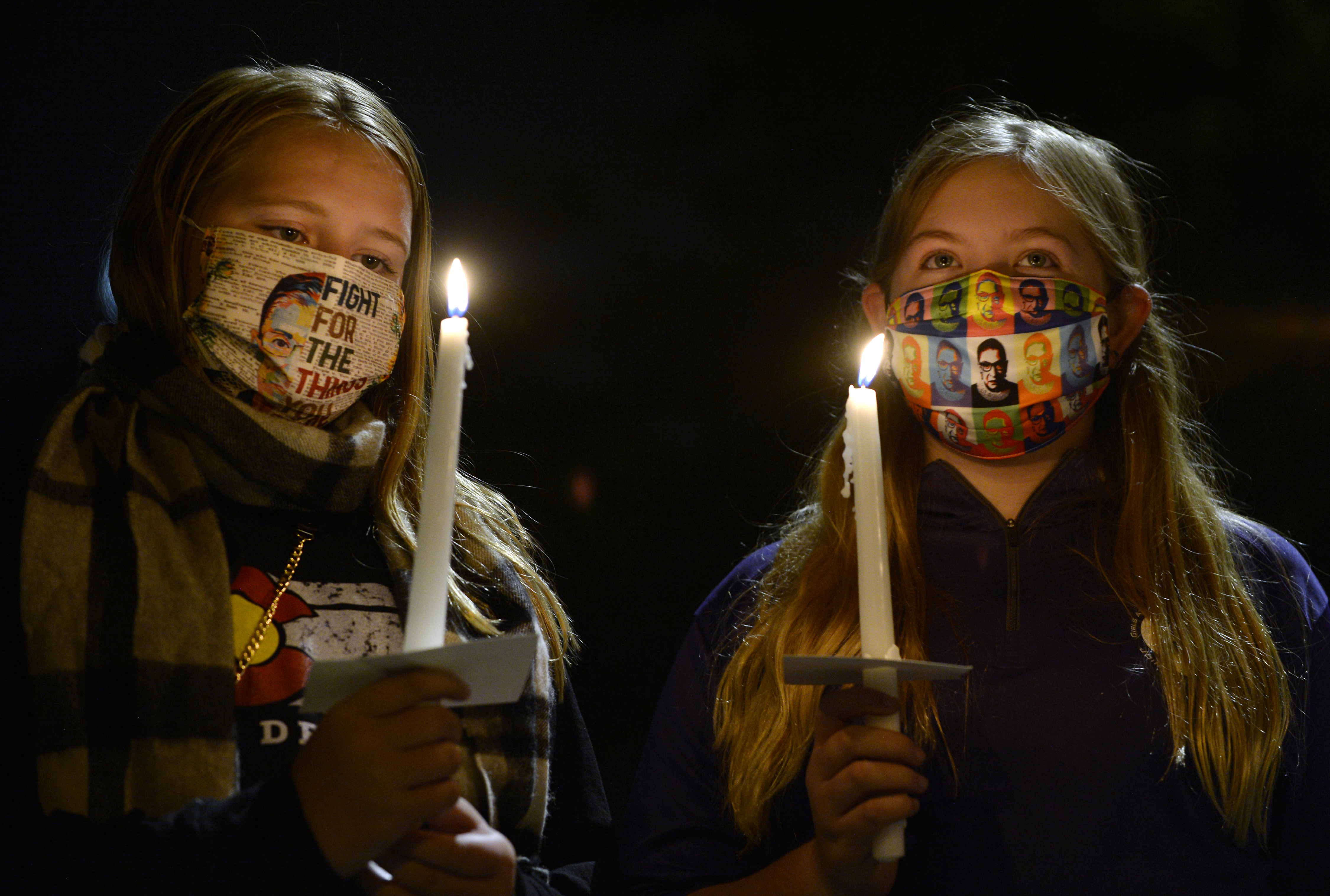
? As the fall campaign season kicked off, there was no denying Colorado had lost the status it had enjoyed since 2008 as a crucial battleground state. Neither the Trump nor the Biden campaign were spending much money on the airwaves or on the ground, though state Republicans said the combined Trump-Gardner campaign had been organizing longer and making more voter contacts than any previous Colorado GOP campaign. The Democrats, meanwhile, claimed they were reaching voters mostly remotely while maintaining pandemic safety precautions.
A month before ballots went out, the Senate race between Gardner and Hickenlooper and the race between Boebert and Mitsch-Bush for Tipton’s seat were the only high profile campaigns generating the kind of spending and attention Coloradans had come to expect. Polls consistently showed Hickenlooper holding a roughly 10-point lead over Gardner, and internal Democratic polls showed a dead heat in the 3rd CD.
? The health department reported that Colorado passed 60,000 confirmed COVID-19 cases on Sept. 10 and was fast approaching 2,000 deaths. More than 7,000 people had been hospitalized due to the virus, and nearly 775,000 tests had been conducted.
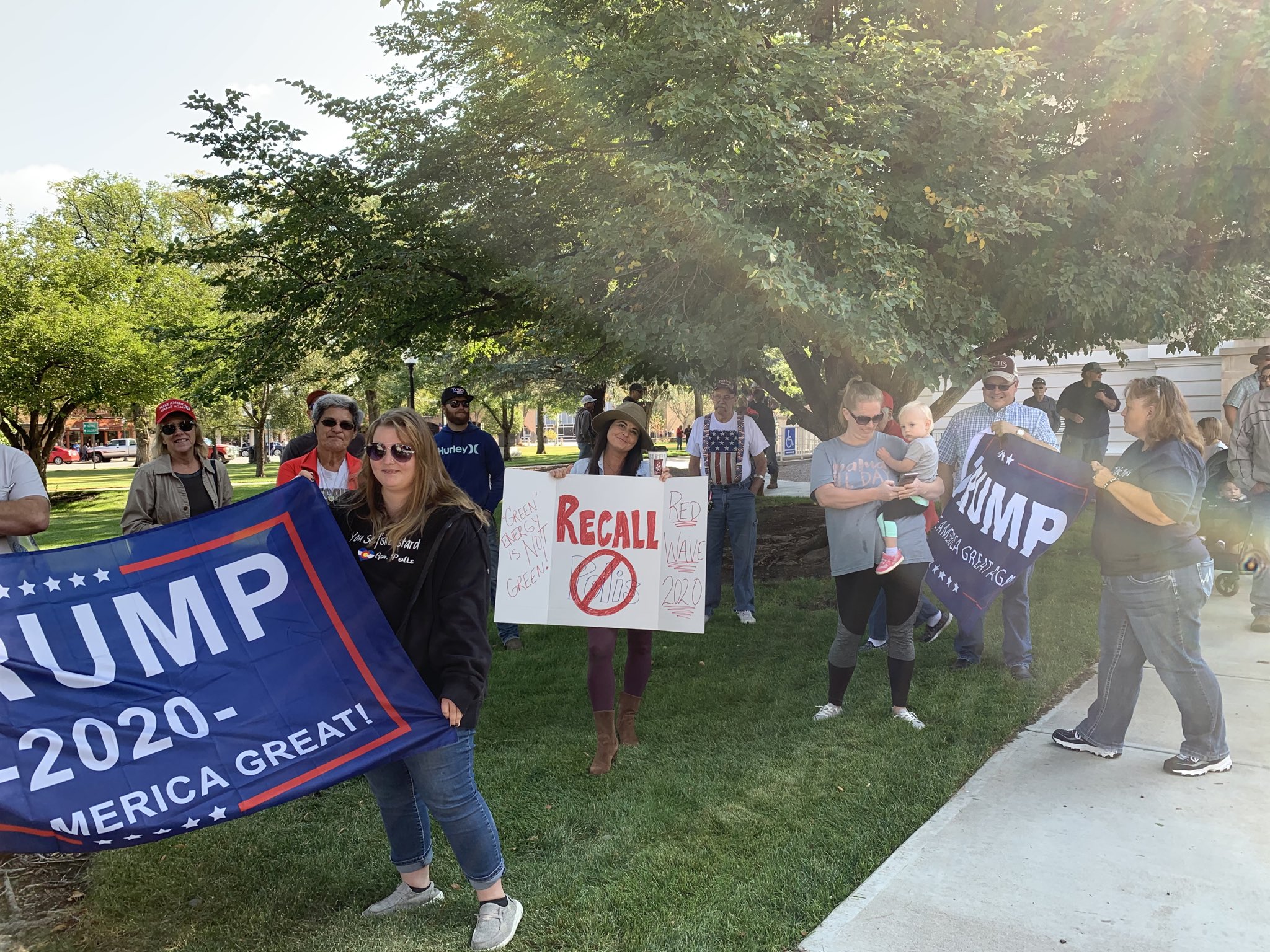
? Yet another group filed paperwork to recall Polis, about a year after a previous effort failed spectacularly, claiming the governor had “abused his emergency power” by issuing a disaster order that led to confining Coloradans at home, forbidding travel, closing businesses and mandating that they wear masks. The committee would have two months to collect 631,266 signatures in order to send the recall question to voters.
? Supreme Court Justice Ruth Bader Ginsburg’s death on Sept. 18 stunned the political world, but the grieving was cut short by Senate Majority Leader Mitch McConnell’s announcement the next day that he would fill the seat before the election, potentially creating a solid, conservative majority on the high court.
Gardner, who demanded that the voters have a say before filling Justice Antonin Scalia’s seat when the conservative jurist died nine months before the 2016 election, shifted gears with a Republican in the White House and said he would support replacing Ginsburg with a qualified nominee.
OCTOBER
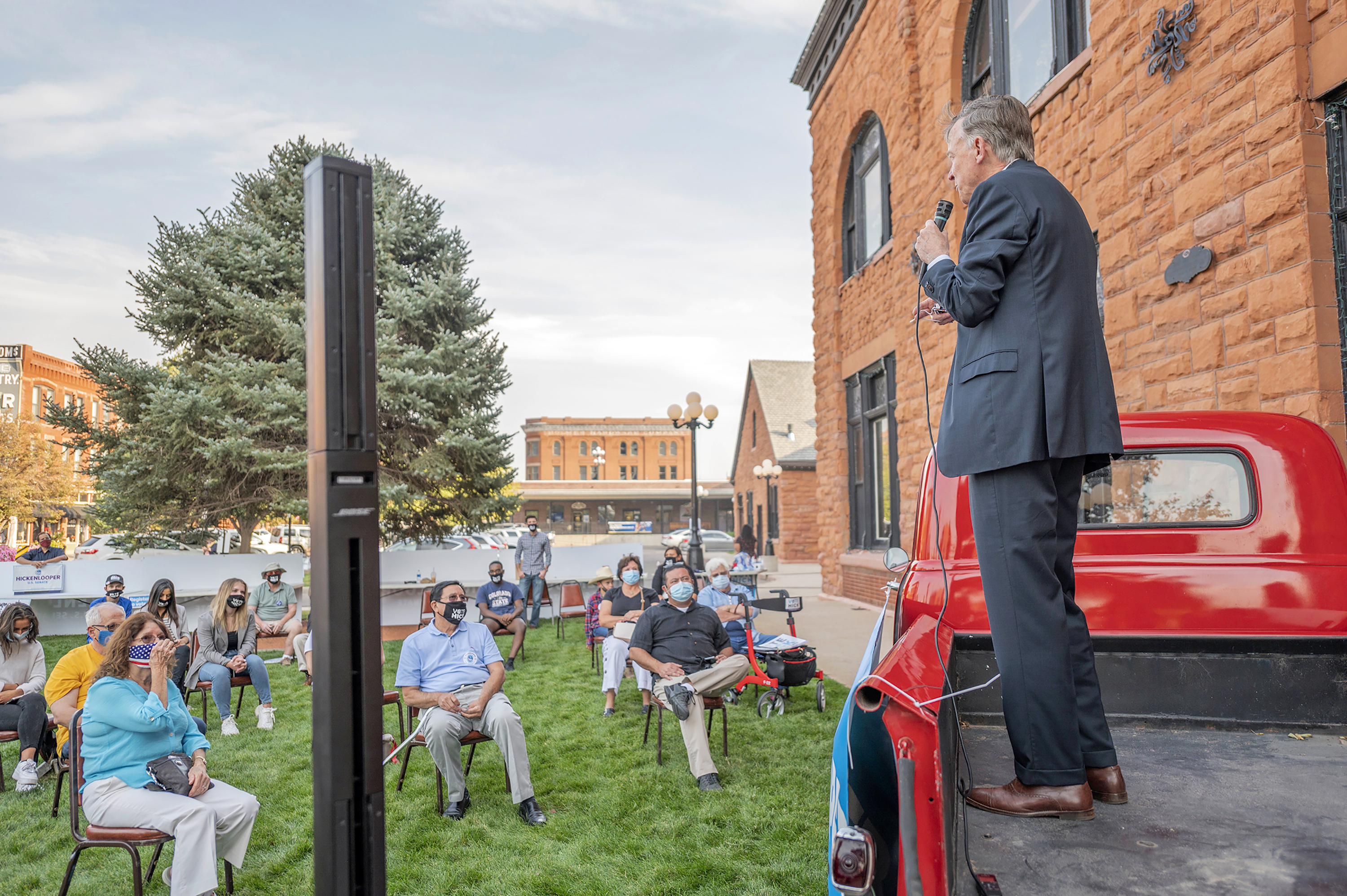
? Polis issued a mass pardon for 2,732 people convicted in state court of possessing an ounce or less of marijuana, his first action under authority granted by a law authorizing the governor to pardon those convicted of holding up to two ounces of the substance legalized for recreational use by Colorado voters in 2012. “It’s ridiculous how being written up for smoking a joint in the 1970s has followed some Coloradans throughout their lives and gotten in the way of their success,” Polis said.
? Just as ballots were set to go in the mail, a Colorado Politics-9News poll of likely Colorado voters found Hickenlooper leading Gardner by 9 points, with Biden 10 points ahead of Trump. The Senate candidates met for two debates in the first week of October and had two more debates scheduled, but so far the clashes didn’t appear to be moving the needle.
? Hickenlooper reported raising $22.6 million for the just-completed third quarter, shattering the previous quarterly fundraising record for a Colorado Senate candidate, a record set by Hickenlooper in the previous quarter when he raised $5.2 million. The Democrat’s third-quarter haul was almost triple the $7.8 million raised by Gardner for the period. They entered the campaign’s final month with roughly the same cash on hand – Hickenlooper with $7.2 million in the bank and Gardner with $6.8 million.
? Denver was grappling with an anticipated $190 million shortfall to the $2.1 billion budget proposed months earlier by Hancock. Among suggestions made by city council members: boosting funding for the Support Team Assisted Response program, which diverts some low-level 911 calls to mental health professionals instead of the police.
? Months after negotiations over additional federal relief had stalled, Polis proposed sending a one-time $375 payment to Coloradans who had been out of work and met other qualifications, getting aid to an estimated 435,000 residents. The assistance would come from emergency funds and money that was budgeted by the state but not spent, he said.
NOVEMBER
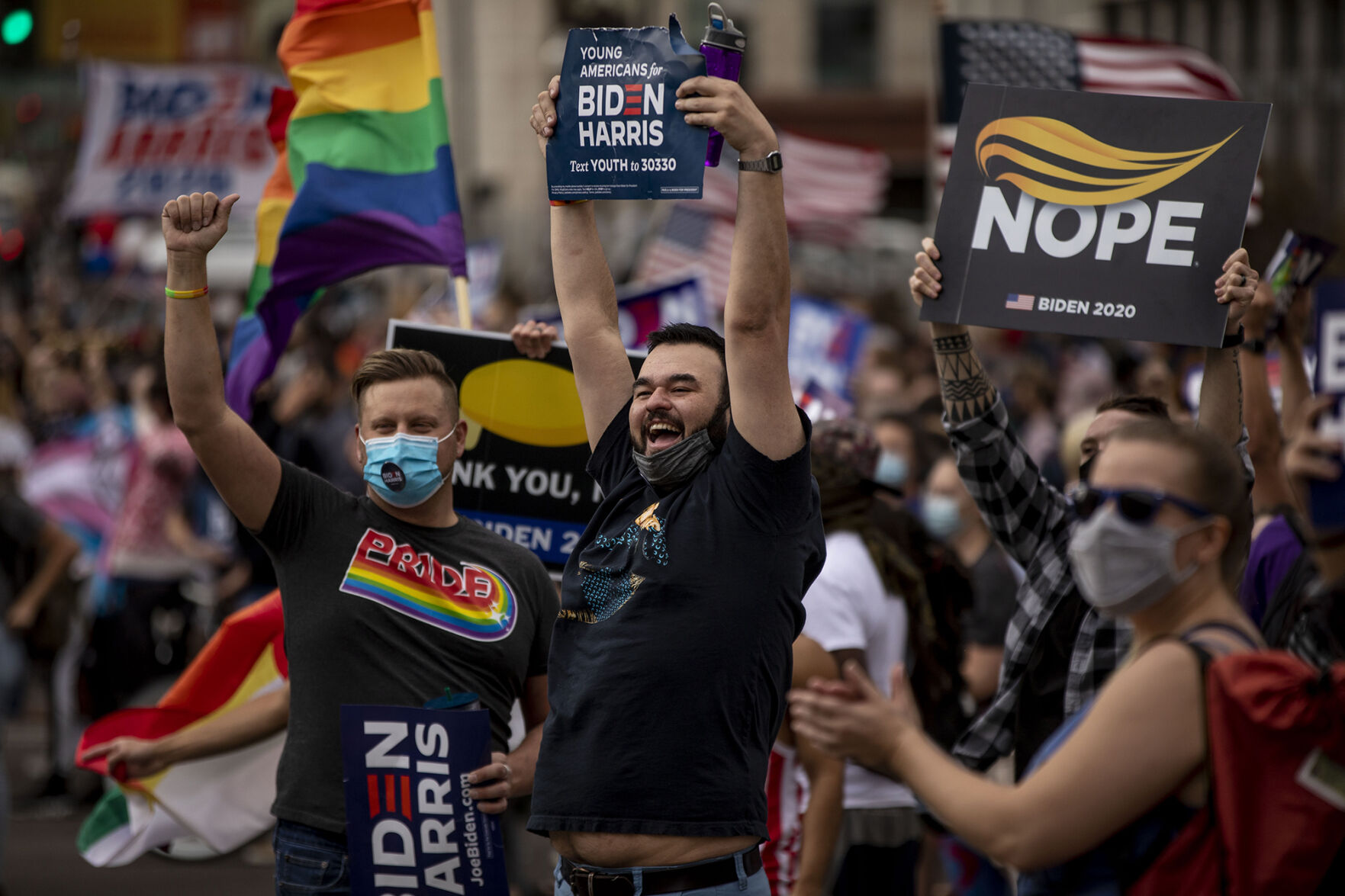
? Colorado voters continued their leftward drift on Election Day, handing the Senate seat to Hickenlooper by 9 points and assigning the state’s electoral votes to Biden by 13.5 points. The makeup of the state’s congressional delegation was unchanged, with all six incumbents on the ballot easily winning another term and Boebert keeping the 3rd CD in Republican hands by a 5-point margin. Democrats kept their 41-24 majority in the state House and gained a seat in the state Senate for a 20-15 majority.
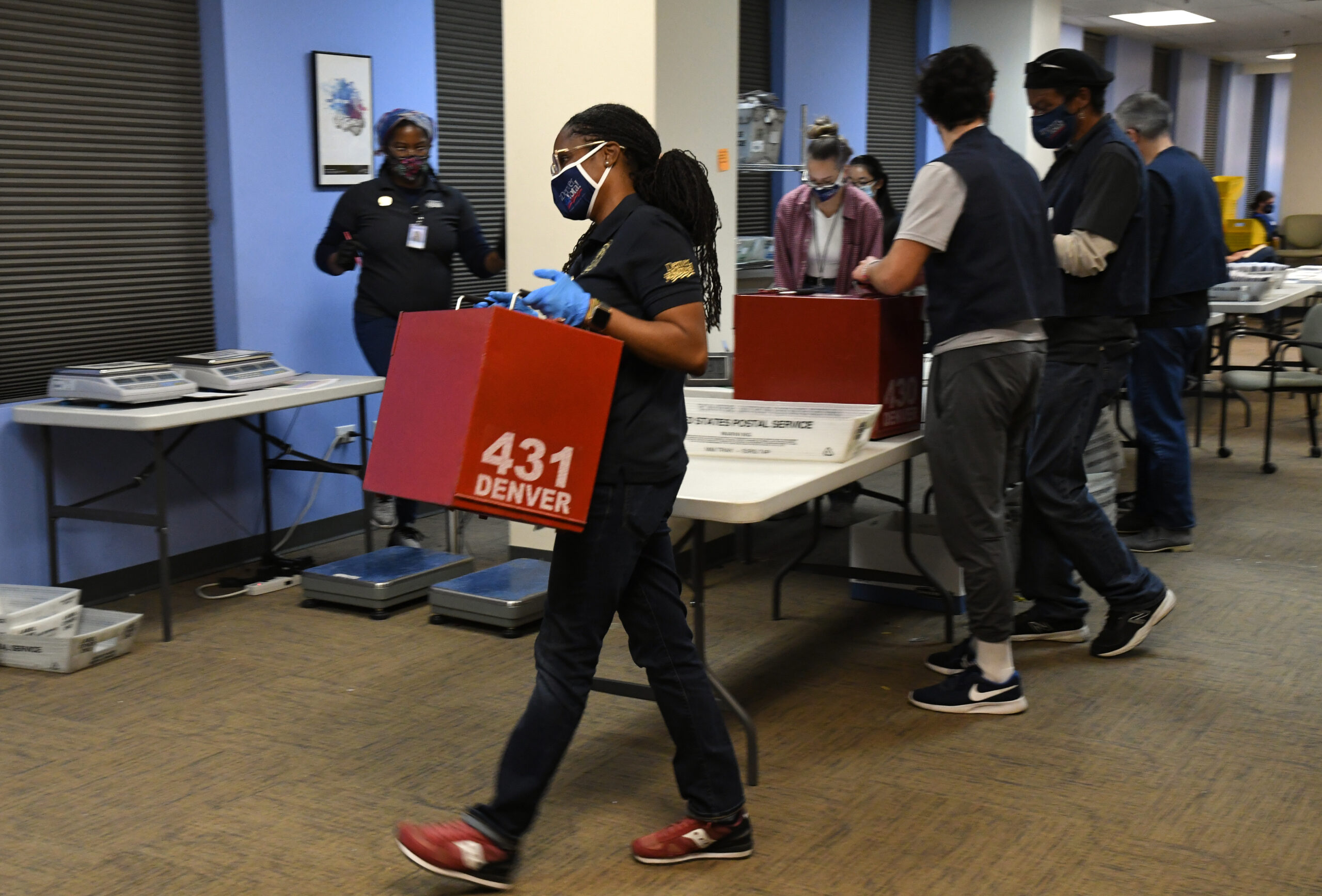
? Nearly every statewide measure on the ballot won approval, including an income tax cut and a tobacco tax hike, a program to reintroduce gray wolves to the state and a bill that could ultimately mean Colorado’s electoral votes go to the winner of the national popular vote. A family and medical leave proposal passed by wide margins, as did a complicated question to change the way property tax is calculated, but voters rejected a ban on abortions after 22 weeks.
? At the Capitol, House Democrats elected Alec Garnett of Denver as speaker and Daneya Esgar of Pueblo as majority leader, and Republicans picked Hugh McKean of Loveland as minority leader. Senate Democrats kept Leroy Garcia of Pueblo as Senate president and Steve Fenberg of Boulder as majority leader, and Republicans reelected Chris Holbert of Parker as minority leader.
? U.S. Reps. Doug Lamborn, a Colorado Springs Republican, and Ed Perlmutter, an Arvada Democrat, went into isolation after testing positive for the coronavirus, becoming the first members of Colorado’s DC delegation to come down with the virus. Both later emerged from isolation without incident.
? Fearing the state’s hospitals could be swamped if Coloradans gathered for Thanksgiving as a third wave of infection swept the nation, Polis and public health officials implored people to stay home and to practice social distancing and other safeguards.
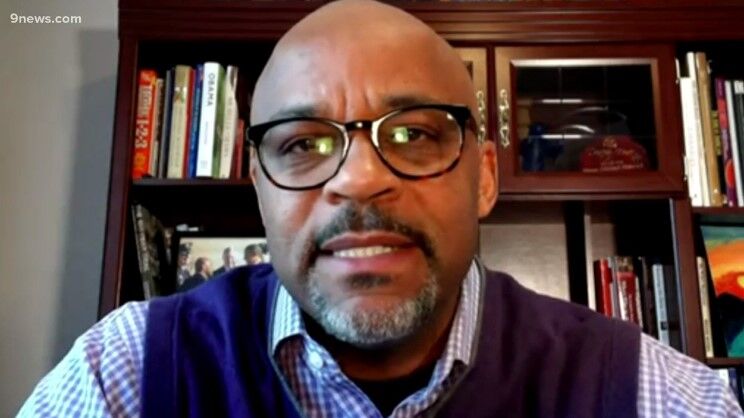
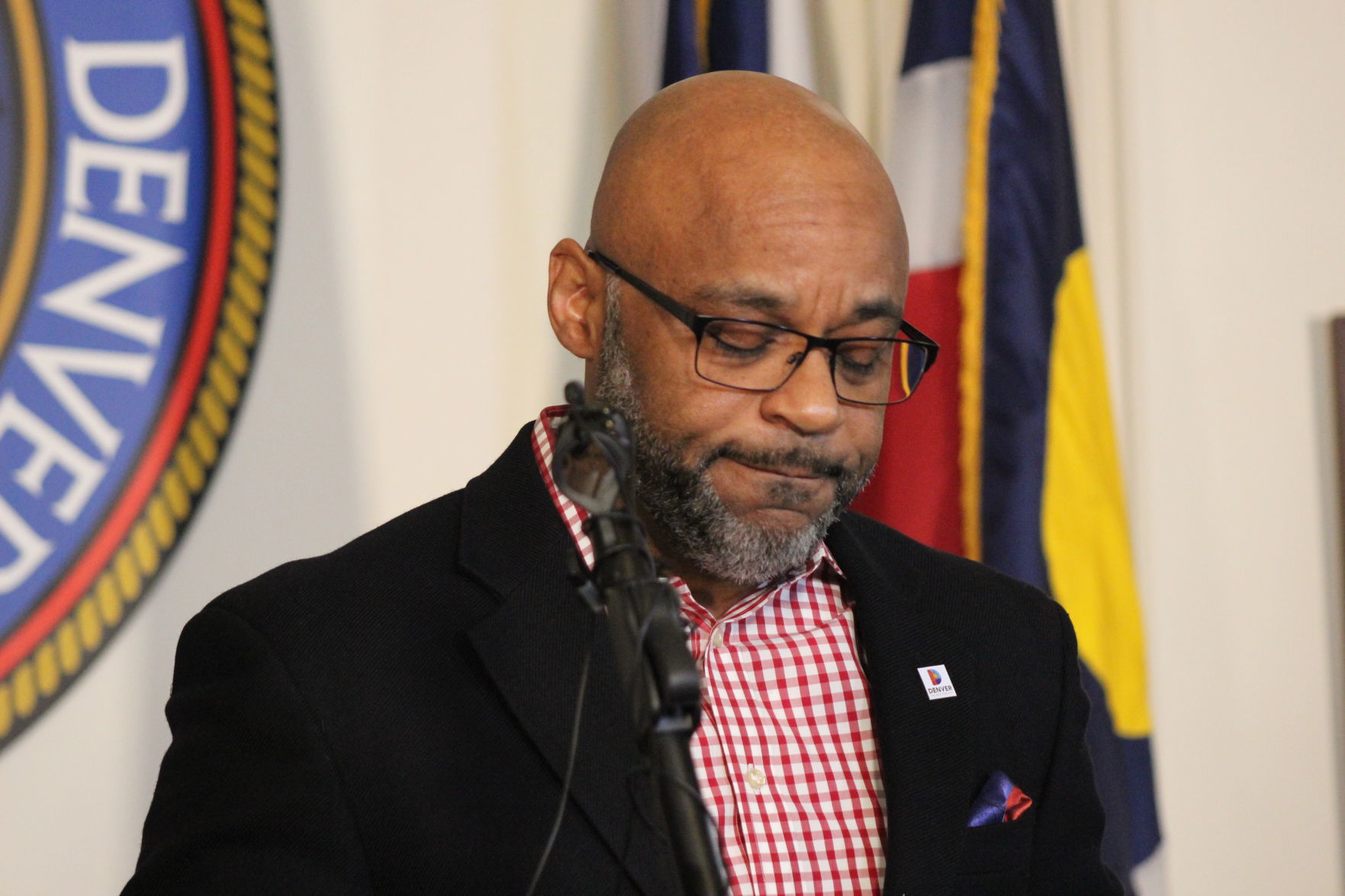
Shortly after tweeting a warning to “avoid travel, if you can,” Hancock boarded a plane to fly to Mississippi to spend Thanksgiving with his wife and daughter. After earning national headlines for the move, the mayor called his decision “unwise and hypocritical” in an apology letter that admitted he’d failed to set an example.

? Polis called the current batch of legislators back for a special session starting Nov. 30 to consider a stimulus package of up to $400 million to help bars, restaurants, tenants, landlords and students rocked by the pandemic.
? On Nov. 30, Colorado passed its 3,000th death among COVID-19 cases, state health officials said. At that point, the state had recorded more than 225,000 cases after testing nearly 1.75 million people, with at least 1,123 active outbreaks.
DECEMBER
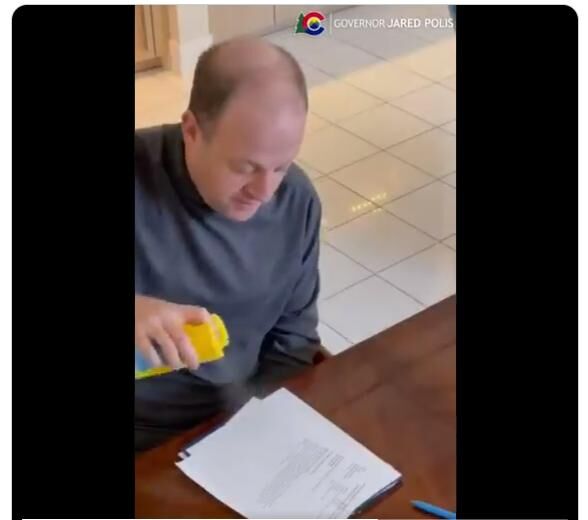
? Democrats cheered the results after the three-day special session produced 10 bills that Polis said he would sign in isolation and then spray with disinfectant after testing positive for the coronavirus. First gentleman Marlon Reis, who also tested positive, experienced mild symptoms and was briefly hospitalized but recovered quickly. Lawmakers emphasized that Colorado can only do so much and again called on Congress to pass a relief package before the end of the year.
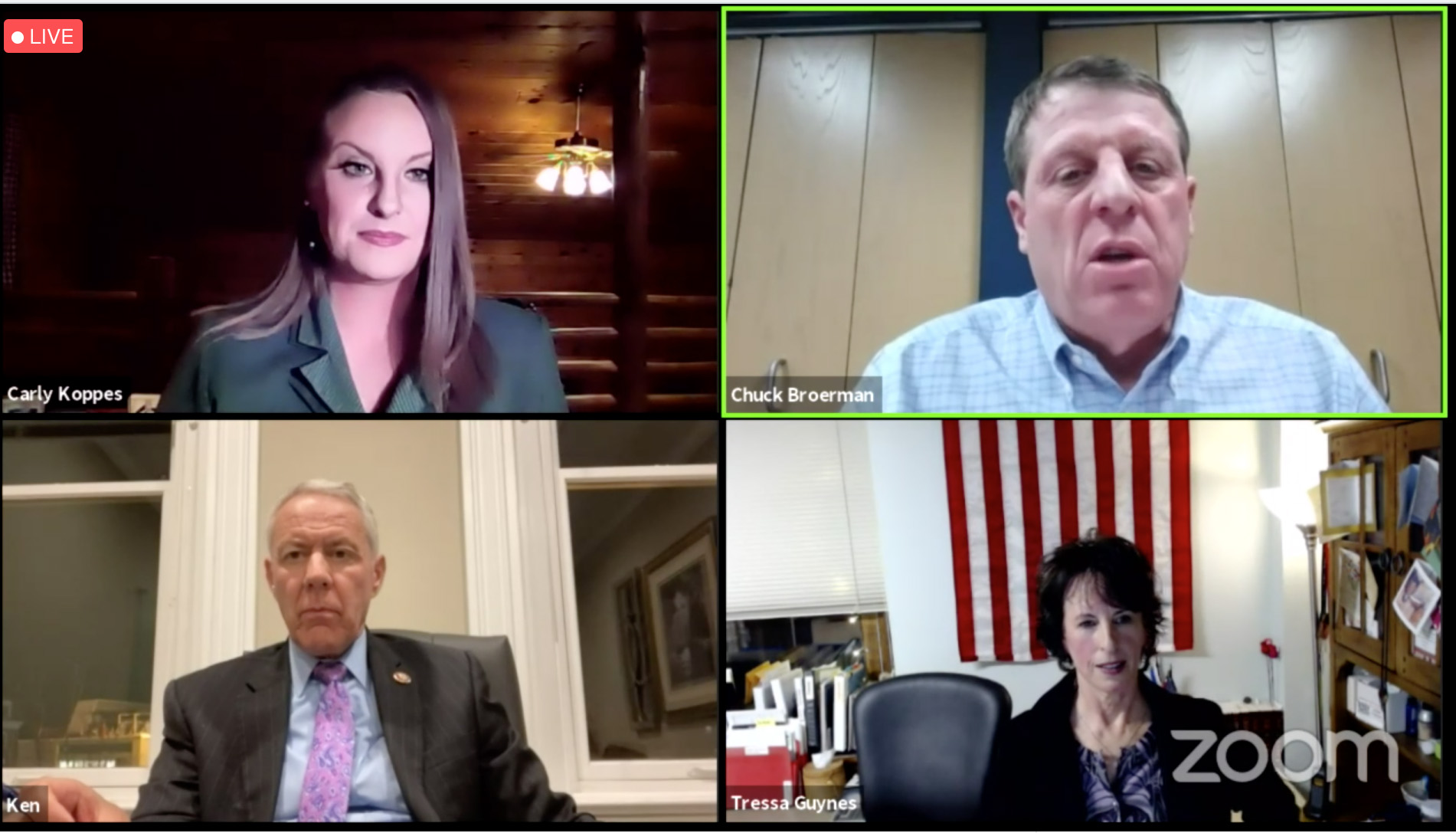
? Even as Trump continued to maintain he won the November election in a landslide – despite losing to Biden by 7 million votes and 306-232 electoral votes – U.S. Rep. Ken Buck, chairman of the Colorado Republican Party, convened a panel of GOP county clerks to reassure skeptical Republicans who were concerned about the integrity of Colorado’s election.
The Republican elected officials pushed back against increasingly unhinged claims by Trump and his allies involving Denver-based Dominion Voting Systems and the safety of mail ballots, but not everyone was satisfied. A handful of Republican legislators convened the Legislative Audit Committee for an all-day hearing that featured unfounded charges of impropriety but didn’t produce any evidence of voter fraud in Colorado’s 2020 elections.
? Although business owners pleaded for a delay, Denver officials said the city’s minimum wage would rise to $14.77 on Jan 1, as scheduled. In separate action, an independent arbiter determined that Denver police officers would receive raises totaling 3.5% in 2022 under a new contract, capping negotiations that stalled earlier this year.
? On Dec. 16, the number of deaths among COVID-19 cases had climbed to 4,085, just over two weeks after the grim total topped 3,000. Officials counted almost 300,000 cases among nearly 2 million people tested, though Polis said Colorado appeared to have mostly avoided the post-Thanksgiving surge filling hospitals in other states.
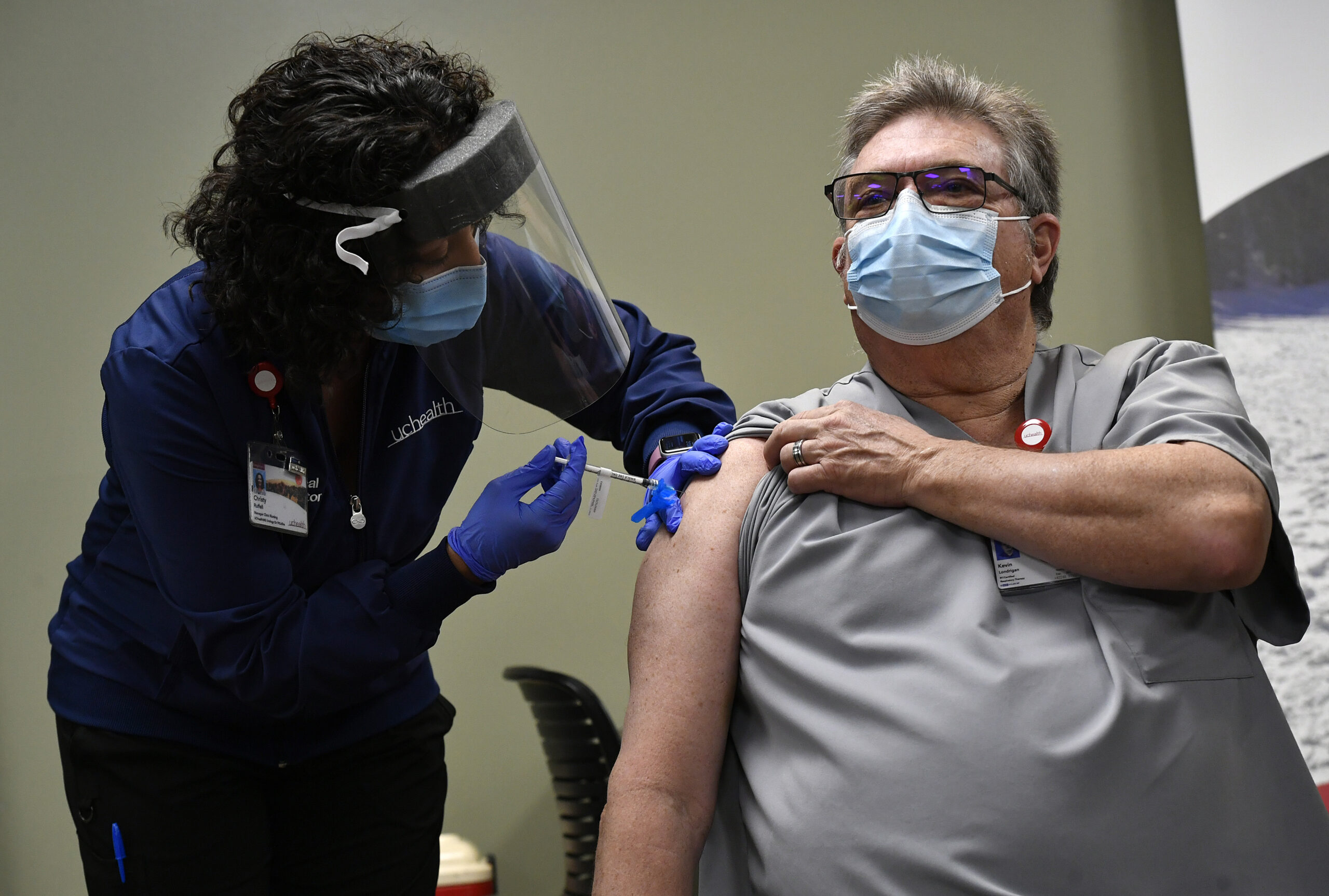
? As the year drew to a close, shipments of the newly authorized coronavirus vaccines began to arrive in Colorado, and the front-line health care professionals who were first in line to receive the shots began to be inoculated.
The immunization represents a “light at the end of the tunnel,” said state Rep. Kyle Mullica, a Northglenn Democrat and emergency room nurse, who was among the first to be vaccinated. “That’s why I’m here today, to show that it’s safe and this is the way we’re gonna get through this and I’m at the front of the line because I trust the science behind this,” he said.

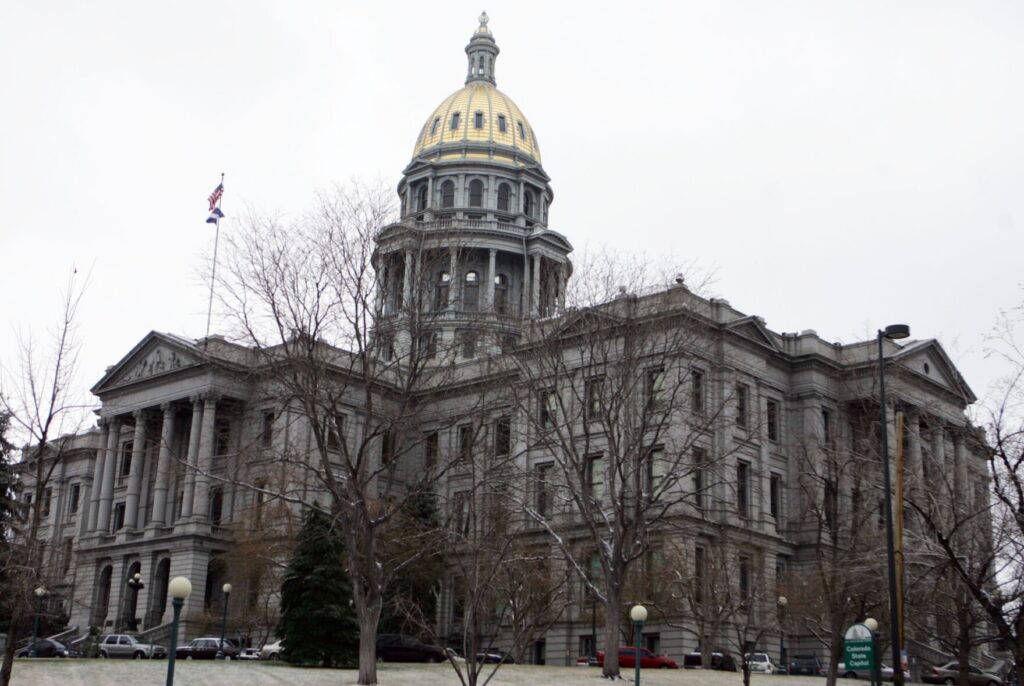
Colorado taxpayers would lose thousands in TABOR refunds under Democrats’ proposed ballot measure
Marianne Goodland
marianne.goodland@coloradopolitics.com
Updated 10 hours ago
A nonpartisan analysis of a proposed ballot measure that seeks to increase public education spending by tapping Taxpayer’s Bill of Rights refunds shows that about 75% of what would otherwise go to Colorado residents wouldn’t actually go to K-12 schools....
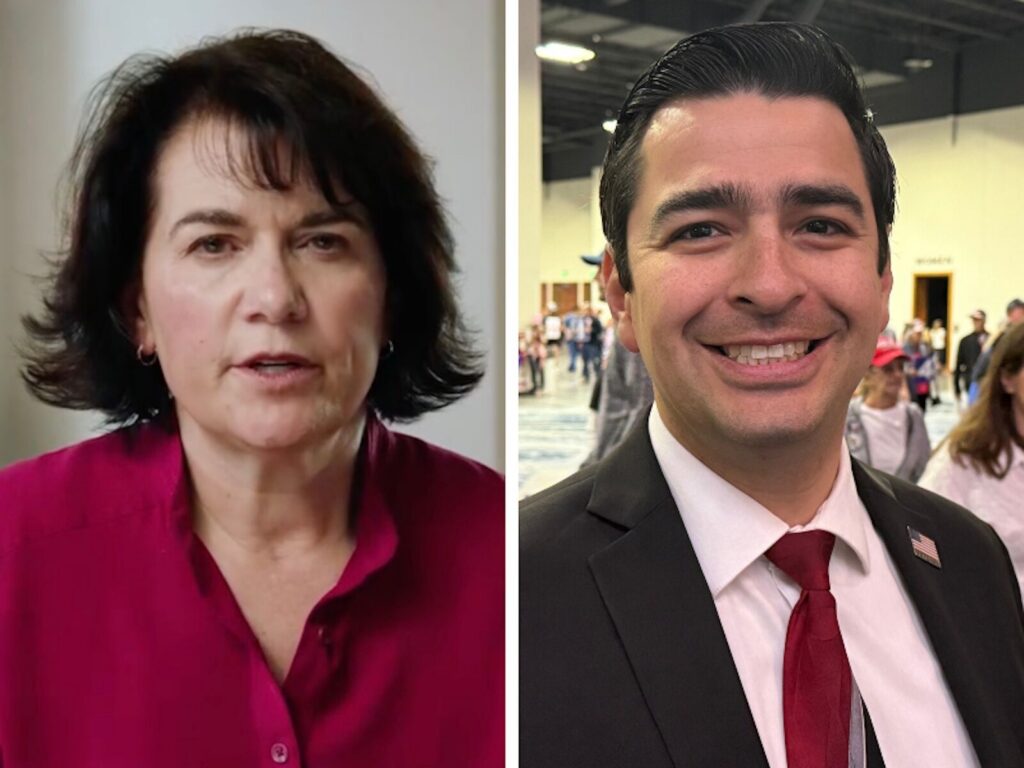
Boebert challenger Eileen Laubacher, Republican Gabe Evans lead Colorado’s quarterly House fundraising
Ernest Luning
ernest.luning@coloradopolitics.com
Updated 12 hours ago
The Democrat challenging U.S. Rep. Lauren Boebert in Colorado’s most solidly Republican congressional district again posted the state’s biggest fundraising numbers for the most recent quarter, while Republican U.S. Rep. Gabe Evans, who is defending the state’s lone toss-up seat,...
Colorado data‑privacy bill fails after sponsors shift it to a ballot measure
Marissa Ventrelli
marissa.ventrelli@coloradopolitics.com
Updated 18 hours ago
A Colorado bill aimed at restricting law enforcement and private companies from purchasing personal data without a warrant failed to advance Wednesday after a 6–5 vote in the House Judiciary Committee. The proposal, originally titled the “Fourth Amendment Is Not...
Colorado congressional elections see over $9M in ad reserves from House Democrats’ super PAC
Ernest Luning
ernest.luning@coloradopolitics.com
Updated 21 hours ago
The leading House Democratic super PAC is booking more than $9 million in fall TV and digital advertising across three Colorado media markets as part of an aggressive move to win control of the chamber in this year’s midterm elections....

Colorado GOP asks judge to bar state from sending Republican primary ballots to unaffiliated voters
Ernest Luning
ernest.luning@coloradopolitics.com
Updated 1 day ago
The Colorado Republican Party on Monday asked a federal judge to issue an emergency injunction to prevent the state’s unaffiliated voters from being able to cast ballots in the GOP’s upcoming primary election. Lawyers for the party argue in a...
Colorado Senate candidate charged with felony child neglect after daughter nearly drowns in Florida pool, police say
Marianne Goodland
marianne.goodland@coloradopolitics.com
Updated 3 days ago
Frederick Alfred, Jr., the sole Republican candidate for Senate District 21 in the June primary and November general election, was arrested in Key West, Florida, late Monday night. Alfred, 38, was charged with two counts of felony child neglect and...
Colorado lawmakers set Jan. 11 start date for 2027 General Assembly
Marianne Goodland
marianne.goodland@coloradopolitics.com
Updated 1 day ago
Legislative leaders on Tuesday confirmed that the 2027 session of the Colorado General Assembly will begin on Monday, Jan. 11. Ordinarily, legislative sessions start on the second Wednesday in January. That schedule shifts in years when a new governor is...
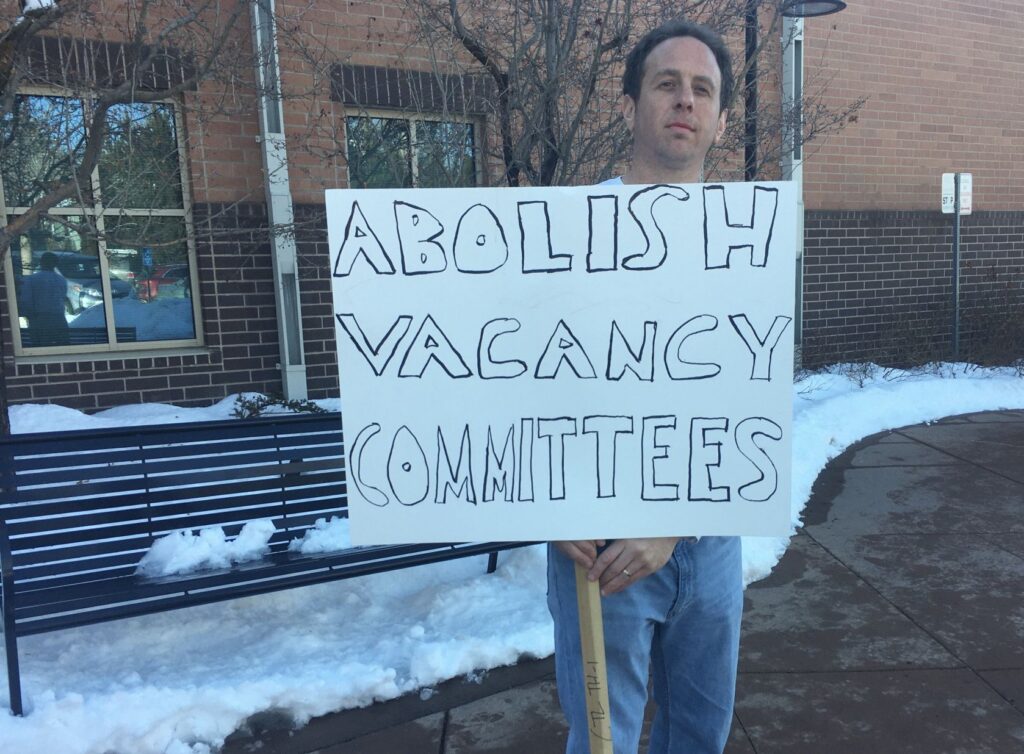
Proposal to ban appointed Colorado legislators from serving in next term fails to advance
Marissa Ventrelli
marissa.ventrelli@coloradopolitics.com
Updated 3 days ago
For the third year in a row, lawmakers have struck down a proposal that would have prohibited members of the Colorado General Assembly who were appointed through a vacancy committee from serving in the term immediately after. Sponsored by Rep....
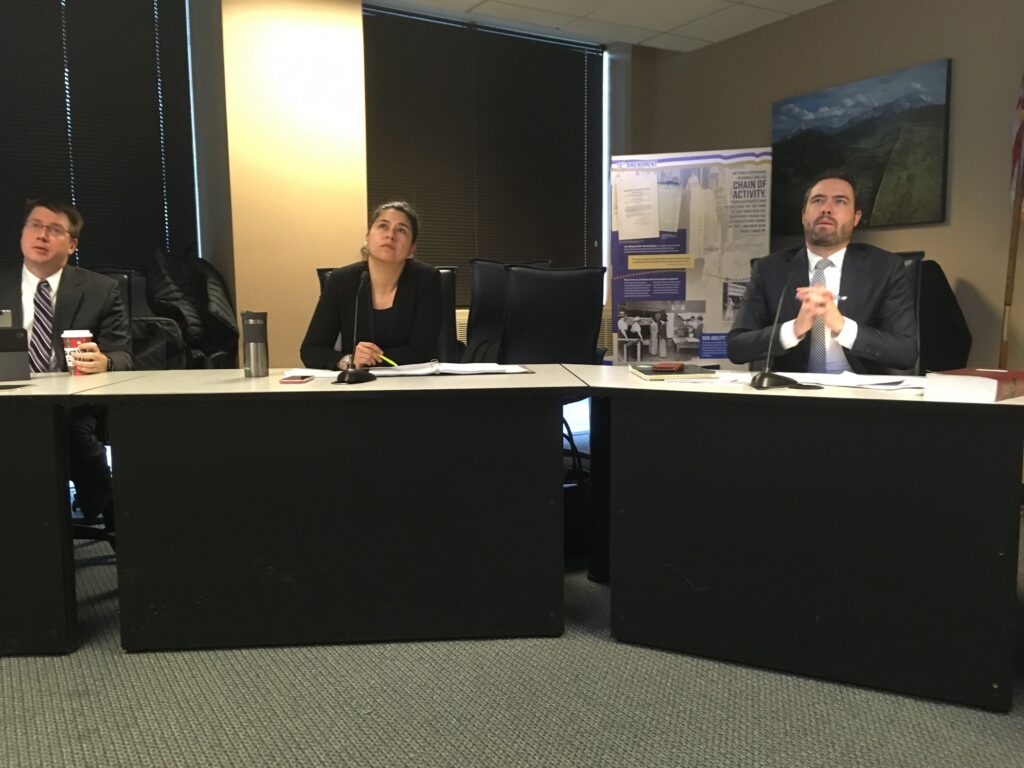
Colorado body reviews redistricting proposals as battle heats up nationwide
Marianne Goodland
marianne.goodland@coloradopolitics.com
Updated 3 days ago
With 60 proposals on the April 15 agenda, Colorado’s title board wrapped up its final initial hearing for the 2026 election cycle, sending forward a slate of measures that could reshape workers’ compensation and reignite partisan battles over congressional redistricting....
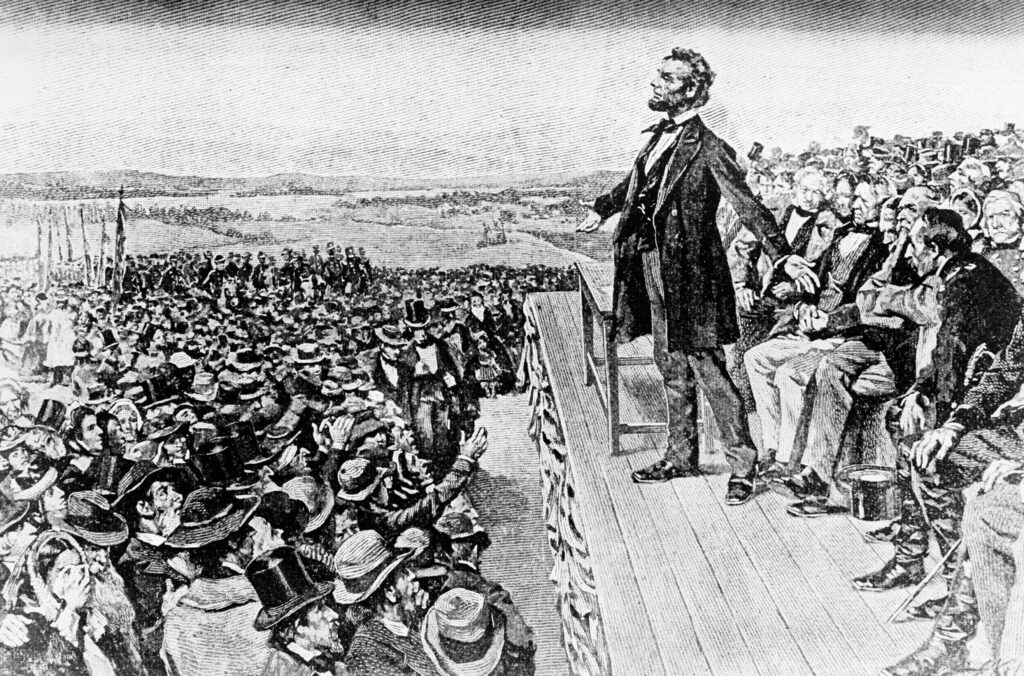
Lincoln – Pragmatic, persistent, partisan coalition-builder | Tom Cronin
Tom Cronin
tom-cronin@coloradopolitics.com
Updated 4 days ago
Abraham Lincoln was assassinated 161 years ago this week, six days after Confederate General Robert E. Lee surrendered at the Appomattox Court House in Virginia. Lincoln was 56 years old. Lee was 58 years old. Lincoln, generally regarded as our best...
PREV
PREVIOUS

OUT WEST ROUNDUP | New Mexico launches largest wind farm; Utah college yanks 'Dixie' from name
NEW MEXICO Largest wind farm in state to begin generating power ALBUQUERQUE – Work is done on a massive wind farm in eastern New Mexico that Xcel Energy officials said Dec. 16 will move the utility closer to its goal of being carbon-free by 2050 and help cement the Western state’s position when it comes […]
Gov. Jared Polis extends state disaster order over COVID-19 rates
Gov. Jared Polis extended the state’s disaster emergency order Sunday for another month over the COVID-19 pandemic. Polis issued the first disaster emergency order verbally on March 10 and in writing on March 11. Sunday’s executive order, D2020 290, extends the disaster declaration for an additional 30 days. Colorado seemed to avoid the national surge […]