

Lincoln – Pragmatic, persistent, partisan coalition-builder | Tom Cronin
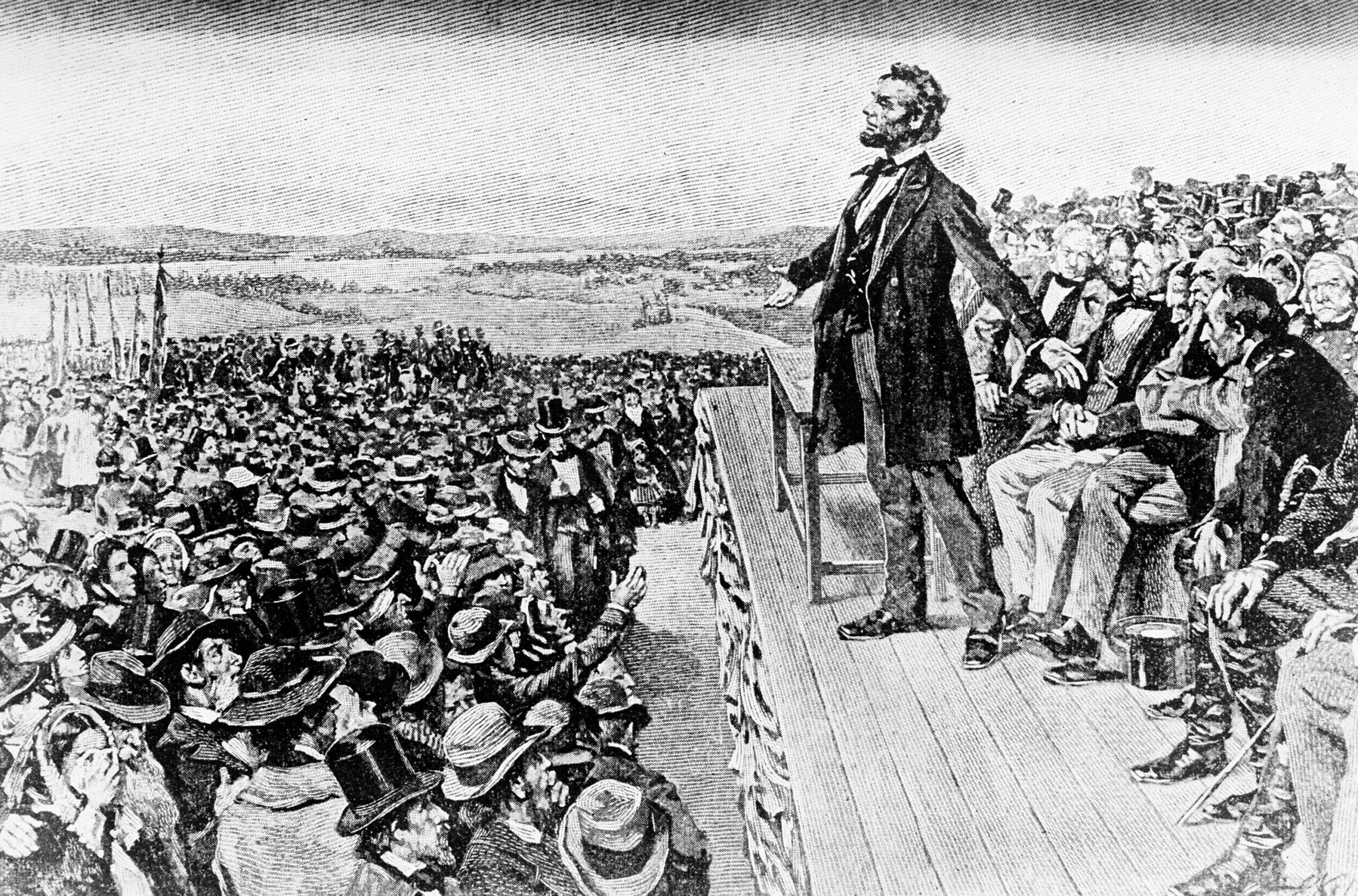
Abraham Lincoln was assassinated 161 years ago this week, six days after Confederate General Robert E. Lee surrendered at the Appomattox Court House in Virginia. Lincoln was 56 years old. Lee was 58 years old.
Lincoln, generally regarded as our best president, fascinates us still and teaches us still.
A valuable new, well-written book has just been published on Lincoln as a political operative. Matthew Pinsker’s “Boss Lincoln: The Partisan Life of Abraham Lincoln” (W.W. Norton, 2026) captures the almost entirely self-taught Midwesterner as a tireless civic and partisan activist.
Lincoln began running for office when he was 23 years old, and he ran for office 10 more times. He semi-ran on an additional occasion, yet declined the chance to serve in the Illinois state legislature in 1856.
He won seven elections and lost on four occasions. He ran and lost for the state legislature in 1832 without a party affiliation. But the persistent Lincoln ran and won the next four elections, in 1834, 1836, 1838 and 1840 to the Illinois state legislature, running on the new Whig party label.
He lost a bid for the Whig party nomination for the U.S. House of Representatives in 1843. He won nomination and election to Congress in 1846 – serving as a Whig member of the House. He would have liked to stay in Congress but he had partnered with fellow Whig colleagues back home on a rotational plan that obliged him to step aside for one of his friends.
Both in 1855 and 1858, he campaigned vigorously for the U.S. Senate. He lost each time. At the time, senators were selected by the state legislature.
But he built up support, clarified his policy views and began to develop a national reputation as a moderate anti-slavery Republican. The Whig party had floundered, and Lincoln had shifted parties. However, he was as relentlessly involved as a Republican party organizer as he had been as a Whig.
Lincoln won the presidential election of 1860 as a Republican but, once again, would help form a new party, the fusionist National Union Party, to secure his reelection in 1864.
What is especially noteworthy about Lincoln is that even as his party allegiances shifted as the country wrestled with economic development issues and slavery, he was consistently a party organizer and coalition-builder.
His father and relatives were probably Jacksonian Democrats. But Lincoln moved from his family and first ran as an independent. He migrated to the new Whig Party because it favored river and harbor improvements and similar Hamiltonian measures that appealed to young Lincoln, who had worked on the rivers. Lincoln held several jobs as he learned about business and government — county surveyor, postmaster, co-owner of a failed general store, and flatboat crewmember.
He was attracted by the views of Kentucky U.S. Sen. Henry Clay, the leading national Whig at the time.
The new “Boss Lincoln” book emphasizes how Lincoln embraced party building with unmatched enthusiasm. He excelled at composing party strategy documents for Whig captains at the county and precinct levels. He did this throughout the 1830s and especially during the election of 1840.
Lincoln was willing throughout his more than 30-year political career to do what most would consider political grunt work of compiling lists of supporters, fundraising, pamphleteering, and recruiting candidates — anything that could strengthen his partisan caucus. He also, after initial qualms, became a shrewd user of patronage.
Lincoln learned early on that politics was tough, messy, divisive and rancorous, yet necessary. He plainly enjoyed being a part of it. He embraced partisanship as a challenging and pragmatic practice of give-and-take and compromise necessary to advance worthy policy goals. In a noted eulogy for Clay, he said that a free people naturally divide into parties. But “the man who is of neither party is not, cannot be, of any consequence.”
Serving in the Illinois State Legislature became a pathway for the hardworking and ambitious Lincoln to learn the law and become a lawyer.
He eventually became a leading lawyer in the state with railroad companies as major clients.
Lincoln went from being an independent to being a zealous Whig. He was a proud Whig when he was in Congress, 1847-49, and campaigned across the country for the successful Whig presidential candidate, Zachary Taylor, in 1848.
But the Whig Party fell apart in the early 1850’s – mostly over slavery and the backlash to the Whig-supported Compromise of 1850. Lincoln was caught in the middle of several clashing political developments.
Abolitionists, although always a minority, loomed large in the Northeast. A nativist and anti-immigrant Know-Nothing emerged as an important political movement in the Midwest and Illinois. Southern slaveholding states backed Democrats. The Republican Party emerged, built around opposition to the expansion of slavery to the newly developing western states.
Lincoln gradually shifted to becoming a Republican — yet as he ran for the U.S. Senate in 1855, he often found himself trying to appeal to a variety of partisans, even if he disowned many of their views. He found in his day what many people feel today, that it is hard to wholly accept the views of any one party.
Lincoln ran against U.S. Sen. Stephen Douglas in 1858. They debated each other at great length around the state. Lincoln lost this election, decided by a vote of the state legislature. But his views opposing the expansion of slavery became national news. He became a much sought-after public speaker and emerged as one of the attractive voices of the growing Republican Party. He continued to be a party builder and a coalition builder, trying to attract disaffected Democrats and nativists.
Lincoln was emerging so fast that he won some support to be the party’s vice presidential nominee at the first-ever national Republican Party convention held in Philadelphia in mid-June of 1856. Four years later, at a convention conveniently held in Chicago, Lincoln was a “dark horse” candidate for the presidential nominee who surprisingly surged as the major frontrunners fell to the side.
Republicans nominated Lincoln for president and a Maine political leader Hannibal Hamlin, for vice president. Hamlin was a U.S. Senator and had been a governor, yet Lincoln apparently had never met him. Hamlin, a former Democrat, had become a Republican and held even stronger anti-slavery and anti-Fugitive Slave Act views than Lincoln.
The Republican ticket won in 1860 in a four-party race. The Lincoln-Hamlin ticket won virtually no votes in Southern slaveholding states. South Carolina seceded from the Union the next month and several additional states left before Lincoln was sworn in as president on March 4, 1861. The newly formed Confederacy elected its own president before Lincoln came to Washington.
The pragmatic and coalition-building Lincoln faced the biggest challenge of his life, as did our Republic. His leadership challenge was to navigate a balance between radical Republicans pressing for aggressive anti-slavery measures and an aggressive military campaign and those in the border states who wanted the country to respect slaveholder rights and conciliate as much as possible.
Lincoln was cautious and pragmatic. He had to govern as a Republican, but he needed Democrats and anyone else he could persuade to fight the war. He fought with cabinet members. He was impatient with his generals. He was blasted by abolitionists and black leaders, including Frederick Douglass. But he was steadfast in his primary goal of reuniting the country as one union. He learned that to do this, he would gradually have to push for the emancipation of slaves and enlist blacks into his military efforts. He did these.
Lincoln was a good listener yet often a loner. He was humble yet ambitious. He was a partisan yet knew he needed allies, especially in fighting the war. He made some splendid appointments, but most of his cabinet had left by the end of his first term. He removed or reassigned several generals. One of his top generals ran against him in 1864, and one of his cabinet members almost ran against him that year.
His pragmatism was again reflected as he downplayed his affiliation as a Republican, and by late 1862, he joined efforts to build a national fusionist effort called the National Union Party. In the process, Lincoln and his allies pushed Vice President Hamlin aside and selected former Tennessee U.S. senator and governor Andrew Johnson as his new running mate. This was a good pragmatic decision to win the election, but it was a terrible decision for the country.
Lincoln teaches us that politics is inevitable and urgently necessary. Lincoln teaches us that political parties are inevitable and vitally important. But he also teaches us that parties sometimes lose their way and leaders are needed to invent new political movements.
We remember Lincoln for many achievements, yet have generally overlooked that he was a career politician and unusually attached to his political party, which changed three times.
Tom Cronin is a news columnist who writes on Colorado and national politics.


CoComandering? | Miller Hudson
Miller Hudson
miller-hudson@coloradopolitics.com
Updated 22 hours ago
At 8 a.m., Friday morning, Aug. 28, 70 or 80 mostly bleary-eyed visitors to the Transportation Technology Center outside Pueblo packed a conference room to attend the Front Range Passenger Rail District’s (FRPRD) Board meeting. With the exception of those...
Even Dem court couldn’t abide theft of GOP seats | Dick Wadhams
Dick Wadhams
dick-wadhams@coloradopolitics.com
Updated 18 hours ago
Thanks to the Colorado Supreme Court, Colorado voters will be able to reaffirm their support for the Independent Congressional Redistricting Commission after the court struck down the Democratic scheme to steal three Republican congressional seats. Billionaire-funded national Democratic groups from...

Chaotic meeting began with attempt to squelch public comment | Rachel Gabel
Rachel Gabel
rachel-gabel@coloradopolitics.com
Updated 18 hours ago
When Attorney General Phil Weiser takes the governor’s office in January, he must immediately address the chaos of the latest round of appointees to the Colorado Parks and Wildlife Commission to assure stakeholders he’s willing to put pressure on the...

Graduated income tax proposal is a flat tax in disguise | Jon Caldara
Jon Caldara
jon-caldara@coloradopolitics.com
Updated 4 days ago
“Youth is wasted on all the wrong people.” That’s one of my favorite lines from “It’s a Wonderful Life.” The older I get, the less it sounds like a joke. Every generation inherits victories it did not win. Young Americans...
AI optimism vs. anxiety — podcasters debate this every night | Tom Cronin
Tom Cronin
tom-cronin@coloradopolitics.com
Updated 2 days ago
President Donald Trump, CNBC’s “Mad Money” host Jim Cramer and entrepreneurial “accelerationists” celebrate the AI revolution and the infrastructure data-center build-out. Cramer recently gushed, “I like data centers so much that I wish I lived in one.” Trump criticized any community...
The dissonance of an American Jew thinking about Israel | SONDERMANN
Eric Sondermann
eric-sondermann@coloradopolitics.com
Updated 4 days ago
The Jewish High Holidays will soon be upon us. The third anniversary of Oct. 7 will then quickly follow. Three weeks later, Israeli voters will head to the polls to elect all 120 members of its parliament, the Knesset and...
Gong-Show Griswold’s latest data dump a disaster | George Brauchler
George Brauchler
george-brauchler@gazette.com
Updated 4 days ago
Last week, Colorado Secretary of State Jena Griswold’s office discovered they exposed for weeks the addresses of more than 130,000 “confidential voters” — including victims of sexual assault, domestic violence — and her political opponent in the attorney general’s race,...
Colorado’s education paradigm déja-vu | Paula Noonan
Paula Noonan
paula-noonan@coloradopolitics.com
Updated 4 days ago
Déja-vu for 10 years. In 2015-2016, state standardized testing was fully integrated into teacher performance evaluation. The tests comprised 50% of teacher “performance.” The idea was to follow the General Electric “rank-and-yank” human resources model. At GE, the model went...
Trump’s ‘BBB’ casts aside rural Colorado healthcare | Hal Bidlack
Hal Bidlack
hal-bidlack@coloradopolitics.com
Updated 6 days ago
Well, as I often do, let me start by yet again telling you what I am not going to be writing about (Editor: sigh…). I’m not going to talk about President Donald Trump’s most recent (of many, many) attacks on...
A course correction Canada would concur with | Miller Hudson
Miller Hudson
miller-hudson@coloradopolitics.com
Updated 1 week ago
I’ve always harbored a soft spot for Canada. My father was stationed there twice, once in the 1960s as the Atomic Energy Commission’s American liaison with the Canadian nuclear reactor program in Chalk River, Ontario and again in the 1970s...
PREV
PREVIOUS
A happier budget week | Capitol M | Week of April 18, 2026
It’s budget time at the state Capitol, and generally, it’s a humorless situation. It certainly was that way in the House last week, with a 15-hour reading of the long bill at 661 pages that resulted in lawmakers having to work on Saturday, and that meant Republicans – except for two who were marked as […]

Regulators seek public input for massive Montana-Wyoming oil pipeline proposal | OUT WEST ROUNDUP
WYOMING Massive oil pipeline proposed State and federal officials are seeking public comment on the proposed Bridger Pipeline Expansion project to carry Canadian crude from the border in Phillips County, Montana, to a terminal near Guernsey in Wyoming. The massive 36-inch-diameter pipeline would span 647 miles and move about 550,000 barrels of crude oil daily. […]