

Regulators seek public input for massive Montana-Wyoming oil pipeline proposal | OUT WEST ROUNDUP
WYOMING
Massive oil pipeline proposed
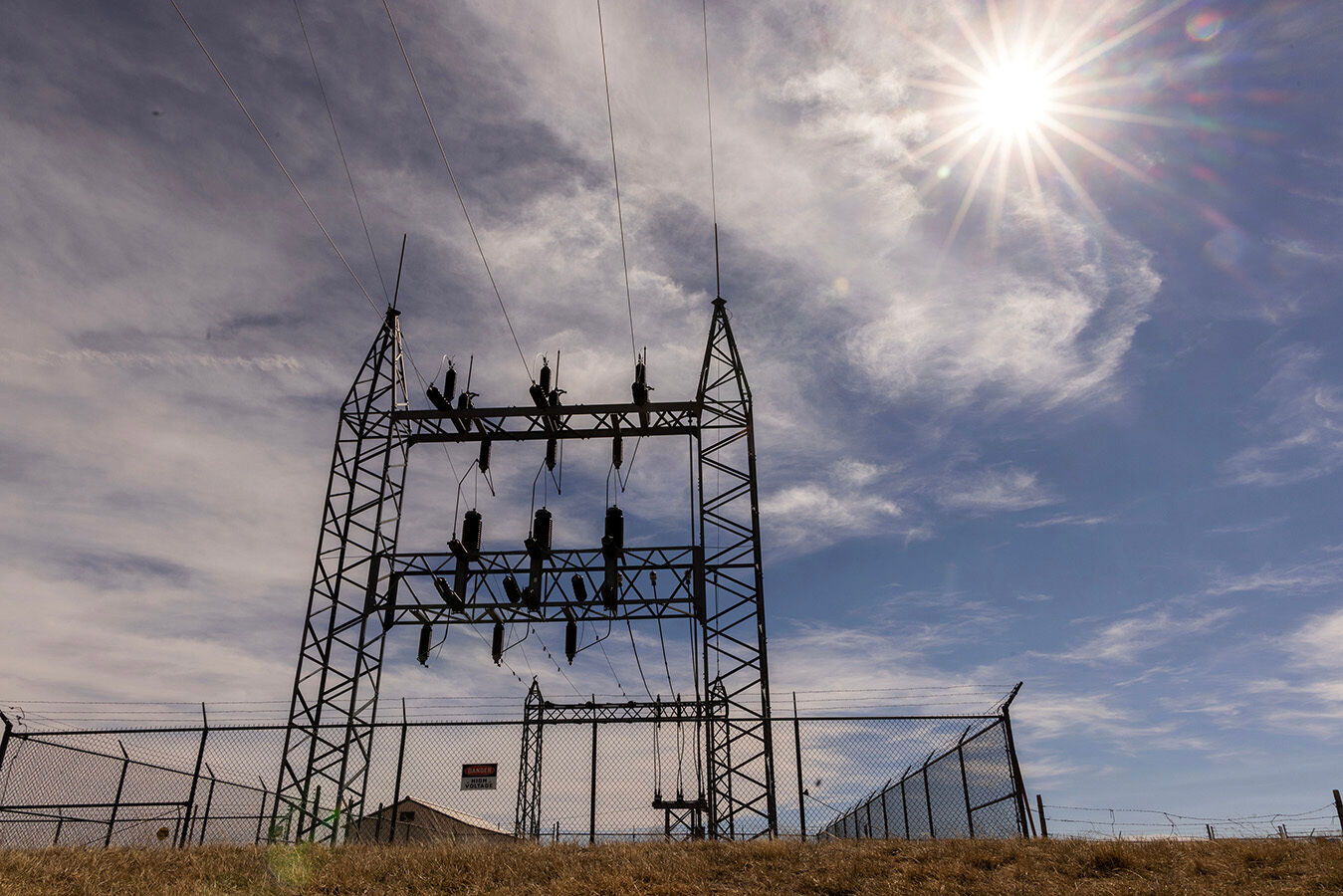
State and federal officials are seeking public comment on the proposed Bridger Pipeline Expansion project to carry Canadian crude from the border in Phillips County, Montana, to a terminal near Guernsey in Wyoming.
The massive 36-inch-diameter pipeline would span 647 miles and move about 550,000 barrels of crude oil daily. The proposed route includes about 210 miles across Crook, Weston, Niobrara, Goshen and Platte counties in eastern Wyoming, according to developer Bridger Pipeline Expansion. The company is a subsidiary of Casper-based Bridger Pipeline LLC, which owns a network of oil pipelines, including the Belle Fourche and Butte pipelines that connect North Dakota, Montana and eastern Wyoming oilfields to the Guernsey storage and interconnect hub.
Bridger Pipeline is owned by True Cos., which has had several significant pipeline spills, including a 45,000-gallon diesel spill in eastern Wyoming in 2022 and an incident in 2015 that spewed more than 50,000 gallons of Bakken crude into the Yellowstone River in Montana.
The U.S. Bureau of Land Management is the lead federal regulatory authority “to review potential impacts of the entire project to ensure environmental, cultural and community considerations are fully evaluated,” according to a BLM press release. A 30-day public scoping and comment period initiated in the first week of April will help both federal and Montana officials identify potential impacts and alternatives. The agencies said they plan to co-host one virtual and three in-person public meetings.
Similar to the Bridger Pipeline Expansion, the abandoned Keystone XL pipeline would have transported Canadian oil-sands crude, but was larger — designed for up to 830,000 barrels per day. Its proposed route also differed, crossing in Montana and spanning portions of South Dakota and Nebraska.
One major advantage of the Bridger project, according to company officials, is that the Canada-Montana-Wyoming route follows many existing rights-of-way. About half of the route in Montana is parallel to existing pipelines, and a little more than half of the 210-mile route in Wyoming follows existing pipeline corridors, according to a project description provided by the BLM.
Megadonor’s son bids for US House seat
Conservative activist and businessman Steve Friess announced his campaign for Wyoming’s sole U.S. House seat on April 2.
Friess, son of longtime Republican megadonor and political candidate Foster Friess, emphasized his support for President Trump and long history of right-wing advocacy.
The ninth to declare for the race, Friess will face a packed field of fellow Republicans during the Wyoming primary election on Aug. 18.
Already declared for the race are former superintendent of public instruction Jillian Balow, state Senate president Bo Biteman, veteran Kevin Christensen, rancher Frank Chapman, veteran David Giralt, Wyoming Secretary of State Chuck Gray, businessman Reid Rasner and former state legislator John Romero-Martinez. Two more candidates, Daniel Verl Workman and Jim Treibert, have filed to run.
A self-described “political outsider,” Friess said in a prepared statement he is not running to advance his political career or get rich.
“Freedom and opportunity have always been the birthright of every American. I’m running for Congress to keep it that way,” Friess said.
His father, Foster Friess, who died in 2021, was an investment manager well-known for making significant contributions to the Republican Party and right-wing Christian causes. Foster Friess ran an unsuccessful campaign for Wyoming governor against Gov. Mark Gordon in 2018.
Outgoing Rep. Harriet Hageman, R-Wyoming, is running for the U.S. Senate.
UTAH
GOP measure fails to make ballot
SALT LAKE CITY — Utah’s new congressional map, which gives Democrats a high likelihood of picking up a U.S. House seat in the Salt Lake City area, is likely to remain in place beyond this election cycle because a Republican-led initiative to repeal the state’s anti-gerrymandering law failed to make the November ballot.
The GOP effort, endorsed by President Donald Trump, aimed to reverse a 2018 measure passed by Utah voters that established an independent redistricting commission and banned drawing districts that deliberately favor one political party over another.
A state judge ruled that the Republican-led state legislature violated those standards when it drew boundaries after the 2020 census that divided the Democratic stronghold of Salt Lake City among all four House districts. Judge Dianna Gibson put in place a new map that gives Democrats a prime opportunity to pick up a seat this year as they’re fighting to retake chamber.
Repealing the law would have allowed Republicans to enact a more favorable congressional map ahead of the 2028 elections. But their multimillion-dollar signature-gathering campaign fell below the threshold needed to qualify for the ballot this year after anti-gerrymandering advocates got thousands of people to remove their signatures, according to data released on March 26 by elections officials.
Better Boundaries, the nonprofit that led the signature removal push, celebrated the outcome, while Utah Republican Party Chair Rob Axson said efforts to repeal the law were “not over, but just beginning.”
NEVADA
Newspaper stops printing its rival
LAS VEGAS — The Las Vegas Review-Journal announced on April 3 that it will no longer print its rival, the Las Vegas Sun, for the first time in decades, sharpening its legal dispute over the nation’s last joint operating agreement, stemming from a 1970 law designed to preserve newspapers.
Readers “will not find a printed Las Vegas Sun insert inside,” the Review-Journal wrote in an editorial, noting the Sun maintains a website, has a few hundred thousand followers across social media platforms, and is free to produce its own newspaper.
“It is time the Sun stood up on its own two feet,” the editorial said.
It was the first day in 76 years the Sun hasn’t been printed, Sun attorney Leif Reid said in an email.
“This does irreparable harm to our community, as no one benefits when a local newspaper is prevented from being published,” Reid said.
The now-rare joint operating agreement required the Sun to be printed as a daily insert in the Review-Journal, the state’s largest newspaper. Both companies remained editorially independent with separate newsrooms and websites.
A lower court found the agreement was unenforceable because a 2005 update was never signed by the U.S. attorney general, and in February, the U.S. Supreme Court declined to hear the Sun’s appeal.
The Review-Journal editorial called the Supreme Court decision a decisive victory, saying that halting publication of the Sun on Friday was “a result of 6½ years of litigation between the newspapers, precipitated by the Sun.”

Colorado Politics Calendar Sept. 7-13
Rachael Wright, Special to Colorado Politics
rachael.wright@coloradopolitics.com
Updated 5 days ago
CoPo’s weekly political calendar will help you find political and public-policy events throughout Colorado. It includes candidate and issue campaign events, public policy meetings, court hearings, state and local party conventions, assemblies, debates, rallies, parades, speaking engagements, traveling dignitary appearances,...

Blue-collar support trends highlighted GOP gains among rank‑and‑file workers | A LOOK BACK
Rachael Wright, Special to Colorado Politics
rachael.wright@coloradopolitics.com
Updated 4 days ago
Forty-five years ago this week: Kathy Oatis of the Colorado AFL-CIO’s Committee on Political Education said that organized labor had a negative image with the American voter. “I don’t think the country is against us,” said Oatis. “I think the...

The dissonance of an American Jew thinking about Israel | SONDERMANN
Eric Sondermann
eric-sondermann@coloradopolitics.com
Updated 4 days ago
The Jewish High Holidays will soon be upon us. The third anniversary of Oct. 7 will then quickly follow. Three weeks later, Israeli voters will head to the polls to elect all 120 members of its parliament, the Knesset and...

Parenting from prison: Inmates hope to be present in their children’s lives, while physically absent
Marianne Goodland
marianne.goodland@coloradopolitics.com
Updated 15 hours ago
The room was decorated with balloons, the tables sparking bright with colors as the smell of pizza and cake wafted through the air. As did music. This was, after all, a father-daughter dance. Except this was not a typical father-daughter...

Colorado House ethics committee issues ‘stern letter’ to Democrat over caucus funds mismanagement
Marianne Goodland
marianne.goodland@coloradopolitics.com
Updated 20 hours ago
The Colorado House ethics committee on Friday voted unanimously to issue a “stern letter” to Rep. Mandy Lindsay, D-Aurora, regarding her mismanagement of House Democratic caucus funds. The committee further voted to request that Lindsay resign as Democratic Caucus co-chair...
Appeals court confirms Colorado judges can compel electronic records from out of state
Michael Karlik
michael.karlik@coloradopolitics.com
Updated 19 hours ago
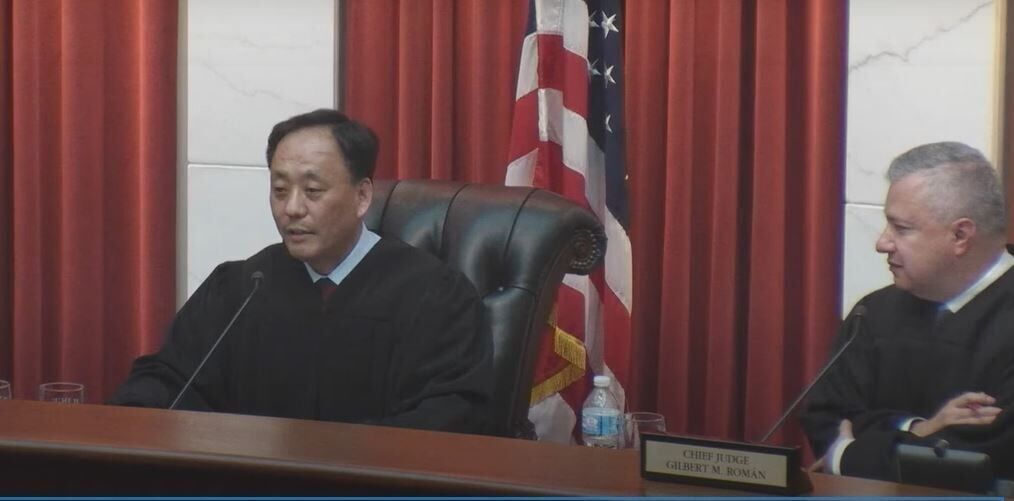
Colorado’s second-highest court clarified on Thursday that judges are empowered to compel out-of-state companies to produce electronic records under state law. El Paso County jurors convicted Mischa Jargowsky on three counts of money laundering and one violation of Colorado’s organized...
Federal judge extends block on Trump executive order seeking to limit mail voting in the midterms
The Associated Press
the-associated-press@coloradopolitics.com
Updated 3 days ago
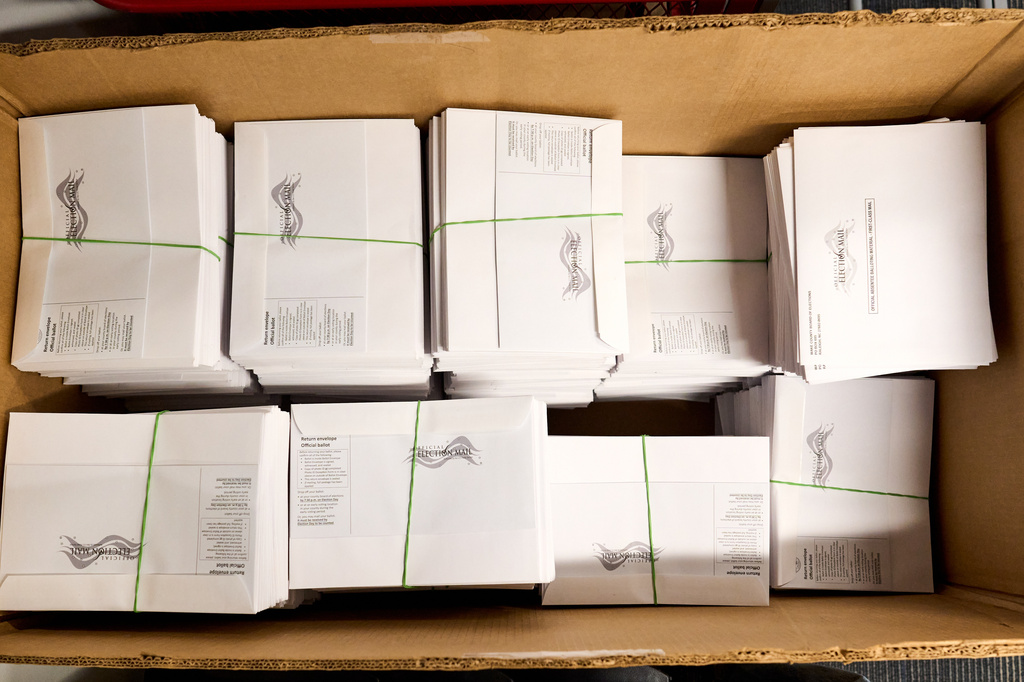
A federal judge on Friday extended her prohibition against the U.S. Postal Service implementing President Donald Trump’s executive order seeking to limit mail voting during the midterms, putting another major obstacle in the way of the administration as the first...
Mullin asks DOJ to review voter data sharing tied to Zuckerberg-funded nonprofit group
The Washington Examiner
the-washington-examiner@coloradopolitics.com
Updated 18 hours ago
Washington Examiner Homeland Security Secretary Markwayne Mullin asked the Justice Department this week to review whether election-related nonprofit groups, some with multimillion-dollar backing from a Mark Zuckerberg-linked nonprofit, improperly received sensitive state motor vehicle and voter-registration data. In a letter...
Colorado secures FEMA support for wildfire, flooding and mudslide recovery
Marissa Ventrelli
marissa.ventrelli@coloradopolitics.com
Updated 2 days ago
Federal authorities on Friday approved Colorado’s request for federal public assistance to help communities devastated by the Aspen Acres and Gold Mountain Fires. The Federal Emergency Management Agency did not announce how much the state would receive but confirmed that...

State seeks $50K penalty against GOP candidate Victor Marx over alleged campaign finance violations
Deborah Grigsby
deborah.smith@denvergazette.com
Updated 2 days ago
Republican gubernatorial candidate Victor Marx is looking at more than $50,000 in fines in what the Elections Division of the Office of the Secretary of State calls “unprecedented” campaign finance violations. The state has not imposed that fine yet, and...
PREV
PREVIOUS

Lincoln - Pragmatic, persistent, partisan coalition-builder | Tom Cronin
Abraham Lincoln was assassinated 161 years ago this week, six days after Confederate General Robert E. Lee surrendered at the Appomattox Court House in Virginia. Lincoln was 56 years old. Lee was 58 years old. Lincoln, generally regarded as our best president, fascinates us still and teaches us still. A valuable new, well-written book has just […]

Aurora City Council to discuss statement of 'mourning' for police shooting victims
In Monday night’s Aurora City Council study session, councilmembers will discuss a resolution that, if passed at a future regular meeting, would state that the City Council “stands in mourning” with people who have lost loved ones to officer-involved shootings. The resolution comes to a study session just over a week after an officer shot […]