

State court to decide if 180 days means 180 days on a campaign finance complaint

A decision from an administrative law judge could open the door to a flurry of campaign finance complaints that exceed the state’s statute of limitations, or make it clear that 180 days means 180 days.
The 180-day limit for filing a campaign finance complaint is set in state law. It says that a “complaint must be filed no later than 180 days after the date on which the complainant either knew or should have known, by the exercise of reasonable diligence [emphasis added]” of the alleged violation.
It’s whether a complainant knew or should have known about the violation – and when – that’s at issue with a May 2020 complaint filed against Suzanne Staiert by Dorota Wright-O’Neill of Denver.
The issue is Staiert’s financial disclosures. She’s a Republican candidate vying to succeed Republican Sen. Jack Tate of Centennial in Senate District 27. It’s the hottest state Senate race in Colorado in 2020, and a seat that Democrats hope to flip.
State law requires that once they’ve filed the candidate affidavit, candidates must file a personal financial disclosure form, supplied by the state, within 10 days. Staiert filed her candidate affidavit on Aug. 7, 2019. And despite her years of experience as deputy secretary of state under Republicans Scott Gessler and Wayne Williams, she filed – instead of the PFD two days later – her 2018 federal tax return. That’s allowed by state law under the Public Official Disclosure Act, but that applies only to appointed or elected officials, not for candidates, according to Peter Baumann, the assistant attorney general representing the Secretary of State.
In addition, Theresa Conley, the legal and operations manager for the Secretary of State, testified that their office does not have a history of accepting tax returns in lieu of the personal financial disclosure.
The difference is that a PFD requires information on sources of income, and any assets or liabilities held by the candidate; information that is not available on a tax return.
According to Wright-O’Neill’s testimony in a Wednesday hearing on the complaint, Christy Powell, who she said worked for ProgressNow Colorado, filed an open records request in September 2019 seeking Staiert’s personal financial disclosure. But Powell didn’t file a complaint; instead she later turned to Wright-O’Neill, an acquaintance, and who testified she knew very little about campaign finance rules or laws.
Wright-O’Neill filed the complaint on May 6, 2020, well exceeding the 180-day statute of limitations. But the question becomes whether Wright-O’Neill should have known about the violation within the 180 days and in time to file the complaint, and that’s what the Secretary of State’s office is hoping Administrative Law Judge Matthew Norwood will decide.
Wednesday’s hearing also brought out a lack of diligence by the Secretary of State’s campaign finance division in monitoring what people file. According to Conley’s testimony, they didn’t examine Staiert’s financial disclosure filing when it was submitted in August 2019 to see if it complied with the law, nor did they notify her to fix it.
Conley said Staiert was given an opportunity to “cure” – which gives the candidate 10 days to correct any errors – on May 20. Conley said Staiert did not file a notice stating she would cure the error, but she submitted the Secretary of State’s personal financial disclosure form on May 24.
Initially, the campaign finance division accepted the complaint as filed in a timely manner. However, on June 23, Conley filed a motion to dismiss, based on the expiration of the statute of limitations. That motion went to Deputy Secretary of State Ian Rayder, who rejected it and ordered the complaint to go to a hearing with the Office of Administrative Courts. Staiert also had sought that hearing, although she tried earlier this month to delay it until after the election.
Staiert chose not to testify Wednesday and was represented by attorney David Lane.
Lane told Norwood that the only issue for the judge to consider is the 180-day limit, not whether Staiert violated the law by not filing and then taking months to file the correct information.
Baumann agreed that the statute of limitations is the key issue, but also asked Norwood to rule on the factual issue of Staiert’s initial failure to file the PFD. The documents speak for themselves on whether Staiert satisfied the law on the financial disclosures, Baumann said.
Norwood indicated that if Powell’s first request in September is the “trigger,” then the 180-day limit is a factor.
Lane advised Norwood that “to go into any other [issue beyond the] limitations is a political act” by Norwood. “This entire complaint is motivated by politics,” Lane said, adding that the Secretary of State’s office is trying to “run out the clock” on this case, to ensure it hangs over Staiert’s head as she runs for the SD27 seat. “If your honor is going to render an opinion in the middle of November, you are assisting the political posture that is occurring here,” Lane said.
Lane also pointed out that Staiert has been the subject of attack ads on TV over the campaign finance complaint, which he called “a political smear.” A decision prior to the election would give Staiert an opportunity to respond to the ads and would require those running the ads to pull them off TV, Lane said.
Staiert has her own history with complaints that lead to political attacks. She is director of the Public Trust Institute, which in 2018 (before Staiert began working there) filed a series of ethics complaints against then-Gov. John Hickenlooper over travel and other gifts he received on trips in 2018. The Colorado Independent Ethics commission found that Hickenlooper, now a Democratic candidate for U.S. Senate, twice violated the state’s limits on gifts and fined him $2,750.
Staiert was the attorney who prosecuted and presented PTI’s complaint in a June 5, 2020, hearing with the ethics commission. That commission includes Debra Johnson, whom Staiert had recommended for the commission, and who gave Staiert a campaign contribution after Johnson was appointed to it. Johnson did not disclose that during the Hickenlooper hearing on June 5.
The result of the Hickenlooper case has been millions of dollars in attack ads against the former governor over the ethics issue, from Hickenlooper’s opponent U.S. Sen. Cory Gardner, the National Republican Senatorial Committee, Unite for Colorado and others. Hickenlooper’s campaign called the complaints “a political hit job.”
Norwood did not provide a timeline for when he would issue his ruling.
This article has been updated to correct a typo on the status of Staiert’s tax return filing; in addition, the timing of Staiert’s “cure” was mistaken; according to testimony and TRACER records she was made aware of the issue on May 20 and filed a personal financial disclosure form on May 24. An addition has also been made to note the timing of Staiert’s involvement with Public Trust Institute.


Rural frustration, parental rights shape Scott Bottoms’ pitch ahead of Colorado’s gubernatorial primaries
Thelma Grimes
thelma.grimes@coloradopolitics.com
Updated 24 minutes ago
With just weeks before Colorado’s June primary, Republican gubernatorial candidate state Rep. Scott Bottoms is spending nearly all his time on the road — literally crisscrossing the Western Slope and eastern plains — in a final push to connect with...

Registered voters on the eve of the 2026 primaries | Cronin & Loevy
Tom Cronin Bob Loevy
tom-cronin-bob-loevy@coloradopolitics.com
Updated 2 days ago
The Colorado Secretary of State’s Office has published the latest voter registration figures for the state and its counties as of June. Colorado ranks among the highest states for independent, or unaffiliated, voters. Only Alaska and Massachusetts have more. New Hampshire, New Jersey, Maine and Oregon also rank highly. So here...
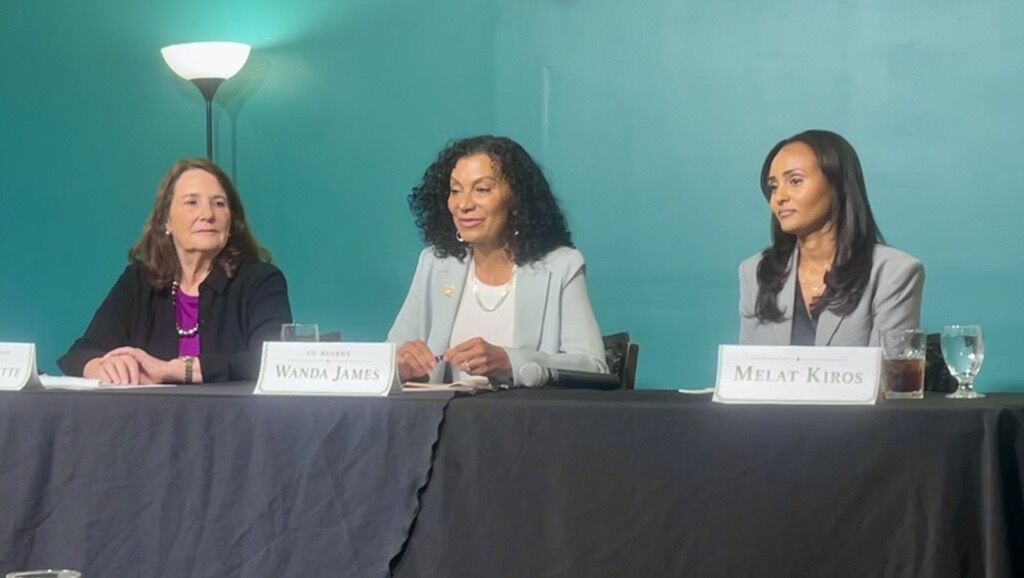
Democratic candidates DeGette, Kiros and James clash in CD1 forum
Marissa Ventrelli
marissa.ventrelli@coloradopolitics.com
Updated 1 hour ago
The three Democratic candidates for Colorado’s 1st Congressional District clashed on Friday night over a host of issues, even as they expressed frustration with their party. The candidates — U.S. Rep. Diana DeGette, doctoral student Melat Kiros and university regent...
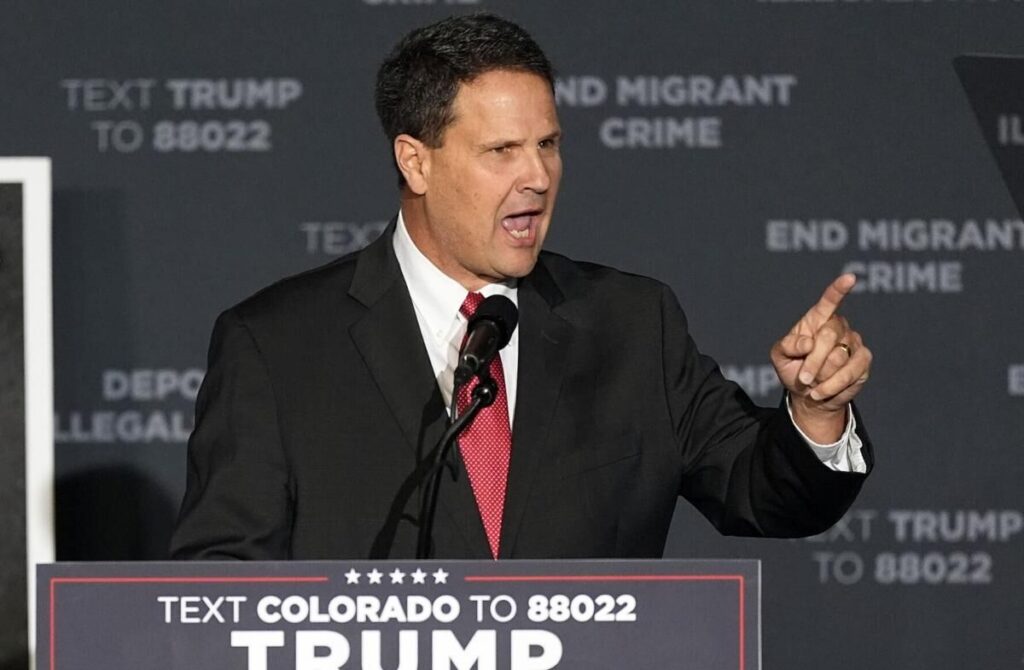
Rep. Jeff Crank thinks Democrats are too focused on Trump, not enough on Colorado Springs | Vince Bzdek
Vince Bzdek
vince.bzdek@gazette.com
Updated 19 hours ago
For U.S. Rep. Jeff Crank, who’s unopposed in the Republican primary for the 5th Congressional District but the main target of both candidates in the lively Democratic primary, the big question in the midterms is not who will stand up...

Bernie Sanders endorses DeGette challenger Melat Kiros in Colorado’s 1st CD Democratic primary
Ernest Luning
ernest.luning@coloradopolitics.com
Updated 3 days ago
U.S. Sen. Bernie Sanders on Friday endorsed congressional candidate Melat Kiros, one of two Democrats challenging 15-term U.S. Rep. Diana DeGette in Colorado’s June primary. Sanders, a Vermont independent who caucuses with the Democrats, called the 29-year-old Kiros “exactly the...

Democratic ballots outpace Republicans’ as Colorado’s primary vote starts to trickle in
Ernest Luning
ernest.luning@coloradopolitics.com
Updated 3 days ago
With less than two weeks left before ballots are due in Colorado’s primary election, election officials have logged in ballots from just under 6% of the state’s 4 million active, registered voters, the Colorado Secretary of State’s Office said Thursday....

Amid public pressure, Colorado candidates tackle social media regulations for minors
Bethany Johnson
bethany.johnson@denvergazette.com
Updated 23 hours ago
Following the accidental overdose of her daughter in 2020, Patti Lujan pursued a lawsuit against Snapchat, the social media platform that, she claimed, connected her daughter with a drug dealer. In a news release announcing the lawsuit, Lujan alleged that...
Colorado state Senate: Meet the primary election candidates
Marianne Goodland
marianne.goodland@coloradopolitics.com
Updated 5 days ago
Colorado’s June 30 primary features a slate of state Senate contests, with several incumbents stepping aside and competitive fields emerging in both parties. These are some of the races to watch as voters begin to submit ballots. Senate District 3:...

Hickenlooper raises $900K since April, heads into primary with almost $3 million on hand
Ernest Luning
ernest.luning@coloradopolitics.com
Updated 5 days ago
U.S. Sen. John Hickenlooper raised just over $900,000 for his reelection bid in the 10-week pre-primary reporting period, the Colorado Democrat’s campaign said Wednesday. The campaign finished the period with almost $3 million in the bank, with more than 80%...
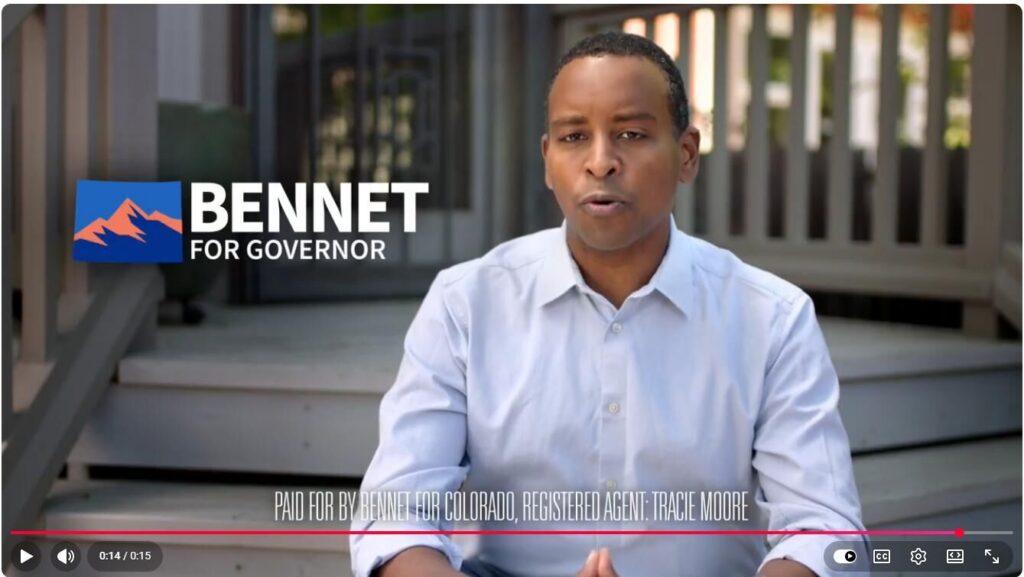
Bennet’s gubernatorial ads say U.S. Senate committee paid for them
Marianne Goodland
marianne.goodland@coloradopolitics.com
Updated 5 days ago
Update: as of Wednesday morning, at least one of the ads, featuring Colorado’s Democratic congressional delegation, has been changed to include the disclaimer “paid for by Bennet for Governor.” A series of TV commercials for U.S. Sen. Michael Bennet’s gubernatorial...
PREV
PREVIOUS

Brauchler, Brophy give a Colorado GOP view of the Supreme Court shuffle
Donald Trump’s nominee for the U.S. Supreme Court got a ringing Colorado endorsement from two state heavyweight Republicans online Wednesday night. District Attorney George Brauchler, the GOP nominee for attorney general two years ago, and former state Sen. Greg Brophy, a one-time gubernatorial candidate, gave their views to members of a new group called Confirm […]

Coronavirus in Colorado: The latest numbers
There are now 7,453,829 coronavirus cases in the U.S. and 210,127 deaths, according to Johns Hopkins University. The latest COVID-19 numbers in Colorado (Updated on Oct. 5): – 73,054 cases, including 13,811 in Denver County – 947,395 people tested – 2,068 deaths among cases, including 434 in Denver County – 2.83% fatality rate in the […]