

Court: El Paso County judge issued potentially-coercive instruction to jury

An El Paso County judge improperly told a deadlocked jury to continue deliberating without analyzing whether the instruction might coerce them into a verdict, the Court of Appeals ruled on Thursday.
“In sum, when faced with a jury question that indicates the possibility of an impasse, a trial court cannot simply tell the jury to continue deliberating,” wrote Judge Neeti Vasant Pawar for the three-member panel in reversing all of the defendant’s convictions.
Fountain police found Latrice Monique Black asleep in her vehicle outside of a Walmart. Nearby were two small, empty whiskey bottles. The first officer to arrive physically and audibly roused her, and after several minutes awake Black was able to converse with police and paramedics.
While the first responders attended to Black, another officer reviewed the store’s surveillance tapes, which showed Black pulling her car into the parking lot an hour prior and not leaving the vehicle. The officer told his colleagues that they should arrest her for driving under the influence.
Black yelled that she had not driven anywhere and had committed no crime as officers removed her from the car.
Getting her into the patrol car, one officer struck her leg to prompt her to put it all the way in the vehicle, and Black scratched another officer’s arm with her fingernail leaving a “very faint mark.” El Paso County prosecutors charged her with DUI, resisting arrest and — for the scratch — second degree assault on a peace officer.
After approximately one day’s deliberation, the jury sent a question to the court: “What happens if we can’t come to a unanimous decision on only one charge?”
District Judge David A. Gilbert indicated that he was “not all that clear on this,” and “we don’t know what they mean by the question.” Nonetheless, he did not believe the jury was indicating they were at an impasse and told them: “please continue with your deliberations at this time.”
A half hour later, the jury convicted Black on all counts, but returned a guilty verdict on a lesser offense of third degree assault. For the assault conviction, Black received two years and one day in jail with work release.
The 1896 U.S. Supreme Court case of Allen v. United States established the permissibility of a judge instructing a deadlocked jury to keep deliberating. One version of the Allen instruction asks jurors who are committed to guilt to reassess “if the evidence is really convincing enough,” and likewise requests jurors leaning toward acquittal to “ask yourselves if the doubt you have is a reasonable one.”
Some states, however, do not allow Allen instructions because they are deemed coercive, putting pressure on the jurors in the minority to change their minds. In the appeals court’s opinion, Pawar indicated that the level of coercion is dependent on context, and the Colorado Supreme Court has not issued a blanket rule.
“If it is early in deliberations and the jury is making progress towards a verdict, an instruction to continue deliberating, even an unqualified one, carries little coercive risk,” she wrote. “That same instruction, however, given to a jury that has been deliberating for longer and is making little or no progress towards a verdict, carries significant coercive risk.”
In other words, “the coercive risk attached to any instruction to continue deliberating increases with the intractability and duration of the jury’s impasse,” Pawar summarized.
The court emphasized that trial judges may not give jurors an instruction that would incite them to surrender their “conscientious convictions” for the sake of unanimity. However, the judge in Black’s case did not inquire about the nature of the deadlock, and whether it was hypothetical or truly reflected a lack of progress.
“The best we can do is say that, based on the jury’s question, progress towards a verdict may have been unlikely or impossible (though the latter is less plausible),” Pawar wrote. “If either was true, the court’s unqualified instruction to continue deliberating was coercive.”
While the appellate panel did not determine conclusively that Gilbert’s instruction was coercive, they also could not say it had zero effect on Black’s convictions. Because there was no indication which charge caused the impasse, the panel elected to reverse all of Black’s convictions.
Although Black also argued there was insufficient evidence to prosecute her for the assault charge, the court agreed that she may be retried for that offense because officer testimony and photographs indicated bodily injury.
The case is People v. Black.


USPS ballot rule faces lawsuit from Colorado, other states
Thelma Grimes
thelma.grimes@coloradopolitics.com
Updated 1 hour ago
Colorado, along with 25 other states, filed a lawsuit against the U.S. Postal Service to challenge a new rule that seeks to restrict the mailing of ballots to American citizens in an eligible voters list. Colorado relies heavily on the...

Trump defends pause on beef tariffs: Prices are ‘coming down very rapidly’
Naomi Lim
naomi-lim@coloradopolitics.com
Updated 2 hours ago
President Donald Trump defended his decision to pause tariffs on some beef imports, even as Republicans criticize the decision. “Prices are coming down very rapidly, and now beef is starting to come down,” Trump told The Glenn Beck Program on...
Denver murder, assault convictions reversed due to faulty jury instructions
Michael Karlik
michael.karlik@coloradopolitics.com
Updated 2 hours ago
Colorado’s second-highest court reversed a defendant’s convictions for murder and assault last week after concluding a Denver judge incorrectly omitted key jury instructions that could have affected the verdict and sentencing. Stephen C. Swainson fatally stabbed Israel Casillas in downtown...

This is how much Colorado will receive from massive Meta child safety settlement
Thelma Grimes
thelma.grimes@coloradopolitics.com
Updated 46 minutes ago
As part of a sweeping multistate agreement, Meta Platforms, Inc. — the parent company of Facebook and Instagram — has agreed to pay more than $17 billion and adopt extensive child-safety changes to its operations. Colorado Attorney General Phil Weiser...
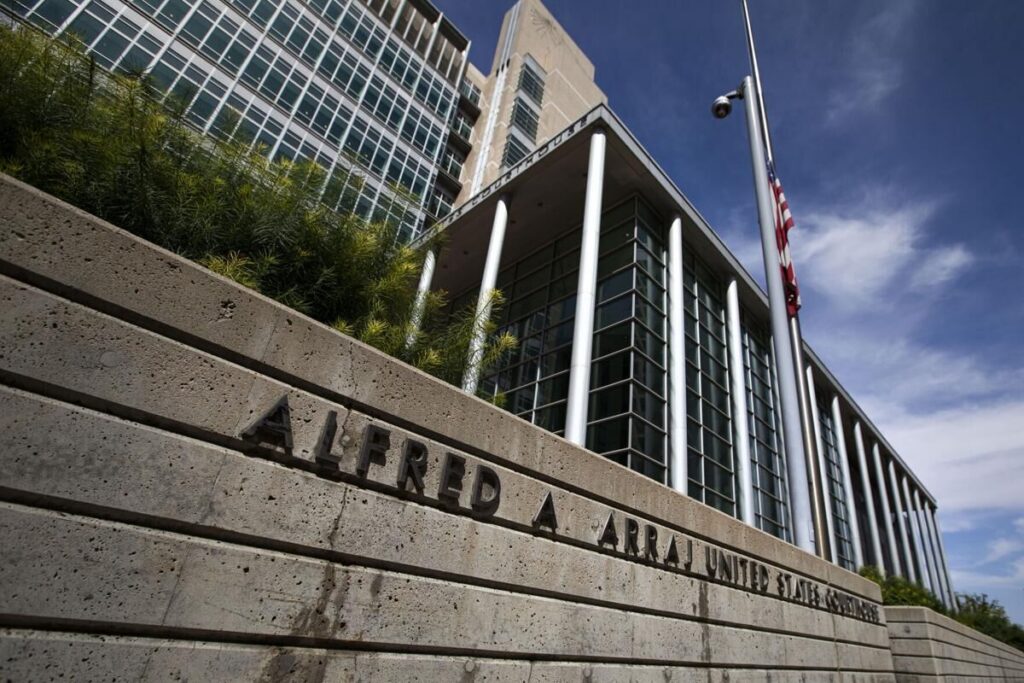
‘Understand people for who they are’: 2 federal judges talk about compassion in courtroom
Michael Karlik
michael.karlik@coloradopolitics.com
Updated 4 hours ago
Before taking the bench in 2022, U.S. District Court Judge Charlotte N. Sweeney was an employment discrimination attorney. While the cases could be emotionally charged, they were different from the criminal proceedings she is now handling. “It wasn’t necessarily affecting...

Trump lowers flags to half-staff for Dolly Parton: ‘The World loves you’
Naomi Lim
naomi-lim@coloradopolitics.com
Updated 24 hours ago
President Donald Trump is honoring the life of country music legend and philanthropist Dolly Parton by ordering federal buildings across the country to lower flags to half-staff for a week. “Very sad to report that Dolly Parton, one of the...
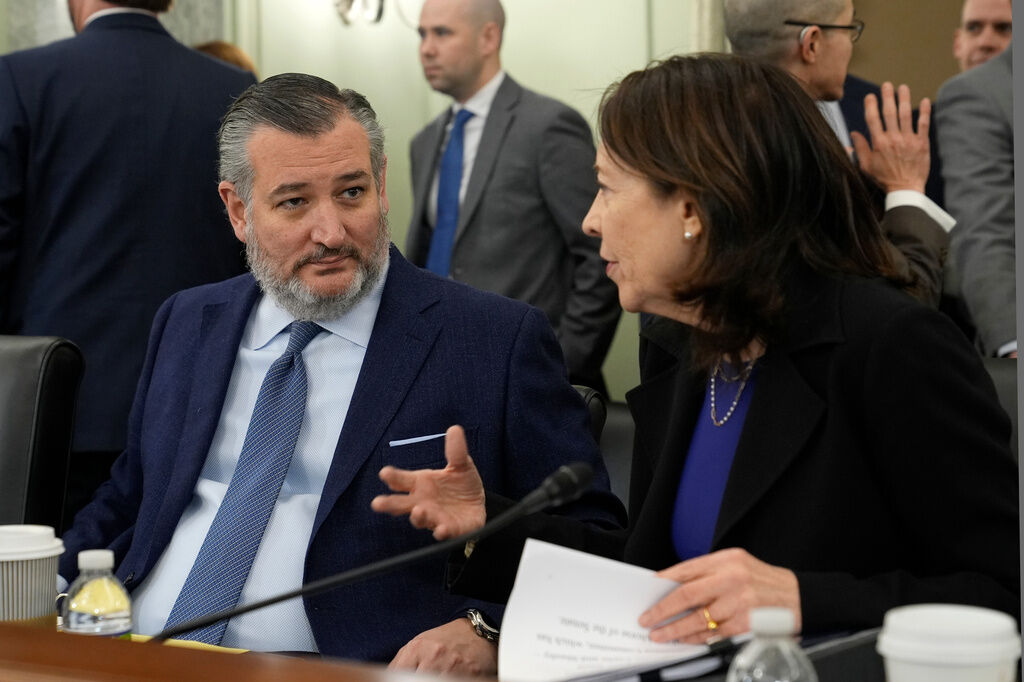
Ted Cruz suggests GOP realignment coming after Trump leaves office
Emily Hallas
emily-hallas@coloradopolitics.com
Updated 24 hours ago
Sen. Ted Cruz (R-TX) on Monday suggested the Republican Party could embrace a directional shift after President Donald Trump leaves office, a transition that promises to leave a gaping hole in the GOP. Cruz is known as a critical ally...

2 Colorado State troopers shot near Woodland Park; suspect killed
DEBBIE KELLEY
debbie-kelley@coloradopolitics.com
Updated 23 hours ago
Two Colorado State Patrol troopers were hospitalized, and a suspect is dead after a shooting during a traffic stop Tuesday. The initial incident happened at about 7:15 a.m., when a resident reported suspicious activity in the area near milepost 286...

Aurora moves forward with data center regulations
Kyla Pearce
kyla.pearce@gazette.com
Updated 23 hours ago
The Aurora City Council approved moving forward with two new regulations on data centers and directed staff to come back at the next study session with others. At a council meeting in early August, council members directed city management to...

Aurora City Council considers stricter food truck regulations
Kyla Pearce
kyla.pearce@gazette.com
Updated 23 hours ago
The Aurora City Council is considering passing laws to limit the number of food trucks on properties in the city and how and when they operate. Councilmember Angela Lawson, who sponsored the ordinance, said she understands the importance of food...
PREV
PREVIOUS

Facing economic and family stress, fewer Colorado students are enrolling in college
The coronavirus pandemic is causing fewer students to enroll in Colorado’s community college system this fall, especially those that are first-generation and low-income. The roughly 9% drop in enrollment highlights the brutal situation that COVID has created and decisions thousands of students face. The pandemic also is altering student behavior patterns. Typically, community college enrollment […]

1 million masks given to Colorado teachers
The state provided public and private schools across Colorado with more than 1 million medical-grade face masks, officials said Thursday. Schools throughout the state have opened, with a variety of methods employed from in-person and hybrid classes to remote and online learning. But no matter what blend of teaching schools opted into, districts received a […]