

Colorado meat packers move ahead tentatively on coronavirus
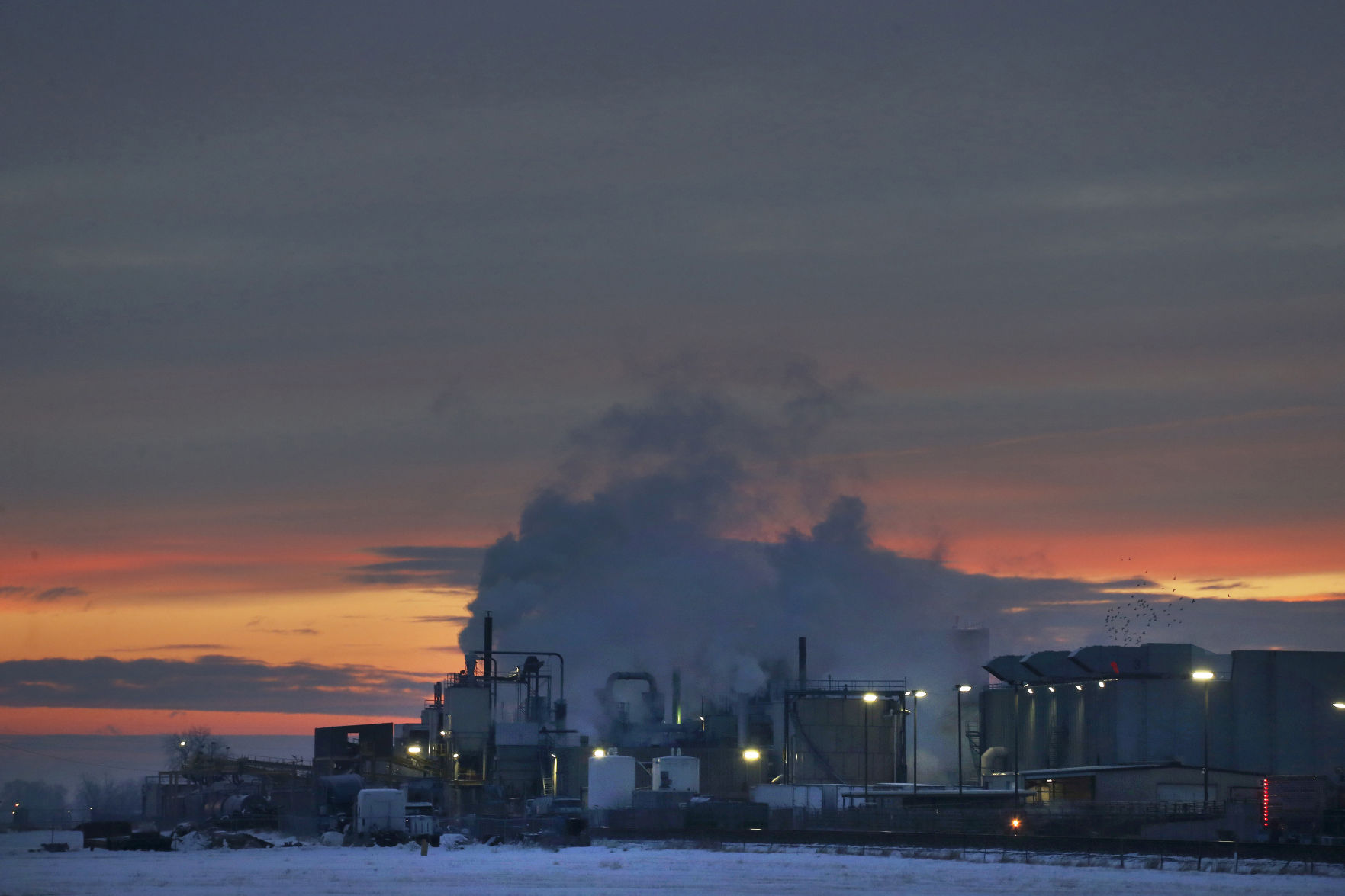
The meat is safe, the employees might not be; that’s the message from meat packers across the country as they scramble to remain open and keep employees safe.
“The health of our team is absolutely critical,” said Jarrod Gillig, the vice president of operations for Cargill Meat Solutions, which operates a 2,100-employee plant in Fort Morgan. “We’ve got a large group of folks there who are working diligently every day to make sure they can put food on the table for people across North America, and quite frankly, the world with many of our products.”
He said Cargill “continues to take a lot of pride” in its food safety, and the food shortage threat could eventually be a problem, but so far so good. Empty shelves have been the product of panic buying, as producers work on new ways of ensuring food can get from farms to tables.
Coronavirus is not a food-borne illness, but meat plants typically have featured workers almost elbow-to-elbow butchering and preparing meat for a hungry globe, and the illness has shaken public faith in the health and perhaps steady supply to grocers, restaurants and others who feed people.
RELATED: Colorado meat plant, site of coronavirus outbreak, reopening
“The supply chain continues to work, though we’re clearly at a reduced rate,” Gillig said, declining to predict how long the supply chain can hold out if the national outbreak get worse instead of better.
The company, like others, is figuring out how to screen its workers for elevated temperature, provide social distancing by adjusting shifts and spacing inside the plant, plus physical partitions between employees.
Cargill scaled back operations at its Fort Morgan plant from two shifts to one on April 16 after finding that as many as 18 employees were sick and one had died. The number has since grown to 23.
“There’s no doubt it’s stressful and different,” Gillig told Colorado Politics Friday.
Dozens of meatpacking plants across the country are under threat of the illness, and a joint investigation by USA TODAY and the Midwest Center for Investigative Reporting this week indicated things could get worse.
The report found that more than 150 of country’s largest slaughterhouses are in counties where coronavirus cases are already among the highest in the country, accounting for perhaps one-third of the nation’s beef, pork and poultry production.
The Swift Beef Co. plant in Weld County and Cargill in Morgan County were cited in the analysis, which you can read by clicking here.
The Weld County Department of Health reported Thursday that there have been 1,263 confirmed local cases and 82 deaths tied to the virus since March 13, once of the highest rates of infection in the state. Neighboring Morgan County has had 214 confirmed cases and eight deaths.
As of Thursday, Colorado has had 11,262 confirmed cases and 552 deaths from 56 of the state’s 64 counties.
The JBS USA plant in Greeley has been the site of more than 100 confirmed cases and three deaths among its more than 6,000 employees. The plant suspended most of its Colorado operations on April 9 and reopened Thursday.
“We believe our partnership with the CDC, the National Institute for Occupational Safety and Health and the (Weld County health department) has enhanced our prevention protocols and will give our team members confidence to safely return to work,” said Chris Gaddis, the head of human resources for JBS USA.
The company said it has continued to pay its Greeley workers and stayed in touch with them via phone calls, emails and text message to monitor their health and offer tips. Masks have been required for everyone at the Greeley plant since April 2, according to JBS. The company also has expanded its space with tents to allow for more social distancing, it said.
RELATED: INSIGHTS | For at-risk workers, their food is our food
JBS noted that there were 275 cases reported in Weld County after the plant closed.
Besides employees at its Fort Morgan plant, among 39 domestic facilities, Cargill has about 160,000 workers in 70 countries.
On Monday, Cargill announced it would temporarily close its beef plant in High River in Alberta in Canada, because of the COVID-19 outbreak, after the local chief medical officer announced there were 484 cases of the coronavirus in the province tied to the Cargill plant, including 360 workers. One worker at the plant died.
Cargill officials on Wednesday reported a confirmed coronavirus case at a plant in Friona, Texas, and moved back to prevent an outbreak, including measures on testing, face masks, social distancing, stepped-up cleaning and enforcing 14-day quarantine protocols.
Employees also have received bumps in wages as a bonus because of the health risks.
The JBS meat packing plant in Greeley reopened Thursday after shutting down from a deadly outbreak, killing at least three workers. The JBS plant is one of the state’s largest employers and one of the largest protein producers in the world.
The Trump administration last week announced a $19 billion program to help agriculture sector by distributing food to families in need, including buying $3 billion in dairy, produce and meat for food banks on top of about $16 billion in direct payments to farmers and ranchers.
The $2.2 trillion coronavirus relief package that passed last month included $9.5 billion in assistance to agricultural producers plus $14 billion for the U.S. Department of Agriculture’s Commodity Credit Corp.
Cargill also is putting its money to work. On April 16, Cargill has pledged $35 million to COVID-19 relief and recovery, including providing 16 million meals to feed an estimated 150,000 families across 16 cities in India.
The company also has donated $1 million to World Food Program USA to fight global hunger and work and support school meal programs, as well as $1 million to Minnesota Central Kitchen for emergency food relief while turning its cafeteria in its Minneapolis headquarters to a preparation site for 5,000 meals a week.
Cargill has been in the unflattering spotlight in Colorado before.
In 2018, the company agreed to pay $1.5 million out of court to settle religious discrimination by 138 people who walked out of the Fort Morgan plant in 2015.
The Denver office of the U.S. Equal Employment Opportunity Commission found in 2017 “reasonable cause to believe Somali, African and Muslim employees were harassed, denied their requests for prayer breaks, and fired,” according to a EEOC.

Flesh-eating cattle parasite spreads beyond Texas as new screwworm cases found | OUT WEST ROUNDUP
The Associated Press
the-associated-press@coloradopolitics.com
Updated 4 days ago
NEW MEXICO Screwworm spreads beyond Texas Three more cases of the New World screwworm have been confirmed, including one found in a dog in New Mexico, outside the main cluster in Texas, demonstrating the difficulty of stopping a resurgent pest...

Michael Dougherty is literally running for attorney general in Colorado Democrat’s 1st TV ad
Ernest Luning
ernest.luning@coloradopolitics.com
Updated 2 days ago
Democratic attorney general candidate Michael Dougherty, the Boulder County district attorney, runs laps around the judicial complex in Denver that houses the office he’s seeking in a TV ad released Friday that includes a subtle dig at one of his...

Group aims to add right to hunt and fish to Colorado Constitution
Marissa Ventrelli
marissa.ventrelli@coloradopolitics.com
Updated 1 day ago
A group is seeking to make Colorado the 25th state in the nation with an established constitutional right to hunting and fishing through a proposed ballot initiative. Backed by the International Order of T. Roosevelt, a group dedicated to preserving...

Colorado Politics Calendar June 15-21
Rachael Wright, Special to Colorado Politics
rachael.wright@coloradopolitics.com
Updated 5 days ago
CoPo’s weekly political calendar helps you find political and public policy events throughout Colorado. It includes candidate and issue campaign events, public policy meetings, court hearings, state and local party conventions, assemblies, debates, rallies, parades, speaking engagements, traveling dignitary appearances,...

A primary brings out primal instincts | SONDERMANN
Eric Sondermann
eric-sondermann@coloradopolitics.com
Updated 4 days ago
There are no Stanley Cup finals or NBA title showdowns involving local teams this June. In their place, we are inundated with primary election campaign ads. Coloradans can be excused for missing the diversion and alternate programming. But life can...
Dem-GOP tension dominates 1,000-bill legislative session | A LOOK BACK
Rachael Wright, Special to Colorado Politics
rachael.wright@coloradopolitics.com
Updated 4 days ago
Forty-Five Years Ago This Week: “I can honestly say that until now, we got along well with the governor’s office,” said House Minority Leader Federico Peña, D-Denver. “We visited frequently with the staff. And you didn’t see certain legislators speaking...
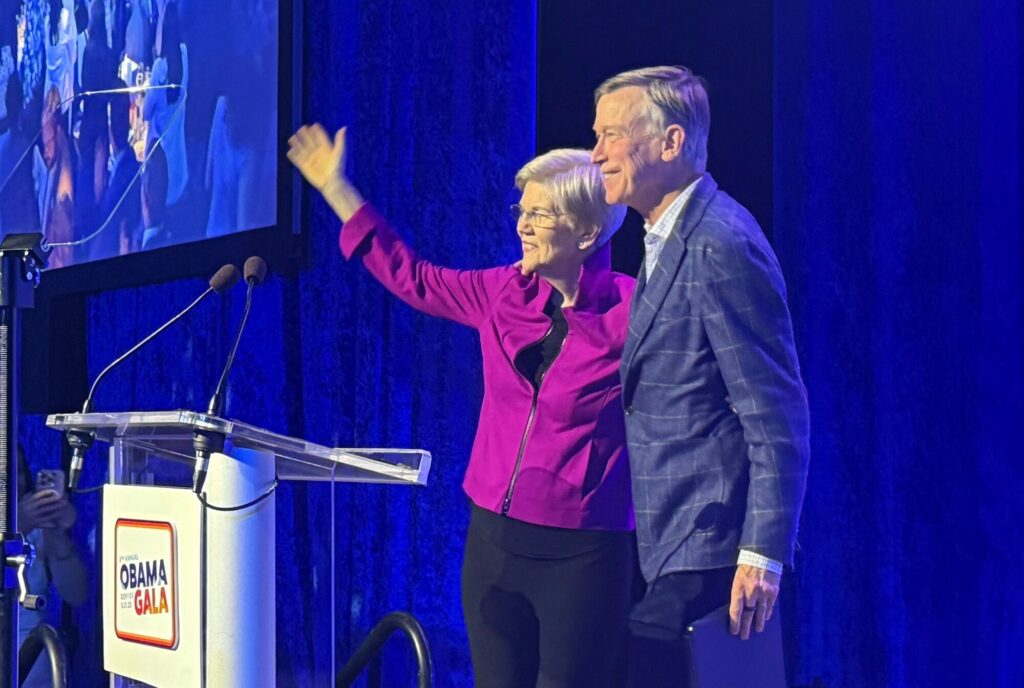
Hickenlooper lands endorsements from Elizabeth Warren, Ministerial Alliance in US Senate primary
Ernest Luning
ernest.luning@coloradopolitics.com
Updated 2 days ago
U.S. Sen. John Hickenlooper won endorsements this week from a progressive Democratic colleague and a coalition of metro-area African American faith leaders as voting began in Colorado’s primary election. U.S. Sen. Elizabeth Warren of Massachusetts and the Greater Metro Denver...
Colorado justices say insurers may access policyholders’ medical info in denied-benefits litigation
Michael Karlik
michael.karlik@coloradopolitics.com
Updated 13 hours ago
The Colorado Supreme Court declined on Monday to expand its narrow prohibition on insurance companies accessing policyholders’ medical information, clarifying that a dispute over an insurer’s bad-faith decision to deny benefits is the only situation where a company is limited...

House District 14: Businesswoman, consultant square off in GOP primary
Mary Shinn
mary-shinn@coloradopolitics.com
Updated 2 days ago
Firearms training company owner Ava Flanell will face Troy Vanderhule, the chief fundraising officer for Dobson Philanthropic, in the June 30 Republican primary for state House District 14, an area in northern Colorado Springs. Flanell was appointed to the seat...
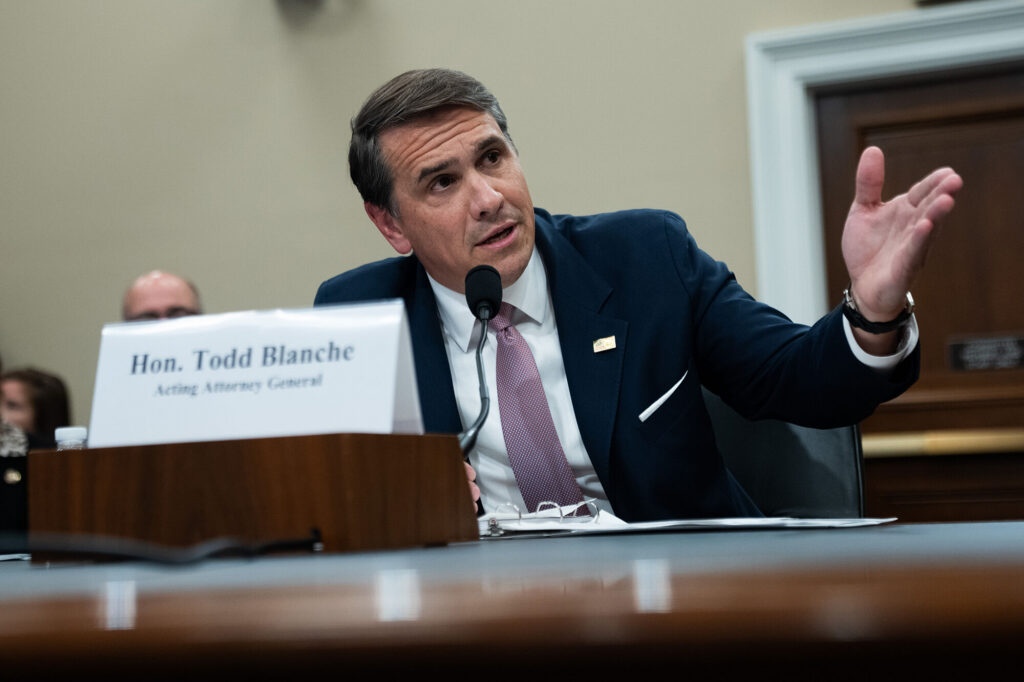
Federal judge wants Todd Blanche to swear in writing anti-weaponization fund won’t be revived
Jack Birle, Washington Examiner
jack.birle.washington.examiner@gazetteedit.wpenginepowered.com
Updated 2 days ago
A federal judge maintained a block on the Department of Justice’s $1.776 billion anti-weaponization fund Friday, despite the DOJ claiming they have abandoned the planned fund aimed at compensating allies of President Donald Trump and others who say they were politically targeted by...
PREV
PREVIOUS
Nearly 75% of Colorado restaurant workers laid off or furloughed since March, surveys show
As new surveys show layoffs and lost sales continue to hammer Colorado’s restaurant industry because of the COVID-19 pandemic, some local restaurant owners say they’re hanging on as they await the expected reopening of their dining rooms in mid-May. Nine of every 10 restaurant operators in the state – 91% – say they’ve laid off […]

Nursing homes with coronavirus outbreaks had more citations from state regulators
Outbreaks in nursing homes, which account for 64% of the state’s coronavirus deaths, have hit facilities that received more citations from the state for deficiencies of care, according to an analysis of data provided by the Colorado Department of Public Health and Environment. Out of the 123 facilities listed in its report, which also now include […]