

Oregon LNG terminal, pipeline seen as key to reviving Western Slope gas patch
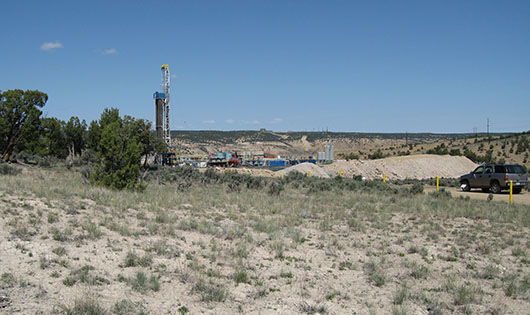
No one even remotely involved in natural gas production on Colorado’s Western Slope wants to continue to party like it’s 1999. Back then prices were below $2 per million British thermal units and there were just 94 well starts in Garfield County.
Last year, prices continued to languish below $2 per million British thermal units (from a high of more than $13 in 2008), and there were only 173 well starts in Garfield County — the lowest number since 1999. Earlier this year, after draconian staffing cuts on both the Western Slope and Denver in 2015, the county’s biggest drilling company -— WPX Energy — sold all its Piceance Basin holdings.
And while Democrats at the state Legislature continue to seek more regulation and greater local control over drilling operations on the Front Range and citizen activist groups tout anti-fracking ballot initiatives, Republicans and even some Democrats in the hard-hit gas fields of Garfield, Mesa and Rio Blanca counties keep searching for any possible way to reignite the industry.
Democratic Gov. John Hickenlooper earlier this month fired off a letter to the Federal Energy Regulatory Commission requesting a rehearing of the previously rejected proposal for the Jordan Cove liquefied natural gas terminal and Pacific Connector Pipeline Project.
In the works since 2013 and heavily backed by Grand Junction energy interests, Jordan Cove is a proposed LNG shipping terminal at Coos Bay, Oregon, which would be connected via 232 miles of new pipeline into the existing Ruby Pipeline that runs from Oregon to Wyoming and could transport Colorado gas.
“In denying the project, FERC will not only be denying the positive economic benefits to the development areas, it will also be denying the far-reaching benefits beyond the Pacific Northwest,” Hickenlooper wrote. “The project terminal is the only LNG facility on the West Coast that would directly link Colorado to new energy markets via the Ruby Pipeline.”
Those new energy markets include recent deals between Jordan Cove, which is owned by Canadian company Veresen, and Japanese JERA Co., the world’s largest LNG buyer, and Itochu, another Japanese energy giant. Those deals weren’t in place before the FERC rejected Jordan Cove last month based on a lack of proven buyers for its product.
David Ludlam, executive director of the West Slope Colorado Oil & Gas Association, earlier this week praised Hickenlooper’s support for the project that the Grand Junction business community has been tracking and backing for three years now — ever since a Colorado Mesa University and Grand Junction Economic Partnership study identified Jordan Cove as the region’s best bet for reaching new markets and boosting the moribund industry.
“The opponents of this project are so myopic and narrow and very much limited to where the terminal is actually being built,” Ludlam told The Colorado Statesman. “This project to me is the opposite of that. It’s a project that transcends those traditional political boundaries. This is the anti-Keystone. It’s a project that has support from Democrats and Republicans alike.”
Both Colorado senators, Republican Cory Gardner and Democrat Michael Bennet, also signed onto Hickenlooper’s letter, as did the House member for the region, Republican Scott Tipton. But the FERC denial wasn’t based solely on a lack of market for LNG exports,
According to the FERC rejection, “Pacific Connector Pipeline would impact 157.3 miles of privately-owned lands, held by approximately 630 landowners (54 of which have intervened).” Landowners feared negative economic impacts, and the FERC concluded that, without LNG contracts, the project wasn’t in the public interest.
“So now FERC is in a sort of a political giveaway to certain constituencies and denied the project on such narrow grounds that it’s hard to imagine that with Gov. Hickenlooper’s support … and now with arguably the world’s two best customers for LNG, that FERC’s going to be able to deny it again,” Ludlam said. “But political appointees are political appointees, and by nature it’s a political process.”
Ludlam added that Veresen officials were planning to be in Grand Junction this month touting the project to business leaders and local media. The Pacific Connector Pipeline is being proposed by Oklahoma-based Williams Partners, which used to own WPX Energy’s Piceance holdings. Ludlam says it’s not a given that natural gas producers in the region would land the contracts if and when Jordan Cove is approved, but he said local producers would be very competitive.
“We’re going to leave no stone unturned as far as advocating for this project, because frankly there’s no other energy infrastructure project west of the Continental Divide that is as important as this one for the Piceance Basin,” Ludlam said.
In an interview with The Statesman earlier this legislative session, state Sen. Ray Scott, R-Grand Junction, said there’s really not much the Legislature can do to turn around the gas-price slump and start to move some of the gas glut currently in storage because of limited demand.
“How do we export our LNG and coal and get it over there, because they have a demand in Asia?” Scott said. “Those are the big questions that we’ve got to get people to work on at the federal and state level, and the industry obviously has to be involved as well to see if we can make something work.”
Colorado Politics Must-Reads:

Judge grants partial injunction to GEO in fight against state health inspection law
Kyla Pearce
kyla.pearce@gazette.com
Updated 4 hours ago
A judge ruled Thursday that The GEO Group does not have to follow parts of a new state law requiring more frequent health and safety inspections at the U.S. Immigration and Customs Enforcement processing center in Aurora. Under the order...

Parker man faces 20 years to life for serial sexual assaults
Nicholas Fogleman
nicholas.fogleman@denvergazette.com
Updated 7 hours ago
A 25-year-old Parker man who sexually assaulted three women in 2025 pleaded guilty Wednesday and will serve 20 years to life in prison. Javier Rodriguez-Andrade pleaded guilty to charges stemming from three sexual assaults involving women ages 19 to 24. ...
Buttigieg performs best among Democrats against Rubio or Vance in possible 2028 contest: Poll
David Zimmermann
david-zimmermann@coloradopolitics.com
Updated 8 hours ago
Former Transportation Secretary Pete Buttigieg appears to be the Democratic Party’s best chance at winning the presidency against Secretary of State Marco Rubio or Vice President JD Vance in 2028, according to a poll released on Thursday. In hypothetical matchups...

Douglas County moves to Stage 1 fire restrictions following recent rain
Nicholas Fogleman
nicholas.fogleman@denvergazette.com
Updated 7 hours ago
Douglas County has downgraded its fire restrictions from Stage 2 to Stage 1 on Thursday following recent rainfall and moderate fire conditions, according to the Douglas County Sheriff’s Office. The change applies to unincorporated Douglas County, as well as the...
Divided appeals court upholds warrantless DNA collection in Colorado cold case, cautions of government overreach
Michael Karlik
michael.karlik@coloradopolitics.com
Updated 5 hours ago
Colorado’s second-highest court upheld the warrantless collection of a suspect’s DNA from a discarded soda can as constitutional on Thursday, while warning about potential abuse of DNA privacy in the absence of further guardrails. By 2-1, a three-judge Court of...
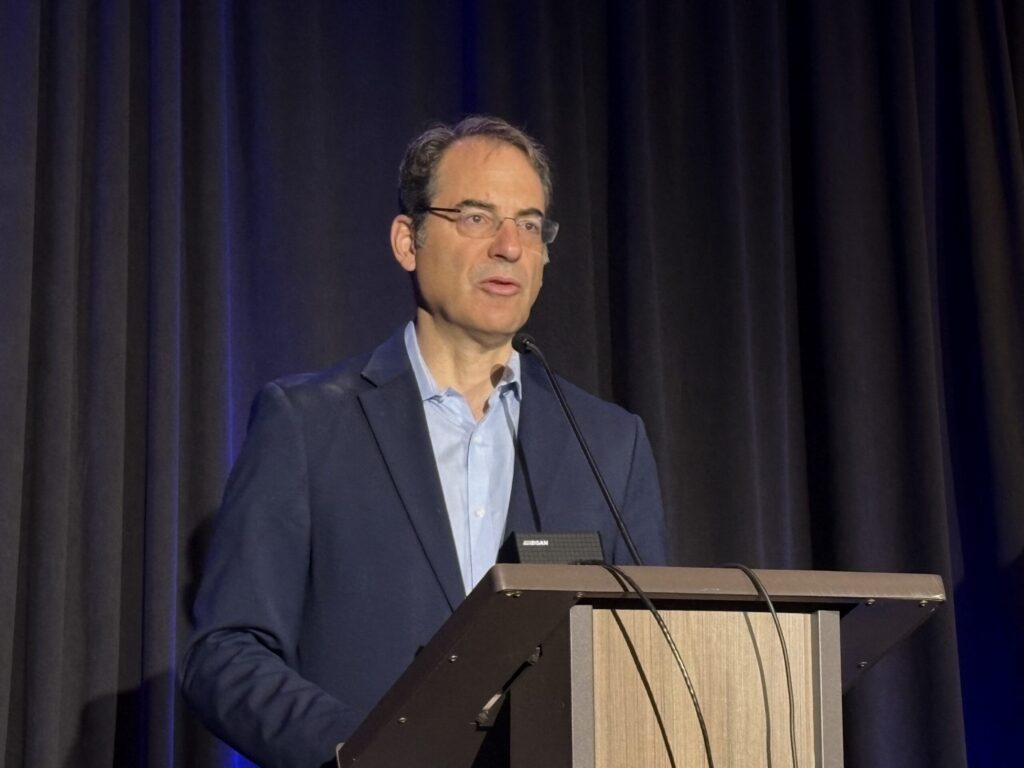
Democratic gubernatorial candidate Phil Weiser promises to appoint rural outreach director, water adviser
Marianne Goodland
marianne.goodland@coloradopolitics.com
Updated 5 hours ago
Democratic gubernatorial candidate and current Attorney General Phil Weiser told the Colorado Water Congress Thursday he intends to appoint a rural outreach director and a water policy adviser should he win the election in November. Weiser’s speech at the Steamboat...
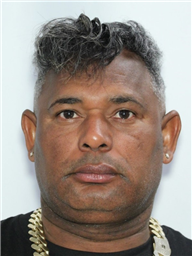
Man charged in Northglenn homicide of wife
Matt Kyle
matt.kyle@denvergazette.com
Updated 7 hours ago
A man has been formally charged with murder and burglary relating to a homicide last week in Northglenn. Alexei Munive-Rodriguez, 48, was arrested Sunday after he was at large following the homicide, which occurred Friday. Police were dispatched around 10:30...
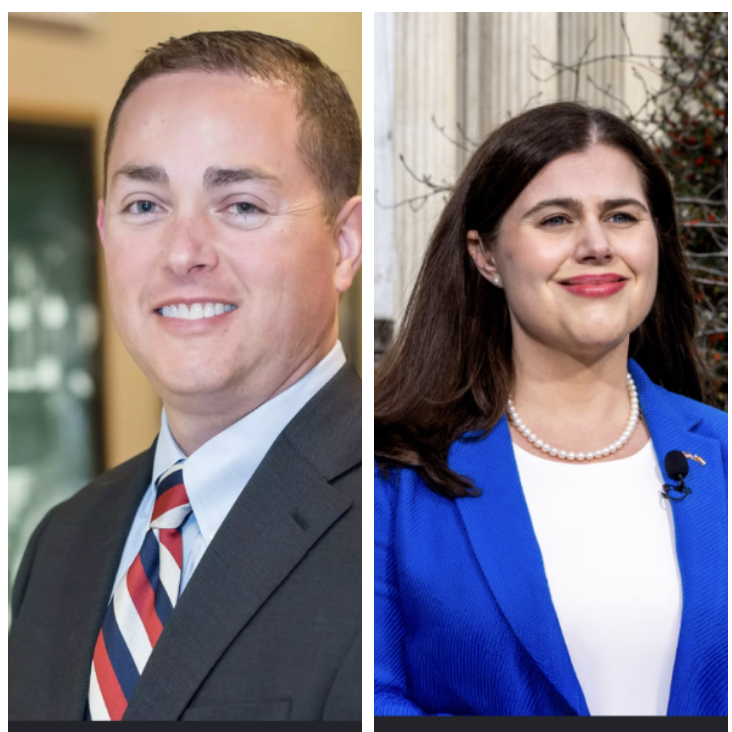
Attorney General candidates present priorities at Colorado Water Congress
Marianne Goodland
marianne.goodland@coloradopolitics.com
Updated 5 hours ago
The two major-party candidates for attorney general — Republican Michael Allen, the district attorney for Teller and El Paso counties, and Democratic Secretary of State Jena Griswold — on Thursday outlined their priorities at the Colorado Water Congress. Griswold attended...

US aircraft carrier arrives in Middle East, relieving long-deployed USS Lincoln
The Associated Press
the-associated-press@coloradopolitics.com
Updated 10 hours ago
WASHINGTON (AP) — The Asia-based USS George Washington aircraft carrier is now operating in the Middle East, the U.S. military said Thursday, relieving a long-deployed carrier following reports of mental health challenges and supply shortages aboard while it was supporting...

Denver named finalist for 2028 Democratic Convention site
Thelma Grimes
thelma.grimes@coloradopolitics.com
Updated 4 hours ago
The Mile High City competes with Boston and Philadelphia The list of cities being considered to host the 2028 Democratic National Convention has narrowed even further, with Denver making the cut as one of the final three, along with Boston...
PREV
PREVIOUS

Not personal: Neville, Leonard on why they oppose Lynne nomination for lieutenant governor
The Colorado House state affairs committee voted 6-2 to approve the nomination of Donna Lynne for lieutenant governor on Wednesday. The hearing went smoothly. Lynne was quick with thoughtful responses to questions. She told jokes that drew laughs. She was familiar with the concerns of committee members because she had met with them individually before […]

Blaha, Frazier fail to make primary ballot for U.S. Senate race
Two more Republican U.S. Senate candidates failed to qualify for the primary ballot, Secretary of State Wayne Williams announced Thursday. Colorado Springs businessman Robert Blaha and former Aurora City Councilman Ryan Frazier both came up short, turning in fewer signatures than required in several congressional districts, leaving just two candidates who will definitely appear on […]