

Colorado court upholds murder conviction despite jury disobeying instructions
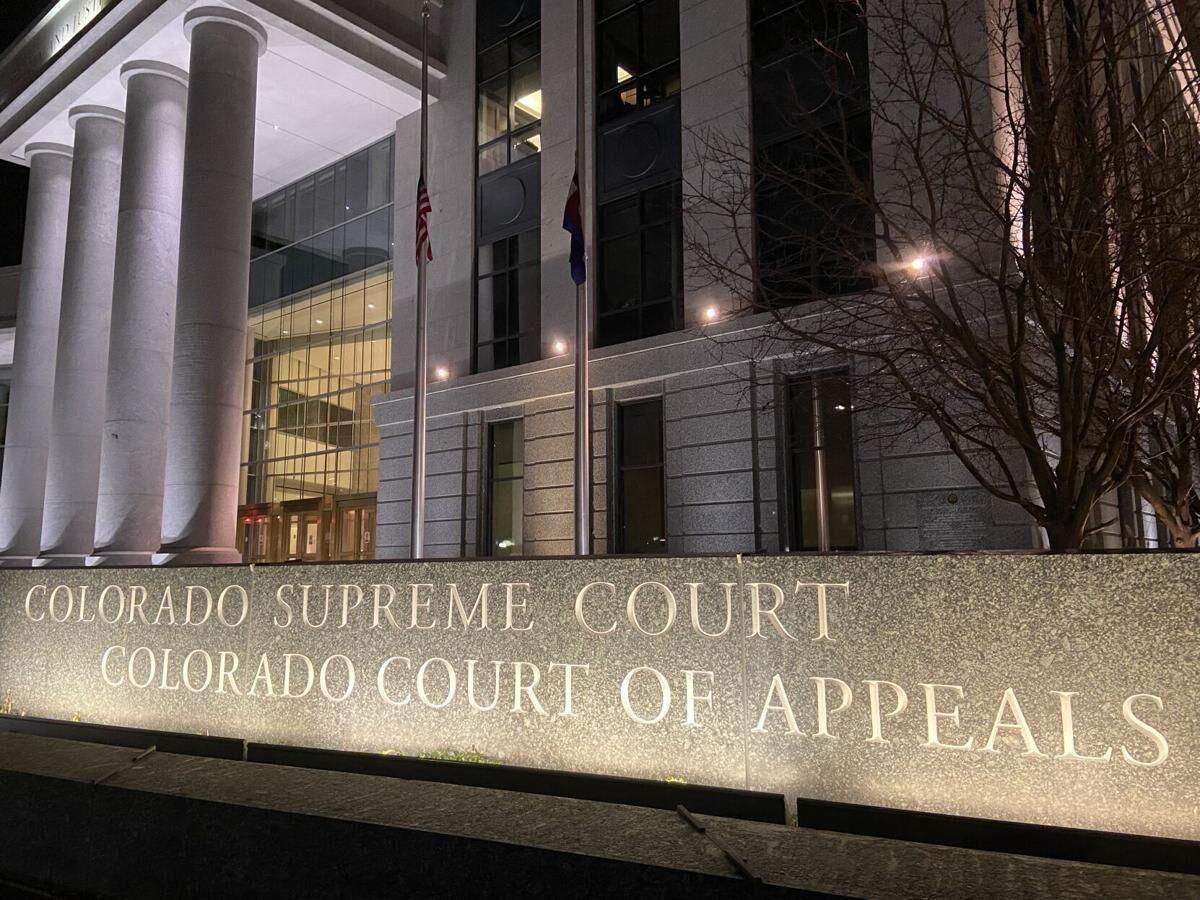
Colorado’s second-highest court upheld an Arapahoe County defendant’s murder conviction last month, even though jurors found he was not the one who shot the victim and the evidence suggested he was not present for the shooting.
A three-judge Court of Appeals panel previously determined that jurors in Jacob Alexander Shockey’s trial disobeyed their instructions and convicted him based upon a theory that they heard about during jury selection but were never instructed to use. Some jurors also provided statements confirming their reliance on the theory. The panel vacated Shockey’s conviction after finding the jury had functionally found him not guilty of killing the victim.
However, the Colorado Supreme Court took no issue with the jury’s actions and returned Shockey’s case to the same appellate panel to resolve his remaining challenges.
Although the panel previously concluded that jurors must have disregarded their instructions in convicting Shockey, Judge Rebecca R. Freyre took the opposite position in the May 28 opinion.
The trial judge “repeatedly instructed the jury — three times before opening statements — that the attorneys might discuss legal concepts, but the jury could only consider the law as the court instructed at the conclusion of all the evidence,” she wrote. “We presume the jury understood and followed these instructions.”
Case: People v. Shockey
Decided: May 28, 2026
Jurisdiction: Arapahoe County
Ruling: 3-0
Judges: Rebecca R. Freyre (author)
David H. Yun
Alex J. Martinez
In the underlying case, there was no dispute that Terrence G. Davis died by gunshot in an Aurora alleyway in 2017. Two men, Shockey and Parus Mayfield, were both present, but each said the other was responsible for shooting Davis. Witness testimony was unreliable and there was evidence suggesting Shockey left the scene prior to Davis’ murder.
Jurors reached two conclusions. First, they believed he was guilty of second-degree murder for causing Davis’ death. Second, they were asked whether the defendant used a gun. No, said the jury, he did not.
The only way jurors could have logically reached that conclusion was by deeming Shockey a “complicitor” — a legal theory holding an accomplice guilty even if another person actually committed the crime.
The idea that Shockey was an accomplice, but not the shooter, arose during jury selection. Although the government advanced the narrative that Shockey alone was the shooter, prosecutor Victoria Klingensmith spent significant time asking jurors to think about and react to the idea of complicity.
She raised the hypothetical scenario of three bank robbers, one of whom is the lookout and another who is the getaway driver. Her goal was to illustrate that they, too, could be guilty of robbery — even if they never went inside the bank.
“You’re OK with that?” Klingensmith, who is now a trial judge, asked one juror.
“They’re all still complicit,” the juror acknowledged.
The defense objected on the grounds that jurors would not be asked to evaluate complicity, but then-District Court Judge Michael Spear allowed Klingensmith to continue.
At the end of trial, the prosecution asked Spear to instruct jurors they could find Shockey guilty as an accomplice. Spear refused, reasoning that “there hasn’t been a lot of information presented that would support a complicity theory.”
After the defense sought to vacate Shockey’s conviction, Spear declined to do so while acknowledging the jury apparently relied on the complicity theory to reach its verdict. Two jurors said as much in statements submitted after the fact.
Subsequently, the Court of Appeals panel agreed Shockey’s conviction could not stand, reasoning that jurors could not have found Shockey guilty of killing Davis — without shooting him — unless they relied on complicity.
“It is apparent that the jury’s verdict, based on the proceedings taken as a whole, convicted defendant on the basis of a complicitor theory,” wrote then-Judge David H. Richman, dissenting only on the question of trying Shockey again for murder. “But defendant’s conviction cannot be upheld on a complicitor theory because it was not submitted to the jury.”
This February, the Supreme Court decided the jury’s actions did not merit reversal of Shockey’s conviction because jurors could simultaneously find Shockey caused Davis’ death without using a weapon. The opinion did not mention how that would have been possible without relying on complicity, as the Court of Appeals had determined.
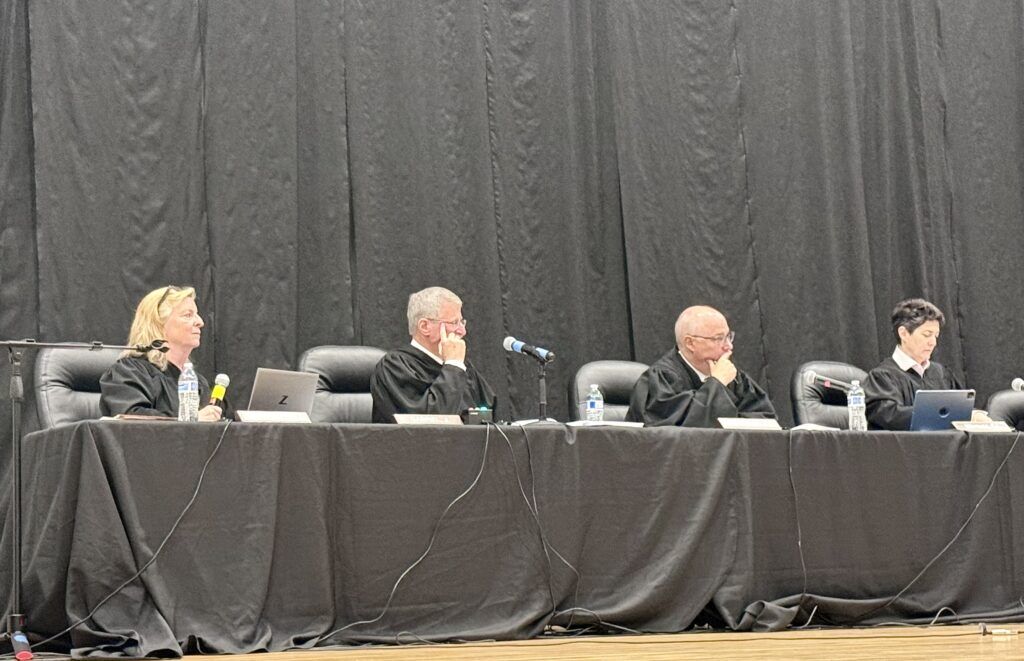
Back before the same appellate panel, but with retired Supreme Court Justice Alex J. Martinez substituting for Richman, the judges rejected the remainder of Shockey’s arguments that protested the prosecution’s extensive comments about complicity.
In the absence of “bad faith, the prosecution’s discussion of a concept that later ends up not being an issue at trial does not require reversal,” wrote Freyre. Further, given Spear’s allowance of the complicity discussion, “the prosecution did not engage in misconduct by following that ruling.”
The panel also determined there were no grounds to consider the jurors’ posttrial statements about their reliance on complicity, as there is a blanket prohibition on inquiring into jury verdicts.
While there is an exception for “extraneous” information that is injected into jury deliberations, the complicity theory “is not ‘extraneous’ because it was presented to the jury during voir dire as part of the judicial proceedings,” Freyre concluded.
The case is People v. Shockey.

Divided appeals court reverses conviction after judge declined to define ‘bludgeon’
Michael Karlik
michael.karlik@coloradopolitics.com
Updated 9 hours ago
Colorado’s second-highest court reversed a Jefferson County defendant’s felony menacing conviction on Thursday, concluding that the trial judge’s failure to define “bludgeon” for jurors may have affected the outcome. A three-judge Court of Appeals panel divided in unusual ways in...
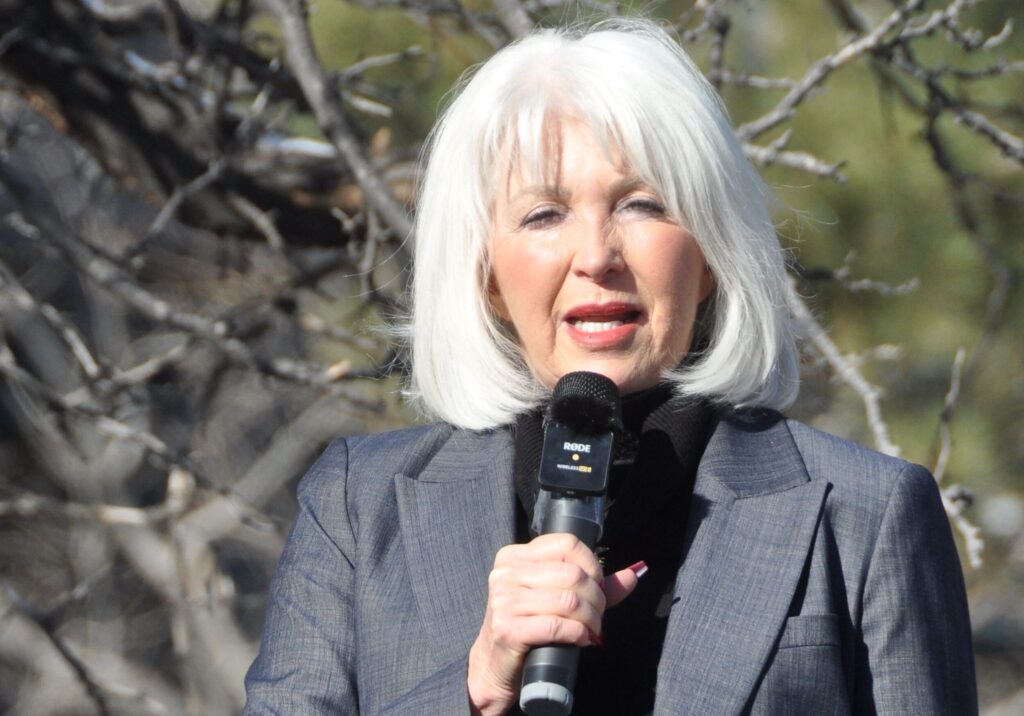
10th Circuit dismisses Tina Peters’ challenge to confinement as moot
Michael Karlik
michael.karlik@coloradopolitics.com
Updated 21 minutes ago
The Denver-based federal appeals court granted the state’s unopposed request on Wednesday to dismiss former Mesa County clerk Tina Peters’ challenge to her confinement as moot. Although Peters received a commutation of her prison sentence last month from Gov. Jared...
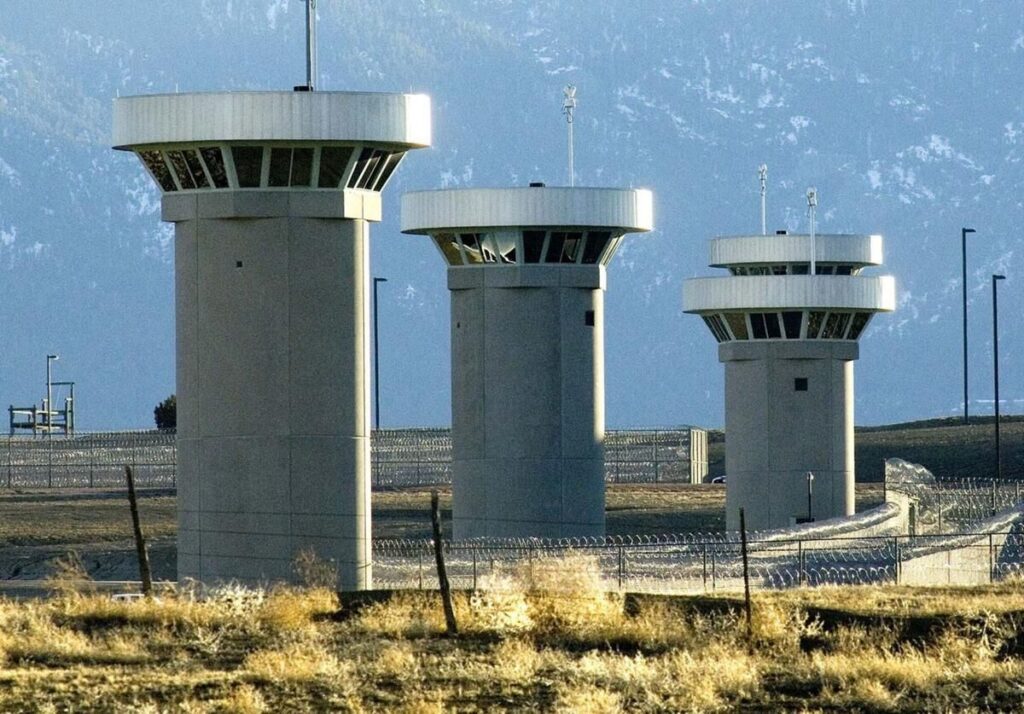
Federal judge declines to recuse from death penalty case after Supermax visit
Michael Karlik
michael.karlik@coloradopolitics.com
Updated 3 hours ago
A federal judge declined to recuse herself last month from a death penalty case arising out of Colorado’s “Supermax” prison, finding that her tour of the facility earlier this year did not bias her decision-making. U.S. District Court Judge Charlotte...
Appeals court clarifies offense of impersonating a peace officer
Michael Karlik
michael.karlik@coloradopolitics.com
Updated 1 day ago
Colorado’s second-highest court clarified this month that a person commits the offense of impersonating a peace officer if they engage in “any conduct” while pretending to be law enforcement. In a case out of El Paso County, Richard James Coulier...
Colorado Supreme Court reverses 2 Chaffee County judges for imposing fee on habeas petitioner
Michael Karlik
michael.karlik@coloradopolitics.com
Updated 2 days ago
The Colorado Supreme Court rejected two separate appeals earlier this month from an incarcerated defendant seeking immediate release from prison, but concluded that two Chaffee County judges incorrectly required him to prepay filing fees for his cases. David J. Gottorff...
Weld County judge wrongly denied bail to murder defendant in gap between law change
Michael Karlik
michael.karlik@coloradopolitics.com
Updated 2 days ago
Colorado’s second-highest court ruled this month that a Weld County judge was wrong to deny bail to a murder defendant in the window between the state Supreme Court’s recognition of the right to bail and the voters’ subsequent overruling of...
Defendants acquitted by insanity are eligible for records-sealing, appeals court says
Michael Karlik
michael.karlik@coloradopolitics.com
Updated 1 day ago
Colorado’s second-highest court clarified last month that defendants who are found not guilty by reason of insanity are eligible to have their criminal records sealed from public view. Judges must seal criminal records if, among other things, a defendant is...
Colorado Supreme Court shuts down ‘new form of representation’ in postconviction cases
Michael Karlik
michael.karlik@coloradopolitics.com
Updated 3 days ago
While unrepresented defendants in postconviction proceedings are permitted to have a court-appointed attorney investigate and augment their claims, that is not the case when a private lawyer authors the original petition, the Colorado Supreme Court decided on Monday. In contrast...
Colorado State Shooting Association files constitutional challenge to firearms dealer law
Marissa Ventrelli
marissa.ventrelli@coloradopolitics.com
Updated 3 days ago
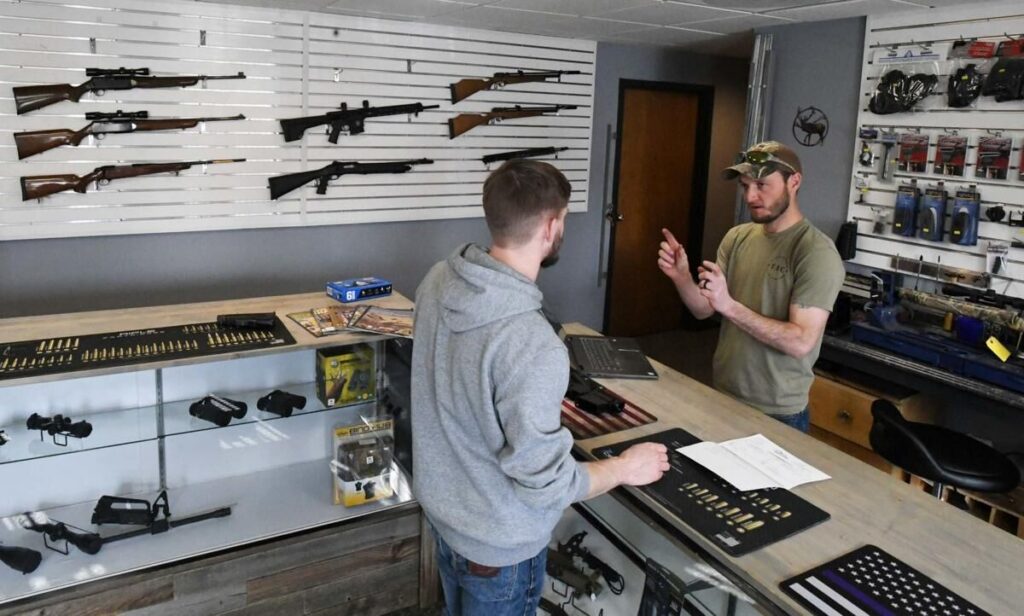
A firearms group has filed a lawsuit challenging a recently signed law expanding regulations for firearms dealers in Colorado. House Bill 26-1126 clarifies that firearms dealers must hold both a federal and state license to operate. The bill also allows the...
Colorado justices walk back appeals court’s expansion of rezoning via ballot box
Michael Karlik
michael.karlik@coloradopolitics.com
Updated 3 days ago
The Colorado Supreme Court ruled on Monday that rezonings of planned-unit developments cannot occur through a vote at the ballot box, reversing an appellate decision that found such changes were fair game for a popular vote. In contrast to traditional,...
PREV
PREVIOUS

July 1 brings new Colorado rules on ammunition purchases, wildfire‑risk scoring and wildlife enforcement
Colorado will usher in a new set of laws on July 1 that touch everything from ammunition sales to insurance transparency and wildlife trafficking enforcement Here is a look at some of the state’s new laws: Ammunition sales Sponsored by Majority Leader Monica Duran, D-Wheat Ridge, and Rep. Lindsay Gilchrist, D-Denver, and Sens. Judy Amabile, […]
Democratic ballots outpace Republicans’ as Colorado's primary vote starts to trickle in
With less than two weeks left before ballots are due in Colorado’s primary election, election officials have logged in ballots from just under 6% of the state’s 4 million active, registered voters, the Colorado Secretary of State’s Office said Thursday. As of noon Wednesday, county clerks reported receiving 230,436 ballots, with ballots cast in the […]