

Wildlife office kills wolf linked to dozens of livestock deaths in Colorado
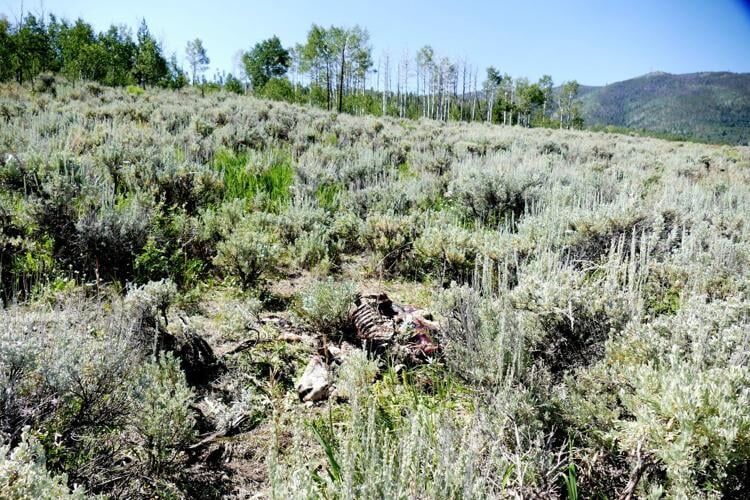
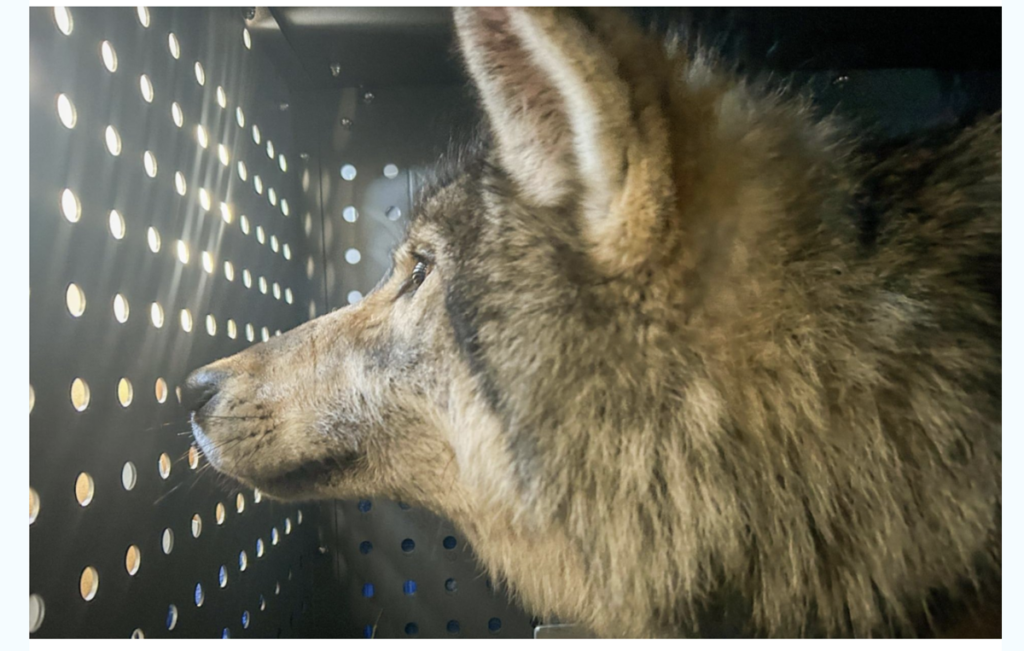
Wildlife officers shot and killed a wolf believed to be responsible for killing at least 22 sheep over the past year in a remote northwestern county, according to a state agency.
The animal came from the Copper Creek pack and is the 15th wolf to die in Colorado in the past two years. It’s also the second wolf from the Copper Creek pack to be shot by Colorado Parks and Wildlife staff due to chronic depredation of livestock.
Wildlife staff had been hunting for the wolf since last year and, at one point, believed they had shot it, but the animal survived and disappeared.
In a statement, Colorado Parks and Wildlife said that “visual evidence obtained at the scene confirmed the removed wolf is the same one that was depredating in Rio Blanco County in 2025 and early 2026.”
The agency added that the wolf had originally been part of the Copper Creek Pack but had not been with that group since September 2024.
The wolf traveled to Routt County, where it killed two more sheep on June 10 and June 11.
“The decision to pursue lethal actions is never an easy one, but the circumstances around this wolf’s repeated depredation history made this a difficult but necessary decision,” said CPW Director Laura Clellan. “The producers impacted by these depredations have worked diligently with CPW to identify and deploy all viable and reasonable nonlethal tools and techniques identified through their site assessment and consultation with our field staff.”
Gov. Jared Polis said the decision became necessary.
“This elusive wolf had a number of chances but sadly chose to continue to depredate, which necessitated this challenging management decision,” he said. “Colorado remains committed to recovering and maintaining a viable, self-sustaining wolf population in Colorado, while concurrently working to minimize wolf-related conflicts with domestic animals, with nonlethal means as our priority.”
Colorado’s voter-approved wolf-reintroduction program has cost the state millions of dollars since passing narrowly in 2020, largely on the strength of support from Front Range voters.
State spending has far exceeded what voters were told at the time, and reimbursements to ranchers for livestock losses in counties, including Eagle, Pitkin, Gunnison, Grand, Rio Blanco, Routt and Jackson, have outpaced the available general-fund dollars set aside for compensation.
Colorado Parks and Wildlife has had to pull money from other species-conservation programs to cover wolf-related expenses. And under the state’s newly approved 2026—27 budget, which takes effect July 1, the agency is barred from using taxpayer dollars to acquire additional wolves in the coming year.
Originally, Proposition 114 estimated the program would cost $800,000 per year.
Last July, a Colorado Parks and Wildlife official told the CPW Commission that the Blue Book — the voter guide explaining ballot measures — noted that “actual state spending will depend on the details of the plan” the commission developed and on the cost of compensating ranchers for wolf-related livestock losses.
For the first “biological year” for wolves, between April 1, 2024 and March 31, 2025, CPW reported 30 livestock and one dog were killed by wolves. In the second year, CPW reported another 44 livestock were killed, along with a dog.
That doesn’t acknowledge the trauma livestock experience when wolves are in the area, according to ranchers. That has led to hundreds of thousands of dollars in claims tied to lower birth rates and lower market weights, the ranchers said.
Earlier this year, the state Senate Agriculture and Natural Resources Committee rejected two of three gubernatorial appointments to the CPW commission, in part because of a lack of experience with the constituents the appointees were intended to represent. The nominees, James Emerick and Christopher Sichko, withdrew their nominations moments before the Senate could vote on them.
The agency had already announced it would not seek more wolves in 2026.
The U.S. Fish & Wildlife had told Colorado last year that it would be prohibited from obtaining wolves from anywhere other than eastern Washington, eastern Oregon, eastern Utah and Montana, Wyoming and Idaho. All of those states have said “no” to Colorado for more wolves.
There are just four of the original 10 wolves from the first group that were relocated to Colorado from Oregon in December 2023, and of the 15 that came from British Columbia in January 2025, eight are still alive. That’s a mortality rate of 40% for the Oregon wolves and 53% for the British Columbia wolves.
The wolf reintroduction plan said the state would re-evaluate the program if the mortality rate fell below 70% within the first six months of release.
That review was done after the mortality rate for the British Columbia wolves fell below the 70% threshold.
“When we did observe lower than 70% survival rate among the wolves translocated from British Columbia last summer, we initiated a review and found that no wolf mortalities were due to any of the capture, transport and release protocols and concluded changes were not warranted,” a CPW officer told Colorado Outdoors.

Q&A with Mike Pence | Former vice president says GOP’s populist turn from conservatism isn’t permanent
Ernest Luning
ernest.luning@coloradopolitics.com
Updated 9 hours ago
Former Vice President Mike Pence says he’s concerned that the Republican Party has taken a populist turn away from bedrock conservative principles during President Donald Trump’s second term, but he believes the party will return to its roots when Trump...
New federal plan sets short-term rules for Colorado River management
Marianne Goodland
marianne.goodland@coloradopolitics.com
Updated 8 hours ago
Interior Department’s plan spares Colorado from mandatory cuts for now After years of stalled negotiations among the seven states that rely on the Colorado River, the federal government on Friday released its own plan for managing the drought-strained system. Calling...
Colorado is spared mandatory cuts under federal Colorado River proposal
The Associated Press
the-associated-press@coloradopolitics.com
Updated 14 hours ago
California, Arizona and Nevada to take less water under plan While Colorado has been spared from mandatory reductions, Arizona, California and Nevada would take less water from the Colorado River under a proposal announced Friday by the federal government to...

Republican Victor Marx taps George Markert as his lieutenant governor pick in Colorado’s gubernatorial race
Ernest Luning
ernest.luning@coloradopolitics.com
Updated 7 hours ago
Colorado Republican gubernatorial nominee Victor Marx named George Markert, a retired Marine colonel, as his running mate for lieutenant governor Friday morning, saying the former U.S. Senate candidate will bring “exceptional character, proven leadership and a lifetime of serving others”...

Boulder County coroner IDs body found over 50 years ago
Matt Kyle
matt.kyle@denvergazette.com
Updated 14 hours ago
After nearly 55 years, a body found in Boulder County has been identified. The Boulder County Coroner’s office on Thursday announced it has identified a set of remains found in Bluebell Canyon in August 1971 as Douglas Sumner, 22. The...

Democrat Jessica Killin’s internal poll shows dead heat with U.S. Rep. Jeff Crank in Colorado’s 5th CD
Ernest Luning
ernest.luning@coloradopolitics.com
Updated 1 day ago
Jessica Killin, the Democratic nominee in Colorado’s 5th Congressional District, is in a statistical tie with Republican U.S. Rep. Jeff Crank, according to an internal poll released this week by Killin’s campaign. The poll of likely general election voters, conducted...

Federal biotech commission examines Colorado’s role in critical minerals production
Scott Weiser
scott.weiser@gazette.com
Updated 14 hours ago
China’s dominance over critical mineral supplies has left U.S. manufacturers vulnerable. Colorado’s biotech and research community is working to ease that dependence. Leaders from the National Security Commission on Emerging Biotechnology met last week at the Colorado School of Mines...

Douglas County schools to consolidate administrative offices into $29M headquarters to cut costs
Nicholas Fogleman
nicholas.fogleman@denvergazette.com
Updated 14 hours ago
The Douglas County School Board is moving forward with a $29 million plan to consolidate district administrative operations into a new headquarters. It’s part of an effort to reduce annual costs as the district faces ongoing budget pressures. In June,...

Veo scooter clutter, sidewalk riders frustrate Denverites
Deborah Grigsby
deborah.smith@denvergazette.com
Updated 14 hours ago
Denver resident Mike Miller was on a downtown sidewalk recently when a Veo scooter rider traveling at full speed passed him as the scooter blasted a “do not ride on sidewalks” warning. In a letter to Veo Policy and Partnerships...

Jeffco taxpayers could be on the hook for a possible child sex assault settlement
Matt Kyle
matt.kyle@denvergazette.com
Updated 14 hours ago
Taxpayers may end up on the hook for a child sexual assault settlement, possibly worth up to $15 million, after Jeffco Public Schools failed to notify its insurance company in a timely manner about the case. The incident stems from...
PREV
PREVIOUS

Remember the grassroots reason for DEI | Miller Hudson
The Trump administration’s jihad against Diversity, Equity and Inclusion (DEI) programs has metastasized into the most unexpected corners of American life. Yet, before examining this policy “incursion,” it’s worthwhile to examine the roots of DEI which reach back more than 60 years. Following the success of civil rights legislation then, Congress created the Equal Employment […]

Colorado Supreme Court heads toward summer recess, newest justice authors first opinion | COURT CRAWL
Welcome to Court Crawl, Colorado Politics’ roundup of news from the third branch of government. The state Supreme Court is in the process of releasing a large batch of opinions as it heads toward its summer recess in July, plus the newest justice authored her first opinion for the court. Colorado Supreme Court news • The […]