

Group aims to add right to hunt and fish to Colorado Constitution
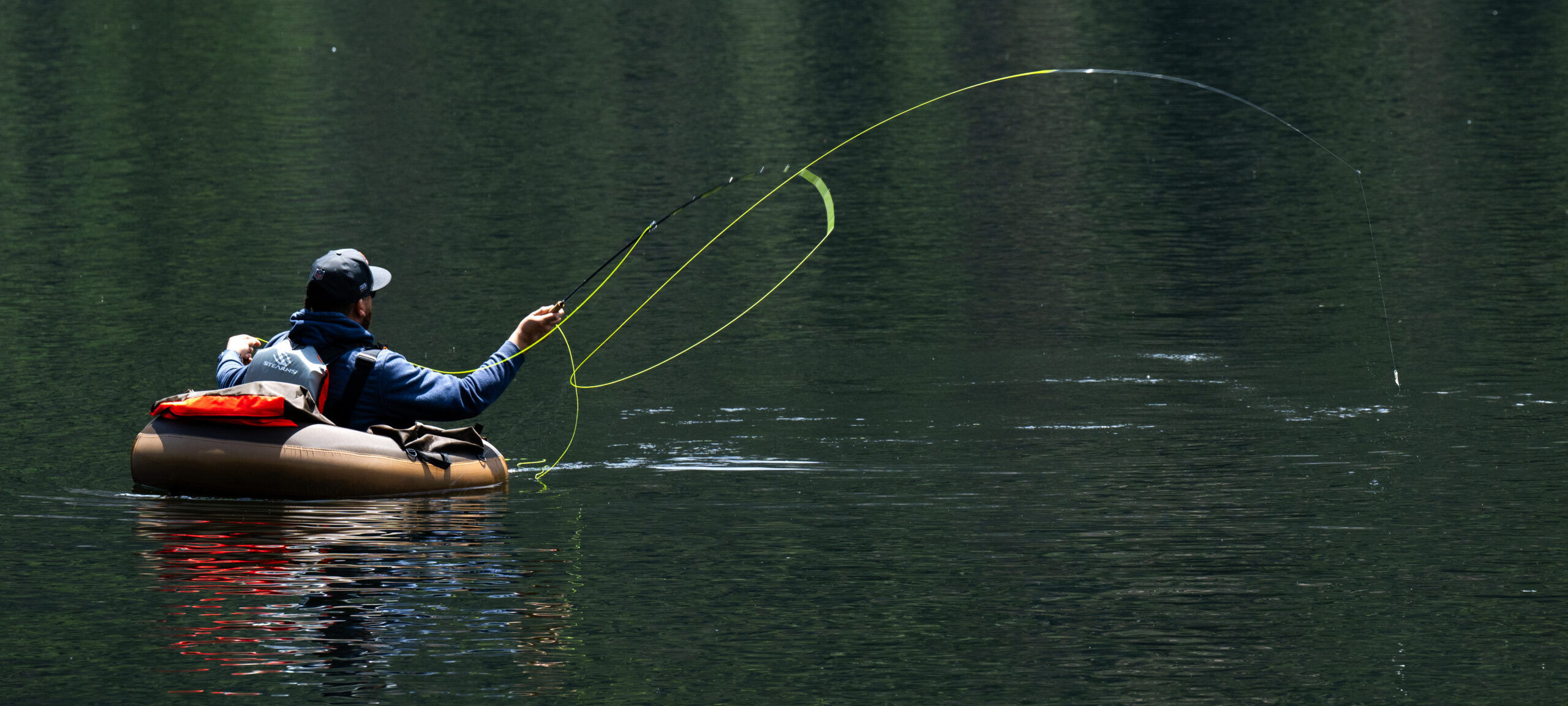
A group is seeking to make Colorado the 25th state in the nation with an established constitutional right to hunting and fishing through a proposed ballot initiative.
Backed by the International Order of T. Roosevelt, a group dedicated to preserving the North American Model of Wildlife Conservation, Initiative 302 would amend the Colorado Constitution to include language establishing the people’s right to “hunt, fish, and take fish and wildlife” by the use of “traditional methods,” except when prohibited by state or federal law.
The amendment also states that hunting and fishing are the “preferred means of responsibly managing fish and wildlife populations” and underscores that it does not limit the authority of any state agency responsible for regulating fishing, hunting, or wildlife management.
The initiative has collected about 90,000 signatures so far, according to the group’s executive director, Luke Hilgemann. The group is based in Wisconsin.
To qualify for the ballot this November, an initiative needs about 124,000 valid signatures by August 4.
Hilgemann said 24 other states have a right to hunt and fish in their constitutions, with Vermont being the first in 1777 and Florida the most recent to adopt it, passing an initiative, also backed by his group, in 2024.
“Hunting and fishing is part of Colorado’s heritage,” he said. “It’s something that the state traces its roots back to, and we want to make sure that those are forever protected against an onslaught of threats that have come from the anti-hunting and fishing groups, not only in Colorado, but nationwide.”
Hilgemann noted a proposed ballot measure in Oregon that would effectively ban hunting, fishing, breeding, and killing animals — except in cases of self-defense or medical care. He said the proponents behind that measure are looking to do something similar in Colorado.
Initiative 302 is a “proactive measure that allows us to be offensive and prevent these types of radical policies from ever taking hold of an amazing place like Colorado,” he said.
Hunting and fishing bring in about $3.25 billion to the state’s economy every year, and the industry supports over 25,000 full-time jobs, according to the Colorado Wildlife Council.
“Tens of hundreds of jobs are supported in local communities all across Colorado, so (Initiative 302) is about protecting that economic impact, as well,” said Hilgemann.
Critics: an unnecessary right
Opponents of the measure argue that establishing a constitutional right to hunting and fishing is unnecessary, since both activities are already legal.
Some critics also expressed worries about the measure’s use of the term “traditional methods,” sparking fears that it could repeal a 1996 ban on certain kinds of traps, poisons and snares.

David Kane, a member of Protect Colorado’s Constitution, the coalition opposing the measure, said the group’s concerns come from two angles: the proposal’s legality and how it could impact the state’s wildlife and the agencies that manage it.
Kane argued the amendment could violate the U.S. Constitution’s Equal Protection Clause, as it establishes certain rights for only one group of individuals — hunters and fishermen.
“This is really disturbing to me that we have a proposal for a constitutional amendment for a very small, narrow group of people,” he said. “It seems very problematic and not very constitutional to me.”
The group believes the initiative’s language is too vague and could open the gates to a litany of lawsuits based on different interpretations.
“You could probably ask 10 different people what ‘traditional methods’ are, and you’d get 10 different answers,” Kane said. “That’s something that could be left to the interpretation of the courts if it was challenged.”
Kane, who noted he is an avid sportsman, said doesn’t oppose hunting and fishing but added he believes there is a better way to create protections for the activities, such as through legislation, which is much easier to make changes and adjustments to than a constitutional amendment.
“This is really not something that falls within democratic principles around constitutions,” Kane said. “This would just overload and bloat the Constitution even more. It weakens public trust; it could create potential budgetary chaos, and it kind of creates inequality.”
The group also raised ethical issues about the amount of outside money that, it said, is being poured into Initiative 302.
Finance records from the Colorado Secretary of State’s Office website for the T. Roosevelt Conservation Alliance, the coalition backing the initiative, show the group has brought in about $750,000 in contributions to date. The group brought in $5 million in revenue in 2023, according to ProPublica’s nonprofit records.
“This money is not coming from grassroots,” Kane said. “It’s coming from outside the state.”
Hilgemann dismissed the criticism, calling it “nothing more than scare tactics, lies, and fear-mongering.”
“This is just their way of trying to spread fear and lies to get people to believe that their ultimate goal isn’t to end hunting and fishing in Colorado, as we truly know that it is,” he said, adding that the measure’s language includes a provision clarifying that it does not limit the state from regulating hunting, fishing, and wildlife management if the policy is necessary for “sound scientific wildlife conservation and management, public safety, or to preserve the future of hunting and fishing opportunities for all species statewide.”


Michael Dougherty is literally running for attorney general in Colorado Democrat’s 1st TV ad
Ernest Luning
ernest.luning@coloradopolitics.com
Updated 3 hours ago
Democratic attorney general candidate Michael Dougherty, the Boulder County district attorney, runs laps around the judicial complex in Denver that houses the office he’s seeking in a TV ad released Friday that includes a subtle dig at one of his...

Hickenlooper lands endorsements from Elizabeth Warren, Ministerial Alliance in US Senate primary
Ernest Luning
ernest.luning@coloradopolitics.com
Updated 24 hours ago
U.S. Sen. John Hickenlooper won endorsements this week from a progressive Democratic colleague and a coalition of metro-area African American faith leaders as voting began in Colorado’s primary election. U.S. Sen. Elizabeth Warren of Massachusetts and the Greater Metro Denver...

House District 14: Businesswoman, consultant square off in GOP primary
Mary Shinn
mary-shinn@coloradopolitics.com
Updated 1 day ago
Firearms training company owner Ava Flanell will face Troy Vanderhule, the chief fundraising officer for Dobson Philanthropic, in the June 30 Republican primary for state House District 14, an area in northern Colorado Springs. Flanell was appointed to the seat...

Douglas County moves to tighten rules on electric scooters, off-road vehicles
Nicholas Fogleman
nicholas.fogleman@denvergazette.com
Updated 1 day ago
Douglas County commissioners advanced an ordinance Tuesday that would significantly expand regulation of electric scooters and off-highway vehicles, citing safety concerns and gaps in state law. The proposed measure, introduced by the Douglas County Sheriff’s Office, would raise fines for...

As number of unaffiliated voters grow in Colorado, experts note patterns, behavior
Marissa Ventrelli
marissa.ventrelli@coloradopolitics.com
Updated 23 hours ago
For the first time in Colorado’s history, more primary ballots are going to voters without a party affiliation than to registered Democrats or Republicans. As such, political experts said, candidates today need to appeal to a new block of people...

Aurora considers landlord license program to help protect renters
Kyla Pearce
kyla.pearce@gazette.com
Updated 1 day ago
The Aurora City Council is considering creating a landlord rental registration and licensing program to protect renter rights. Supporters of a landlord license program say renters in Aurora don’t have adequate protections or an avenue to take recourse against landlords....

Bennet campaign finance case delayed again as Colorado Elections Division amends complaint
Marianne Goodland
marianne.goodland@coloradopolitics.com
Updated 2 days ago
A campaign‑finance complaint alleging that U.S. Sen. Michael Bennet’s Senate committee improperly paid for travel tied to his gubernatorial bid won’t get a public hearing until after the June 30 primary. The latest development followed months of delays and a...

Aurora voters to decide on sales tax hike to fund projects
Kyla Pearce
kyla.pearce@gazette.com
Updated 2 days ago
Aurora voters will decide in November whether to raise sales taxes for the first time since 1993 to help pay for infrastructure, transportation and public safety improvements. If voters approved the tax increase, the money will go toward “Build Up...

Douglas County School District board weighs return to collective bargaining
Nicholas Fogleman
nicholas.fogleman@denvergazette.com
Updated 2 days ago
The Douglas County School District board plans to consult a labor attorney and survey staff as it considers whether to resume negotiations with the Douglas County Federation, a local teacher’s union. The federation first urged the board in April to...

Cherry Creek hires search firm for new superintendent
Nico Brambila
nico.brambila@denvergazette.com
Updated 1 day ago
The Cherry Creek School District board earlier this week approved a nearly $30,000 contract with McPherson & Jacobson to conduct a national superintendent search. The measure was unanimously passed on Monday without discussion. Founded in 1991, McPherson & Jacobson is an...
PREV
PREVIOUS

Dem-GOP tension dominates 1,000-bill legislative session | A LOOK BACK
Forty-Five Years Ago This Week: “I can honestly say that until now, we got along well with the governor’s office,” said House Minority Leader Federico Peña, D-Denver. “We visited frequently with the staff. And you didn’t see certain legislators speaking out publicly against the governor. We worked together harmoniously.” Peña spoke to The Colorado Statesman after a […]

Michael Dougherty is literally running for attorney general in Colorado Democrat’s 1st TV ad
Democratic attorney general candidate Michael Dougherty, the Boulder County district attorney, runs laps around the judicial complex in Denver that houses the office he’s seeking in a TV ad released Friday that includes a subtle dig at one of his primary opponents. Dougherty, a veteran ultramarathoner — he covered 100 miles in under 24 hours […]