

Don’t break what works — leave Colorado’s ‘float but don’t touch’ intact | PODIUM
By Bill Ritter
As a Colorado native, I have a great appreciation for the natural beauty of our state. Throughout my life, I have had the good fortune of spending time in the wilds of Colorado, on the plains, in the mountains and on the rivers.
I understand intimately what fishing, floating and public access to outdoor recreation mean to this state — to our identity, and to our economy, particularly on the Western Slope.
I also understand as more people have moved into Colorado, the tensions between public recreation and private landownership have only grown. One result of those tensions is a recent push for proposals that would change stream access laws in Colorado. But buyer beware. These seemingly well-intentioned proposals could come with serious unintended consequences and significant costs to taxpayers.
In order to understand the stream access debate in Colorado, it’s helpful to understand our state’s unique history and why our system is different from other western states, particularly states like Montana.
From early in our statehood, Colorado courts determined there were no rivers within Colorado’s borders “navigable for the purposes of commerce” and rejected the legal doctrine of “public trust.” In doing so, they determined the beds of rivers and streams that cross private property are the private property of the adjacent landowner. For the next 150 years, those properties have been purchased, sold and taxed as such.
This doctrine has been upheld by numerous Supreme Court rulings, most significantly Hartman v. Tresise (1906) and People v. Emmert (1979). In Hartman, the Colorado Supreme Court held the owner of a non-navigable streambed holds the exclusive right of fishery over the water flowing above it — meaning the public has no right to fish on a private streambed without the landowner’s consent. Seven decades later in Emmert, the court extended that same principle to floating and recreation, ruling there is no general public right to float over private land without the landowner’s consent, and doing so can constitute trespass.
Following the Emmert holding, the Colorado legislature changed the state’s criminal trespass statute to exclude floating over private property from the definition of the offense. That led Colorado Attorney General Duane Woodard to opine in 1983 the legislature intended, “one who floats upon the waters of a river or stream over or through private property without touching the stream banks or beds, does not commit a criminal trespass.” However, neither the statutory change nor Woodard’s opinion created a public right to float over private land without the landowner’s consent.
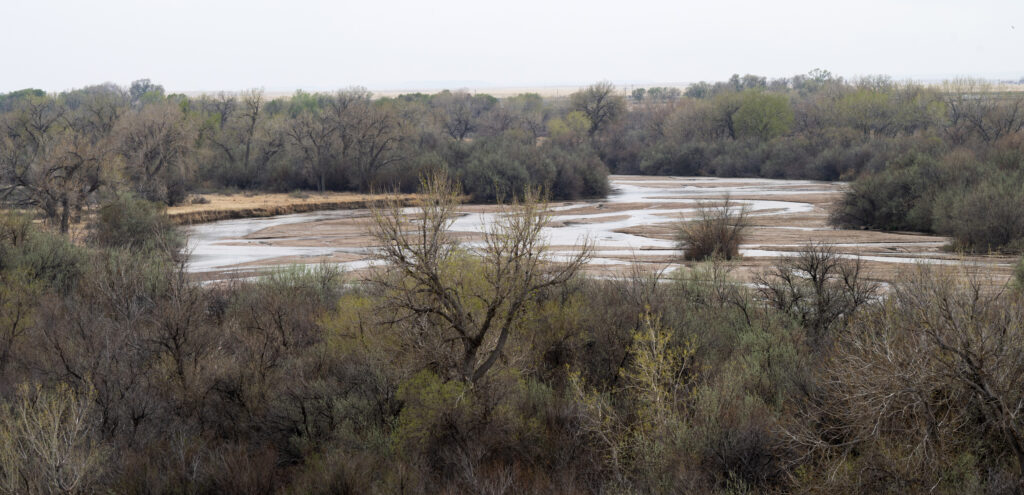
The “float but don’t touch” rule alluded to in the Woodard opinion emerged as a detente of sorts between landowners and the boating community. With rare exceptions, that has been the case during the past 40 years.
One of those exceptions occurred when I was governor. In 2010, there was a dispute regarding access between rafting outfitters and a Dallas-based development company which had put a fence across a section of the Taylor River that crossed its property. In response to this dispute, a “right to float” bill was considered by the legislature. That, in turn, gave rise to numerous landowner-backed ballot initiatives to confirm the prohibition on floating across private waters without permission. Instead of allowing this conflict to play out at the ballot box, I asked the sponsors to withdraw the right to float legislation, and I asked the landowners to withdraw their ballot measures. I then created a task force composed of outfitters, landowners, water managers, anglers, paddlers and other stakeholders. I charged the task force members with finding a solution to the Taylor River dispute. The result was a reaffirmation of the “float but don’t touch” compromise. It’s a system that balances the needs of public recreation with respect for private property rights, and it has served Colorado well.
But here is the catch: “float but don’t touch” works because in 2010 we made the decision NOT to write it into law. At the time, many of the stakeholders recognized that, in light of previous Colorado Supreme Court rulings, legislation establishing the compromise as law might well be overturned by the courts because of the Hartman and Emmert decisions. What was true for us in 2010 is still true for legislators today. Establishing a right to wade or a right to float, especially if it permits any contact with the river or stream bed, could be viewed as a “taking of private property” under the law. That in turn requires just compensation to property owners to be paid by the state.
The potential cost is significant. A recent study published by the Colorado Common Sense Institute put the potential cost to taxpayers for a right-to-wade proposal in the billions of dollars. Even worse, a right-to-float bill — no matter how well intentioned — could have the very real consequence of the courts reaffirming no right to float exists, prompting property owners to restrict access. This would be a terrible outcome for communities like Buena Vista and Salida that depend upon the Arkansas River recreation for their economy.
If the principal rule of governing is to “first do no harm,” then we implore legislators to learn from our experience in 2010, consider the Supreme Court rulings, and read the economic impact report. We act at our peril if we upset the balance Colorado currently enjoys under the principle of “float but don’t touch.” If it isn’t broken don’t fix it. Colorado can’t afford it.
Bill Ritter served as Colorado’s 41st governor, 2007-11. He established Colorado as a leader in clean energy and in developing the new energy economy and, after leaving office, founded the Center for the New Energy Economy at Colorado State University.


Hunting is a privilege, not a constitutional right | GUEST COLUMN
Colorado Politics
colorado-politics@coloradopolitics.com
Updated 3 hours ago
By Roland Halpern Colorado voters may soon be asked to place hunting and fishing in the state constitution. Proposition 302 would establish the right to hunt, fish and take wildlife using “traditional methods,” while declaring hunting and fishing are the...

DEA’s Miguel Chino describes Colorado’s place on the ‘fentanyl pill superhighway’ | The OpEdge Podcast
Tony Olivero
tony.olivero@gazette.com
Updated 11 hours ago
Miguel Chino, Acting Special Agent in Charge of the Drug Enforcement Administration’s Rocky Mountain Field Division, joins The OpEdge to paint the picture of Colorado’s place on America’s “fentanyl pill superhighways.” Chino updates Gazette and Colorado Politics Deputy Opinion Editor...

Colorado students push AI task force as schools navigate new tech era
Marissa Ventrelli
marissa.ventrelli@coloradopolitics.com
Updated 6 hours ago
A group of students is urging lawmakers to establish a task force on artificial intelligence in education to advise districts on how to ensure that pupils and educators use the technology effectively without becoming overly reliant on it. The students...

A right to buy a product? | Hal Bidlack
Hal Bidlack
hal-bidlack@coloradopolitics.com
Updated 1 day ago
A recent story in Colorado Politics caught my eye, as I learned of a “citizen initiative” that has qualified for the November ballot. It seems supporters of Initiative 177 have collected enough signatures, 146,165 legitimate ones out of a total...
Fourteen years after Aurora — we can’t afford to go backward | GUEST COLUMN
Colorado Politics
colorado-politics@coloradopolitics.com
Updated 1 day ago
By John Hickenlooper and Gabby Giffords Two Saturdays ago, a gunman shot and killed three people and wounded several others in Twin Falls, Idaho. This latest deadly shooting comes only days after we remembered the lives we lost 14 years...
U.S. Rep. Lauren Boebert’s son arrested, faces charges of sexual exploitation of minor
Matt Kyle
matt.kyle@denvergazette.com
Updated 1 day ago
U.S. Rep. Lauren Boebert’s son Tyler Jay Boebert has been arrested and accused of recording and sharing a video depicting himself having intercourse with a minor, according to court records. The case originated in Garfield County in Western Colorado and...
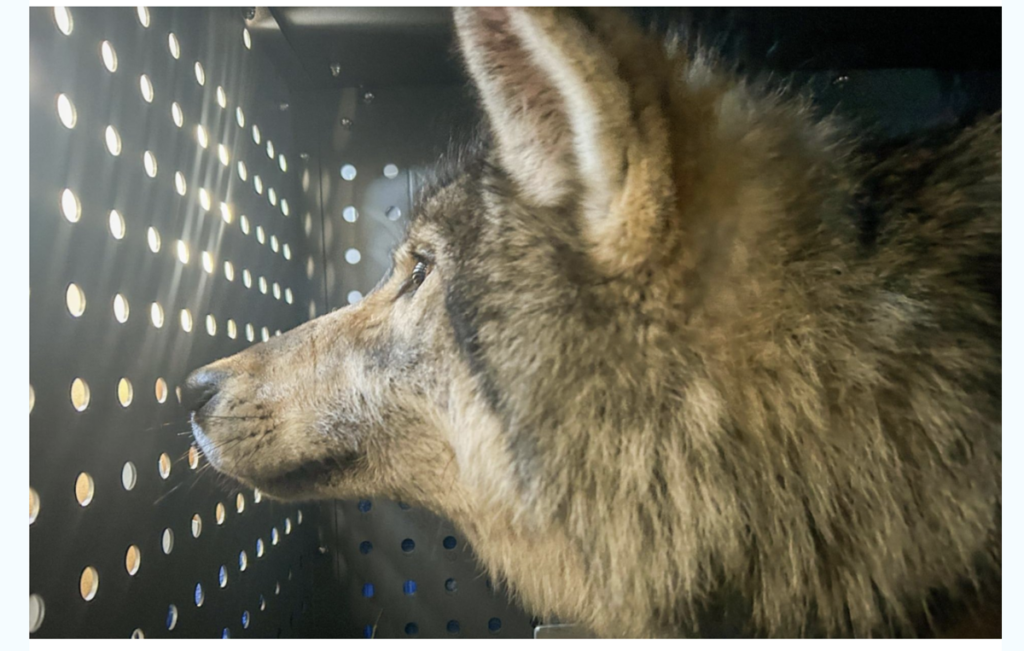
Hunter shot Colorado wolf after mistaking it for a coyote, wildlife office says
Marianne Goodland
marianne.goodland@coloradopolitics.com
Updated 10 hours ago
Colorado Parks and Wildlife said Monday that a female wolf from British Columbia that died in January was shot by a hunter who mistook her for a coyote. The wolf, identified as 2504‑BC, was one of 17 wolves relocated since...

A daring and fearless rescuer — is afraid of a debate | Dick Wadhams
Dick Wadhams
dick-wadhams@coloradopolitics.com
Updated 3 days ago
Victor Marx, the Republican nominee for governor who says he can exorcize demons and who claimed he has fearlessly rescued 45,000 women and children during 150 “high-risk” missions around the world, appears to be intimidated by the notion of debating...

Colorado’s ballot-initiative process again a battleground for deep pockets, special interests — not the people | Miller Hudson
Miller Hudson
miller-hudson@coloradopolitics.com
Updated 2 days ago
The Oxford English Dictionary defines a constitution as, “The set of fundamental principles according to which a state is constituted and governed, a body of rules prescribing the major elements of the structure and activities of any organization.” Somewhere in...

Democratic group aims Spanish-language TV ad at Gabe Evans in Colorado’s battleground 8th CD
Ernest Luning
ernest.luning@coloradopolitics.com
Updated 11 hours ago
A national group tied to House Democratic leadership launched a six-figure Spanish-language TV ad in Colorado this week targeting Republican U.S. Rep. Gabe Evans and the GOP’s signature budget legislation. The 30-second spot is part of $15 million in new...
PREV
PREVIOUS

Can a law be neutral if it overrides faith-based beliefs? | GUEST COLUMN
By Joseph C. Stewart In what seems like a quintessential “Only in America” parody, there is a correlation between unemployment benefits, smoking peyote, and LGBTQ kids — or kids of LGBTQ couples — being allowed enrollment into Catholic Colorado preschools. Let’s connect the dots. Recently, the Supreme Court announced it will be taking the case […]
Colorado on the hook for $1 million in costs to pay for wolves' livestock kills
After paying more than $700,000 in March to ranchers for livestock lost to wolves, the Colorado Parks and Wildlife Commission is poised to approve two additional claims totaling $262,000 at its meeting this week. Those approvals would bring total payouts to about $970,000 with another $56,000 in claims rejected across the March and May meetings. […]