

Can a law be neutral if it overrides faith-based beliefs? | GUEST COLUMN

By Joseph C. Stewart
In what seems like a quintessential “Only in America” parody, there is a correlation between unemployment benefits, smoking peyote, and LGBTQ kids — or kids of LGBTQ couples — being allowed enrollment into Catholic Colorado preschools.
Let’s connect the dots.
Recently, the Supreme Court announced it will be taking the case St. Mary Catholic Parish v. Roy this autumn. The gist of the case, if you haven’t already heard, is the Archdiocese of Denver and some accompanying parishes are suing Colorado (specifically, Lisa Roy, head of the Colorado Department of Early Childhood) for revoking the preschools’ state funding because their preschools do not agree to comply with the state’s nondiscrimination laws which would force the schools to allow LGBTQ kids (or kids of LGBTQ parents) into their schools.
The State of Colorado is holding its ruling falls under the Employment Division v. Smith case from 1990. And this is where things get tangled.
Over thirty years ago, in 1989, two employees of a drug rehabilitation clinic in Oregon were fired from their jobs for smoking peyote during a Native American religious ceremony. Because they were fired for smoking peyote, a federal crime, they were denied state unemployment benefits. The two men fought, claiming religious freedom to smoke peyote.
Not surprisingly, the Supreme Court ruled in favor of the Employment Division of Oregon and ruled state governments can enforce a law that applies to everyone — even if it burdens religious practice — so long as the law is neutral and generally applicable; really, a law of neutrality. In other words, no one may consume Schedule I narcotics, regardless of religious motivation.
Seems to make sense.
However, things change — a lot of things.
Now, at the center of the Colorado case are the 1990 neutrality ruling and the Colorado Anti-Discrimination Act (CADA). Under CADA, places of public accommodation must not discriminate against people on the basis of race, religion, or other protected status. CADA was put into law in 1959, and one can guess how many times it mentions sexual preferences or gender identity — zero times.
When Justice Antonin Scalia wrote the majority opinion on the Smith case, the LGBTQ revolution could never have been conceived to be a human reality. Indeed, for most of American legal history, the law assumed stable definitions of sex and family structure.
It was not until a major revision in 2007 that gender identity and sexual orientation were added to CADA. Things changed. Right?
But here is where things have not changed — the Catholic Church has followed its doctrines regarding sexual orientation for 2,000 years. Those doctrines are fundamental beliefs about the biblical creation order. The First Amendment was written in a context where religious belief — particularly within the Christian tradition — was widespread and deeply embedded in public life.
For 200-plus years in America, the state had to prove there was a very strong and essential reason for a law, and that there were no less harmful means to enact that law without infringing on religious freedom. After Smith, courts can skip that whole test, and any law that applies to the land applies to religion.
The question before the court is not whether nondiscrimination matters — it does. The question is whether a neutral law can remain neutral when it conditions participation on the surrender of deeply held religious beliefs.
In 1990, the court found smoking a Schedule 1 drug was illegal, no matter who smoked it and hallucinated.
In 2026, Catholic preschools can get defunded for not refuting their well-established ancient doctrines.
“Congress shall make no law… prohibiting the free exercise (of religion)” — the First Amendment. Can Colorado’s current framework accommodate the very religious commitments the First Amendment was designed to protect?
I believe it fails. But we will find out this fall.
Theology matters, history matters and laws matter.
In a profoundly odd sense, this is how peyote is affecting Catholic preschools in Colorado.
Joseph C. Stewart is, Ph.D., is a researcher in applied theology and a writer in Castle Rock whose work focuses on theology, culture, global affairs and the moral questions shaping public life.

Three districts that will answer key Colorado political questions | Paula Noonan
Paula Noonan
paula-noonan@coloradopolitics.com
Updated 10 hours ago
Colorado’s legislature used to be a place where neither party was dominant. Dozens of seats were competitive and House and Senate majorities switched regularly. From 2010 to 2020, the House was predominantly Democratic with one two-year assembly under Republicans. The...
‘Ticked off’: Third-party US Senate candidate in Colorado launches $1.3 million TV ad campaign
Ernest Luning
ernest.luning@coloradopolitics.com
Updated 12 hours ago
Bob Chew, the Forward Party nominee for U.S. Senate in Colorado, sends household objects flying in a TV ad set to run statewide through September, backed by $1.3 million across multiple platforms, his campaign told Colorado Politics. Meant to demonstrate...

Colorado shifts vaccine authority to state as Trump administration revises childhood framework
Marissa Ventrelli
marissa.ventrelli@coloradopolitics.com
Updated 11 hours ago
As the Trump administration rolls out a revised childhood vaccine framework, Colorado’s law allowing the state to set its own immunization schedule has now taken effect. Issued Monday, President Donald Trump’s executive order separates childhood and adolescent vaccines into three...

Colorado NRA chapter seeks injunction against new gun‑training requirement
Marissa Ventrelli
marissa.ventrelli@coloradopolitics.com
Updated 11 hours ago
The Colorado chapter of the National Rifle Association is seeking an injunction to stop the state from enforcing a new law that took effect earlier this month. The new law requires anyone buying or selling certain firearms to first complete...

Hunting is a privilege, not a constitutional right | PODIUM
Colorado Politics
colorado-politics@coloradopolitics.com
Updated 10 hours ago
By Roland Halpern Colorado voters may soon be asked to place hunting and fishing in the state constitution. Proposition 302 would establish the right to hunt, fish and take wildlife using “traditional methods,” while declaring hunting and fishing are the...

DEA’s Miguel Chino describes Colorado’s place on the ‘fentanyl pill superhighway’ | The OpEdge Podcast
Tony Olivero
tony.olivero@gazette.com
Updated 2 days ago
Miguel Chino, Acting Special Agent in Charge of the Drug Enforcement Administration’s Rocky Mountain Field Division, joins The OpEdge to paint the picture of Colorado’s place on America’s “fentanyl pill superhighways.” Chino updates Gazette and Colorado Politics Deputy Opinion Editor...

Colorado students push AI task force as schools navigate new tech era
Marissa Ventrelli
marissa.ventrelli@coloradopolitics.com
Updated 1 day ago
A group of students is urging lawmakers to establish a task force on artificial intelligence in education to advise districts on how to ensure that pupils and educators use the technology effectively without becoming overly reliant on it. The students...
A right to buy a product? | Hal Bidlack
Hal Bidlack
hal-bidlack@coloradopolitics.com
Updated 2 days ago
A recent story in Colorado Politics caught my eye, as I learned of a “citizen initiative” that has qualified for the November ballot. It seems supporters of Initiative 177 have collected enough signatures, 146,165 legitimate ones out of a total...
Fourteen years after Aurora — we can’t afford to go backward | GUEST COLUMN
Colorado Politics
colorado-politics@coloradopolitics.com
Updated 2 days ago
By John Hickenlooper and Gabby Giffords Two Saturdays ago, a gunman shot and killed three people and wounded several others in Twin Falls, Idaho. This latest deadly shooting comes only days after we remembered the lives we lost 14 years...
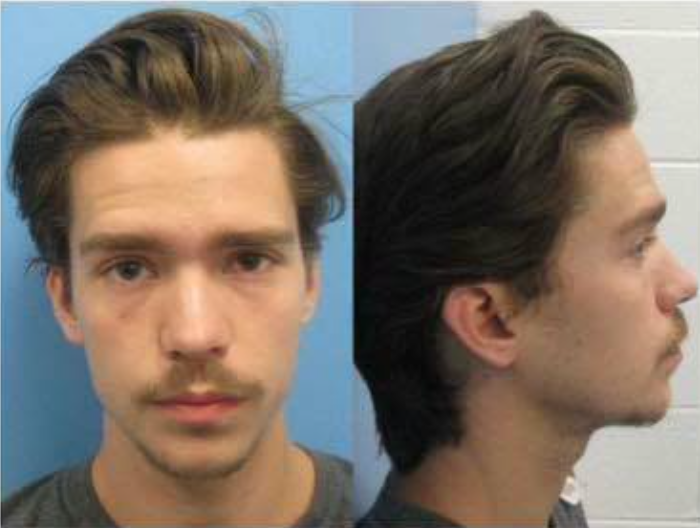
U.S. Rep. Lauren Boebert’s son arrested, faces charges of sexual exploitation of minor
Matt Kyle
matt.kyle@denvergazette.com
Updated 2 days ago
U.S. Rep. Lauren Boebert’s son Tyler Jay Boebert has been arrested and accused of recording and sharing a video depicting himself having intercourse with a minor, according to court records. The case originated in Garfield County in Western Colorado and...
PREV
PREVIOUS
Legislating at the speed of artificial intelligence | GUEST COLUMN
By Sean Camacho Consumers in Colorado and across the country are demanding artificial intelligence companies be more transparent about how their systems work: how they’re built, how they learn, how they change over time. What we’ve learned as advocates for AI regulation is the process of building AI — iterative, adaptive and never fully finished […]

Don’t break what works — leave Colorado’s ‘float but don’t touch’ intact | PODIUM
By Bill Ritter As a Colorado native, I have a great appreciation for the natural beauty of our state. Throughout my life, I have had the good fortune of spending time in the wilds of Colorado, on the plains, in the mountains and on the rivers. I understand intimately what fishing, floating and public access to […]